

You spot a lifted shingle, uneven flashing, or a ceiling stain after roofing work. It’s natural to worry about leaks, but a visible problem doesn’t tell the whole story. If you’re wondering what to do after a bad roofing job, start by recording what you can see safely before contacting the roofer.
It can be hard to know which details matter, and raising a concern may feel uncomfortable. A clear record gives you a calm, practical starting point. This guide explains how to photograph the issue, save contracts and messages, and describe your concern without jumping to conclusions.
You’ll also learn how to protect your home from further damage, communicate your request clearly, and choose next steps if the problem remains unresolved. The goal is to make decisions based on evidence, not guesswork. United Roofing & More! provides roof repairs and free estimates in the Seattle Metropolitan Area. Get a Free Quote!
Key Takeaways
- Learn which visible roof concerns may warrant a closer look, without assuming they prove poor workmanship.
- Find out what project records and photos to gather before contacting the roofer.
- Use a calm, written message to explain your observations and request a clear response.
- Understand how to reduce interior water damage while you determine the right next step.
- See how documented roof concerns can guide a repair plan for a bad roofing job in the Seattle area.
What Counts as a Bad Roofing Job, and What Should You Notice First?
Finding a roof concern after the crew has finished can be frustrating, especially when you’re worried about leaks or damage inside your home. An unusual-looking detail is a reason to document the condition and ask questions, not proof on its own that the work was done poorly. The roof’s design, materials, and installation details all matter. This overview of roof types and components can help explain why a visible feature may serve different purposes on different roofs.
A cosmetic irregularity may be worth documenting, but signs of water entry or displaced materials that could affect weather protection deserve prompt attention. Note what you can see, when you noticed it, and whether it is changing. Avoid deciding who is at fault before the roof’s condition and project details are understood.
Which roof problems deserve prompt attention?
Active water entry, a newly damp ceiling, or fresh interior staining should be documented promptly. Take clear photos from a safe place and note when you first saw the moisture. Exterior appearance alone may not reveal the source or full extent of a problem, so don’t treat a stain as proof of a specific installation error. Don’t climb onto the roof or disturb loose materials to investigate.
What visible workmanship concerns can you document?
From the ground, look for details such as shingle courses that appear crooked, inconsistent edges, exposed or loose materials, or flashing that seems displaced. These are observations to record, not conclusions about workmanship. Take photos from several angles, note when each concern appeared, and stay away from unstable areas.
Useful context matters as much as a close-up. Include a wider view showing where the detail sits on the roof, then take a closer image only if you can do so safely from the ground. If the concern becomes more noticeable after rain or wind, record that timing too. Don’t pull at shingles or flashing to test whether they’re secure. That could cause additional damage or make the original condition harder to assess.
Some details are easy to mistake for a defect without understanding their purpose. For example, this roof drip edge guide explains the detail and its role. Keep your notes factual: “flashing appears raised near the roof edge” is clearer than “the roofer installed it wrong.” That wording keeps the conversation focused on what needs an explanation.
If you’re weighing what to do after a bad roofing job, begin with what you can safely observe. A set of clear photos, dates, and brief descriptions helps you explain the concern without making unsupported assumptions. United Roofing & More! provides roof repairs and free estimates in the Seattle Metropolitan Area. Get a Free Quote!
How to Document a Bad Roofing Job Before You Contact the Roofer
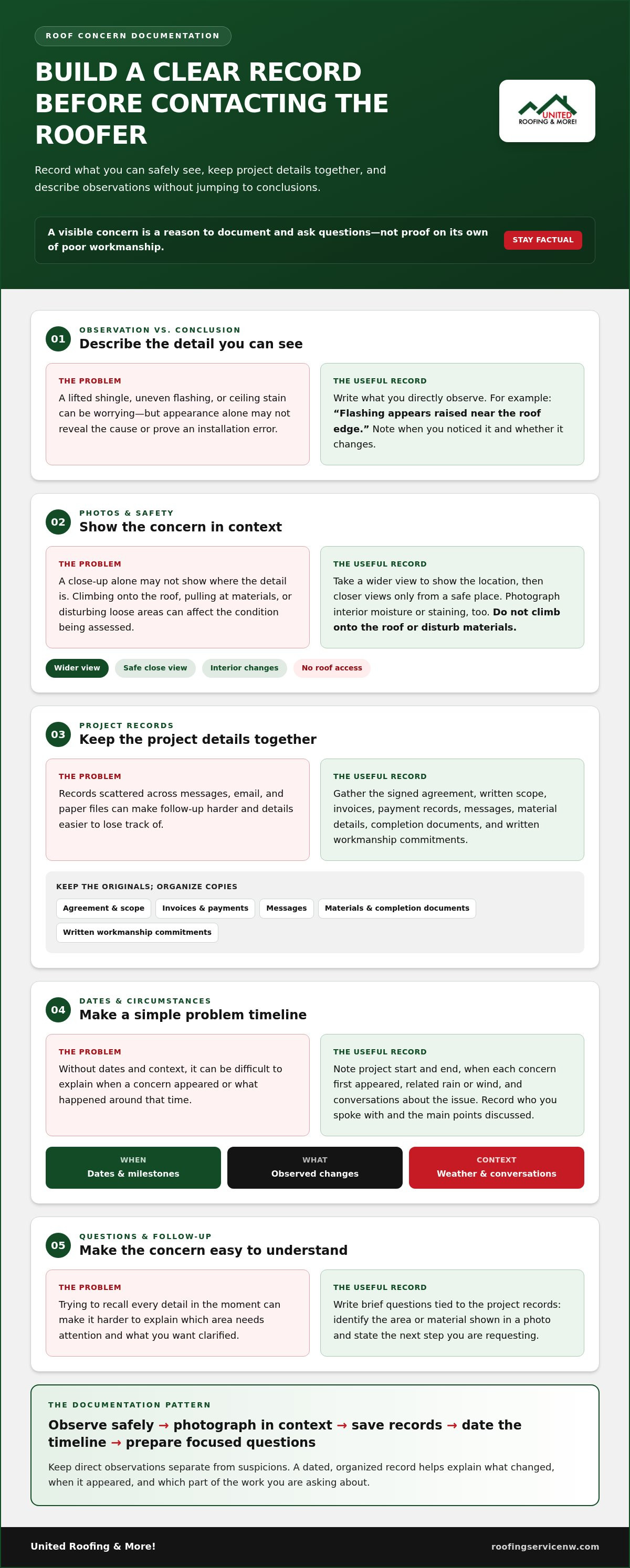
Good documentation gives you a factual way to explain what you’ve noticed and keeps project details together for follow-up. Before reaching out, use this sequence and save copies in one digital or paper folder.
- Preserve project records. Gather the signed agreement, written scope or project description, invoices and payment records, messages, material details, and any completion documents. Include written workmanship commitments. Keep original files where possible and make copies so you can refer to the records without altering or misplacing them.
- Photograph concerns safely. Take clear photos from the ground or another safe location. Include a wider view to show where the concern is, plus closer views if you can take them without climbing or disturbing the roof. Save indoor photos of leaks, staining, or other changes noticed after the roofing work. Don’t move materials or alter the work to get a better picture.
- Note dates and circumstances. Record when the project began and ended, when you first noticed each concern, and when any water entry or interior change appeared. Note whether rain, wind, or another event came before the symptom. Separate what you directly observed from what you suspect. “Ceiling stain appeared after rain” is more useful than assigning a cause.
- Organize questions. Write down the specific details you want explained, such as which area or material appears in a photo and what next step you’re requesting. Keep questions brief and tied to the project records. A focused list helps you explain the concern clearly rather than trying to recall every detail during a conversation.
Dated photos and organized project records make follow-up clearer by showing what changed, when it appeared, and which part of the work you’re asking about.
What evidence should you save?
Keep records together rather than scattering them across text messages, email, and paper files. Preserve the agreement, scope, invoices, payment records, messages, material information, completion documents, and any written workmanship commitments. Add dated exterior and interior photos. Keep original files unchanged, and avoid edits that could obscure when or where an image was taken.
How do you create a clear problem timeline?
Use a simple dated list for project milestones, the first appearance of each concern, related weather or events, and every conversation about the issue. Note the date, who you spoke with, and the main points discussed. The roof replacement guide offers general project context that may help you organize the records you already have.
With your notes and questions together, you can describe the issue without overstating what the evidence proves. United Roofing & More! provides roof repairs in the Seattle Metropolitan Area. You can share your documented concerns and request a free quote.
How to Raise Roofing Workmanship Concerns and Evaluate the Response
Once you’ve gathered your notes, raise the concern in writing. A calm, specific message gives the original roofer a chance to understand what you’re seeing and explain their view of the issue. Stick to observable details, not conclusions about intent or fault. Your aim is to get a useful response and a clear next step.
What should you say to the original roofer?
Use a straightforward subject line, such as “Request to discuss roofing concern at [address].” Identify the concern, where it appears, and when you noticed it. Refer to an attached photo by its date or filename. Then ask for a written explanation of the findings and a proposed plan for addressing the reported issue. Keep the message concise, factual, and courteous.
For example, you might write: “I noticed what appears to be displaced flashing near the rear roof edge on [date]. I’ve attached a photo taken from the ground. Could you explain what you find and outline the next steps you recommend in writing?” This describes an observation without declaring the cause and makes your request clear.
After sending the message, keep a copy with the reply. Record any proposed work, timing discussed, and questions that remain unanswered. If you speak by phone or in person, make a brief note afterward with the date and a neutral summary. You can send a follow-up confirming your understanding: “My notes are that you plan to address [item] and will provide an update about [question]. Please let me know if I misunderstood.”
Evaluate the response by whether it addresses the concern you raised. Does it explain what the roofer believes is happening? Does it set out a practical next step or identify what remains uncertain? If a repair is proposed, ask for the work and expected timing to be described in writing. Save updates and note whether the reported problem changes. Clear communication matters when later conversations need to refer back to what was discussed.
When might a homeowner consider escalation?
If your concern goes unanswered, damage remains unresolved, or you and the roofer disagree about the work, seek authoritative guidance before deciding what to do next. Washington homeowners can check current information from the Washington State Department of Labor & Industries and the Washington State Attorney General. Procedures and requirements can change, so rely on their current guidance rather than assumptions or outdated summaries.
Looking up official information doesn’t require you to make a legal conclusion about your situation. Keep your records organized, note what remains unresolved, and use the guidance to understand which options may apply. Avoid relying on promises of a guaranteed remedy or a deadline unless you’ve verified the details with an authoritative source. If the concern is roof damage that needs corrective work, roof repair may be a practical next step based on the documented symptoms and roof condition.
Knowing what to do after a bad roofing job includes keeping the conversation measured and preserving a written record of both sides. A clear request, a thoughtful review of the reply, and current official guidance can help you move forward without escalating based on assumptions alone.
How to Limit Further Roof and Interior Damage While You Wait
If water is getting inside, focus first on people and safe interior protection. Temporary steps can help limit damage to belongings, but they don’t fix the roof or identify the source of a leak. In the Seattle area, wet weather makes it especially useful to document changes promptly and protect what you safely can indoors while arranging a lasting response.
Don’t try to solve a roof problem by climbing up, especially if the surface is wet, steep, damaged, or unfamiliar. A quick cover or adjustment could worsen the damage, create a safety risk, or change the condition you’re trying to document. Keep the distinction clear: temporary protection is a short-term measure, not a completed repair.
What can you do if water is entering the home?
If it’s safe to reach the affected area, move furniture and belongings away from the water and place a container under active drips. Photograph the room and affected materials, then note when the water appeared and whether it returns. Don’t stand beneath a ceiling that’s bulging or shifting, and keep clear of water near electrical fixtures, wiring, or outlets.
If you see electrical exposure or another unsafe condition, don’t touch it or enter the area. Keep people away and seek appropriate help. Avoid puncturing a ceiling or pulling down wet materials. These actions can create additional hazards and make the damage harder to document. Take photos from a safe position instead.
When should roof work wait for a professional response?
Stay off a wet, steep, damaged, or unfamiliar roof. Don’t handle loose materials, move shingles, or apply a cover that could shift or conceal the condition. From indoors, protect belongings and collect drips only if the area is safe to access. Temporary steps may reduce exposure, but they can’t confirm the cause or replace an appropriate roof repair.
Keep a simple record while you wait. Note whether water entry is active or has stopped, which room is affected, and whether the visible area changes. Take new photos if conditions worsen, but don’t risk your safety to get a better view. If the concern involves ceiling movement, electrical exposure, or another immediate hazard, keep clear and seek appropriate help rather than attempting a repair yourself.
These precautions are especially relevant during rainy weather in the Seattle Metropolitan Area. A container, moved belongings, and clear notes can help protect the interior and show how conditions have changed. They don’t establish the full extent of roof damage. The underlying issue still needs a suitable repair plan based on the roof’s condition.
If you’re concerned about ongoing water entry, United Roofing & More! provides roof repairs in the Seattle Metropolitan Area. Request a free estimate to discuss a practical next step: learn about roof repair.
Get a Clear Repair Plan for a Bad Roofing Job in the Seattle Area
The right next step depends on what you’ve documented and the roof’s current condition. A visible concern, an interior stain, or active water entry may call for different responses. Avoid choosing a repair based on appearance alone. A clear plan should connect the reported symptoms to the work being proposed and explain what happens next.
For broader context on what quality roofing involves, the master roofing standards guide discusses roofing quality considerations. Use that background alongside your project records, not as a substitute for understanding the specific condition of your roof.
What should a practical repair plan make clear?
A useful plan identifies the reported concern and where it appears, explains the proposed repair approach, and outlines the next steps for the homeowner. It should also make clear what questions remain and how updates will be shared. Written follow-up helps everyone refer to the same scope and timing without assuming a particular result before the work is assessed.
For example, if you reported water entry near a roof edge, the plan should address that concern directly rather than leave you guessing what work is being discussed. Keep the explanation and any agreed details with your project records. If something is unclear, ask for it to be explained plainly before making decisions.
How can Seattle-area homeowners take the next step?
Homeowners across the Seattle Metropolitan Area can share their project details and documented concerns with United Roofing & More! The company provides roof repair locally, and its founding team has over 15 years of industry experience. Clear communication is central to the process. The company stays in communication with customers until the roofing job is done.
As you consider what to do after a bad roofing job, focus on a practical path: explain the symptoms, understand the proposed repair, and keep the follow-up in writing. A repair plan should reflect the roof’s condition and the information available, not assumptions about cause or outcome. You can request a free quote to discuss your roof concerns.
Take the Next Step With a Clear Plan
A roofing concern doesn’t have to leave you stuck between waiting and making a rushed decision. Use the information you’ve collected to start a practical conversation about the condition of your roof and possible repair options. If you’re still asking what to do after a bad roofing job, focus on the next decision you can make with confidence: getting a clear explanation of the concern and a path forward.
United Roofing & More! serves homeowners across the Seattle Metropolitan Area. Its founding team brings over 15 years of industry experience, and the company stays in communication with customers until the roofing job is done. A clear conversation can help you understand whether roof repair may be an appropriate next step for your home.
United Roofing & More! serves the Seattle Metropolitan Area, including Seattle, Marysville, Renton, Everett, Lynnwood, Kirkland, Mount Vernon, Bothell, Edmonds, Shoreline, Sammamish, Redmond, Bellevue, Tacoma, and Kent.
Frequently Asked Questions
What should I do first after a bad roofing job?
First, make sure people can stay clear of immediate hazards, then record what you can safely see. If water is near electrical equipment or a ceiling is shifting, avoid the area and seek appropriate help. What to do after a bad roofing job starts with facts, not blame: note the location and timing of the concern, then review the project paperwork before writing to the roofer. Keep your first message focused on one or two specific questions.
How can I tell if my roof was installed incorrectly?
You can spot possible warning signs, but a visual clue alone can’t confirm incorrect installation. Uneven shingle lines, displaced materials, or flashing that looks damaged may be worth documenting. A stain below the roof can also have more than one possible cause. Compare photos over time and note whether a visible change appeared after a weather event. A roofing professional can help clarify the roof’s condition before you decide what the observation means.
Should I contact the roofing contractor before filing a complaint?
In many situations, writing to the original contractor first is a practical way to seek an explanation and proposed next steps. Keep the note neutral, attach relevant photos, and save the reply. If the concern stays unresolved, consult current information from the Washington State Department of Labor & Industries and the Washington State Attorney General before considering a formal complaint. Agency guidance can help you understand which options may apply to your circumstances.
Can I fix a roofing problem myself while I wait?
Avoid climbing onto the roof or attempting a repair, especially if it’s wet, steep, damaged, or unfamiliar. Indoors, move items away from a leak and place a container beneath drips only if the area is safe. Don’t handle water near a light fixture or outlet. Photograph the affected room from a safe spot. These steps can protect belongings, but they won’t correct the roof problem.
What evidence should I keep after a bad roofing job?
Keep the signed agreement, written description of the work, invoices, project messages, and any written commitments about workmanship. Save original photo files and note the date and location each image shows. A useful timeline might record when work ended, when a stain first appeared, and when you reported it. If you discuss the issue by phone, write down the date and a factual summary while the conversation is fresh.
Where can I get help with a roofing concern in the Seattle area?
For unresolved concerns, review current Washington agency guidance. For roof repair, United Roofing & More! serves the Seattle Metropolitan Area and offers a free estimate or quote. Local homeowners in Seattle, Marysville, Renton, Everett, Lynnwood, Kirkland, Mount Vernon, Bothell, Edmonds, Shoreline, Sammamish, Redmond, Bellevue, Tacoma, and Kent can share their project details and discuss a repair plan. The company emphasizes clear communication throughout the roofing job. Call now for FREE Estimate!


