
A thicker-looking shingle isn’t automatically the right roof for your home. The benefits of architectural shingles can include a more dimensional appearance and greater durability than basic three-tab shingles, but the value depends on the specific product and how it fits your roof. Compare the details, not just the label.
If you’re weighing options, start by understanding what separates architectural shingles from three-tab shingles. Architectural shingles have multiple laminated layers, while three-tab shingles have a flatter, more uniform profile. That difference affects appearance and may influence performance, but it doesn’t mean every product will perform the same way.
This guide explains the construction, practical advantages, and trade-offs to consider for a Seattle-area roof replacement. You’ll learn how to evaluate product claims, compare the features that matter to your home, and plan an installation. The goal is a clear, useful comparison, not a decision based on broad guarantees or marketing language.
Key Takeaways
- Architectural shingles use layered construction for a dimensional look, while three-tab shingles have a flatter profile.
- The benefits of architectural shingles depend on the product and project. Compare documented features rather than relying on broad promises.
- Consider your appearance preferences, roof condition, and product documentation before choosing a shingle type.
- For a Seattle-area home, factor in local exposure and moisture when planning, without assuming any shingle is immune to weather.
- United Roofing & More! serves the Seattle Metropolitan Area, Washington. Get a Free Quote! for roof replacement or installation planning.
What Are Architectural Shingles, and What Benefits Set Them Apart?
Architectural shingles are layered asphalt roofing shingles with a dimensional, varied appearance. They’re also commonly called dimensional or laminate shingles. Their overlapping layers create a more textured roof surface than three-tab shingles, which typically have a flatter, more uniform pattern. This construction is a helpful starting point for comparing options, but it doesn’t tell you everything about how a particular shingle will look or perform.
“Asphalt shingle” describes a broad category, not a single identical product. The Asphalt shingle overview explains the basic material and its common forms. Within the category, manufacturers can vary materials, shapes, finishes, and documented specifications. Treat “architectural” as a description of construction and appearance, then compare the actual product details.
How architectural shingles are constructed
Architectural shingles have multiple laminated layers, although the materials and exact construction vary by product. In these asphalt shingles, a supporting base and finished surface combine with asphalt coating. Varied tabs and layered sections create visible shifts in shape and shadow. From the ground, that variation gives the roof more depth and texture than the repeated pattern of three-tab shingles.
Not every architectural shingle has the same profile or finish. Compare manufacturer images and documentation to get a sense of how the selected option will look across a full roof. A small sample can help with colour, but it may not show the full pattern or the way shadows fall across a larger surface.
What the word “benefits” means in a roofing decision
The benefits of architectural shingles can refer to several different things. Appearance is what you see, including pattern, depth, and how the roof complements the home. Product specifications describe features and performance ratings documented for a particular shingle. Installation quality concerns how the roofing work is completed, while roof-system performance depends on the shingles working as part of the overall assembly.
A category name alone can’t guarantee a specific result. The selected product, roof condition, and installation all matter. Read performance claims in the context of the product documentation rather than assuming they apply to every architectural shingle.
In plain language, architectural shingles are layered asphalt shingles designed to create a dimensional roof appearance, with product details that vary by manufacturer.
That distinction makes comparisons clearer. Three-tab shingles may suit a homeowner who prefers a simpler, consistent look; architectural shingles may appeal to someone seeking more visible texture. Neither choice is right for every project. Use the construction difference to frame your questions, then weigh product specifications and installation planning against your home’s needs.
Which Architectural Shingle Benefits Matter Most to Homeowners?
The most useful benefits depend on your priorities for the roof’s appearance and documented features. Some homeowners value a more textured look; others focus on the specifications relevant to their roof and project. Set your priorities before comparing products. That makes it easier to distinguish a feature documented for a specific shingle from a broad claim about the whole category.
Appearance, depth, and curb appeal
Architectural shingles use varied shapes and overlapping sections to create visible depth and shadow. This breaks up the uniform pattern of a flatter shingle and gives the roof a more layered look. The effect depends on the shingle’s profile, colour, roof pitch, and light, so consider how those details work with your siding, trim, and home style. Curb appeal is a visual consideration, not proof of a higher resale value.
Compare colour and profile together. A shade that looks appealing on a small sample may appear different across a large roof. If your home has several exterior colours or strong architectural features, consider whether a busy roof pattern will complement them or draw too much attention. The Asphalt Roofing Manufacturers Association offers industry information about asphalt roofing; details about a particular product’s appearance come from its manufacturer documentation.
Durability and protection: what claims can support
Durability describes a product characteristic, not a guaranteed service life or outcome. Shingle construction matters, but the roof also depends on the full assembly and the quality of installation. A rating applies to the product and test conditions documented by the manufacturer, not automatically to every roof made with that shingle.
For a fair comparison, match each claim to the product documentation. Review the named shingle’s ratings, stated limitations, and warranty terms instead of relying on phrases such as “weather resistant” or “long lasting.” Warranty coverage is not the same as a prediction of how long a roof will last. Installation details and roof conditions also affect the finished system.
For weather-related claims, look for the exact rating and what it measures. A wind rating, impact classification, or fire-resistance rating describes a particular test or standard. It doesn’t mean the shingle is protected against every storm, falling object, or fire scenario. Read the supporting documentation, including conditions and exclusions, before deciding whether a rating is relevant to your home.
Be cautious with claims about energy savings, resale gains, or financial returns. Those outcomes depend on more than shingle type, so don’t assume them without reliable evidence that applies to the product and home. Focus first on your appearance preferences, documented specifications, and project requirements. If you’re weighing materials as part of a replacement, roof replacement planning can help connect those preferences with practical project decisions.
Architectural vs. Three-Tab Shingles: Which Differences Are Meaningful?
Choosing between architectural and three-tab shingles isn’t simply a choice between “better” and “worse.” The profiles look different, but the right decision depends on your home’s appearance, the product documentation, and the roof project. For a Seattle Metropolitan Area home, include the roof’s condition and exposure in your decision instead of assuming a shingle label guarantees weather performance.
Architectural shingles and three-tab shingles side by side
Use this comparison to separate visible differences from details that need to be verified in product documents. The labels describe general types, not every specification of an individual shingle.
| Comparison point | Architectural shingles | Three-tab shingles |
|---|---|---|
| Appearance | Layered, varied profiles create visible depth and a less uniform pattern. | A flatter, more consistent pattern creates a simpler, repeated look. |
| Construction | Multiple laminated layers; exact materials and construction vary by product. | A single, flatter layer with a more uniform tab shape. |
| Product documentation | Review the individual product’s specifications, ratings, and warranty terms. | Use the same approach. The category name doesn’t establish a product’s ratings or coverage. |
| Homeowner priorities | May suit a preference for more roof texture, if the selected product fits the project. | May suit a preference for a simpler, more uniform roof appearance. |
Architectural, dimensional, and laminate are commonly used to describe the layered shingle category. Similar labels don’t make products identical, so compare product documents rather than relying only on wording on a sample or estimate. The National Roofing Contractors Association provides roofing resources; manufacturer documentation is the place to find a particular shingle’s stated specifications.
When the upgrade may fit a homeowner’s priorities
An architectural shingle may fit if you prefer a more varied roof profile or if a particular product’s documented features align with your project goals. Three-tab shingles may fit if you favor a flatter, more consistent appearance. Neither description settles the choice on its own.
Category names can’t establish a roof’s lifespan or weather performance. Those claims depend on the product documentation and the conditions attached to each rating or warranty. Assess the benefits of architectural shingles product by product, alongside the planned installation and the roof’s condition.
For a Seattle-area replacement, factor in the existing roof and the home’s exposure when comparing options. A material comparison won’t account for every project detail; installation and the broader roof system matter too. United Roofing & More! provides roof replacement and installation in the Seattle Metropolitan Area, Washington. Get a Free Quote! to discuss your project.
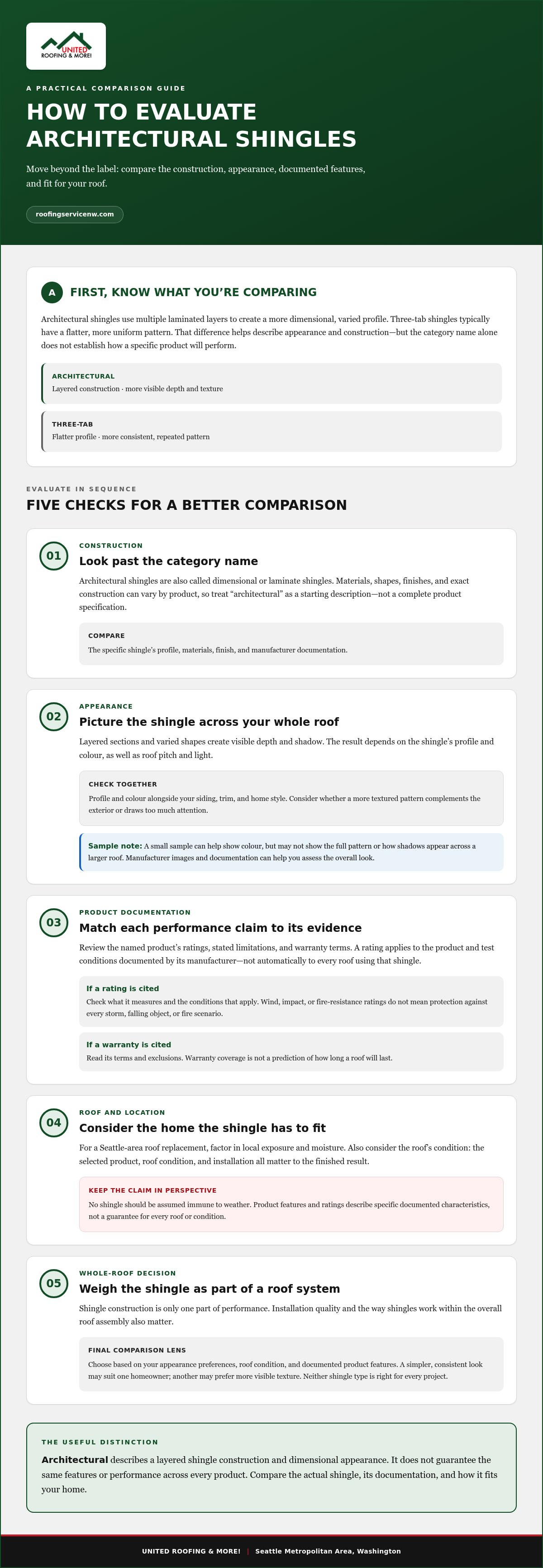
How to Evaluate Architectural Shingles for a Seattle-Area Home
A useful comparison starts with your roof, not an advertised claim. Decide what matters most: the look you want, the condition of the existing roof, or documented features that fit your project. In the Seattle Metropolitan Area, include the home’s exposure to rain and moisture in your planning. Local conditions are useful context, not proof that a particular shingle will prevent a specific problem.
A practical checklist for comparing product claims
Keep notes for each option so you can compare like with like. This checklist can make a roof replacement or installation conversation more focused:
- Set your roof goals. Note whether appearance, a particular documented specification, or matching the home’s existing style matters most.
- Record your visual priorities. Compare colour and profile with the siding, trim, and overall exterior. Consider the look across the full roof, not just on a small sample.
- Describe the existing roof. Note known issues, visible wear, and features such as valleys, edges, and penetrations that may shape project planning.
- Identify the exact product. Write down its name and gather the manufacturer’s available specifications, stated ratings, and warranty terms, including conditions or exclusions.
- Separate evidence from broad claims. Match performance statements to product documentation. Treat claims without manufacturer support cautiously rather than assuming they apply to every shingle in the category.
This process keeps the benefits of architectural shingles in perspective. You’re assessing a specific product against your priorities, not making a decision based on a category label alone.
Why local exposure and roof details matter
Seattle-area weather makes moisture and exposure sensible topics for a roofing discussion, but the regional setting can’t predict how an individual shingle will perform. Roof shape, pitch, ventilation, existing conditions, and installation details all help define the project. The full roof assembly matters too. Discuss how the selected product’s installation requirements fit the roof design, and keep the manufacturer’s instructions alongside the specification sheet.
Roof geometry can affect project planning. For related context, “How to Calculate Roof Pitch: A Guide for Marysville & Seattle Homeowners” covers roof pitch, while “Roof Drip Edge: The Essential Guard for Marysville Homes in 2026” discusses an edge detail in the broader roof system. Use these topics to inform your questions, not as a substitute for assessing the actual roof.
Bring your priorities and product notes into the planning conversation. United Roofing & More! serves the Seattle Metropolitan Area, including Marysville, Seattle, Renton, Everett, Lynnwood, Kirkland, Mount Vernon, Bothell, Edmonds, Shoreline, Sammamish, Redmond, Bellevue, Tacoma, and Kent. The company emphasizes clear communication throughout the roofing job. Get a Free Quote! to discuss roof replacement or installation.
Plan Your Roof Project with United Roofing & More!
Material research is most useful when it leads to a clear project plan. The benefits of architectural shingles depend on the selected product and the roof they’ll be installed on, so bring your priorities into the replacement or installation discussion. United Roofing & More! provides roof replacement and installation in the Seattle Metropolitan Area, Washington.
What to discuss when planning a shingle roof project
Before the conversation, organize the details you’ve gathered. A short list can help keep the discussion practical:
- Preferred appearance: Note the colours and profiles you like, and how they might complement your home’s exterior.
- Product claims: Bring the product name and available manufacturer documentation, including any stated ratings and warranty conditions you’re comparing.
- Project priorities: Identify what matters most, such as the roof’s appearance, the existing roof’s condition, or specific documented product features.
- Roof context: Mention known concerns and roof details that could affect replacement or installation planning.
These notes help distinguish a visual preference from a documented product feature. They can also surface practical questions about how the selected material fits the roof and project scope. For wider planning context, the guide Roof Replacement: The Complete Local Guide can help you think through the replacement process alongside your shingle research.
A productive discussion connects the material choice to the roof itself. The right comparison isn’t just a list of advertised benefits. It considers what you want from the finished roof, what the product documentation states, and how the project will be planned and installed.
A clear next step for Seattle-area homeowners
Roof work involves decisions as well as installation. United Roofing & More! emphasizes clear communication and stays in contact with customers throughout the roofing job. The founding team brings over 15 years of industry experience to its roofing work in the Seattle Metropolitan Area.
If you’re planning roof replacement or installation, a conversation can help bring your preferences and project details together. Free estimates or quotes are available for roof replacement, roof repair, or roof cleaning. Share what you’re considering and get straightforward guidance as you plan the next step.
Get a Free Quote!
Turn Your Shingle Research Into a Clear Roof Plan
The right choice isn’t the one with the longest list of advertised advantages. It’s the product and project plan that align with your priorities and your roof’s requirements. Use what you’ve learned about the benefits of architectural shingles to focus your next conversation: describe the look you want, bring the product details you’re considering, and ask how those choices fit the work.
A clear plan can make a roof replacement or installation feel more manageable. Start with the priorities that matter most, then consider how each product and installation plan fits your home. You don’t need to settle every detail at once.
Start planning your roof project with United Roofing & More! Get a free estimate for roof replacement, repair, or cleaning, and take the next step with a clear understanding of your options.
Frequently Asked Questions
Are architectural shingles better than three-tab shingles?
Architectural shingles may be a better fit if you prefer a more varied roof profile, while three-tab shingles suit a simpler, flatter look. Your priorities matter more than a universal ranking. If a particular wind or impact rating matters to you, compare the exact product documents. Also consider the roof’s current condition and project scope, since the shingle choice alone doesn’t determine how the completed roof performs.
How long do architectural shingles last?
There’s no single lifespan that applies to every architectural shingle. A lifespan statement is product-specific, so review the manufacturer’s documentation and warranty conditions rather than treating it as a forecast for your roof. Installation, roof design, and exposure also affect performance. For a useful comparison, put each product’s stated coverage and conditions side by side, then consider how they relate to your roof project.
Can architectural shingles withstand heavy rain and wind?
Some products have documented ratings for particular weather-related tests, but performance varies by product and roof. Check what a rating measures and any conditions attached to it. A general phrase such as “weather resistant” doesn’t promise protection in every storm. For a Seattle-area home, include the roof’s exposure and design in project planning, and remember that water management involves the full roofing system, not just the shingle surface.
Do architectural shingles add curb appeal?
They can add visual depth, but whether that improves your home’s curb appeal depends on the exterior and your taste. Compare the shingle’s colour and profile with the siding, trim, and architectural style. A dark, textured roof can make a different impression from a lighter, more uniform option. View samples or product imagery alongside your home’s exterior, and treat appearance as a design choice, not a promise of higher resale value.
Are architectural shingles energy efficient?
Architectural shingles aren’t automatically energy efficient because of their category. If energy performance is a priority, look for documented properties of the exact product and consider how they fit the complete roof assembly, including ventilation and other building conditions. A product claim alone can’t establish energy savings for your home. Look for evidence that applies to the specific shingle and roof design, and don’t assume a particular colour or profile will lower energy use.
Can architectural shingles be installed over an existing roof?
Sometimes, but it depends on the existing roof’s condition and construction, the selected product’s instructions, and applicable local requirements. Visible wear, damage, or uneven areas may affect whether another layer is suitable. Roof replacement planning should account for the actual assembly, not just the proposed shingle. Homeowners in Marysville, Seattle, Renton, Everett, Lynnwood, Kirkland, Mount Vernon, Bothell, Edmonds, Shoreline, Sammamish, Redmond, Bellevue, Tacoma, and Kent should keep local project conditions in view.


