
Black streaks can make a roof look worn, but their presence alone doesn’t prove the shingles are failing. So, do black streaks damage roof shingles? Often, they’re caused by algae and affect appearance first. The roof’s overall condition matters more than the stain by itself.
It’s reasonable to worry that the marks signal deterioration, or that cleaning could loosen shingles. Algae stains can look different from moss, lichen, and ordinary wear, and each calls for a different response. Moss can lift shingles and hold moisture, while algae is generally considered more of an appearance concern. Aggressive cleaning, especially pressure washing or scrubbing, can harm shingles.
This guide explains what black streaks may mean, what to look for before deciding on a next step, and why safe removal matters. You’ll also learn when roof cleaning may help and when roof repair may be more appropriate. United Roofing & More! serves the Seattle Metropolitan Area with roof cleaning and repair, clear communication, and free estimates. Get a Free Quote! to discuss your roof’s condition.
Key Takeaways
- Learn what the question “do black streaks damage roof shingles” can tell you, and why visible staining alone isn’t a diagnosis of roof damage.
- Use the streaks’ pattern and signs such as leaks or visibly damaged shingles to decide whether the issue needs more than cosmetic attention.
- Compare leaving stable stains alone, attempting surface treatment, and professional roof cleaning, including the risks of roof access and harsh cleaning methods.
- Understand when roof cleaning may address persistent staining and when roof repair is the more appropriate next step.
- Seattle-area homeowners can get a free quote from United Roofing & More! for roof cleaning or repair.
Do Black Streaks Damage Roof Shingles in the Seattle Area?
Usually, black streaks are discoloration, and seeing them alone doesn’t prove that asphalt shingles are damaged. The marks are often associated with Gloeocapsa magma, a type of cyanobacterium. Cyanobacteria are simple organisms that can make their own food using light. “Algae” is often used casually to describe roof growth, although this organism is technically a bacterium. For a plain-language overview, see Gloeocapsa magma on Wikipedia.
There’s debate about whether this growth directly harms asphalt shingles. The Asphalt Roofing Manufacturers Association says there’s no scientific evidence that algae damages asphalt shingles, while some accounts suggest it may affect the shingle’s limestone filler. That claim isn’t proof that every stained roof is deteriorating. A stain is a visible change in color; physical damage means a change to the shingle itself.
What causes black streaks on asphalt shingles?
Algae-related growth can appear as dark streaks or patches. Moisture and limited sunlight can support visible growth, so shaded roof areas may show staining differently from exposed sections. In Seattle, shade and moisture exposure are useful context, but they don’t establish the cause or severity of a stain. Streaks also can’t tell you a roof’s age or how much useful life remains.
The pattern is a clue, not a diagnosis. Similar-looking discoloration can have different causes, and staining may be limited to a few areas or spread across a roof. Look for changes in the roofing material and how the roof performs, not just the color. If you can’t assess the roof safely from the ground, don’t climb up for a closer look.
When could streaks be part of a larger roof concern?
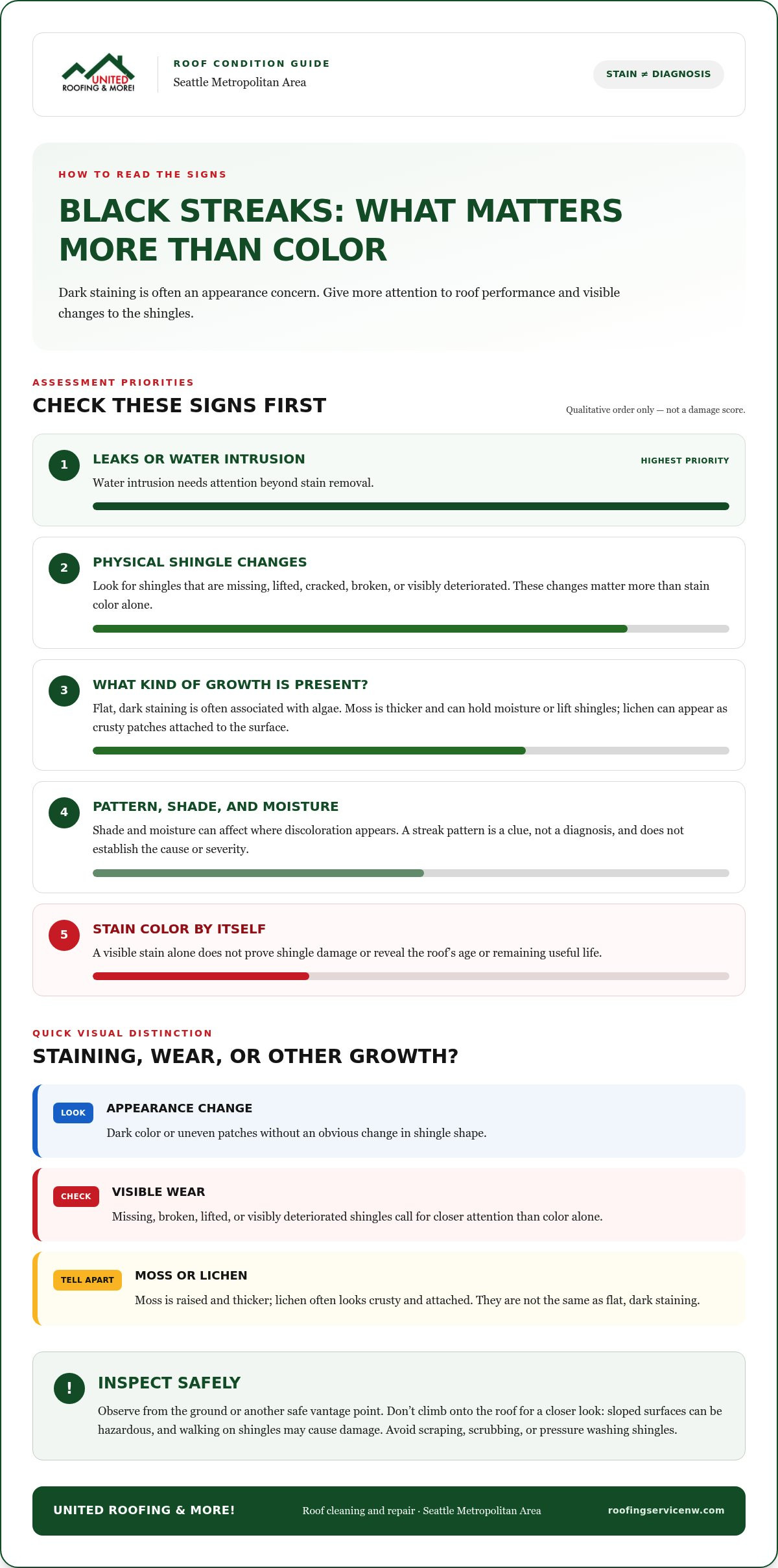
Pay attention to separate signs of physical trouble, such as shingles that are missing, lifted, cracked, or visibly deteriorated. Leaks or water intrusion also need attention beyond stain removal. Roof color alone can’t confirm structural or water damage, and removing a stain won’t repair a damaged shingle.
Moss and lichen aren’t the same as flat, dark algae staining. Moss forms a thicker growth and can hold moisture or lift shingles; lichen can appear as crusty patches attached to the surface. These growths may call for a different response than discoloration. Avoid scraping or scrubbing them, since forceful cleaning can harm shingles.
A visible stain isn’t evidence of physical shingle damage; changes to the shingles or roof performance need closer attention. If you’re unsure what you’re seeing, an assessment can help distinguish cleaning needs from roof repair. United Roofing & More! provides roof cleaning and roof repair in the Seattle Metropolitan Area, along with free estimates. Call now for FREE Estimate!
How Black Streaks Form, and What They Say About Shingle Condition
Dark marks can vary in shape, location, and intensity. Some appear as narrow lines that follow the slope; others look like broad, uneven patches. These patterns help describe what you see, but they don’t identify the cause with certainty. Sun exposure, moisture, roof orientation, nearby shade, and surface conditions can all affect where discoloration appears.
How algae-related discoloration develops
Algae-related growth can create dark staining on asphalt shingles. As moisture moves down a sloped roof, it may leave or reveal streak-like patterns along the shingle surface. Growth can look more pronounced in shaded areas that stay damp longer, while sunnier or more exposed sections may look different. Seattle-area homeowners can consider shade and moisture as context, not proof of a particular cause.
Dark marks don’t mean algae is necessarily eating or weakening the shingles. Claims about damage should be treated cautiously; the pattern alone can’t confirm what’s happening to the roofing material underneath. Dark streaks can suggest algae-related discoloration, but they can’t prove shingle damage, roof age, or remaining service life.
How to distinguish staining from visible wear
Staining changes the roof’s appearance, while visible wear changes the roofing material’s shape or surface. From the ground, look for clear differences such as missing sections, shingles that appear lifted, broken edges, or areas that look worn compared with nearby shingles. These signs matter more than stain color alone. Ordinary aging can also change a roof’s appearance, so don’t rely on color to estimate its condition.
Other growths can look different from flat, dark staining. Moss is thicker and raised, while lichen often appears as crusty spots attached to the roof. Neither should be mistaken for ordinary shingle discoloration. A dark streak beside moss, lichen, or visibly worn shingles may need closer evaluation, but appearance alone can’t diagnose hidden damage.
- Staining: Dark color or uneven patches without an obvious change in shingle shape.
- Visible wear: Missing, broken, lifted, or deteriorated shingles.
- Other growth: Raised moss or crusty lichen, rather than a flat stain.
Observe from the ground or another safe vantage point. Don’t climb onto a roof to inspect marks; sloped surfaces can be hazardous, and walking on shingles may cause damage. If you notice visible wear, leaks, or water stains inside the home, arrange a professional assessment rather than treating the issue as a cleaning problem alone.
For persistent staining, Seattle roof cleaning may help address the appearance. Roof repair is the relevant next step when an assessment identifies actual damage. United Roofing & More! offers both services in the Seattle Metropolitan Area. Get a Free Quote!
Black Streak Removal Compared: What Is Safe for Roof Shingles?
Whether to clean black streaks depends on more than appearance. Consider how widespread the staining is, whether the shingles look intact, and whether you can view the roof safely. If the shingles appear stable and there are no signs of leaks or other problems, leaving the stain alone may be reasonable. Discoloration doesn’t automatically require cleaning.
It can be tempting to treat an easy-to-see patch from a ladder or the roof surface. That adds risk without confirming what caused the marks. Avoid experimenting with household cleaners, mixing chemicals, or using a treatment that isn’t supported by the shingle manufacturer’s guidance. The wrong product or technique can harm the roofing surface, and runoff also needs careful management.
Why pressure washing and aggressive scrubbing can be risky
High-pressure water can dislodge the protective granules on asphalt shingles, while scrubbing can abrade or disturb the surface. The Asphalt Roofing Manufacturers Association warns against pressure washing asphalt shingles, and the National Roofing Contractors Association cautions against scrubbing moss from roofs. Follow the guidance for your specific shingles, and don’t assume a method is safe simply because it removes visible growth.
Roof access adds another concern. A sloped surface can be slippery, and a ladder can shift if it isn’t set up securely. Keep your inspection on the ground. If cleaning requires climbing or reaching across a roof, leave the work to trained professionals.
When professional roof cleaning is a better fit
Professional cleaning may be a better option when staining covers a broad area, the roof is difficult to access, or you’re uncertain how to treat its surface. A professional can consider the roof’s condition and an appropriate next step instead of relying on forceful cleaning. United Roofing & More! offers roof cleaning in the Seattle Metropolitan Area, with a free estimate and clear communication.
There are three practical paths to consider:
- Leave stable staining alone: This avoids cleaning-related risk when the shingles appear intact and the marks are primarily cosmetic.
- Try a homeowner treatment: This may seem convenient, but it can create safety and shingle-damage risks. Don’t proceed without following the shingle manufacturer’s care instructions.
- Arrange professional roof cleaning: This can suit widespread staining or roofs that are unsafe or difficult to reach. Results depend on the roof and the type of growth, and cleaning isn’t a substitute for repair.
If shingles are missing, cracked, or lifted, or you’ve noticed a leak, focus on an assessment rather than stain removal. Roof repair is appropriate when actual damage is identified; replacement isn’t automatic because streaks are present. For a careful next step, explore professional roof cleaning from United Roofing & More! Get a Free Quote!
How to Decide What to Do About Black Streaks on Your Roof
Use a simple sequence: look safely, note any symptoms beyond discoloration, then decide whether cleaning or a professional assessment makes sense. The question “do black streaks damage roof shingles” can’t be answered by color alone. Your next step depends on what you can see about the shingles and how the roof is performing.
What homeowners can check safely from the ground
Choose a spot on the ground or another secure vantage point with a clear view. Note whether the marks are isolated or spread across several roof areas, and look for shingles that appear missing, curled, lifted, or broken. From inside, watch for water stains on ceilings or walls. These observations can help describe the concern, but they can’t confirm where a leak starts or what’s happening beneath the roof surface.
Don’t climb onto the roof for a closer look. Wet or sloped surfaces can be hazardous, and walking on shingles may cause damage. Seattle-area roofs can experience moisture and shade, but exposure varies by home, tree cover, and roof orientation. Local conditions provide context, not proof that every streak has the same cause.
When staining calls for cleaning, repair, or further evaluation
If the shingles appear intact and the concern is mainly surface discoloration, roof cleaning may be an option. Avoid treating the stain with pressure washing, scrubbing, or an improvised chemical mixture. A cleaning approach should account for the roof material and its manufacturer’s care guidance. If staining covers multiple areas or the roof is difficult to access, professional roof cleaning can provide a safer next step.
Visible damage or signs of water intrusion change the priority. Missing, broken, or lifted shingles, or a ceiling stain that appears after rain, call for evaluation beyond cosmetic cleaning. Roof repair may be appropriate when an assessment identifies actual damage. A dark stain alone doesn’t establish that repair or roof replacement is needed, and cleaning won’t correct a damaged shingle.
- Observe from a safe place. Note where the streaks appear and whether shingles look altered.
- Record other symptoms. Include visible shingle damage or interior water stains, without assuming their cause.
- Choose the next step. Consider cleaning for a mainly cosmetic concern; seek professional evaluation for leaks or visible wear.
If an assessment confirms widespread deterioration, replacement may be part of the discussion. The roof replacement guide can help you understand that option. Streaks by themselves don’t make the decision. United Roofing & More! offers roof cleaning and repair in the Seattle Metropolitan Area, with a free estimate and clear communication. Call now for FREE Estimate!
Seattle-Area Roof Cleaning: Get a Clear Next Step from United Roofing & More!
Black streaks can be frustrating, but their color alone doesn’t show whether shingles are damaged. A roof with discoloration and intact shingles may call for a different response than one with missing or deteriorated shingles, or signs of a leak. So, do black streaks damage roof shingles? Staining by itself doesn’t answer that. The roof’s condition and performance help determine whether cleaning, repair, or further evaluation is the right next step.
United Roofing & More! serves homeowners in the Seattle Metropolitan Area with roof cleaning and roof repair. These are distinct options: cleaning addresses surface staining, while repair is relevant when there’s actual damage or a leak concern. Visible streaks alone don’t mean you need roof repair or replacement.
What to expect when discussing roof cleaning
When requesting an estimate, describe where the streaks appear and whether they’re isolated or spread across multiple roof areas. You can also mention visible concerns, such as shingles that look broken or lifted, or water stains indoors. You don’t need to climb onto the roof to gather this information. A ground-level view and a clear description can explain what prompted your request.
United Roofing & More! provides free estimates for roof cleaning and roof repair. The estimate gives you a chance to discuss the concern and consider a suitable next step without assuming that every dark mark needs treatment. If staining is the main issue and the shingles appear intact, roof cleaning may be worth discussing. Get a Free Quote!
When roof repair may be the right next step
Leaks, missing shingles, or visible deterioration call for attention beyond cosmetic stain removal. A stain on the roof doesn’t establish the source of a leak, and cleaning won’t correct a damaged shingle. Roof repair is an option when there are signs of physical damage or water intrusion. The appropriate response depends on the roof’s condition, not stain color alone.
Seattle-area homes have different roof designs, shade, and exposure to moisture. Those differences can affect what homeowners notice, but they don’t mean every roof has the same cleaning or repair needs. Focus on what you can safely observe, and share those details when discussing your roof concern.
United Roofing & More! emphasizes clear communication and stays in contact with customers until the roofing job is done. Whether your concern points toward roof cleaning or roof repair, you can discuss the issue and request a free estimate. For a straightforward next step in the Seattle Metropolitan Area, Call now for FREE Estimate!
Take the Next Step With Confidence
A roof concern doesn’t have to turn into guesswork. If you’re still asking, “do black streaks damage roof shingles,” focus on making a clear, informed decision for your home rather than rushing into cleaning or repair. Note what you’ve observed from a safe vantage point, then share those details when discussing the roof. A measured conversation can help you choose an option that fits its condition.
United Roofing & More! serves homeowners in the Seattle Metropolitan Area. The founding team brings over 15 years of industry experience, and the company offers roof cleaning and roof repair with clear communication throughout the job. Request a free quote and take the next step with a team ready to help you understand your options.
Get a Free Quote! Your roof deserves a thoughtful response, and getting started can be simple.
Frequently Asked Questions
Do black streaks damage roof shingles, or are they only cosmetic?
Usually, black streaks are discoloration, but the question “do black streaks damage roof shingles” can’t be answered by color alone. Staining doesn’t prove the shingles are deteriorating. Pay attention to separate changes, such as cracking, missing pieces, or leaks inside the home. If those appear, the roof needs attention beyond cleaning. An assessment can help distinguish a surface concern from a problem affecting the roofing system.
Can I remove black streaks from my roof myself?
It’s safer not to climb onto the roof or apply a treatment without checking the shingle manufacturer’s care guidance. Roof surfaces can be slippery, and walking on shingles may disturb them. Don’t mix household chemicals or try an unverified cleaner. From the ground, you can document where the marks appear and whether they’re changing. For roof-surface work, professional cleaning avoids putting you on a ladder or sloped roof.
Does pressure washing remove black streaks from roof shingles safely?
No. Pressure washing may remove visible growth, but the force can dislodge protective granules and harm asphalt shingles. The Asphalt Roofing Manufacturers Association warns against pressure washing shingle roofs. Avoid using a pressure washer even if the marks seem stubborn or the roof looks sturdy. If one has already been used, don’t assume the roof is damaged, but have visible granule loss or newly exposed areas assessed.
Are black streaks algae, moss, or something else?
Flat, dark discoloration is often associated with algae-related growth, while moss usually looks raised and soft, and lichen often forms crusty patches. The distinctions aren’t always easy to see from the ground, and other causes of discoloration are possible. Avoid scraping or touching growth to identify it. If the surface looks uneven or the material seems altered, describe what you can see and have the roof assessed safely.
When should I call a roofer about black streaks or roof damage?
Contact a roofer if the roof has missing, cracked, or lifted shingles, or if you notice a ceiling stain, damp area, or signs of a leak. These symptoms deserve attention beyond cosmetic cleaning. A stain appearing after a storm is worth documenting, but it doesn’t identify the source of water. Share when the concern began and which areas look affected so the issue can be discussed clearly.
Can roof cleaning remove black streaks in the Seattle area?
Professional roof cleaning may address surface staining, but results depend on the roof and the type of growth. Cleaning also needs to account for runoff: Seattle’s Stormwater Manual says pollutants such as soaps and detergents shouldn’t enter the public drainage system. Roof conditions vary across Seattle, Bellevue, Renton, Everett, Lynnwood, Kirkland, Mount Vernon, Bothell, Edmonds, Shoreline, Sammamish, Redmond, Tacoma, Kent, and Marysville, so the appropriate approach can differ by home.
Do black streaks mean I need to replace my roof?
No. Streaks alone don’t establish that replacement is necessary. The decision depends on the roof’s overall condition, including whether shingles are deteriorated, leaks are present, or damage is widespread. A roof with discoloration and otherwise sound shingles may need a different response from one with extensive wear. Have the roof’s condition assessed before deciding on replacement, rather than treating dark color as a measure of remaining life.


