

Reflective TPO roofing can help limit heat absorption on low-slope commercial roofs in Redmond, supporting energy efficiency in warmer months. This single-ply membrane can be installed as a replacement roof or repaired if its seams or surface are damaged. When choosing a roofing contractor, it’s reasonable to want clear information about licensing and insurance.
Learn how TPO installation and replacement work, what membrane repairs can address, and how reflective roofing may help reduce cooling costs. The right approach depends on the roof’s condition, drainage, seams, and other factors that affect performance.
This guide explains roofing services in Redmond and nearby Washington communities, and when installation, replacement, or repairs may be the right next step. You’ll get a practical overview without a promise that reflective roofing will deliver the same energy results for every building.
Key Takeaways
- Learn what careful membrane alignment, secure seams, flashing, and drainage contribute to a TPO installation or replacement.
- See how a reflective roof surface can reduce heat absorption and support cooling efficiency during warmer months.
- Understand which roof conditions can guide a choice between repairing a damaged area and replacing more of the membrane.
- Explore roofing options for Redmond and nearby communities, including when installation, repairs, or replacement may help.
TPO roof installation and replacement
TPO is a single-ply membrane used on low-slope commercial roofs. Its lightweight, flexible construction suits buildings such as warehouses and retail spaces. A well-planned installation accounts for the roof structure, insulation, flashing, and drainage. These elements help the membrane function as a complete roofing system, not just a surface covering.
Compared with EPDM, PVC, and modified bitumen, TPO has a reflective surface that can reduce heat absorption, and its seams are hot-air welded. PVC seams are also hot-air welded. TPO’s advantages include lightweight construction and durability, while punctures, seam separation, and surface wear are potential repair concerns. No single membrane suits every roof, so compare systems based on the building’s structure, drainage, and repair needs.
For a TPO roof replacement in Redmond, applicable permit and building-code requirements depend on the project scope and existing roof assembly. Changes to the roof structure and other project details can affect what applies, so plan around the specific conditions rather than assuming every replacement follows the same process.
Installation starts with assessing the existing commercial roof and preparing the surface. The membrane must be aligned, secured, and joined with sealed seams. Installers also need to address flashing around rooftop vents and keep drainage paths clear. Commercial drains channel rainwater away, while pooling water can contribute to leaks and interior damage.
Replacement may involve installing TPO over an existing commercial roof structure or replacing the existing system. The roof’s condition, insulation, drainage, and suitability for the new assembly help determine the approach. A thorough assessment shows whether the existing roof can support the planned work.
Watch for punctures, separated seams, surface wear, and standing water. For a repair, identify the damaged area and assess whether the membrane and surrounding roof remain sound. Addressing damage early can help protect the building interior and limit disruption.
Townhome owners and property managers can follow the same practical checks: look for leaks, membrane damage, or drainage problems, then arrange roof repairs before water reaches interior spaces. Related flat-roof membrane work also requires attention to seams, flashing, insulation, and drains. These details matter across low-slope roofing systems.
Energy efficiency and sunlight reflection
A white TPO surface reflects sunlight rather than absorbing as much heat, which may help reduce cooling costs in warmer months. For a Redmond commercial building, the effect depends on more than membrane color. Insulation, roof condition, cooling needs, and building use all influence energy performance. Reflection can help, but it does not replace a sound roof assembly.
Start by considering the roof assembly. Note the existing insulation, signs of moisture, drainage paths, and areas exposed to direct sun. A warehouse with limited insulation may respond differently from a retail space with different cooling needs. These details help owners understand how reflective roofing may fit and what else could affect indoor temperatures.
Compare the roof’s current material and condition before planning installation or replacement. A dark metal roof, shingles, and a white membrane interact with sunlight differently, but surface color alone does not determine the best choice. Consider the roof’s structure, slope, drainage, and existing insulation together. TPO’s durability and reflective surface may suit a low-slope commercial roof, but the full assembly still needs to match the building.
After installation, keep drains clear and address membrane damage promptly. Pooled water or a compromised surface can undermine roof performance, regardless of reflectivity. Track surface wear, drainage, and insulation-related concerns over time. This practical review can help distinguish a roofing issue from broader cooling challenges inside the building.
For a property considering a reflective membrane, roof installation and replacement planning should include both the existing assembly and energy goals. A roof inspection can identify conditions that affect the decision, such as deteriorated insulation or drainage trouble. If you’re assessing next steps for a commercial roof, explore roofing installation and replacement options alongside the building’s specific needs.
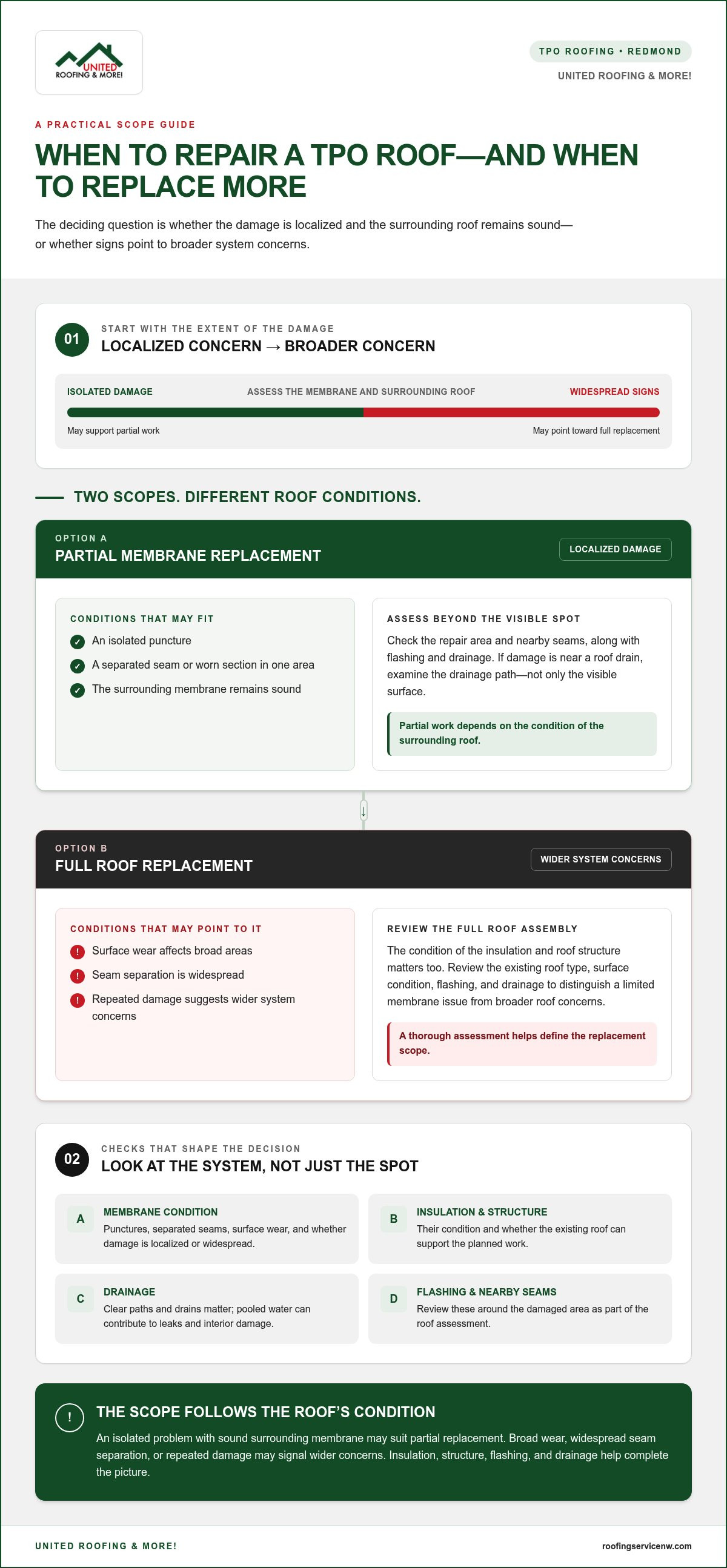
Partial membrane replacement versus full replacement
A TPO membrane combines polypropylene and ethylene-propylene rubber. It is lightweight, flexible, and strong, with resistance to punctures, ultraviolet exposure, and chemical damage. These properties suit flat roofs on commercial buildings, but the membrane is not immune to wear. An assessment can help determine whether damage is localized or widespread.
Partial replacement may suit a roof with an isolated puncture, separated seam, or worn section when the surrounding membrane remains sound. The repair area and nearby seams need assessment, along with flashing and drainage. For example, damage near a roof drain may require examining the drainage path, not just patching the visible surface.
Full replacement may make more sense when surface wear or seam separation affects broad areas, or repeated damage points to wider system concerns. The condition of the insulation and roof structure also matters. A sound assessment can distinguish a limited membrane problem from issues affecting the entire flat roof.
Older asphalt or asphalt shingle roofs have different assemblies from single-ply TPO systems. A commercial building’s existing roof type, surface condition, insulation, drainage, and flashing all shape replacement planning. Reviewing those details helps determine whether localized work can address the issue or broader replacement is appropriate.
What affects TPO roofing costs in Redmond? The price depends on the affected area, existing membrane condition, insulation, drainage details, and project scope, and is provided after a quote request. When comparing partial and full replacement, weigh the damaged area against the condition of the surrounding roof system.
Before deciding, document visible concerns such as surface wear, a puncture, or separated seams. Then have the roof, drainage, flashing, and insulation assessed together. This gives property owners a clearer basis for choosing targeted membrane work or full replacement, rather than treating every roof issue as the same repair.
Roofing services in Redmond and nearby communities
Roofing needs vary across Redmond and nearby communities. Match the service to the roof’s condition and the damage you can see.
Redmond and Nearby Service Areas
For a Redmond home, townhome, or commercial property, roof repair can address damage before it spreads indoors. Weather exposure, membrane wear, and drainage problems affect roofing systems in different ways. When arranging service, describe the affected roof area and visible signs, such as a leak or seam damage.
Nearby properties may have low-slope commercial roofs or other roof types. Identify whether the concern involves a membrane, flashing, or drainage, and note where water appears inside. This information helps focus the assessment and match the work to the roof instead of treating every problem as the same repair.
Bid and Warranty Comparisons
Compare written bids by checking whether each describes the same work area, damage, materials, and preparation. Look for details on membrane replacement, flashing, insulation, and drainage, as well as what the estimate includes. A clear scope makes it easier to understand differences between proposed roofing systems and the work each price covers.
For warranties, compare the written coverage, exclusions, and responsibilities for future repairs. Check whether the terms address membrane seams, flashing, and installation work. Base comparisons on the actual scope and warranty language, not just a headline price or broad claim about resistance.
Before choosing, gather the estimate, assessment findings, and warranty terms. Check that the documented damage matches the proposed repair or replacement. For example, a bid focused on one damaged area should explain the work there, while a broader roof replacement should describe its wider scope. This makes the options easier to compare.
If weather or visible damage has you concerned, request roofing help for your property. Share the roof type, location of the damage, and any inspection findings to make the next step more focused.
United Roofing & More!: Roof Replacement
United Roofing & More! provides commercial roof installation, repair, and replacement. If a TPO membrane has widespread wear, recurring seam problems, or damage beyond a localized repair, roof replacement may be the next step. For an isolated issue, roof repairs can address the damage without replacing the entire system.
Discuss the roof’s condition, drainage, insulation, and project scope to understand which approach fits. Roofing financing is available to help manage project costs. The right next step depends on the building’s roofing needs and the work required, not simply the visible membrane damage.
For help with TPO roofing, repairs, or replacement in the Redmond area, contact United Roofing & More!.
Plan a Clear Next Step for Your Roof
Make your next roofing decision based on a clear picture of the building’s needs. Note where you’ve seen leaks or visible wear, what questions remain, and whether your priority is repair or a longer-term roof plan. For Redmond TPO roofing, a focused conversation can connect those observations to a practical project scope.
Gather your notes before discussing the work. Include the roof areas involved, any past repairs, and the concerns that matter most to your property. This gives you a useful starting point for discussing options and understanding what the proposed work addresses.
United Roofing & More! can discuss roof installation, replacement, and financing in relation to your project. Contact United Roofing & More! to talk through your roofing needs and take the next step with confidence.
Frequently Asked Questions
Are you licensed and insured?
United Roofing & More! provides roofing services, but I can’t state that it is licensed and insured based on the business details available here. A roofing service offering doesn’t establish either credential. Licensing and insurance are separate matters, so don’t treat roof replacement, installation, or repair services as proof of a particular licensing or insurance status.
Can you weld new TPO to an older membrane?
Yes, new TPO can be hot-air welded to an older TPO membrane when the materials are compatible and the existing surface can accept a sound seam. The joining area must be prepared and assessed before welding. If the old membrane is deteriorated or contaminated, that can affect the repair approach and seam quality.
What is TPO roofing?
TPO roofing is a single-ply membrane system used on low-slope commercial roofs. Its membrane is made from polypropylene and ethylene-propylene rubber. For example, a warehouse roof may use TPO as its weather-facing layer over insulation. The complete roof assembly, including seams, edges, and drainage, helps protect the building from water intrusion.
What is TPO roofing and how does it work?
TPO forms a continuous membrane over a roof assembly. Installers join membrane sections with hot air, then detail edges and roof penetrations to help water drain away. For example, correctly fitted flashing helps close the gap around a rooftop vent. The membrane, seams, flashing, and drainage work together as a roofing system.
Which Redmond roofing contractors install or repair TPO roofs?
United Roofing & More! offers roofing, installation, and repair services in Redmond and communities including Bellevue, Kirkland, Sammamish, Seattle, Bothell, Everett, Marysville, Renton, Lynnwood, Mount Vernon, Edmonds, Shoreline, Tacoma, and Kent. For a TPO project, describe the roof concern and whether you need installation or repairs.
How long does a TPO roof last in the Pacific Northwest climate?
A TPO roof’s service life depends on installation quality, membrane condition, drainage, exposure, and how promptly damage is addressed. In the Pacific Northwest, property owners can watch for separated seams, punctures, surface wear, or standing water. These signs can reveal developing roof problems, but they don’t by themselves determine the remaining service life of the entire roofing system.


