
The shingle rating is only part of what drives the installed total. Impact-resistant shingles cost more than standard options, but the final price also depends on the roof’s size, pitch, materials, labor, and whether old roofing needs to be removed. Class 4 describes a tested level of impact resistance, not a promise that a roof can’t be damaged.
It’s reasonable to want a clearer picture before choosing a roofing material. This guide explains what an installed estimate can include, how Class 4 shingles are tested, and how impact-resistant shingles may help protect against hail and other weather hazards.
You’ll also see how roof design and project scope affect the installed total, and how to weigh impact resistance against your home’s exposure to severe weather. Use this as a practical starting point, and distinguish shingle material from the full installation project.
Key Takeaways
- Compare the full installed estimate, not just the shingle material cost; roof size, design, labor, and removal work all shape the project total.
- Class 4 identifies a tested impact-resistance level. It doesn’t mean a roof is immune to damage.
- Impact-resistant shingles are designed to better withstand hail impacts, but the rating alone doesn’t describe protection from every weather hazard.
- Consider your roof’s exposure to severe weather alongside the added cost, and understand what the installation scope includes before choosing materials.
What Is an Impact-Resistant Roof?
Impact-resistant shingles are tested for their ability to withstand impacts. Their class rating helps compare tested performance, but roof design and installation also shape the finished roofing system.
Impact-Resistance Ratings and Testing
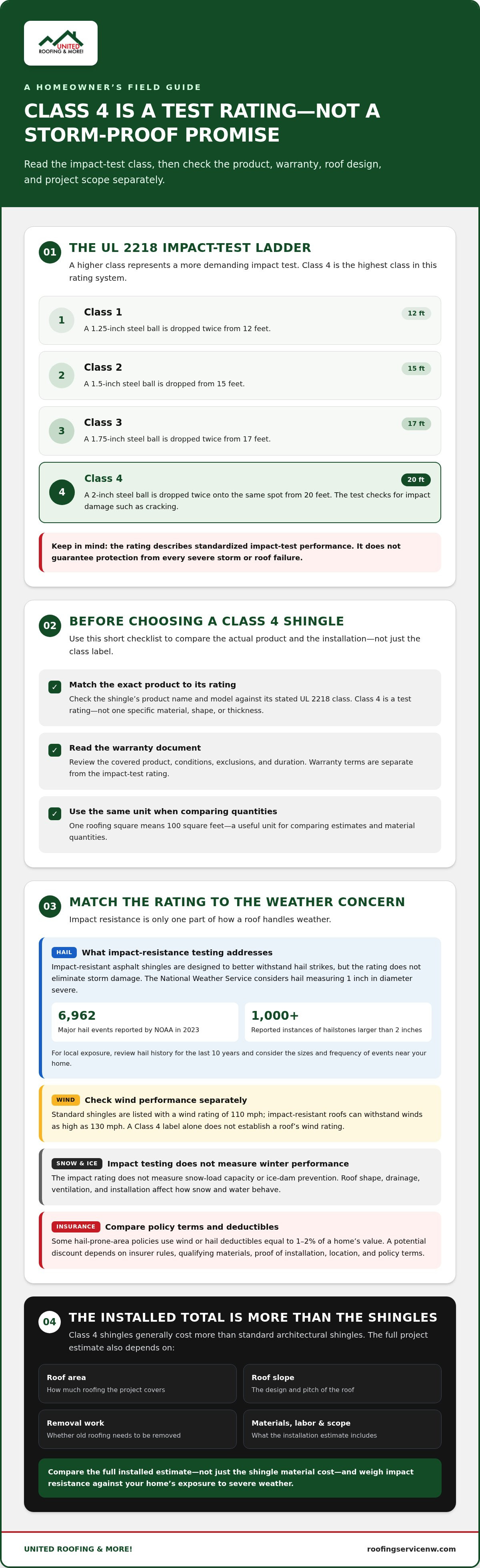
An impact-resistance rating indicates how shingles perform in standardized impact testing, helping homeowners compare products before choosing a roofing material. Under UL 2218, ratings run from Class 1 through Class 4. Class 1 testing uses a 1.25-inch steel ball dropped twice from 12 feet; Class 2 uses a 1.5-inch ball from 15 feet. Class 3 uses a 1.75-inch steel ball dropped twice from 17 feet.
For Class 4, a 2-inch steel ball is dropped twice onto the same spot from 20 feet. The test assesses whether impact causes damage such as cracking. A higher class represents a more demanding test, not a guarantee against every severe storm or roof failure.
Shingle Specifications and Class Costs
Class 4 describes a test rating, not one particular shingle material, shape, or thickness. Product specifications vary, so compare the named class and the product’s own warranty terms rather than assuming every Class 4 shingle is identical. A roofing square means 100 square feet, a useful unit for comparing estimates and material quantities.
Class 4 shingles generally cost more than standard architectural shingles, reflecting the impact-resistance upgrade. The installed total also depends on roof area, slope, removal work, and installation scope. U.S. permits and building-code requirements depend on the local jurisdiction and project, so there isn’t one nationwide rule that applies to every roof. Tax credits or rebates depend on specific programs and eligibility terms; don’t assume installation automatically qualifies.
Verifying Ratings and Warranty Coverage
Before selecting shingles, match the exact product name and model to its stated UL 2218 class rating. Then read the warranty document for the covered product, conditions, exclusions, and duration. Those details help distinguish a Class 4 test rating from the separate terms governing warranty coverage.
These are separate considerations: the rating reflects impact testing, while the roof’s condition and upkeep affect maintenance needs over time.
What is a Class 4 roof?
A Class 4 roof uses shingles that meet the highest impact-resistance class in the UL 2218 rating system. For homeowners, that rating can matter beyond durability: some insurers offer premium discounts for qualifying impact-resistant roofing materials. The discount is a policy benefit, not part of the roof itself, so compare the insurance terms separately from the shingle specifications.
Potential insurance discounts range from 5% to 30% off the premium. The listed potential annual insurance savings are $100 to $500. These figures illustrate possible savings, not a set reduction for every homeowner in Washington or the Seattle area.
Insurers can assess discount eligibility using details such as:
- The impact-resistance class documented for the installed shingles.
- The insurer’s rules for qualifying roofing materials and proof of installation.
- The home’s location and the policy’s coverage and premium terms.
- Whether the policy applies a discount to the full premium or a portion.
These factors help explain why a national estimate can’t predict an individual policy’s savings. A Class 4 designation may support an eligibility review, while the insurer’s rules determine the premium adjustment. The roof’s ability to withstand impacts and the policy’s terms are distinct considerations. Severe weather exposure can make impact resistance appealing, but peace of mind shouldn’t be confused with guaranteed insurance savings.
Compare any potential reduction with the roofing upgrade cost and the premium you actually pay. An estimated $400 to $800 annual reduction could repay the upgrade in 2 to 4 years, based on the listed estimate; your own calculation depends on the project and policy. If a roof project is on your horizon, explore roofing services as part of your planning.
Hail, wind, snow, and ice protection
Impact-resistant asphalt shingles are designed to better withstand hail strikes, not eliminate storm damage. Class 3 testing uses a 1.75-inch steel ball, while Class 4 uses a 2-inch ball. The rating gives a comparison point for hail resistance. It doesn’t mean every shingle will avoid damage during severe weather or repeated storms.
Hail is a real roofing concern across the United States. NOAA reported 6,962 major hail events in 2023 and over 1,000 instances of hailstones larger than 2 inches. The National Weather Service considers hail measuring 1 inch in diameter severe. To understand local exposure, review hail history for the last 10 years and consider the sizes and frequency of events near your home.
Wind performance is a separate consideration from impact resistance. Standard shingles are listed with a wind rating of 110 mph, while impact-resistant roofs can withstand winds as high as 130 mph. A Class 4 label alone doesn’t establish a roof’s wind rating. Review the specific roofing materials and installation details as separate parts of storm protection.
Snow and ice create different demands. Impact testing measures resistance to strikes, not snow-load capacity or ice-dam prevention. Roof shape, drainage, ventilation, and installation affect how snow and water behave. An impact rating may indicate hail resistance, but it does not mean broad protection from every winter hazard.
Insurance terms also matter after storms. Some hail-prone-area policies use wind or hail deductibles equal to 1-2% of a home’s value. Compare the deductible with your policy’s coverage before weighing possible savings from impact-resistant materials.
Consider the shingle’s impact rating and wind performance alongside your area’s hail history and your insurance deductible. A home frequently exposed to large hail may face different risks from one mainly exposed to winter ice. This comparison helps you weigh impact protection against the weather your roof actually faces.
Installed cost of impact-resistant shingles
The installed total covers the roofing project, not just the shingle rating. When comparing estimates, review the materials, labor, roof conditions, and work included.
Installed Shingle Costs
An installed estimate combines shingles with the labor and project work needed to put them in place. That distinction matters because material-only figures don’t describe the complete roof replacement. Class 4 shingles are an upgraded roofing material, so compare estimates using the same shingle class and scope.
A roofing square equals 100 square feet. For example, a 2,000-square-foot roof measures 20 squares before adjustments for roof shape and details. Ask for the estimate to show shingle quantities and installation work separately. This makes it easier to see whether two proposals cover comparable materials and labor.
Roof Size, Pitch, and Removal Costs
Roof area determines how many shingles and how much labor the project requires. Pitch and layout matter too: steep slopes, multiple sections, valleys, and roof openings can make installation more involved. A home’s floor area does not necessarily equal its roof area, so estimates should be based on measured roofing surface.
Removing existing shingles adds labor and disposal work to a replacement project. The roof’s underlying condition can also affect the scope if repairs are needed. The estimate reflects the specific project, including roof size, pitch, removal, access, shingle selection, and necessary repairs.
Compare the full scope before deciding whether the impact resistant shingles cost fits your plans. Request a roofing quote to discuss roof replacement needs and project factors.
United Roofing & More!: Roof Replacement
United Roofing & More! provides roof replacement and installation for homeowners considering impact-resistant shingles. If shingles are damaged, roof repairs can address the problem. If replacement is needed, discuss the roof’s condition, material selection, and project scope together.
A project estimate helps you compare material options and understand the work involved. Roofing financing is available to help manage the project. The next step depends on whether your roof needs repairs or replacement and on the installation work required.
Contact United Roofing & More! to discuss your roofing project.
Make your next roofing decision with confidence
A decision about impact-resistant shingle cost should fit your wider plans for the home, not just a single material choice. Consider how long you expect to stay, what roof work is due, and which concerns matter most to your household. Those priorities can help you plan a practical project for now and the years ahead.
Before moving forward, gather your questions and discuss the project scope, material options, and financing needs. A clear conversation can help you understand the choices for your roof and decide what suits your situation. You don’t need to settle every detail before beginning that discussion.
United Roofing & More! can help you explore the next step for your roof. Contact United Roofing & More! to talk through your project and move ahead with a plan that feels right for your home.
Frequently Asked Questions
What Are Class 4 Shingles?
Class 4 shingles are roofing shingles assigned the top impact-resistance class in the UL 2218 system. The rating describes impact-test performance, not every feature of a complete roof. It doesn’t by itself tell you the roof’s wind rating, snow handling, installation quality, or warranty terms. Compare the product’s documented class separately from other roof-system specifications.
Who Should Upgrade to Class 4?
Homeowners in areas with recurring hail exposure, or those planning a roof replacement, should consider whether a higher impact class fits their priorities. Weigh local hail patterns, the roof’s age, material options, and the project budget. Class 4 focuses on impact resistance. It isn’t automatically the best choice for every home, especially where wind, snow, or other roofing needs matter more.
How much do impact-resistant shingles cost per square foot installed in the U.S.?
Installed pricing varies by project, so no single rate applies to every roof in the United States. Roof area, pitch, shingle selection, removal work, access, and repairs all affect the estimate. Compare the installation scope and material specifications, rather than judging an estimate by its per-square-foot figure alone.
What is the average total cost to replace a roof with Class 4 impact-resistant shingles?
A roof replacement estimate depends on the measured surface area, design, selected shingles, removal needs, and any repairs. A home’s floor area alone does not establish the roofing quantity, because roof shape and pitch affect the surface to be covered. In Marysville, Seattle, Renton, Everett, Lynnwood, Kirkland, Mount Vernon, Bothell, Edmonds, Shoreline, Sammamish, Redmond, Bellevue, Tacoma, or Kent, contact United Roofing & More! for a free quote.
How do impact-resistant shingle prices compare with standard asphalt shingles?
Impact-resistant shingles generally cost more than standard asphalt shingles because they offer a higher level of tested impact resistance. Compare estimates covering the same roof area, removal work, installation scope, and related repairs. This helps you see how much of the difference reflects the material and how much comes from the work included.
What are the differences between Class 3 and Class 4 impact-resistant shingles?
Class 4 represents a higher impact-resistance rating than Class 3, so the two classes aren’t interchangeable when comparing products. The practical distinction is the level of impact testing each rating represents. If hail resistance is a key concern, compare the exact class shown for each shingle. Don’t assume either rating describes performance against wind, snow, or ice.


