

Fall is often the best time of year to replace a roof. Shingles typically need temperatures above 40-45°F to seal correctly, so weather and roofing material also help determine the right installation window. For apartment building roofing contractors in Kent, timing matters alongside the demands of working on a shared residential property.
Careful planning matters because roofing work can affect residents, building operations, and the property budget. Apartment buildings also present different challenges from single-family homes, including roof size, access, and coordinating work around occupants.
This guide explains when to consider replacement, how residential and commercial roofing projects differ, and what to look for in a contractor for an apartment building in Kent, Washington. You’ll also learn what can shape project costs and how roof replacement, installation, and repairs fit different needs, so you can approach the next step with a clearer picture.
Key Takeaways
- Fall is often a practical time to plan roof replacement, while weather and shingle-sealing temperatures help determine the installation window.
- Residential and commercial roof projects differ in scale, building use, and planning needs, so match the replacement approach to the property.
- For an apartment building, account for resident access and coordination alongside the roof’s condition and project scope.
- Compare a contractor’s apartment-building experience, project approach, licensing, and insurance when assessing who can handle the work.
What is the best time of year to replace a roof?
Fall is often considered the best season for roof replacement in Kent, Washington. Shingles typically require temperatures above 40-45°F to seal correctly, so the forecast and installation conditions matter. For an apartment building, schedule work around suitable weather and resident access. A clear plan helps crews install materials and finish each roof area efficiently.
Kent requires a residential building permit for adding, repairing, or removing roofs. Before scheduling apartment roof work, define the project scope and include it in the permit process. Replacing roofing materials and repairing storm damage are different tasks, so describe the planned work clearly. Keep permit information with the project documents.
Storm damage can affect the project schedule. After wind or heavy rain, document visible damage from the ground and note interior signs such as ceiling stains. A roof assessment can help determine whether the building needs localized repairs or broader replacement. Record affected units and shared areas, and prioritize active leaks to limit water exposure while arranging the work.
Flat roofs and single-ply systems need repair methods suited to their membranes and seams. A lifted seam or puncture can let water travel beneath the surface, so tracing the leak is important before repairing the damaged area. Note where and when water appears indoors, since the entry point may be elsewhere on the roof.
Before work begins, review the written warranty for covered materials, workmanship terms, exclusions, and claim steps. A maintenance plan should set out what gets inspected, how findings are recorded, and how repairs are handled. For multifamily properties, keep roof records alongside unit reports. That gives property managers a clear way to track recurring leaks and make informed decisions.
Residential and commercial roof replacement
Roof replacement planning depends on the building’s use, roof design, and access needs. A residential home usually has one household to coordinate with. An apartment building adds shared entrances, resident communications, and work areas serving multiple units. A commercial property may also require crews to plan around business operations. Map roof sections, access points, and building activities before work starts.
Whether to repair or replace a commercial roof depends on the damage and the roof’s overall condition. A localized leak or isolated membrane problem may suit repair, while widespread deterioration or recurring failures can point toward replacement. For an apartment building, compare the affected area with adjoining roof sections before deciding.
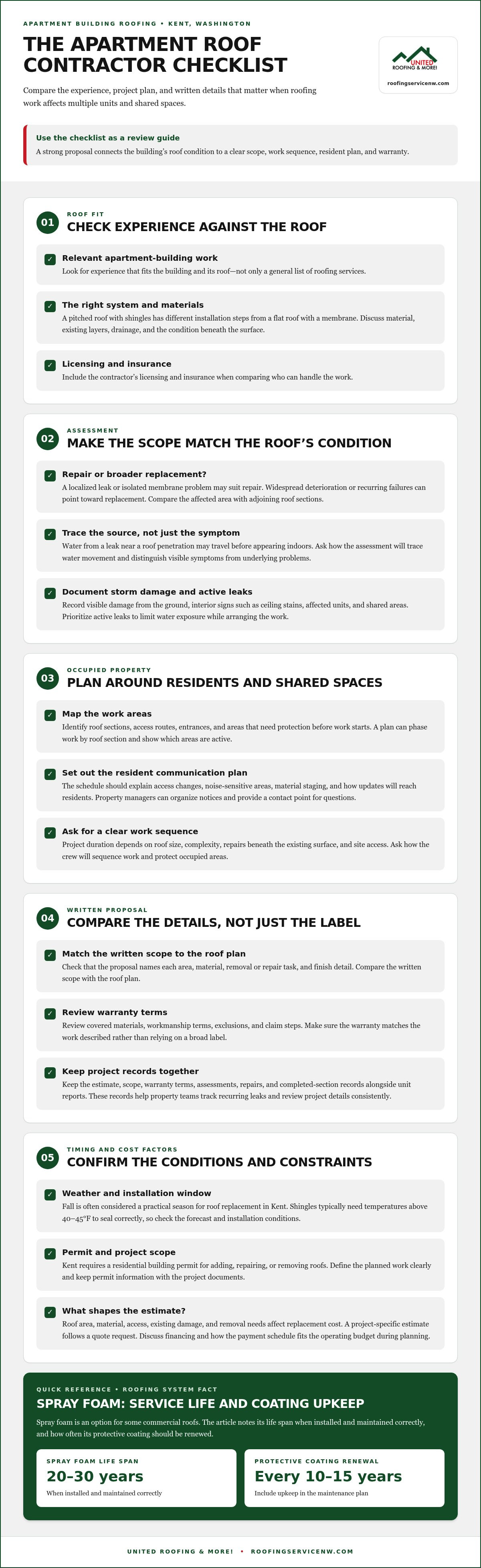
Material affects both the estimate and the work plan. Composite shingles, metal, and single-ply membrane are distinct roofing systems, each with different installation requirements. Spray foam is another option for some commercial roofs; it can last 20 to 30 years when installed and maintained correctly. Its protective coating should be renewed every 10 to 15 years. Roof replacement cost depends on roof area, material, access, existing damage, and removal needs; a project-specific estimate follows a quote request.
Discuss financing early in project planning. Property owners can consider how a payment schedule fits the operating budget and planned work, while still choosing materials suited to the building. Keep the estimate, scope, and warranty terms together so decision-makers can review the same project details.
There is no single replacement interval that fits every building. Material, installation quality, weather exposure, and maintenance all influence roof condition. Project duration also depends on roof size, complexity, repairs beneath the existing surface, and site access. Ask for a schedule that explains the work sequence, resident access arrangements, and how the crew will protect occupied areas. To explore roof replacement options, review the project needs and financing considerations together.
Contractors with apartment-building roofing experience
Apartment-building roofing requires planning for shared spaces, multiple units, and residents who remain on site. A useful project plan identifies roof sections, access routes, entrances, and areas needing protection. For example, crews can phase work by roof section and keep property managers informed about which areas are active. This makes the work sequence easier to follow.
Look for experience relevant to the building’s roof, not just a general list of services. A pitched roof with shingles requires different installation steps from a flat roof with a membrane. The material, existing layers, drainage, and condition beneath the surface all shape the solution. Discussing these details helps connect the proposed scope to the property.
A clear assessment should explain whether damage calls for targeted repair or broader replacement. A leak near one roof penetration, for example, may require tracing water movement before work begins. If several roof sections show wear, the assessment should distinguish visible symptoms from underlying problems. This gives the property team a practical basis for reviewing the scope, materials, and durability.
Communication matters when a building is occupied. The work schedule should identify access changes, noise-sensitive areas, material staging, and how updates will reach residents. Property managers can organize resident notices and provide a contact point for questions before work starts. Records of assessments, repairs, and completed sections also help inform future decisions.
When reviewing a proposal, compare the written scope with the roof plan. Check that it names each area, material, removal or repair task, and finish detail. Make sure the warranty terms match the work described, rather than relying on a broad label. A useful plan explains what happens from start to finish and keeps the building team informed.
Apartment building roofing contractors in Kent should account for resident safety and property protection as well as installation quality. A suitable plan connects the roof system with building operations and the property’s needs, rather than treating the roof as an isolated surface. These details help property decision-makers assess whether the work suits their building.
Apartment roofing contractors in Kent with commercial roofing licenses and insurance
Licensing and insurance records help property managers understand who will perform the roof work and how responsibilities are documented. Match the business name on the proposal with the name on its license and insurance paperwork. If the proposal lists a separate operating entity, make sure the project documents clearly identify the same parties.
Review license details as part of the project file, alongside an assessment of the work plan. Check that the record identifies the contractor and covers the type of roofing work described. For a flat membrane replacement, for example, the proposal should clearly describe that scope rather than relying on a broad label such as “roofing.” Keep copies with the contract and building records.
Review insurance documents just as carefully. Read the named insured, policy dates, coverage descriptions, and exclusions, and compare the stated work with the project scope. Read the policy for its actual terms rather than treating it as proof that every possible loss is covered. Record who handles coverage questions and how changes to the work affect the project paperwork.
For an occupied apartment building, connect these documents to the site plan. Note which roof areas crews will access, where materials will be staged, and how residents will be protected around active work zones. If the schedule changes or the scope expands from repair to replacement, update the written scope and related records before proceeding. This keeps property managers, owners, and roofing crews aligned.
A practical review sequence is straightforward:
- Match the business identity across the proposal, license record, and insurance documents.
- Compare the written roofing scope with the building’s actual roof system and planned work.
- File current project records with the schedule, site plan, and completed-work notes.
These steps support an informed choice without confusing paperwork with workmanship. For help planning an apartment roof project, discuss your roofing project.
United Roofing & More!: Roof Replacement
United Roofing & More! provides roof replacement and installation for residential and commercial properties, as well as roof repairs for leaks and damage. Turn to the team when an apartment building needs a full roof replacement or repairs to address a specific problem. Localized leaks may call for repairs, while broader roof concerns may require replacement.
Roofing financing options can help property owners manage project costs. The right next step depends on the roof’s condition and the work required. Share the building’s roofing needs to discuss a suitable path forward, whether that means repair, installation, or replacement.
Contact United Roofing & More! to discuss your apartment building’s roofing needs.
Set Your Apartment Roof Project in Motion
Prepare a clear project brief with the building’s roof type, known trouble spots, access needs, and resident priorities. These details keep the discussion focused on the work the property needs. Keep your assessment notes and project documents together so decision-makers can review the same information.
Choosing apartment building roofing contractors in Kent means matching the project scope to the property and keeping the process clear for everyone involved. United Roofing & More! serves the Seattle Metropolitan Area, including Kent, with roof replacement, installation, and repair. Call now for a FREE Estimate!
Contact United Roofing & More! to talk through your project. A clear conversation can help you move forward with confidence and a plan that fits your property.
Frequently Asked Questions
How much does a new roof cost in Kent?
The project price depends on the building and the work required, and is provided after a quote request. Roof area, chosen material, access, removal needs, and repairs beneath the existing roof all shape the estimate. Terms are up to 12 years or 12 months for a same-as-cash loan. Get a Free Quote!
Which commercial roofing contractors serve apartment buildings in Kent, Washington?
For an apartment building in Kent, choose roofing work that suits the property’s roof system and use. United Roofing & More! provides roof replacement and installation for residential and commercial properties, as well as repairs for leaks and structural damage. A useful project brief covers the roof type, affected areas, access needs, and whether repair or full replacement is the priority.
What is the apartment building roof replacement cost per square foot in Kent, WA?
The estimate depends on the roof material, its condition, and the work involved, so measured roof area alone does not determine the project scope. Complex roof sections, difficult access, removal, and underlying damage can also affect what the work requires. For a useful comparison, provide the same measured area and clearly defined scope when requesting estimates. Contact United Roofing & More! for a free quote.
Who are the best-rated multifamily roofing contractors near Kent, WA?
A “best-rated” label alone does not show whether a contractor’s work suits a multifamily property. Look for a clear scope that identifies the roof system, repair or replacement work, and coordination needs for an occupied building. United Roofing & More! provides roof replacement, installation, and repairs for residential and commercial properties. Consider whether those services match your building’s needs.
How should I compare bids from apartment building roofing contractors?
Compare proposals line by line, not only by their totals. Check that they describe the same roof areas, materials, removal work, repairs, and finish details. Note differences in access arrangements, work sequence, and warranty terms. A proposal for membrane replacement is not directly comparable to one that only covers a leak repair. Keep questions and revisions with the written proposals.
What is the apartment roof replacement timeline, and how can tenants be affected?
The schedule depends on roof size, layout, material, access, and any damage beneath the existing surface. Residents may experience noise, temporary access changes, and activity near material staging areas. Before work starts, map entrances and shared spaces, then prepare resident notices explaining affected areas and schedule updates. A clear communication plan helps property managers respond to questions as work progresses.


