

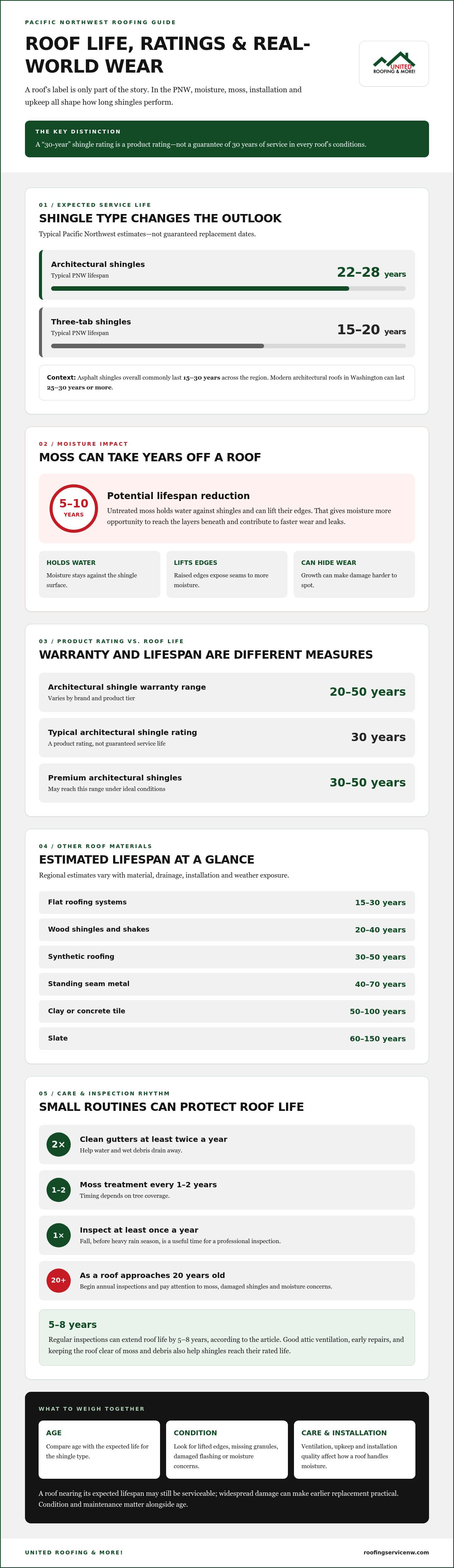
A “30-year” architectural shingle may not reach 30 years in the Pacific Northwest. For homeowners wondering how long architectural shingles last in the PNW, a realistic estimate is 22 to 28 years. Persistent moisture, moss, installation quality, and upkeep all influence where a roof falls within that range.
It makes sense to focus on the shingle label, but the rating isn’t the whole story. You’ll learn how architectural shingles compare with three-tab shingles, why the Pacific Northwest’s damp conditions matter, and which signs can help you judge whether your roof is aging normally.
We’ll also explain how moss and trapped moisture can contribute to wear, and why a roof’s condition matters alongside its age. This context can help you plan upkeep and make a more informed decision about repair or replacement.
Key Takeaways
- Architectural shingles in the Pacific Northwest typically last 22 to 28 years, while three-tab shingles usually last 15 to 20 years.
- Untreated moss can shorten a roof’s lifespan by 5-10 years by lifting shingle edges and holding water against the surface.
- Good attic ventilation, early repairs, and keeping the roof clear of moss and debris can help shingles reach their full rated life.
- Clean gutters at least twice a year and arrange regular inspections to spot moisture-related wear before it spreads.
- Compare the roof’s condition, installation quality, and upkeep with its age to understand whether repairs or replacement may be the next step.
Does moss shorten the life of a roof?
Yes. Untreated moss can shorten a roof’s lifespan by 5-10 years. It holds water against shingles and can lift their edges as it grows. Raised edges let more moisture reach the layers beneath the shingles. In the Pacific Northwest, repeated wet weather can then contribute to faster wear and leaks. Moss is more than a surface issue: it can affect how well shingles shed water.
Installation quality also affects how a roof handles moisture. Properly aligned and secured shingles form a more effective barrier than shingles with loose edges or exposed gaps. Flashing around roof openings and transitions must direct water away from vulnerable seams. If installation leaves weak points, moss and persistent rain can worsen them. Quality roof installation, paired with regular care, helps shingles reach their rated lifespan.
Ventilation matters, too. Poor attic ventilation can trap moisture and contribute to early deterioration of roofing materials. Watch for dampness or musty odors in the attic, and look for signs that air is not moving well. As a roof approaches 20 years old, homeowners should begin annual inspections. A trained eye can identify moss, damaged shingles, and moisture concerns before they spread.
Timing maintenance around Pacific Northwest weather makes it more useful. Schedule a professional roof inspection every fall, before the heavy rain season. A visit before the rainy season can clear moss and debris, then catch small problems early. Regular inspections can extend roof life by 5-8 years. Washington homeowners should have their roofs inspected at least once a year.
- Clean gutters at least twice a year so water and wet debris can drain away.
- Keep the roof clean and treat moss, with treatment every 1-2 years depending on tree coverage.
- Trim overhanging branches and clear roof debris, moss, and algae to reduce moisture buildup.
Respond promptly when an inspection finds lifted shingle edges, missing granules, or damaged flashing. Small defects can let water reach the roof deck, where moisture may lead to more extensive damage. Roof repairs address localized problems; delaying them can allow a leak to affect nearby materials. A roof’s age matters, but condition and maintenance matter too. With ventilation, gutter care, moss treatment, and timely repairs, homeowners can help a shingle roof reach its full rated life, including a roof nearing 25 years.
How Long Does a Roof Last in the Pacific Northwest?
Permit and code requirements vary by city and county, so replacement plans should follow local building department rules. Architectural shingle warranties range from 20 to 50 years, depending on brand and product tier.
Architectural Shingle Longevity in the Northwest
Architectural shingles are layered asphalt shingles with a typical Pacific Northwest lifespan of 22 to 28 years. Modern architectural roofs in Washington can last 25 to 30 years or more. For homeowners estimating how long architectural shingles last in the PNW, the local expectation is more useful than a label alone. A “30-year” rating describes a product rating, not a guaranteed service life in every roof’s conditions.
Asphalt Shingle Lifespan Expectations
Asphalt roofing includes basic three-tab shingles and thicker architectural styles, with different expected lifespans. Three-tab roofs typically last 15-20 years in the Pacific Northwest. Asphalt shingles overall commonly last 15 to 30 years across the region, depending on type and conditions. This distinction matters when planning roof replacement: two asphalt roofs of similar age may have different remaining service life because their shingle types differ.
Manufacturer Warranties and Lifespans
A manufacturer warranty describes the product coverage offered for a specified period; it isn’t the same as a roof’s expected lifespan. Architectural shingle warranties can range from 20 to 50 years, while the typical rating for architectural asphalt shingles is 30 years. Premium architectural shingles may reach 30-50 years under ideal conditions. Compare the warranty term with the product tier and realistic regional lifespan when evaluating roofing options.
Other roofing materials have different estimated lifespans, which helps put asphalt shingle expectations in context:
- Standing seam metal roofs in the Pacific Northwest are expected to last 40 to 70 years.
- Wood shingles and shakes in the region are estimated at 20-40 years.
- Clay or concrete tile roofs are estimated at 50-100 years; slate is estimated at 60 to 150 years.
- Synthetic roofing materials are estimated to last 30-50 years.
- Flat roofing systems typically last 15 to 30 years, depending on material, drainage, and installation quality.
These comparisons are estimates, not a replacement schedule. Roof condition, material, installation, and exposure to local weather all shape how long a roof performs. A roof nearing its expected lifespan may still be serviceable, while widespread damage can make earlier replacement practical. If your roof is approaching that decision, explore roof replacement options as part of your planning.
Moss and shingle deterioration
Moss changes how water moves across an asphalt roof. It can lift shingle edges and hold moisture against the surface, leaving seams more exposed to rain and allowing water to move beneath shingles. Over time, affected materials may deteriorate sooner than nearby areas. Moss can also make it harder to spot curled edges, missing granules, and small cracks during a visual check.
Algae can leave dark streaks on shingles, while moss forms thicker growth. Both can make a roof look worn, but visible growth alone doesn’t mean replacement is necessary. Look for the condition underneath: granule loss, bare spots, curling, and missing shingles. Several signs together may indicate that replacement is approaching, while a single damaged shingle may call for a localized repair.
Removal should protect the shingle surface. Avoid pulling firmly at moss or scraping it with a hard tool, since that can disturb the shingle material. Moss treatment is recommended every 1-2 years, depending on tree coverage. Trimming overhanging branches and clearing leaves reduces shade and debris that can keep roof surfaces damp. Use algae-resistant cleaning treatments where appropriate, and avoid letting cleaning damage shingles or flashing.
Attic ventilation is another part of the picture. Poor ventilation can trap moisture and contribute to early deterioration of roofing materials. If the attic feels damp or smells musty, include ventilation in your roof assessment. Check flashing around chimneys, vents, and roof intersections, where damaged seals can create separate paths for water. Removing moss won’t fix a leak caused by deteriorated flashing or a ventilation problem.
Use a simple inspection routine to track changes over time. From the ground, note where moss or dark growth appears, then compare those areas later. Look for lifted shingle edges, loose flashing, and debris collecting in gutters. Don’t walk on the roof; a roofing professional can assess areas that aren’t visible from below. Record the roof’s age and repairs so you can distinguish new damage from existing wear.
- Arrange moss treatment every 1-2 years, adjusting for tree coverage.
- Trim overhanging branches and clear roof debris, moss, and algae.
- Check attic ventilation and flashing when moisture or leaks appear.
- Track missing granules, curling, bald spots, and changes between inspections.
When damage is widespread, repeated spot repairs may no longer address the roof’s condition. A roof more than 20 years old may need replacement rather than a small repair, but age alone isn’t the deciding factor. The condition of the shingles, flashing, and surrounding roof materials helps show whether localized repairs remain practical. A focused assessment can separate moss-related surface wear from damage that affects the roof’s ability to protect the home.
Rain and persistent moisture
Washington’s wet climate exposes asphalt roofs to repeated moisture. Persistent rain makes drainage and drying especially important. Water that drains slowly or remains trapped beneath debris can keep roofing materials damp and increase the chance of deterioration over time. Shingles can be affected even when there’s no visible indoor leak. Pay attention to roof valleys and places where branches drop leaves, as water or debris can collect there.
Moisture affects more than the visible shingle surface. If water passes beneath damaged shingles, it can reach the roof deck and contribute to water intrusion, insulation damage, and mold. Proper underlayment beneath architectural shingles can improve water resistance and breathability. It helps manage moisture below the shingles, but it cannot compensate for damaged materials or poor drainage.
Look for changes that suggest water isn’t shedding properly. Granule loss, curling edges, and missing shingles can leave the roof more exposed to rain. Ceiling stains or damp attic insulation may indicate that water has traveled beyond the roof covering. South-facing slopes receive more direct sun and may wear faster than shaded or north-facing areas. Comparing roof slopes can reveal uneven exposure.
Drainage is part of moisture control. Clean gutters at least twice a year, and remove leaves or other debris that block water flow. Check that downspouts carry water away from the roof edge and that water isn’t collecting near roof valleys. Valleys and flashing transitions direct runoff, so damage or debris there can concentrate water where the roof needs to shed it efficiently.
A practical check after heavy rain can help identify trouble early. From the ground, look for displaced shingles, overflowing gutters, and visible debris. In the attic, check for damp areas, water marks, or musty odors. Avoid walking on wet shingles; a roofing professional can assess areas that aren’t safely visible from below. Record where you notice a leak, since an indoor stain may not be directly beneath the entry point.
Small repairs can keep localized damage from spreading. A loose shingle or compromised flashing can let more water beneath the roof covering during repeated rain. Address the source, not just the interior stain. If moisture has affected insulation or the roof deck, the repair may need to address those materials too. A roof’s condition, drainage, installation, and ventilation all influence how it handles Washington’s climate.
- Clear gutters and roof debris so rainwater can drain freely.
- Watch for missing shingles, granule loss, curling, and attic dampness.
- Arrange repairs when flashing or shingles no longer direct water away.
Comparison of 3-tab and architectural asphalt shingles
Both options use asphalt, but their construction and expected service life differ. Three-tab shingles have a typical manufacturer rating of 20 to 25 years, while architectural shingles typically carry a 30-year rating. In the Pacific Northwest, three-tab roofs realistically last 15-20 years. Architectural shingles commonly last 22 to 28 years. That gap can affect how homeowners plan maintenance and eventual replacement.
Three-tab shingles have a flatter, more uniform appearance. Architectural shingles use multiple laminated layers, creating a thicker, dimensional profile. Their rated lifespan is longer, but actual service life varies from roof to roof. Installation quality, moisture exposure, ventilation, and upkeep all influence performance. A roof with poor drainage or damaged flashing can wear sooner, regardless of shingle type.
Compare the estimates in context. Asphalt shingles overall typically last 15 to 30 years in the Pacific Northwest. A three-tab roof falls toward the shorter end of that range, while architectural shingles usually last longer. In Washington, modern architectural roofs can last 25 to 30 years or more. These are expected ranges, not a timetable for replacing every roof at a particular age.
Seasonal care matters for both materials. Wet leaves can collect in valleys and gutters, slowing drainage and keeping roof surfaces damp. Clear debris, keep gutters flowing, and watch for missing shingles or visible granule loss. Check flashing near roof openings, where water can enter through damaged transitions. These steps can help you determine whether a roof needs a localized repair or a broader assessment.
Installation is another key factor in real-world performance. Properly aligned shingles and well-fitted flashing help shed rain. Poor installation can leave weak points that moisture exploits, reducing the roof’s ability to protect the home. Consider the shingle rating alongside the roof’s condition, installation history, and exposure to local weather. A higher rating helps set expectations, but the roof itself shows how it’s performing.
- Three-tab: rated 20-25 years, with a realistic Pacific Northwest lifespan of 15-20 years.
- Architectural: typically rated 30 years, with a Pacific Northwest lifespan of 22 to 28 years.
- Both types: benefit from clear drainage, sound flashing, and timely attention to visible damage.
For homeowners choosing between the two, architectural shingles offer a longer regional lifespan estimate. Three-tab shingles may still suit a roof where the shorter expected service life fits the homeowner’s plans. If you’re considering new shingles, explore roof installation options and compare the product rating with the roof’s needs.
United Roofing & More!: Roof Replacement
United Roofing & More! helps homeowners move from roof concerns to a clear next step. If shingles show widespread wear or the roof no longer protects the home, replacement may be practical. For localized damage, roof repairs can address the affected area. The roof’s condition, not age alone, helps guide that decision.
For a new roof, roof installation provides a fresh start with materials suited to the home. Roofing financing is also available to help manage project costs. Whether you’re weighing repairs or considering replacement, a conversation can help clarify which service fits your situation.
Contact United Roofing & More! to discuss your roofing needs.
Make Your Next Roofing Decision With Confidence
Knowing how long architectural shingles can last in the PNW gives you a useful planning frame, but your next step should reflect what your roof is showing now. Keep a record of visible changes, past repairs, and areas where moisture appears. That information can make a conversation about your roof more specific and useful.
If you’re deciding between continued upkeep and a larger project, focus on whether the roof still protects your home and whether repairs can address the problems. United Roofing & More! offers roof repairs, roof replacement, and roof installation. Roofing financing is available to help homeowners plan for a project.
Choose a next step that fits the roof’s condition and your household’s plans. A clear assessment can help you move forward with less guesswork and a plan that makes sense for your home. Contact United Roofing & More! to discuss your roofing needs and take the next step with confidence.
Frequently Asked Questions
How long do architectural shingles last?
Architectural shingles in the Pacific Northwest generally last about 22 to 28 years. For a Seattle-area home, treat that as a planning range, not a fixed deadline. Installation quality, shade, drainage, and upkeep affect the roof’s actual condition. A product rating and a roof’s observed wear are different measures. Compare the shingles’ condition with the installation date before deciding whether maintenance, repairs, or replacement deserves attention.
Can a roof last longer than its rating?
Yes, some architectural shingle roofs can remain in service beyond their typical rating. Premium architectural shingles may last 30-50 years under ideal conditions, while their typical rating is 30 years. These figures describe different things: a rating is not a precise prediction of when a roof will need replacement. Consider the roof’s materials, installation, exposure, and current condition when judging how it is performing.
How long does a roof last in Washington by material?
Estimated lifespans in Washington vary by roofing material: asphalt shingles typically last 20 to 25 years; metal roofing, 40 to 70 years; wood shakes, 20 to 30 years; tile, 50 years or longer; and slate, 60 to 150 years. These are broad estimates, not a schedule for replacement. For a home in Everett or Tacoma, installation, exposure, roof design, and maintenance all influence actual performance.
Should you repair or replace an aging roof?
Repair is often considered for minor damage on roofs under 15 years old, while widespread problems can point toward replacement. A roof more than 20 years old may need replacement rather than a small repair, but age alone doesn’t decide. One isolated leak differs from several areas with curling, granule loss, or bald spots. Consider how much damage exists and whether repairs can still protect the home effectively.
Does attic ventilation affect how long a roof lasts?
Yes. Poor attic ventilation can trap moisture and contribute to early deterioration of roofing materials. In a Washington home, damp insulation, condensation, or a musty odor can prompt a closer look at attic airflow and roof condition. Ventilation won’t repair failed shingles or flashing, so consider both the attic and the exterior. Determining whether moisture comes from airflow problems, a leak, or both can clarify the needed response.
How can I tell how old my roof is?
Start with records showing when the roof was installed, such as invoices, home improvement documents, or paperwork from a previous owner. Dated property records may also help establish whether roofing work took place. If you can’t find a clear installation date, use the roof’s condition to understand its current needs, not to assign an exact age. Keep any records you find with your other home documents.
How can you extend your roof’s life in Washington?
Build maintenance into the seasons: arrange a roof inspection each year, clear gutters at least twice a year, and address small damage before it spreads. Treat moss every 1-2 years, depending on tree coverage, and keep leaves and branches from accumulating on the roof. Before Washington’s heavy fall rains, check for drainage problems and visible damage from the ground. These habits help reduce avoidable wear.
How do I know how old my current shingles are?
The most reliable starting point is the date of the last roof installation or replacement, not the shingles’ appearance. Look for contractor paperwork, receipts, or home records related to the work. If the installation date is unavailable, visible wear can help assess condition but can’t establish an exact age: sun exposure, moisture, and upkeep affect how quickly shingles deteriorate. Record future repairs or replacement dates to make tracking easier.


