
What if a ceiling stain is nowhere near the spot where water enters your roof? With a valley leak, runoff can travel beneath shingles before appearing indoors, so the visible damage may not point to the source. If you’re looking into valley leak repair lynnwood homeowners can rely on, start by tracing the water before choosing a fix.
A drip or spreading stain is worrying, especially when you can’t see what’s happening beneath the roof. Avoid climbing onto a wet or steep roof. From indoors or the ground, note where you see damage and whether it appears after rain, then arrange a professional inspection.
This guide explains why roof valleys leak, what an inspection should cover, and how to judge whether a targeted repair or broader roofing work may be needed. You’ll also find questions to ask about the proposed repair, materials, and next steps. United Roofing & More! is a locally owned Pacific Northwest roofing contractor that provides roof repairs. Clear findings can help you make an informed decision for your home.
Key Takeaways
- Roof valleys channel runoff where roof slopes meet, so intact drainage paths and roofing details matter in Lynnwood’s rainy conditions.
- For valley leak repair lynnwood homeowners should look for a fix based on inspection findings, not just the indoor stain or drip.
- Whether a targeted repair or broader roofing work makes sense depends on the affected area, the overall roof condition, and signs of related damage.
- Document symptoms, review the inspection findings, and ask which materials and roof sections the proposed repair will address.
- Compare roofers on relevant repair experience, clear findings, a written scope, and responsive communication before choosing your next step.
Valley Leak Repair in Lynnwood: Recognize the Signs and Limit Interior Damage
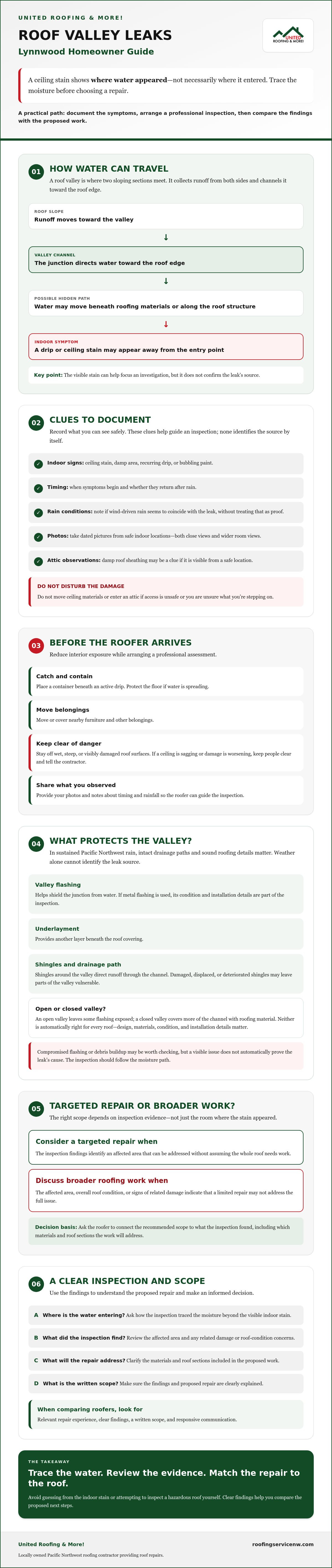
A ceiling stain or drip after a stretch of Lynnwood rain can be unsettling. The water may appear below a roof valley, where two roof slopes meet, but that doesn’t prove the leak starts directly above the stain. Water can move beneath roofing materials or along the roof structure before reaching the ceiling. Effective valley leak repair lynnwood starts with tracing the moisture, not guessing from its indoor location.
Roofing details around valleys are designed to direct water off the roof. Where metal flashing is used, it helps protect vulnerable joints from water intrusion. You can read more about the role of Flashing (weatherproofing). Wear or damage in this area may be one possible source, but an inspection should also consider the surrounding roof and the path water may have taken.
Which warning signs may point to a roof valley leak?
Look for clues, not confirmation. A stained ceiling or damp area below an intersection of roof slopes may help an inspector focus the investigation, but it doesn’t identify the entry point by itself. Other signs to document include bubbling paint, recurring drips, or damp roof sheathing visible from a safe attic location. Don’t enter an attic if access is unsafe or you’re unsure what you’re stepping on.
Note whether symptoms return after wet weather and, if possible, when they begin. A leak that appears during rain can give the roofer useful timing information. Take dated photos from safe indoor locations, including close views of the damage and wider shots showing where it is in the room. Don’t move ceiling materials or disturb wet areas to investigate.
What should you do before a roofer arrives?
Limit interior damage while arranging a professional assessment. Place a container beneath an active drip, and move or cover nearby furniture and belongings. Protect the floor if water is spreading. If the ceiling is sagging or the damage is worsening, keep people clear of the affected area and explain the concern when you contact a roofing contractor.
- Stay off wet, steep, or visibly damaged roof surfaces. A roof can be hazardous even when the leak seems small.
- Record when the drip or stain appears and whether it follows rainfall.
- Note whether wind-driven rain seems to coincide with the leak, without treating that pattern as proof of the source.
- Share your photos and observations with the roofer so they can guide the inspection.
These details help a contractor assess the problem and explain what should happen next. A clear inspection is more useful than patching the nearest visible stain and hoping the leak stops.
How Roof Valleys Work and Why Lynnwood Weather Can Expose Weak Points
A roof valley is the internal junction where two sloping roof sections meet. It collects runoff from both sides and channels the water toward the roof edge. In Lynnwood, sustained Pacific Northwest rain puts these drainage paths to work, so sound water flow and intact roofing details matter. Weather alone, however, can’t identify a leak’s source. An inspection must trace the water and establish where it enters.
The indoor stain shows where water appeared, not necessarily where it entered the roof. Water can travel along the roof deck or beneath roofing materials before reaching a ceiling. A careful assessment therefore looks beyond the visible damage and checks the valley and nearby roof areas.
Which materials and details protect a roof valley?
Valley flashing helps shield the junction from water, while underlayment provides another layer beneath the roof covering. Shingles around the valley direct runoff through the drainage path. In an open valley, some flashing remains exposed; in a closed valley, roofing material covers more of the channel. Neither configuration is automatically right for every roof. Design, materials, condition, and installation details all matter. The National Roofing Contractors Association offers roofing information that can help homeowners learn what to discuss with a contractor.
What can cause a valley leak to develop?
Damaged, displaced, or deteriorated shingles may leave parts of a valley vulnerable. Compromised flashing or debris buildup may also be worth checking, but these conditions don’t automatically prove the cause of a leak. The roofer should inspect the details and follow the moisture path rather than assume the first visible issue is responsible.
A leak can begin outside the valley and travel along the decking before appearing indoors. Water may also enter near a roof intersection and emerge elsewhere. Local weather helps explain why effective drainage matters, but it doesn’t confirm where water entered. Ask the contractor to explain the inspection findings, identify affected roof components, and describe how the proposed repair addresses the source. For homeowners considering valley leak repair lynnwood, United Roofing & More! provides roof repairs in its service area. You can review its roof repair services as you consider the next step.
Valley Leak Repair or Roof Replacement? Compare the Evidence Before Deciding
A leak by itself doesn’t tell you whether the roof needs a targeted repair or replacement. The recommendation should follow the inspection findings: how much roofing is affected, the condition of nearby areas, and whether there’s related damage beneath the visible surface. For valley leak repair lynnwood, ask the roofer to show you the suspected entry point and explain how the proposed work addresses it.
A useful assessment separates what you can see indoors from what the roofer has confirmed on the roof. A ceiling stain is evidence of moisture, not proof that the valley is the only damaged area. If the inspection identifies a repair concern, ask which roof sections and materials are involved, what the contractor found, and whether concealed damage remains uncertain. You can also review the complete local roof replacement guide if broader work is being considered.
When might a targeted valley repair be appropriate?
A localized repair may be suitable if an inspection finds a limited, identifiable problem and the surrounding roof remains in serviceable condition. The roofer should distinguish visible symptoms from confirmed damage beneath shingles or flashing. Ask what will be removed, what will be repaired or replaced, and how the work will connect with the existing roof. A promised lifespan should be supported by evidence, not offered without explanation.
When should you ask about broader roof work?
Repeated leaks, deterioration across multiple areas, or damage extending beyond the valley are reasons to request a broader roof-condition assessment. They don’t automatically mean replacement is necessary. Ask the roofer to explain the repair’s limitations and identify the inspection evidence behind any replacement recommendation. If the recommendation isn’t clear, request a written scope or another professional opinion before deciding.
Roof valley construction requirements can depend on the applicable code and roof details. The International Code Council’s building code standards for roof valleys provide a reference for discussing valley construction with a contractor. Ask how the proposed work addresses the specific roof design and applicable requirements.
Choose a scope that matches the documented condition, not the most dramatic possibility or the quickest patch. If you’d like to discuss roof repair options, share what you’ve observed and ask what an inspection would cover.
How to Prepare for Valley Leak Repair in Lynnwood
A little preparation can make a roof repair conversation clearer and help you compare proposals on more than the final scope. For valley leak repair lynnwood, share what you’ve observed, ask how the suspected source was identified, and get the proposed work in writing before deciding.
- Document symptoms. Keep dated photos of indoor stains or drips, and note when they appear, especially in relation to rain.
- Arrange an inspection. Share your notes and ask the roofer to assess the suspected valley and surrounding roof areas.
- Review the findings. Ask where the contractor believes water enters and what evidence supports that conclusion.
- Compare the scope. Check which roof sections and materials the work addresses, and whether any damage still needs further assessment.
- Confirm next steps. Clarify scheduling, access, work-area protection, communication during the job, and how the completed work will be reviewed.
What should you ask during the roof inspection?
Ask whether nearby flashing, shingles, underlayment, or decking show damage, and whether the findings are confirmed or still uncertain. A written scope should identify the proposed work and distinguish it from items that may need closer assessment once work begins. This helps you understand what the repair includes without mistaking a visible stain for a confirmed roof-entry point.
How can you assess a repair proposal?
Look for a clear description of the work area, repair approach, materials, and any limitations. Ask how the contractor will contact you if concealed damage or other unexpected conditions are found, and whether you’ll review scope changes before additional work proceeds. If the proposal is vague, request clarification before approving it.
Before work is scheduled, confirm how the roofer will access the roof and protect the surrounding work area. Ask who will provide updates, how to reach the project contact, and what to expect during the final review. These practical details help set expectations from inspection through completion.
If financing is relevant to your decision, ask whether options may apply to your roofing work and verify eligibility and terms directly. United Roofing & More! offers roofing financing options, but specific terms require confirmation. To discuss roof repairs and next steps for your home, Talk with United Roofing & More!
Choosing a Lynnwood Roofer for Valley Leak Repair and Taking the Next Step
When you’re ready to discuss a repair, look for a roofer who can explain both the suspected cause and the proposed work in plain language. Relevant experience with roof leaks matters, as does a process that helps you understand what the inspection found, what the repair covers, and what remains uncertain. For valley leak repair lynnwood, clear communication can help you make a decision based on the roof’s condition rather than guesswork.
What makes a repair recommendation clear and trustworthy?
A useful recommendation connects the diagnosis to evidence the roofer observed, rather than suggesting a generic patch. Look for findings that identify the suspected entry area and explain why it may be allowing water in. The written scope should describe the work included, relevant limitations, and how the contractor will communicate if further assessment is needed. Ask questions if the explanation doesn’t distinguish confirmed damage from a possibility.
Before agreeing to the work, consider whether the roofer:
- Has experience handling roof repairs for leaks and can explain how that experience applies to your situation.
- Provides findings and a written description of the proposed repair.
- Answers questions about what is included and how updates will be shared.
- Discusses next steps without making unsupported promises about timing or results.
These are practical signs of a transparent process. They don’t replace your judgment, but they can help you compare contractors and understand the plan before work begins.
How do you arrange valley leak repair in Lynnwood?
When contacting a roofer, describe where you noticed the stain or drip, when it appears, and whether you’ve seen it after rain. Share photos taken safely indoors if available. Ask whether an inspection is available for your location, what the assessment will cover, and how the contractor will explain the repair scope. Confirm Lynnwood service availability directly, since coverage and schedules can change.
United Roofing & More! is a locally owned Pacific Northwest roofing contractor that provides roof repairs in its service area. Its service communities include Marysville, Seattle, Renton, Everett, Lynnwood, Kirkland, Mount Vernon, Bothell, Edmonds, Shoreline, Sammamish, Redmond, Bellevue, Tacoma, and Kent. Confirm availability for your location directly. You can also ask about financing options for roofing work and verify whether any option applies and what terms are available.
A clear conversation is a sensible starting point. Contact United Roofing & More! to discuss what you’ve observed and confirm service availability and an appropriate next step for your roof.
Take the Next Step Toward a Clear Roof Repair Plan
A valley leak doesn’t automatically mean you need a new roof. The right decision starts with identifying where water enters, understanding the condition of nearby roofing, and reviewing a repair scope grounded in inspection findings. Keep your observations and photos handy, then ask the roofer to explain the recommended work and any remaining uncertainties.
For valley leak repair lynnwood, United Roofing & More! is a locally owned and operated Pacific Northwest contractor offering roof repairs for leaks and roofing damage. Contact the company to confirm current service availability in Lynnwood and discuss what an inspection should cover. Roofing financing options may also be available for eligible work; ask directly about current terms.
Contact United Roofing & More! to discuss valley leak repair in Lynnwood and find out what a sensible next step could be. Clear findings and an explained scope can help you move forward with greater confidence.
Frequently Asked Questions
How do I know if my roof valley is leaking?
You may notice a ceiling stain, bubbling paint, recurring drips, or dampness on attic sheathing. These signs can point to a roof leak, but they don’t confirm the valley is the entry point. Water can travel beneath roofing materials before becoming visible indoors. Note when symptoms appear, especially after rain, and share dated photos taken safely inside your home with a roofing contractor.
Can water from a roof valley leak appear far from the actual entry point?
Yes. Water can move along roof decking or beneath shingles before reaching the ceiling, so the indoor stain may be some distance from where water entered. The stain is a clue, not a diagnosis. A roofer should inspect the valley and surrounding roof areas, then explain what evidence supports the suspected entry point.
How is a roof valley leak repaired?
The repair depends on what an inspection finds. A roofer may need to address damaged shingles, flashing, underlayment, or other affected roofing materials. If moisture has damaged the underlying decking, that may also need attention. Ask which roof sections the proposed work covers, what materials it involves, and how the contractor will handle unexpected findings. A repair should address the identified source, not just cover an indoor stain.
Should I repair a leaking roof valley or replace the roof?
Decide based on the roof’s overall condition and the inspection findings, not the leak alone. A targeted repair may suit a limited, identifiable problem when nearby roofing is in sound condition. Repeated leaks or deterioration across several areas are reasons to ask for a broader assessment. If replacement is recommended, ask the roofer to explain the evidence, repair limitations, and why broader work may be appropriate.
Can I temporarily stop a roof valley leak myself?
Don’t climb onto the roof to apply a patch, especially if it’s wet, steep, or damaged. Instead, place a container beneath an active drip, move belongings, and protect nearby flooring. Take photos from a safe indoor location and arrange a professional assessment. An indoor measure can help limit the mess, but it won’t identify or fix the roof entry point.
How quickly should I arrange valley leak repair in Lynnwood?
Contact a roofer promptly after you notice an active leak or recurring moisture, since continued water entry can worsen damage. If water is spreading, the ceiling is sagging, or the affected area seems unsafe, keep people clear and mention this when arranging help. For valley leak repair lynnwood homeowners should confirm service availability directly and share when the leak appears, such as during or after rain.
What should I ask a roofer before approving valley leak repairs?
Ask where the roofer believes water enters, what evidence supports that diagnosis, and whether nearby roofing or underlying materials need attention. Request a written scope that names the work area, repair approach, and any uncertainties. Confirm how unexpected findings and scope changes will be communicated. United Roofing & More! offers roof repairs and roofing financing options; ask directly about service availability and current financing terms.


