
Imagine waking up to a steady drip in your living room after a classic Puget Sound storm. You reach for your paperwork, confident in that "lifetime" promise, only to find a hidden clause that voids your entire claim. Understanding roofing warranties Washington State is often the difference between a free repair and a massive out-of-pocket expense. It's stressful to realize that the fine print might not be as solid as the shingles on your home. We know you want protection that actually works when the rain starts falling.
You deserve to feel confident that your Pacific Northwest home stays dry for decades. We've built this 2026 guide to help you navigate the confusing world of roof protection without the headache. You'll learn exactly how to distinguish between material and labor coverage. We'll show you how to choose a reliable local contractor and what specific maintenance steps keep your warranty valid. It's time to get the clarity you need for total peace of mind. Let's make sure your roof stays covered, no matter what the Washington sky throws at it.
Key Takeaways
- Distinguish between manufacturer defects and contractor errors to ensure every part of your roof is fully protected.
- Gain confidence in understanding roofing warranties washington state by learning how to decode "lifetime" coverage promises in the Pacific Northwest.
- Protect your investment by identifying common warranty killers like poor ventilation and moss growth that often void the fine print.
- Confirm how Washington State L&I standards and contractor insurance provide an essential layer of financial security for your home.
- Learn why professional installation is the specific requirement for securing the highest level of manufacturer-backed system protection.
Why Your Roofing Warranty is Critical in the Pacific Northwest
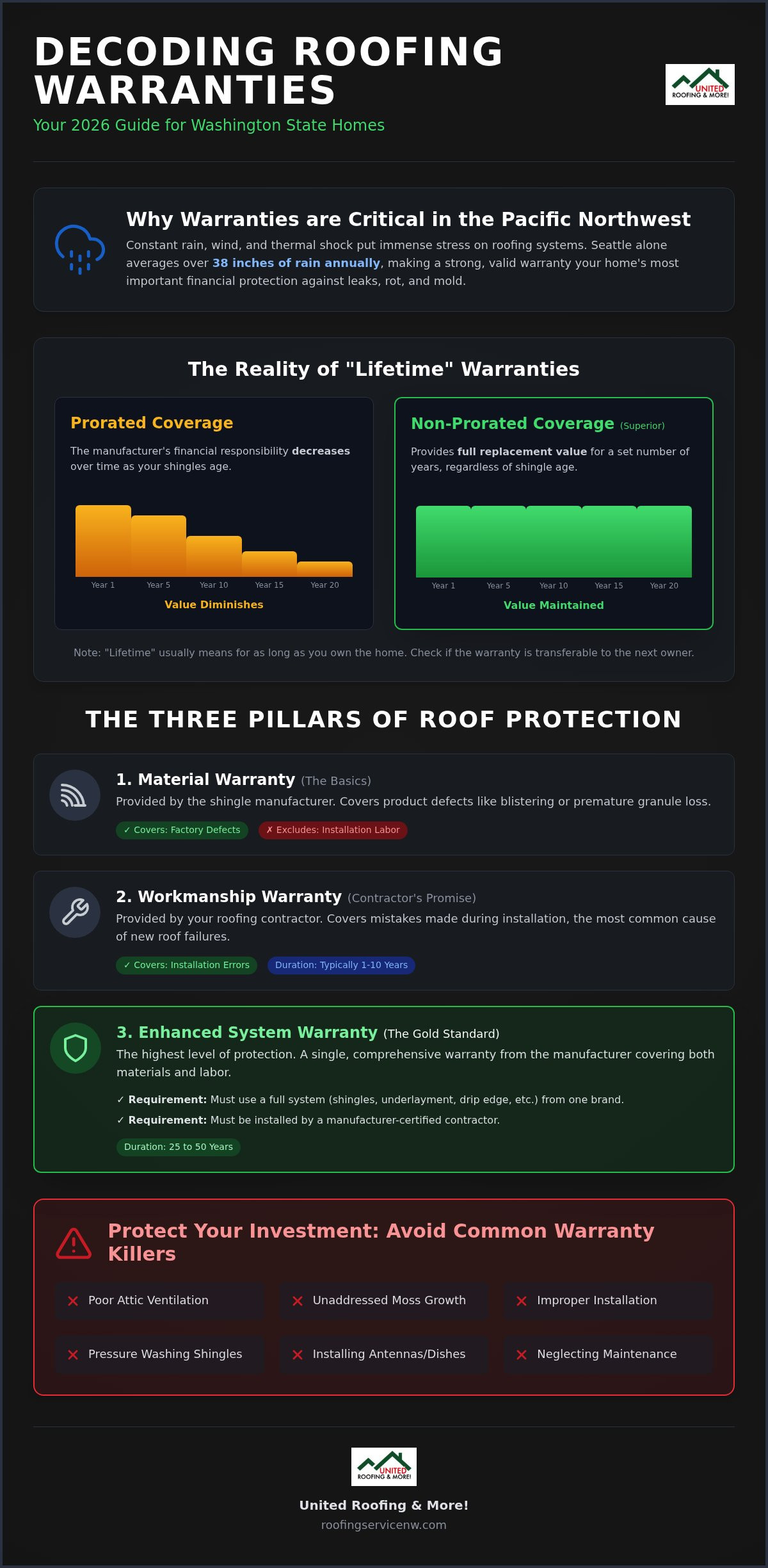
A roofing warranty isn't just a single piece of paper. It's a complex, multi-layered shield designed to protect your home from both material defects and human error. When you're understanding roofing warranties washington state, you have to look past the marketing. You need to understand the legal definition of a warranty to see how it applies to your specific roof. In the high-moisture environment of the Puget Sound, a failed roof is a financial disaster. Seattle averages over 38 inches of rain annually. This means a small leak can turn into structural rot or mold in just a few weeks. Your protection is only as strong as the manufacturer and the local contractor who stands behind the work. If the company disappears, your labor warranty often goes with them.
The Reality of 'Lifetime' Warranties in 2026
Many homeowners see the word "lifetime" and assume they're covered forever. In 2026, "lifetime" usually refers to the length of time you own the home, not the actual lifespan of the shingles. If you sell the house, that warranty might not transfer fully to the next owner. You also need to distinguish between prorated and non-prorated periods. Prorated coverage is the gradual reduction of a manufacturer's financial responsibility for a product's replacement cost as the shingles get older. Non-prorated coverage is much better. It provides full replacement value for a set number of years, regardless of age. Always check the fine print for these terms before you sign any contract.
Why Washington Weather Demands Better Protection
Our local weather is brutal on roofing systems. Constant rain and wind cycles create thermal shock that stresses every seam and seal. Standard manufacturer warranties often have strict requirements for "wind blow-offs." If your contractor doesn't follow specific high-wind installation steps, the manufacturer might deny your claim after a storm. This is why local expertise in Marysville and Everett is vital. We understand how to create weather-tight seals that handle the specific pressure of PNW storms. A warranty is your safety net, but a quality installation by a transparent partner ensures you never have to use it. We focus on getting the details right the first time so your protection remains ironclad for the long haul.
The Three Pillars of Roof Protection: Materials, Workmanship, and Systems
Think of your roof as a high-performance machine. It needs quality parts and expert assembly to function. If a part breaks because it was made poorly, the factory is responsible. If it breaks because it was put together wrong, the mechanic has to fix it. This is the core of understanding roofing warranties washington state homeowners must grasp. You have three distinct layers of protection: materials, workmanship, and full system warranties. Each one plays a specific role in keeping your home dry and your bank account safe.
Material Warranties vs. Workmanship Warranties
A manufacturer’s material warranty covers the shingles themselves. If the shingles blister or lose granules prematurely due to a factory defect, the manufacturer provides replacements. However, these basic warranties often do not pay for the labor to tear off the old roof or install the new one. Most homeowners are surprised to learn that a material warranty won't help if your roof leaks because of a poor nailing pattern. That's where the workmanship warranty comes in.
Workmanship coverage is provided directly by your contractor. It covers installation errors, which are the most common cause of new roof failures. In the Seattle roofing market, these warranties typically range from 1 to 10 years. Before you sign, always check Washington State consumer protection resources to ensure you are hiring a reputable business. You should also verify if this warranty is transferable. If you sell your Marysville home in five years, a transferable warranty adds significant value for the next buyer.
Unlocking Enhanced System Warranties
Enhanced system warranties are the "gold standard" for 2026. These plans combine material and labor protection into one comprehensive package that can last 25 to 50 years. To qualify, you must use a complete system of components from a single manufacturer. This includes the underlayment, the shingles, and a high-quality roof drip edge. When all parts work together, the manufacturer assumes more of the risk.
Only "certified" or "master" level contractors can offer these top-tier warranties. Manufacturers only trust their most experienced partners to install these systems correctly. By following Master Roofing Standards, we ensure every component meets the strict requirements for understanding roofing warranties washington state providers. If you want a roof that is truly "set it and forget it," an enhanced system is your best path. If you are ready to explore your professional roof replacement options, we are here to help you navigate the fine print.
Washington State Standards: What Homeowners Should Expect in 2026
In Washington, a handshake is never a substitute for a written contract. The Department of Labor & Industries (L&I) provides the essential oversight you need to protect your investment. Every registered roofer must carry a bond and liability insurance to operate legally. This bond acts as a financial safety net. If a contractor fails to honor a workmanship claim or goes out of business, the bond can help cover the costs of repairs. It's a critical piece of understanding roofing warranties washington state homeowners often overlook. Following Washington roofing industry standards ensures that your project meets both state laws and manufacturer requirements.
Local building codes in King and Snohomish counties also impact your coverage. For instance, the current energy code requires specific insulation levels, such as R-60 for most residential attics. If your contractor ignores these local requirements, the manufacturer may void your material warranty. They expect every installation to follow the law perfectly. You should also know that verbal warranties are completely unenforceable in Washington roofing contracts. If a promise isn't written down, it doesn't exist in the eyes of the law.
Verifying Your Contractor’s Registration
Don't take a roofer's word for it. Use the L&I "Verify a Contractor" tool before you sign anything. Enter the business name or license number to check their status. Look specifically at the "Infractions" section to see their history of safety or permit violations. A valid license is the foundation of any workmanship claim. If they aren't registered, you have zero protection if the roof fails. We recommend checking this status every time you hire for a major project.
Contractual Transparency and Fine Print
Your Marysville roofing contract must be explicit. It should clearly define the difference between "limited" and "full" warranty coverage. Most 2026 warranties are limited, meaning they have specific exclusions you need to know. Look for a written cleanup and damage clause too. This ensures the contractor is responsible for removing all debris and fixing any property damage, like broken gutters or cracked siding. Demand a clear dialogue about these terms. A transparent partner will always be happy to walk you through every line of the fine print.
How to Keep Your Roofing Warranty Valid: Avoiding Common Pitfalls
Getting a new roof is a major investment. Many homeowners don't realize that their daily habits or poor attic design can kill their protection. understanding roofing warranties washington state requires knowing the specific rules of maintenance. If you don't follow the manufacturer's guidelines, your 50-year warranty could be worthless in five years. One common mistake is "layering" new shingles over old ones. Most manufacturers require a complete roof replacement to honor their system guarantees. Layering traps heat and prevents the shingles from sealing correctly. It's a shortcut that often leads to a denied claim later.
The Critical Role of Attic Ventilation
Trapped heat is the silent killer of roofing materials. Without proper airflow, your attic becomes an oven. This heat literally bakes the shingles from the inside out. You can check your attic for light or hire a professional to calculate roof pitch and intake needs to ensure the geometry allows for a breeze. If your shingles are curling at the edges or losing massive amounts of granules, your ventilation is likely failing. Manufacturers will deny claims if they find the attic wasn't vented to their specific 2026 standards. Proper airflow is just as vital as the shingles themselves.
PNW Maintenance: Moss and Debris
In the Pacific Northwest, moss is almost unavoidable. However, how you handle it determines your warranty status. Never use a pressure washer on your roof. The high-pressure stream strips away the protective granule layer instantly. This will immediately void almost every warranty on the market. Instead, use manufacturer-approved soft-wash chemical treatments or zinc strips. Homeowners in wooded areas like Bothell or Shoreline need to be extra vigilant. Clear your gutters and valleys at least twice a year. Debris traps moisture against the shingles, which leads to rot and moss growth. Moss is a gray area for many warranties; if it's found to have caused the damage, you're likely paying for the fix yourself.
Keep a folder with every receipt and inspection report. If a shingle fails in ten years, the manufacturer will ask for proof of care. Documenting your annual maintenance proves you weren't negligent. It's the best way to ensure your understanding roofing warranties washington state translates into actual financial protection. If you're worried about your current roof's health, don't wait for a leak. We offer expert roofing inspections and repairs to keep your warranty in perfect standing and your home dry.
Securing Your Investment with United Roofing & More!
Your home is your most valuable asset. Protecting it requires more than just new shingles; it requires a partner who understands the local landscape. We are committed to high-quality roofing workmanship across Marysville, Seattle, and the surrounding Puget Sound cities. understanding roofing warranties washington state can feel overwhelming, but you don't have to do it alone. We take a no-nonsense approach to every project. We ensure your installation meets the strict 2026 manufacturer standards required for long-term protection. Our team prioritizes your peace of mind by keeping you informed throughout the entire service process.
One of the biggest mistakes homeowners make is forgetting to register their warranty. Most manufacturers require this step within 60 days of installation. If you miss this window, you might lose your enhanced coverage entirely. We guide every client through the registration process. We provide the documentation you need to keep your protection valid for decades. You deserve a transparent partner who values long-term trust over high-pressure tactics. We are here to help you secure the full value of your investment.
Financing a Roof That Lasts a Lifetime
Choosing a premium roofing system is a smart long-term move. Enhanced warranties often cover both materials and labor for 50 years, but they have a higher upfront cost. We believe peace of mind shouldn't be a financial burden. By using our flexible roofing financing, you can access these top-tier systems without draining your savings. Spending a little more monthly now can save you thousands in future repair costs. Our payment plans make premium shingles accessible for all project sizes. We aim to lower the barrier to entry with helpful, supportive financial solutions.
Ready for a Worry-Free Roof?
Don't wait for the next storm to test your roof. We invite you to experience a different kind of service. We start with a complimentary diagnostic service and a clear, honest consultation. We will walk you through your options and explain the fine print before you sign anything. Our team is ready to provide a transparent, no-obligation quote for your next project. Contact our team today to see how we can secure your home with professional roof installation and industry-leading protection. Let's build a roof that stands the test of time together!
Protect Your Home for the Next Generation
You now have the tools to turn fine print into firm protection. A great roof is more than just shingles; it's a partnership between quality materials and expert installation. By understanding roofing warranties washington state, you can avoid the hidden clauses that catch many homeowners off guard. Remember to prioritize proper attic ventilation and regular maintenance to keep your coverage ironclad. We are here to ensure your investment is safe from the first nail to the final inspection. You deserve a roof that works as hard as you do.
Our team specializes in expertly installed systems with manufacturer-backed warranties that stand up to the Puget Sound climate. We proudly serve the Greater Seattle area with professional reliability and a commitment to transparency. If you're worried about the cost, we offer flexible roofing financing options to make your project affordable. It's time to stop stressing about the rain and start feeling confident in your coverage. Secure your home today with a warrantied roof replacement from United Roofing & More! We look forward to helping you and your family stay dry for decades to come.
Frequently Asked Questions
What is the difference between a material warranty and a workmanship warranty?
A material warranty covers factory defects in the shingles themselves, while a workmanship warranty covers errors made during the installation process. If your shingles fail early due to poor manufacturing, the factory pays for the replacement. If your roof leaks because a nail was placed incorrectly, the contractor is responsible for the fix. Having both ensures you are protected from every angle of potential failure.
Can a new roof warranty be transferred to a new homeowner in Washington?
Most new roof warranties can be transferred to a second homeowner, but you must follow specific steps. Manufacturers usually require written notice and a small transfer fee within 60 days of the home sale. This process is a key part of understanding roofing warranties washington state buyers look for. Always check if the coverage remains non-prorated or if it drops to a lower level after the transfer.
Will my roofing warranty cover damage from a falling tree or storm?
No, roofing warranties do not cover damage from acts of God like falling trees, fire, or severe storm impacts. These events fall under your homeowners insurance policy. A warranty only covers issues related to how the product was made or how it was installed on your home. If a windstorm blows shingles off, the warranty might apply only if the wind speed was below the manufacturer's rated limit.
How do I know if my attic ventilation is sufficient to keep my warranty valid?
You can check for sufficient airflow by looking for a balance between intake vents at the eaves and exhaust vents at the ridge. If your attic feels significantly hotter than the outside air or you see frost on the underside of the roof deck in winter, your ventilation is likely failing. Poor airflow is a common reason for denied claims. We provide complimentary diagnostic services to verify your system meets 2026 standards.
Does United Roofing & More! offer warranties on roof repairs?
Yes, we stand behind our professional roof repairs with specific workmanship warranties tailored to the scope of the fix. While a repair won't extend the manufacturer's warranty on your entire roof, it ensures the specific leak or damage we addressed is covered. We believe in transparency and will always provide you with the exact terms of your repair protection before we start the work. This keeps your home safe without the stress.
What happens to my warranty if the roofing company goes out of business?
If a contractor closes, your workmanship warranty usually disappears unless you have an enhanced system warranty backed by the manufacturer. These top-tier plans ensure the manufacturer takes over the labor costs if the original installer is no longer around. This is why we emphasize the importance of choosing a bonded and insured company. It adds an extra layer of financial security for your home and your bank account.
Why do some manufacturers require specific underlayment for their warranties?
Manufacturers require specific underlayment to ensure all components work together as a single, cohesive system. Using a mismatched underlayment can cause chemical reactions or physical friction that damages the shingles over time. To qualify for an enhanced system warranty, you must use the manufacturer's approved components from the deck up. This reduces the risk of failure and allows the manufacturer to offer much longer coverage periods for your understanding roofing warranties washington state needs.
How long does a typical workmanship warranty last in the Seattle area?
In the Seattle area, a typical workmanship warranty lasts between 1 and 10 years. Some local experts might offer longer periods, but the quality of the company is more important than the length of the promise. A 25-year workmanship warranty from a company that has only been in business for two years is risky. We focus on providing reliable, long-term protection that you can actually trust for your Pacific Northwest home.


