Could your roof’s slope be the secret reason your last repair estimate was thousands of dollars higher than your neighbor’s? In the Pacific Northwest, roof pitch is more than just a measurement. It's your home’s primary defense against water intrusion and heavy structural loads. Most homeowners in Seattle and Marysville feel a bit of vertigo just thinking about climbing a ladder to take measurements. It is stressful to worry that a steep grade will drive your replacement costs toward the $45,000 mark seen in some King County projects. We understand that you want accuracy without the risk of a fall. United Roofing & More! is here to help you master the math. This guide will teach you how to calculate roof pitch safely from the ground or your attic. You will learn the exact 12 inch run method and which materials work best for your specific ratio. We also explain how local 2021 International Building Code standards and the $119 per hour permit fees in Marysville impact your planning. Roof financing is available to help you get started today!
Key Takeaways
- Learn why your roof’s slope is the primary defense against heavy Seattle rain and how it prevents structural water damage.
- Understand the "rise and run" math to ensure your next roof replacement meets current Marysville building codes.
- Discover safe, ladder-free methods to calculate roof pitch using simple household tools like a level and tape measure.
- Identify which roofing materials are compatible with your specific slope to avoid leaks and maximize your home's lifespan.
- See how pitch affects your total project estimate and labor costs. Expert services are ready and roof financing is available!
Why Roof Pitch Matters for Marysville and Seattle Homes
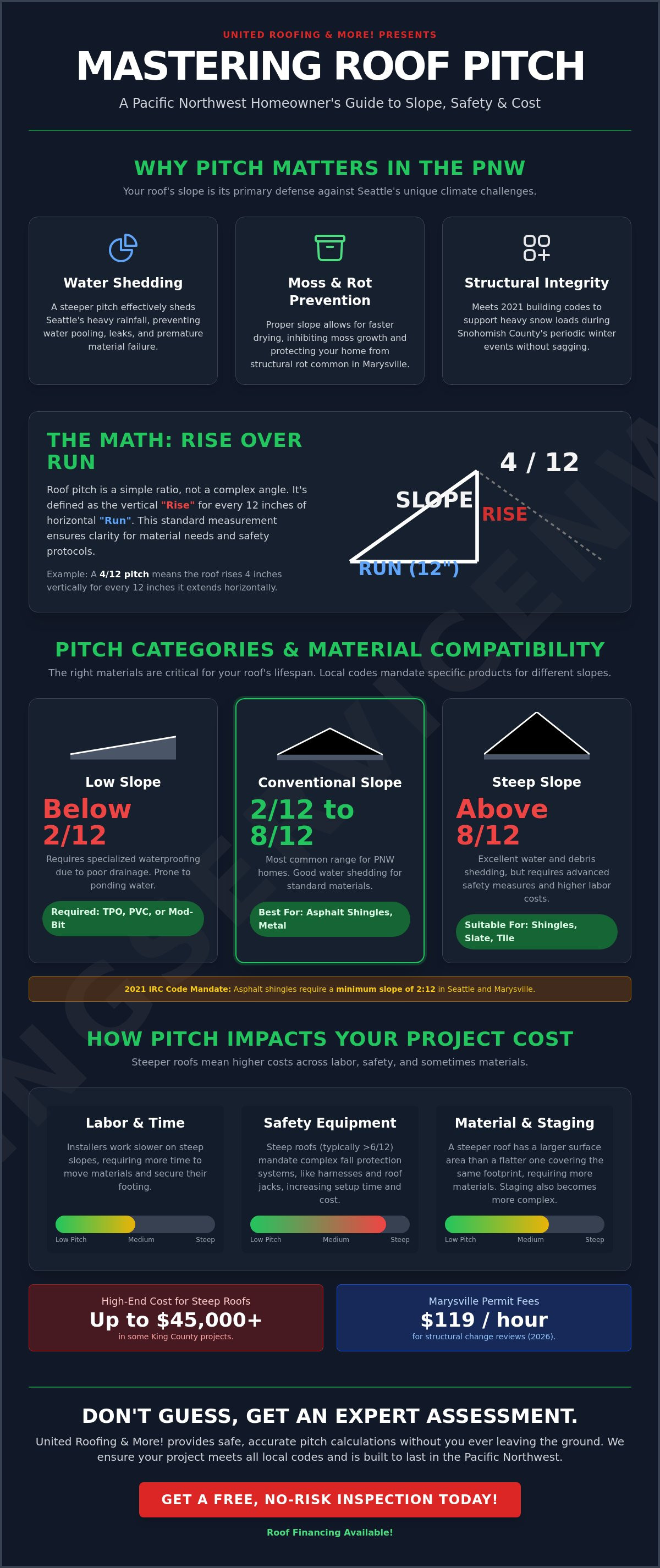
Understanding roof pitch is the first step in any successful home project. It is defined as the vertical rise over a horizontal "run" of 12 inches. For example, a 4/12 pitch means the roof rises 4 inches for every 12 inches it extends horizontally. Homeowners in Marysville and Seattle need to know how to calculate roof pitch to ensure their drainage can handle our unique weather. In the Puget Sound, your roof serves as a critical defense against water intrusion. It is not just about aesthetics; it is about keeping your home dry through months of relentless drizzle.
Seattle's heavy winter downpours mean water must move off your shingles immediately. Low-slope roofs often struggle with ponding water, which leads to premature material failure and leaks. Moss growth is another persistent headache for King County residents. When moisture sits on a surface, it creates a breeding ground for spores that eventually lift shingle edges. A steeper angle allows sunlight to hit the surface more directly and helps the wind dry the materials quickly. This natural drying process is your best defense against the rot that often plagues older Marysville homes. During Snohomish County's periodic snow events, structural integrity becomes the priority. The 2021 building codes ensure your roof can support these heavy loads without sagging.
The Aesthetic and Functional Role of Pitch
Architectural styles across the Pacific Northwest use pitch to define their character. Traditional Craftsman homes in Seattle often feature steep gables that shed rain effectively. In contrast, Modern designs in Marysville might utilize low-slope profiles for a sleek look. While low-slope roofs offer a unique aesthetic, they require specialized membranes to stay watertight. Steeper roofs generally last longer in our climate because they dry out faster between rain showers. Expert Services & More! can help you determine if your current pitch is optimal for your home's longevity. Roof financing available!
Pitch and Local Building Codes
Local regulations are strict about slope requirements. Both Marysville and Seattle have adopted the 2021 International Residential Code (IRC). This code mandates a minimum slope of 2:12 for asphalt shingles. If your roof is flatter than that, you must use different materials like TPO or PVC. High wind speeds near the Puget Sound also mean your shingles must be rated for specific uplift forces. In Marysville, permit fees for structural changes currently sit at $119 per hour for 2026. When we calculate roof pitch for your project, we account for every local amendment to keep your family safe. Drop us a line for a free inspection! Transparency and communication are our top priorities.
The Math Behind the Slope: Understanding Rise and Run
Visualizing your roof as a simple geometric shape makes the math much easier to handle. Imagine a right triangle where the vertical side is the height and the horizontal side is the distance from the edge to the peak. In the roofing industry, we call that vertical height the rise and the horizontal distance the run. While a mathematician might talk about complex angles, roofers keep it simple by standardizing the run at 12 inches. This consistent approach allows us to communicate clearly about material needs and safety requirements. If you are looking for a practical guide on how to calculate roof pitch, you'll see that this 12 inch rule is the foundation for every measurement tool on the market.
Using a ratio like 4/12 is much more practical than using degrees. It tells the installer exactly how many inches of material are needed to cover a specific horizontal distance. It also dictates how we stage the job site for safety. Steeper roofs require more complex fall protection systems. When we provide an estimate in King or Snohomish County, we use these ratios to ensure our crew is prepared and your property is protected. It's a straightforward system that removes the guesswork from the planning process.
Common Roof Pitch Ratios Explained
Roof pitch is the ratio of vertical rise to every 12 inches of horizontal run. For a Marysville homeowner, a 4/12 pitch means the roof climbs 4 inches for every foot of horizontal space. This specific ratio translates to an angle of roughly 18.4 degrees. Most residential homes in the Puget Sound fall into the steep-slope category, which usually starts at a 4/12 ratio. Anything below a 2/12 is considered a flat roof and requires specialized waterproofing like TPO membranes. Understanding these categories helps you select the right shingles and ensures your home stays dry during our long rainy seasons.
The Difference Between Pitch and Slope
You might hear contractors use pitch and slope as if they mean the same thing. Technically, they're slightly different. Pitch refers to the relationship between the rise and the entire span of the building; slope refers specifically to the incline of a single rafter. In most modern conversations, pros use them interchangeably to describe how steep your roof is. Knowing this terminology is helpful when you're reviewing a roof replacement estimate. Clear definitions prevent confusion during the planning phase. If the math feels overwhelming, don't worry. We provide expert roof assessments to give you the exact numbers you need for a successful project. Transparency and communication are our top priorities. Roof financing available!
Material Compatibility: Matching Your Pitch to the Right Roof
Choosing the wrong material for your roof's angle is a recipe for disaster in the Pacific Northwest. Before you sign a contract, you must calculate roof pitch to ensure your chosen product can handle the rain. Seattle's climate is notoriously damp. Water that lingers on a low-slope surface will eventually find its way into your attic. Asphalt shingles are the most popular choice for Marysville homeowners, but they have a "sweet spot" between a 4/12 and 8/12 pitch. In 2026, a standard asphalt shingle replacement for a 2,500 sq ft home in Seattle typically costs between $20,000 and $35,000. If your roof is flatter than a 2/12 ratio, traditional shingles will fail because they aren't designed to be submerged in ponding water.
Metal roofing is an excellent alternative that excels on both low and steep slopes. While the initial investment is higher, ranging from $40,000 to $70,000 for a typical 2,500 sq ft Seattle home in 2026, its durability is unmatched. It sheds water and snow almost instantly. Conversely, heavy materials like slate or tile require extreme caution. These products can weigh over 800 pounds per square. If you try to install them on a very steep pitch without structural reinforcement, you risk catastrophic deck failure. Our team provides the expert guidance you need to avoid these costly mistakes. Roof financing available!
Low-Slope Solutions for PNW Homes
Homes with pitches between 2/12 and 4/12 require extra protection. The 2021 International Residential Code (IRC) mandates double underlayment for these transitional slopes to prevent wind-driven rain from getting under the shingles. Even "flat" roofs in Marysville aren't truly flat. They need a minimum slope of 1/4 inch per foot to ensure proper drainage. A properly installed roof drip edge is essential here. It directs water away from the fascia and into the gutters. Without it, the edges of your roof deck will rot within a few seasons.
Steep-Slope Considerations
When you calculate roof pitch and find it is above 6/12, the project complexity changes. Steeper roofs require specialized safety equipment, including roof jacks and harnesses. This naturally increases labor costs, which typically account for 40% to 60% of your total project cost in Seattle. These roofs are fantastic for shedding snow and ice in the Snohomish County foothills, but they also trap more heat in the attic. Enhanced ventilation is a must for high-pitch systems to prevent moisture buildup and moss growth. Transparency and communication are vital when discussing these requirements. Drop us a line for a free estimate! Expert Services & More! are just a phone call away.
Step-by-Step: How to Calculate Your Roof Pitch Safely
Safety is the most important part of any home improvement project. In the Pacific Northwest, our roofs are often damp, mossy, or slick with rain. Seattle averages about 152 days of precipitation annually, making ladder work dangerous for the inexperienced. We strongly advise that you avoid climbing onto your roof to take measurements. You can calculate roof pitch accurately from the ground or from inside your home. To get started, you only need a few basic tools: a 12-inch level, a tape measure, and a pencil. These simple items will give you a professional-grade measurement without the risk of a fall.
If you prefer to work outside, the "Exterior Method" involves using a ladder at the rake edge of your house. This is the gable end where the roof line forms a triangle. You can hold your level against the trim or the shingles to find the slope. However, the safest and most accurate way for a homeowner is the "Attic Method." This allows you to work in a dry, stable environment while getting a direct reading from the structural rafters themselves. It is a no-nonsense approach that keeps your feet on solid ground.
Measuring from Inside the Attic
This method is highly effective because it measures the actual frame of your home. Follow these steps to get your ratio:
- Step 1: Locate a central rafter and place the end of your 12-inch level against its underside. Ensure the tool is perfectly horizontal.
- Step 2: Use your tape measure to find the 12-inch mark on your level. This represents your "run."
- Step 3: Measure the vertical distance from that 12-inch mark straight up to the bottom edge of the rafter. This is your "rise."
If your vertical measurement is 6 inches, your pitch is 6/12. For more detailed visual aids and diagrams, check out our 2026 guide on how to figure roof pitch. This safe approach ensures you have the right numbers for your repair or replacement planning without any guesswork.
Using Technology to Determine Pitch
Smartphone technology has made it easier than ever to check your slope. Apps like "Pitch Gauge" for iOS and Android allow you to point your camera at the roofline to get an instant reading. While these digital tools are convenient, they can sometimes be off by a few degrees due to perspective or lens distortion. Digital protractors are another option for high-precision degree measurements. We recommend using these apps as a starting point, but always double-check with a manual measurement before ordering materials. If you find the process confusing or don't want to deal with the hassle, request a professional roof inspection today. We provide transparency and communication at every step of the process. Expert Services & More! are always available. Roof financing available!
Professional Pitch Assessment and Cost Estimation
The numbers you find when you calculate roof pitch do more than just guide material choice. They directly dictate the total surface area of your home's protection. A steeper roof has a much larger surface area than a flat one, even if the house footprint is identical. This means you will need more shingles, more underlayment, and more labor hours to finish the job. In Seattle, labor costs typically account for 40% to 60% of the total project cost. Steeper grades require specialized fall protection and slower, more careful movements from our skilled professionals. We prioritize safety and transparency to ensure every Marysville homeowner knows exactly where their investment is going.
Pitch also determines whether you need premium underlayments or specialized ice and water shields. As of May 2026, building permit fees in Marysville are billed at $119 per hour for services not covered by set fees. Accurate measurements prevent costly delays during the plan review process, which currently costs 65% of the permit fee. When we move from your DIY measurements to a formal quote, we verify every inch. This precision keeps your project on track and within budget. Expert Services & More! are just a phone call away. Transparency and communication are our core promises to you.
Pitch Multipliers and Material Ordering
Professional contractors don't just guess how many shingles to buy. We use a "pitch multiplier" to convert your home's ground-level square footage into the actual roof area. For example, a roof with a 6/12 pitch has more surface area than a 4/12 pitch. If you don't use these multipliers, you might under-order materials by 20% or more. This leads to mid-project stops and extra delivery fees. You can consult our 4/12 pitch in degrees guide to see how these ratios translate into real-world measurements. Getting this right ensures you don't overpay for wasted materials. Roof financing available!
Budgeting for Your Seattle Roof Project
United Roofing & More! uses high-precision tools to keep your estimates honest and fair. A typical 2,500 sq ft home in Seattle can see replacement costs ranging from $20,000 to $45,000 in 2026. The steepness of your rafters is a primary factor in where you land on that scale. Because high-pitch roofs involve more complex safety requirements, they often qualify for specific roofing financing plans. We offer these flexible payment options to lower the barrier for essential home repairs. Don't let the fear of a steep roof stop you from protecting your property. Drop us a line today to schedule a free, professional pitch assessment. We are ready to help you master the math and secure your home! Call now for a free quote!
Protect Your Investment with Accurate Measurements
Mastering the slope of your home is the best way to ensure long-term durability in the Pacific Northwest. You now have the tools and knowledge to calculate roof pitch safely from your attic or the ground. This simple measurement helps you choose the right materials and avoid the hidden costs of improper drainage. Whether you are planning for asphalt shingles or a durable metal system, precision is your first line of defense against the Seattle rain. Our team brings over 15 years of expert service to every project in Snohomish and King County. We prioritize transparency and communication from the first measurement to the final shingle. Don't let the math stress you out. We are here to provide the clarity and expertise you deserve for your next home improvement project. Ready for an accurate estimate? Get a Free Roof Inspection & Financing Quote! Roof financing available! Drop us a line today and let our skilled professionals handle the heavy lifting. We look forward to helping you secure your home for years to come.
Frequently Asked Questions
What is a walkable roof pitch?
A walkable roof pitch is typically 6/12 or lower. Anything steeper than a 7/12 ratio is generally considered non-walkable for most contractors without safety ropes and harnesses. This limit impacts how quickly a crew can move across your home during a repair. If your roof is steep, our skilled professionals use specialized gear to stay safe while delivering top-quality results. Expert Services & More! are always available for these challenging heights.
How much does roof pitch affect the cost of a new roof in Marysville?
Pitch affects cost primarily through labor and safety requirements. For roofs with a pitch above 8/12, you can expect labor costs to rise by 15% to 25% compared to a standard 4/12 roof. This covers the extra time needed for staging and fall protection. We maintain transparency and communication regarding these costs so there are no surprises in your estimate. Roof financing available!
Can I change the pitch of my roof during a replacement?
You can change your roof's pitch, but it requires significant structural work. This involves replacing rafters or adding a new truss system. Since this alters the home's skeleton, you must follow the 2021 International Residential Code. It is a complex project, but it can drastically improve your home's drainage and curb appeal. Drop us a line to discuss your structural options today!
What is the minimum pitch for asphalt shingles in Washington state?
The minimum pitch for asphalt shingles is 2:12 according to Washington state building codes. If your slope is between 2:12 and 4:12, the code requires a double layer of underlayment to prevent leaks. This ensures your home stays dry during the heavy rain common in King and Snohomish County. Our experienced team ensures every installation meets these strict local standards for your peace of mind.
How do I calculate roof pitch from the ground?
You can calculate roof pitch from the ground using a smartphone app like Pitch Gauge or by using a speed square. Simply stand back from your home and align the tool with the roof's edge to find the angle. While this provides a good estimate, we recommend a professional inspection for total accuracy before ordering materials. Call now for a free quote and a precision assessment!
What is the standard roof pitch for most Seattle homes?
Standard residential roofs in the Seattle area usually fall between 4/12 and 8/12. Older Craftsman homes often feature steeper 6/12 or 9/12 pitches to handle heavy rainfall. Modern homes might lean toward lower slopes for a minimalist aesthetic. Knowing your specific ratio helps our team plan the most efficient roof cleaning or repair process for your specific architectural style.
Does a steeper roof last longer in the Pacific Northwest?
Steeper roofs generally have a longer lifespan in the Pacific Northwest climate. Gravity helps shed water, pine needles, and debris much more effectively than on a flat surface. This faster drying time discourages the growth of moss and algae, which are major causes of shingle failure in Marysville. A steep angle is your best defense against moisture rot and premature aging.
Is a 12/12 pitch the same as a 45-degree angle?
Yes, a 12/12 pitch is exactly a 45-degree angle. This means the vertical rise is equal to the horizontal run of 12 inches. These roofs are very steep and require expert handling for any repairs or replacements. United Roofing & More! has the experience to manage these high-precision projects safely. We prioritize transparency and communication at every step of the process. Roof financing available!


