
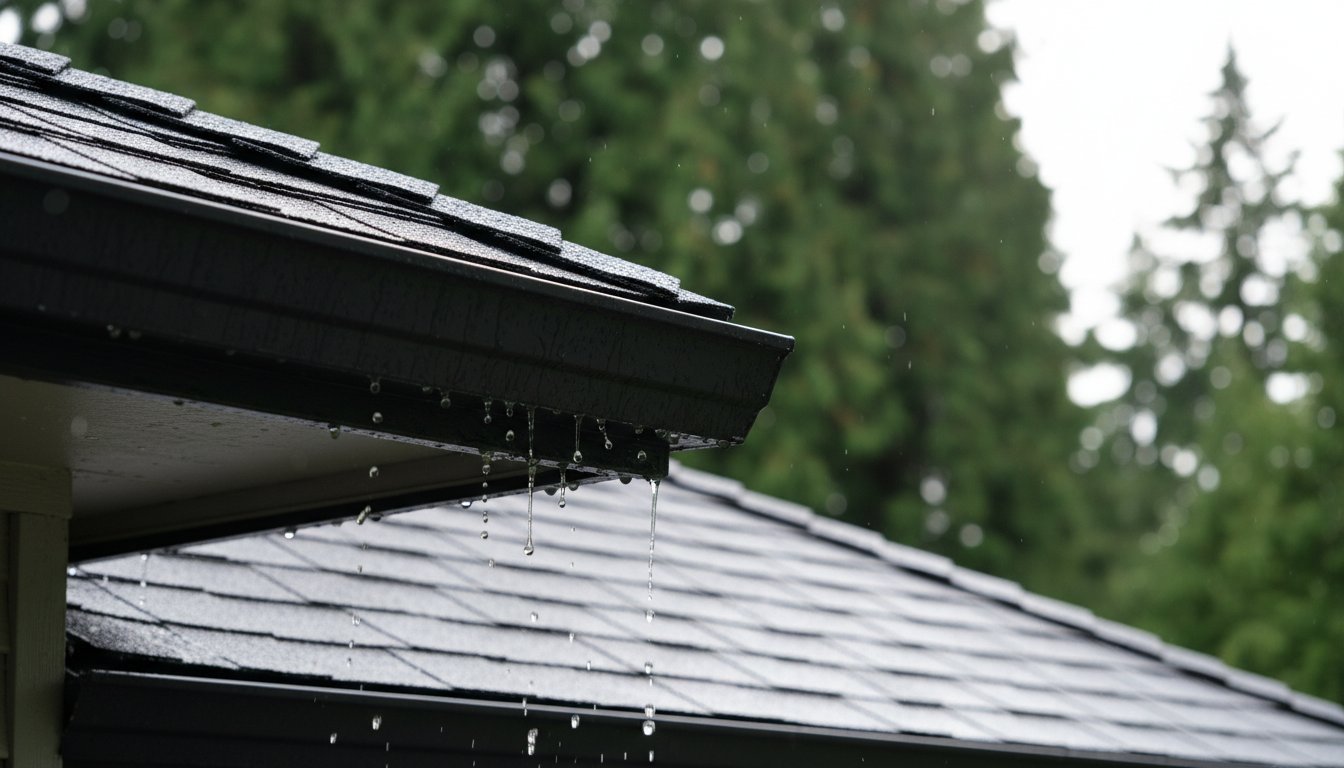
What if the smallest component of your roofing system is the only thing standing between your home and thousands of dollars in structural rot? Most Marysville homeowners assume a new roof is just shingles and paper. However, in our relentless Pacific Northwest climate, skipping a drip edge on roof is like leaving your front door open during a rainstorm. We understand the frustration of hearing technical terms and wondering if a contractor is just trying to pad the bill. You want a dry home without the stress of hidden fees or the fear of wood rot eating your fascia boards.
This guide shows you why a drip edge is a vital, code-required shield for your roof deck and structural bones. You will learn about the March 2026 Seattle Building Code requirements, which mandate a 2-inch metal extension to prevent the wicking effect. We also break down why installing this during a roof replacement costs just $1.50 to $3.00 per linear foot, while waiting to add it later can spike your labor costs to $9 per foot. Roof financing is available to help you secure your home today. We are here to provide the transparency and expert service you deserve for your Marysville or Seattle property.
Key Takeaways
- Learn how L-shaped metal flashing directs rain away from your fascia and into your gutters to prevent expensive structural wood rot.
- Discover why a drip edge on roof is a mandatory requirement under current Washington State building codes for most new installations.
- Understand the critical difference between eave and rake installation to ensure your home is sealed against both wicking moisture and wind-driven rain.
- Find out how to protect your roof's plywood sheathing and secure expert installation with flexible financing options for every project.
What is a Drip Edge and Why is it Vital in Marysville?
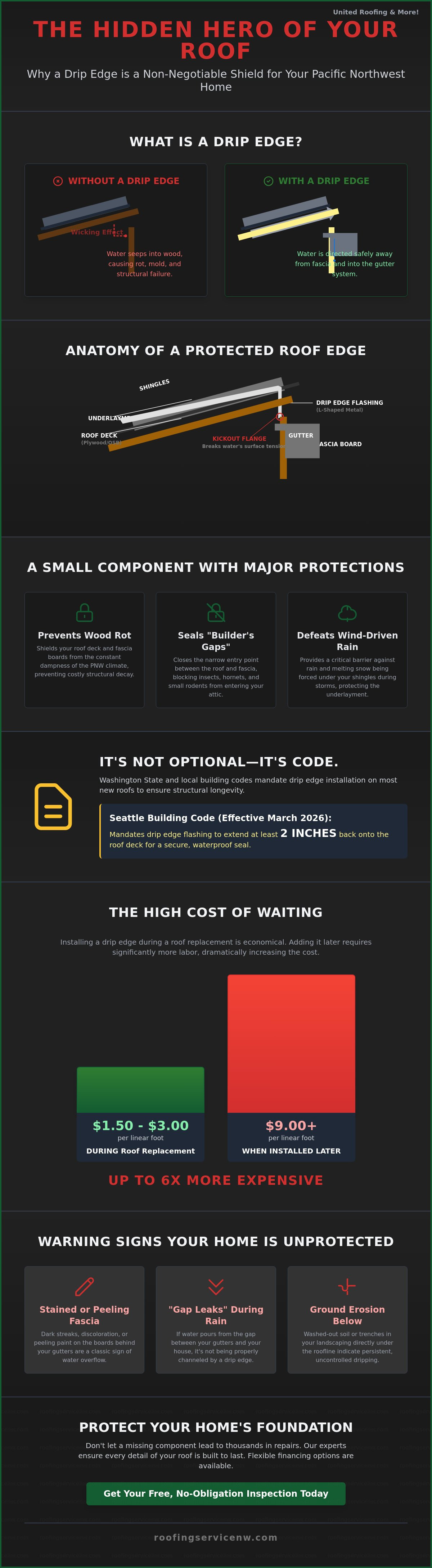
A drip edge on roof is more than just a finishing touch; it is a specialized L-shaped metal flashing designed to be your home's first line of defense. To understand its role, it helps to know What is Flashing and how it protects vulnerable joints. This specific flashing sits at the very edge of your roofline, creating a waterproof bridge between the shingles and the gutter system. Its primary purpose is to direct every drop of rain away from your fascia boards and structural wood. Without it, water follows the path of least resistance, which often leads directly into your home's bones.
In Marysville and Seattle, we face a unique challenge known as the "wicking effect." Because of our high humidity and frequent drizzle, water doesn't always just fall off the roof. Instead, it can actually travel upward. Surface tension allows moisture to cling to the underside of shingles and "wick" into the wooden roof deck or the fascia board. Over time, this constant dampness causes wood to soften, rot, and eventually fail. A properly installed drip edge breaks this surface tension, forcing water to drop safely into the gutters where it belongs. Roof financing is available to help you address these critical defenses before the next storm season hits.
The Anatomy of a Roof Edge
Understanding how your roof is built helps you see why this small metal strip is so important. The drip edge creates a vital connection between the roof deck, the underlayment, and the exterior trim. As of March 2026, the Seattle Building Code requires this flashing to extend at least 2 inches back onto the roof deck to ensure a secure seal. Our skilled professionals focus on these specific components during every installation:
- The Roof Deck: The plywood or OSB sheets that form the base of your roof.
- The Underlayment: The water-resistant barrier that sits on top of the deck.
- The Kickout Flange: The small, outward-bent lip at the bottom of the drip edge that pushes water away from the house.
This "bridge" covers the narrow gap that naturally exists between your roof deck and the fascia board. By sealing this gap, you prevent insects, wind-driven rain, and melting snow from finding a way into your attic. Expert Services & More! are just a phone call away if you suspect your current edge is failing.
Signs Your Marysville Home is Missing a Drip Edge
You don't always need to climb a ladder to know if your home is at risk. There are several clear indicators visible from the ground that suggest your flashing is either missing or improperly installed. If you notice any of these signs, drop us a line for a free inspection. Common red flags include:
- Stained Fascia: Dark streaks or peeling paint on the wooden boards behind your gutters.
- Gap Leaks: Seeing water pour between the gutter and the house instead of flowing through the downspouts.
- Ground Erosion: Noticing deep trenches or washed-out soil in your landscaping directly beneath the roofline after a heavy Snohomish County storm.
Ignoring these signs can lead to expensive repairs for rotted fascia or even foundation issues. We prioritize transparency and communication at every step, ensuring you know exactly what your roof needs to stay dry. Our team has over 15 years of experience helping local homeowners protect their investments. Call now to secure your home with top-quality materials!
How a Drip Edge Protects Your Home from Structural Damage
A drip edge on roof acts as a silent guardian for your home's most vulnerable wooden components. Without this flashing, the edges of your plywood roof deck remain exposed to the constant dampness of the Pacific Northwest. Plywood is essentially a sponge at its edges. When water seeps in, it causes the layers to delaminate and rot. This leads to "deck rot," a condition that weakens the structural integrity of your roof and makes it unsafe to walk on. By providing a non-porous metal barrier, the drip edge ensures that the wood stays bone-dry even during a week-long Marysville downpour.
Protecting your fascia boards is equally critical. When water drips behind a gutter rather than into it, the wooden board behind the metal trough becomes saturated. This leads to peeling paint, mold growth, and eventually, the gutter pulling away from the house entirely. Beyond water, this flashing serves as a physical deterrent for unwanted guests. Small rodents and hornets often use the narrow gap between the roof deck and the fascia to enter your attic. A properly installed edge closes this "builder's gap" tight. While snow is less frequent here, rare freezes can create ice dams. Modern Building Code Requirements emphasize how flashing prevents melting ice from backing up under your shingles and into your living space.
The Physics of Water Shedding
Water has a natural tendency to "cling" to surfaces due to surface tension. On a roof without a drip edge, rain doesn't simply fall off the shingle. It curls around the edge and runs down the siding or fascia. The drip edge features a specific outward-bent flange that breaks this tension. It forces the water to lose its grip and drop directly into the center of the gutter. This also provides vital support for the overhanging edge of your shingles. Without this metal support, shingles can sag over time and eventually crack, creating even more entry points for moisture. Expert Services & More! are available if you notice your shingles beginning to curl or dip at the edges.
Protecting Your Roof Replacement Investment
Installing a new roof without a drip edge is a high-stakes gamble that rarely pays off. Most manufacturers now require a complete roofing system to honor their long-term warranties. If an inspector finds that moisture damage occurred because a drip edge was missing, your claim for shingle failure could be denied. When you invest in a full roof replacement, the drip edge is the seal that keeps the entire system functioning. It is the difference between a roof that lasts 30 years and one that fails in ten. If you aren't sure about the state of your flashing, you can request a free inspection to check for hidden damage. Roof financing is available to ensure your structural bones stay protected without breaking the bank.
Materials and Standards: Is a Drip Edge Required by Code?
Is a drip edge on roof a legal necessity? In Washington, the answer is a firm yes. As of March 2026, the Seattle Building Code Chapter 15 mandates that drip edges are non-negotiable for new roof installations. These flashings must extend back onto the roof deck a minimum of 2 inches. They also require mechanical fastening at a maximum of 12 inches on center. These standards exist to combat the relentless moisture that defines life in King and Snohomish County. Following these rules isn't just about passing an inspection. It's about ensuring your home survives the next decade of storms.
The code also dictates specific material thickness to ensure longevity. Metal flashing must be corrosion-resistant and no less than 0.019 inches thick, which is the industry standard for No. 26 galvanized sheet. Using thinner, cheaper materials is a common contractor shortcut that often leads to early failure. We lead with our credentials and 15 years of experience to ensure your project meets every local requirement. Our team stays current on all local amendments through January 7, 2026. Roof financing available!
The Best Materials for the Pacific Northwest
Choosing the right metal depends on your home's architectural style and your long-term goals. Galvanized steel remains the top choice for durability in Marysville. It provides the rigidity needed to support shingle edges during heavy rain and resists wind-driven debris. Aluminum is another excellent option for residential homes because it's naturally rust-proof and widely available in various colors. For luxury or historic properties in Seattle, copper provides a high-end look that develops a beautiful patina while lasting for decades. We help you choose the best fit for your specific needs. Expert Services & More! are what we provide to keep your home safe.
Mastering Roofing Standards in Washington
Local inspectors are more thorough than ever. They specifically look for proper drip edge overlap and correct fastening during final walk-throughs. If your roof doesn't meet these criteria, it could stall a home sale or significantly lower your appraisal value. Staying updated on master roofing standards is the best way to protect your investment. A code-compliant roof tells potential buyers that you prioritized the property's structural health. Our skilled professionals ensure every detail is handled with transparency and communication. Drop us a line today for a free estimate on your next project.
Proper Installation: Eaves vs. Rakes
Installation isn't a one-size-fits-all process. The way a drip edge on roof is layered changes depending on which part of your house we are protecting. On the eaves, which are the horizontal edges where your gutters hang, the metal must be installed directly onto the roof deck. The waterproof underlayment then goes over the top of the metal. This ensures that any moisture reaching the underlayment flows safely over the flashing and into the gutter. If a contractor reverses this order, they create a shelf that traps water against your plywood deck. We see this mistake often in older Marysville homes, and it is a leading cause of rot.
The rake edges, or the slanted sides of your roof, follow a different rule. Here, the metal flashing goes over the underlayment. This specific layering protects your home from the wind-driven rain common in Snohomish County. It prevents gusts from forcing water underneath the edges of your roofing felt. For a secure fit, our skilled professionals use corrosion-resistant nails spaced every 12 inches per the 2026 building code. We also ensure a minimum 2-inch overlap between metal sections to create a continuous, leak-proof barrier. Proper corner treatment involves careful cutting and lapping to prevent any gaps where moisture could enter. Roof financing available!
Common Installation Mistakes to Watch For
Even experienced builders can make errors that lead to long-term structural damage. One of the most frequent mistakes is installing the drip edge over the underlayment at the eaves. This error effectively funnels water behind the metal and directly onto the wood fascia. Another issue is leaving an improper gap between the flashing and the fascia board. If the gap is too tight, water cannot shed properly; if it is too wide, the metal lacks the support it needs to stay rigid. Failing to overlap sections by the industry-standard 2 inches is another red flag that leads to joint leaks. These small oversights can lead to the very rot you are trying to avoid.
Drip Edge and Gutter Integration
Your gutters and flashing must work as a single team to keep your home dry. The "kickout" flange of the drip edge should always sit correctly over the back edge of the gutter. We never tuck the flashing inside the back of the gutter. Doing so creates a "waterfall" effect where rain flows behind the gutter system and rots the wood siding or fascia behind it. This precise alignment is what keeps your home's exterior dry and your foundation safe from erosion. If you are worried about your current setup, get a free quote to ensure your system is integrated correctly. Expert Services & More! are just a phone call away.
We take pride in our 15 years of experience and our commitment to transparency and communication. We don't believe in high-pressure sales; we believe in doing the job right the first time. Our team is ready to help you secure your home against the next big storm. Drop us a line today to speak with a local expert about your roofing needs.
United Roofing & More!: Expert Installation & Financing
At United Roofing & More!, we believe your home deserves the best protection possible. That's why we commit to a 100% code-compliant installation of every drip edge on roof we touch. We don't just cover up problems; we fix them from the inside out. If our skilled professionals find rotted fascia or damaged decking during an inspection, we address those structural "bones" immediately. Our 15 years of experience ensures that your home in Marysville, Everett, or even as far south as Renton and Tacoma remains bone-dry. We prioritize transparency and communication by keeping you informed at every step of the repair or replacement process. Our team is proud to serve the entire region with reliable, hardworking local expertise.
Many homeowners worry about contractor upsells or hidden fees. We eliminate that stress by providing clear, detailed estimates. We show you exactly what is happening at your roofline before we start any work. This "no-nonsense" approach is why local families trust us with their most valuable asset. We understand the specific weather patterns of King and Snohomish County. We know that a minor leak in April can become a major structural failure by December. Our goal is to lower the barrier to entry for high-quality repairs. Roof financing available!
Affordable Protection with Roof Financing
Don't let the fear of upfront costs stop you from securing your home's perimeter. A missing or damaged drip edge can lead to thousands in structural damage if it's left ignored. We offer flexible payment plans to fit your budget. Whether you need a minor repair or a full system upgrade, our team makes the process easy and stress-free. Check out our roof financing near me guide to see how we make expert quality accessible. We believe every homeowner should have access to a safe, dry roof without financial strain. Expert Services & More! are what we provide to keep your family protected.
Get a Free Expert Inspection Today!
Hidden moisture damage at the roof edge is often invisible to the untrained eye. Our team knows exactly where to look for soft spots, mold, and improper flashing overlaps that violate current building codes. We provide detailed, no-obligation quotes for homeowners throughout the Pacific Northwest. You deserve a contractor who values long-term trust over high-pressure sales tactics. We are highly organized and customer-centric, ensuring your project stays on track and on budget. Drop us a line today to schedule your walkthrough with one of our experienced professionals. Call now to protect your investment with top-quality materials. Expert Services & More! are just a phone call away. Roof financing available!
Protect Your Investment and Stay Dry Today
You now know that a drip edge on roof isn't an optional accessory. It's a critical shield that keeps the Pacific Northwest's rain from destroying your home's structural bones. We have covered how this simple metal flashing prevents "wicking," protects your fascia, and meets the latest 2026 Washington building codes. Don't wait for a stained ceiling or rotted wood to tell you there's a problem. Our team brings over 15 years of local experience to every project. We are fully licensed, bonded, and insured in Washington to give you total peace of mind. We believe in transparency and communication at every step of the process.
Whether you need a quick repair or a full replacement, we make the process easy. Roof financing available! Expert Services & More! are just a phone call away. Drop us a line to ensure your home stays dry through the next rainy season. We are ready to help you secure your roof with top-quality materials and skilled professionals. Call now to schedule your no-obligation walkthrough and get a clear look at your roof's health.
Get Your Free Roof Inspection and Drip Edge Quote Now!
Frequently Asked Questions
Is a drip edge really necessary on a roof?
Yes, a drip edge is essential for protecting your home from the wicking effect caused by the 37 inches of average annual rainfall in the Seattle area. It acts as a waterproof seal that prevents moisture from soaking into your roof deck and fascia boards. Without this protection, your structural wood will eventually rot and fail. Expert Services & More! are available to check your current flashing for gaps.
Does a drip edge go over or under the underlayment?
The placement depends on the specific location of the flashing. On your roof's eaves, the metal goes under the underlayment to ensure water flows directly into the gutters. On the rake edges, the metal goes over the underlayment to block wind-driven rain from entering the sides of your home. This specific layering is required to create a continuous water-shedding system. Our skilled professionals follow these standards on every job. Roof financing available!
What happens if you don’t have a drip edge on your roof?
Skipping a drip edge on roof leads to wood rot in your fascia and roof deck. Water will curl around the shingle edge and soak into the wood rather than dropping into the gutter. This creates an entry point for pests like hornets or rodents and can lead to foundation erosion as water pours down your siding. We offer free inspections to identify these hidden risks before they become expensive structural repairs.
Can you install a drip edge on an existing roof?
You can install a drip edge on an existing roof, though it is more labor-intensive than doing it during a replacement. In 2026, the total cost for this retrofitting typically ranges from $5 to $9 per linear foot because shingles must be carefully lifted. While it costs more than a new installation, it is significantly cheaper than replacing rotted structural wood later. Drop us a line for a clear estimate today.
Is a drip edge required by code in Washington state?
Yes, a drip edge is mandatory under the International Residential Code (IRC) and the Seattle Building Code as of March 2026. Local regulations in King and Snohomish County require flashing to be corrosion-resistant with a minimum thickness of 0.019 inches. We ensure every project is 100% code-compliant to protect your home's value and structural integrity. Transparency and communication are our core promises to you at every step.
How much does it cost to add a drip edge during a roof replacement?
Adding a drip edge during a full roof replacement is very cost-effective, typically ranging from $1.50 to $3.00 per linear foot in 2026. For an average home with 100 to 200 linear feet of roof edge, the total cost is often between $150 and $600. This small investment prevents thousands of dollars in future fascia and deck repairs. Roof financing available to help manage your project costs and keep your home safe!
What is the difference between a drip edge and a rake edge?
The difference lies in the location on your roofline and the installation method. A drip edge on the eaves sits horizontally where gutters are attached. A rake edge refers to the flashing on the slanted sides of the roof gables. While the metal material is often similar, rake edges must be installed over the underlayment to protect against wind-driven moisture. Our team has over 15 years of experience handling both correctly.
Does a drip edge help prevent ice dams in Seattle winters?
Yes, a properly installed edge is a vital defense against ice dams during rare Marysville freezes. It prevents melting ice from backing up under your shingles and into the roof deck. By sealing the gap between the deck and the fascia, it ensures that water has a clear path to the gutter even when ice begins to form. Call now for top-quality protection against extreme weather events. Expert Services & More! are just a phone call away.


