
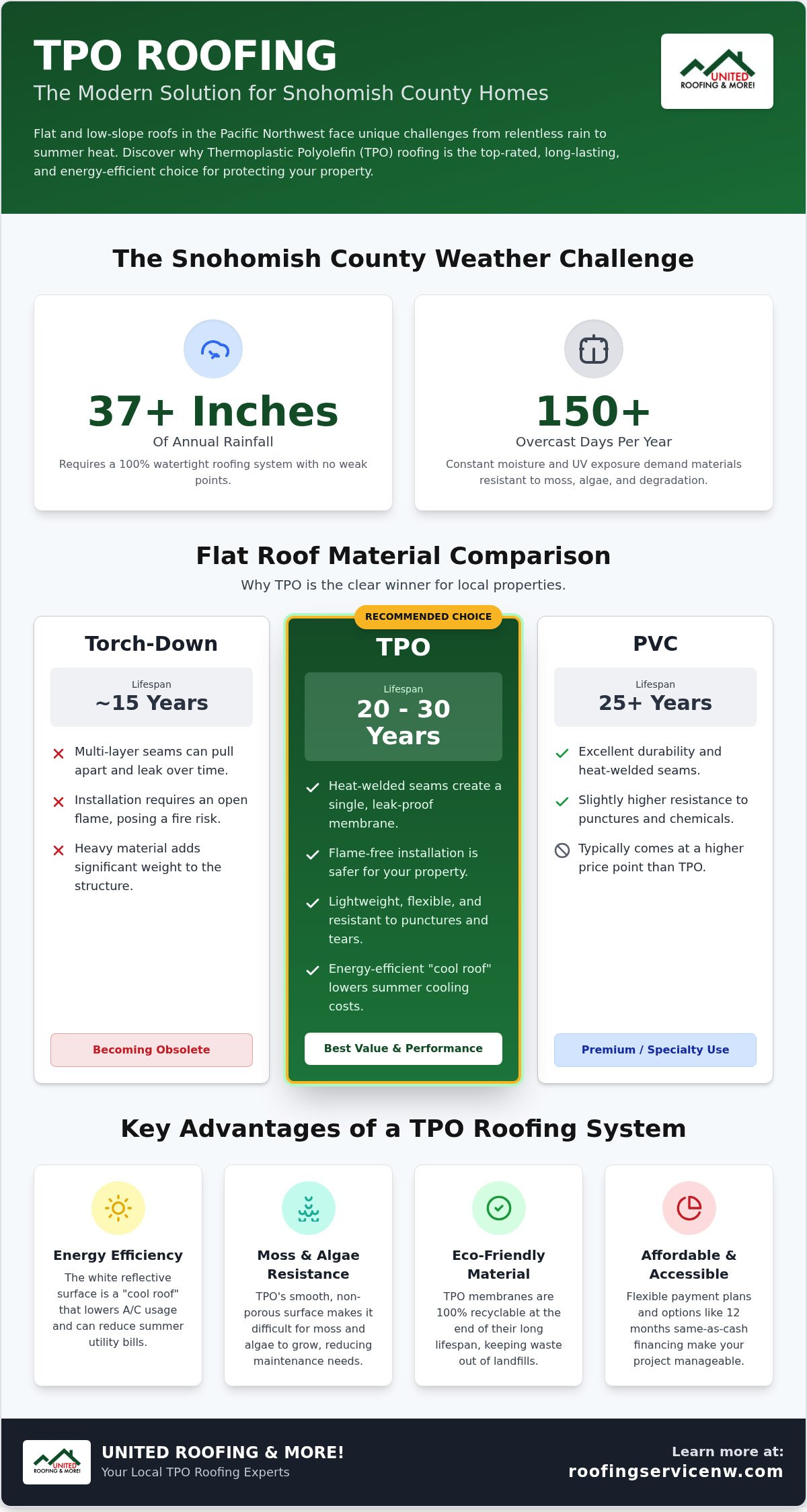
What if you could stop worrying about your flat roof every time the Snohomish County clouds roll in? With over 37 inches of annual rainfall and 150 overcast days a year, a leaky roof isn't just a nuisance; it's a direct threat to your property's value. Many local homeowners and business owners deal with frequent leaks and high cooling costs on low-slope sections. TPO roofing Snohomish County provides a modern, durable solution designed to handle our unique climate while keeping your energy bills low.
We understand the confusion of comparing TPO to PVC or torch-down options. You deserve a roof that lasts 20 to 30 years and keeps your interior dry. This article explores why TPO is the leading flat-roof solution for 2026. We will cover the benefits of professional heat-welded seams, potential energy rebates, and how expert installation ensures lasting peace of mind. Our team is here to help you find the right fit with flexible payment plans and 12 months same-as-cash financing options to make your project affordable today.
Key Takeaways
- Discover why single-ply TPO membranes are the most reliable solution for flat and low-slope roofs in Everett and Marysville.
- Compare TPO with PVC and torch-down options to see why heat-welded seams offer superior leak protection in the PNW.
- Learn how adding polyiso board during your TPO roofing Snohomish County installation can boost your home's R-value and lower utility bills.
- Find out how to maintain your membrane with simple moss removal and seasonal inspections to reach a 30-year lifespan.
- Explore low-interest financing and same-as-cash payment plans that make high-quality roof replacement easy on your wallet.
Why TPO Roofing is the Top Choice for Snohomish County Flat Roofs
Homeowners and business owners in Everett and Marysville are moving away from old asphalt and torch-down systems. They're choosing Thermoplastic Polyolefin (TPO) instead. TPO is a single-ply, heat-reflective roofing membrane that provides a modern solution for flat and low-slope structures. It combines the best traits of EPDM rubber and PVC roofing without the high costs or environmental drawbacks. It's becoming the standard for TPO roofing Snohomish County projects because it handles our unique weather cycles better than traditional materials.
There's a common myth that TPO is only for giant industrial warehouses. That simply isn't true anymore. TPO is an excellent choice for residential home additions, garage conversions, and contemporary homes with flat rooflines. It offers a clean, professional look that doesn't involve the messy tar or dangerous open flames required for older roofing styles. It's a "no-nonsense" material that delivers long-term results for both families and local businesses.
The PNW Weather Challenge: Rain, Wind, and TPO
Water is the biggest enemy of any flat roof in the Pacific Northwest. Standard roofs often fail at the seams, but TPO uses a different approach. We use specialized equipment to create heat-welded seams. This process fuses the sheets together to form a single, watertight barrier. It's incredibly effective at preventing water intrusion during heavy Snohomish rainstorms. You won't have to worry about the typical leaks that plague older flat roofs.
- Moss Resistance: TPO's smooth surface makes it very difficult for moss and algae to take root. This is a massive relief for Marysville homeowners who are tired of constant roof cleaning.
- Cold Weather Flexibility: TPO remains flexible even when North County temperatures drop below freezing. This prevents the membrane from cracking or becoming brittle over time.
- UV Protection: Even on overcast days, UV rays can degrade roofing materials. TPO is engineered to resist this damage, ensuring your roof lasts for decades.
Energy Efficiency in Western Washington
We're seeing hotter temperatures in July and August every year. TPO is a "cool roof" solution that helps you manage these summer heatwaves. The white or light gray surface reflects sunlight away from your building rather than absorbing it. This keeps your attic or upper floors much cooler, which reduces the strain on your air conditioning system. TPO roofing Snohomish County is an investment that pays you back through lower monthly utility bills and a more comfortable living space.
Environmental impact matters to our community. TPO is 100% recyclable, meaning old membranes don't have to end up in a landfill. It's a sustainable choice that fits the values of Western Washington property owners who want durability without compromising on eco-friendly practices.
TPO vs. PVC and Torch-Down: Which Wins in Snohomish County?
Picking the right material for a flat roof in Snohomish County usually involves three main contenders: TPO, PVC, and torch-down. While torch-down was the standard for decades, modern technology has shifted the landscape. TPO roofing Snohomish County provides a balance of longevity and price that older systems simply can't touch. Most asphalt-based roofs start to fail after 15 years in our wet climate. TPO systems typically last 20 to 30 years with proper care.
Chemical resistance is another major factor for local property owners. If your building sits near heavy traffic corridors like I-5 or industrial areas in Everett, your roof faces constant exposure to airborne pollutants. TPO resists these oils and chemicals better than traditional asphalt. For most residential projects, TPO provides nearly all the benefits of high-end PVC at a much more affordable price point, making it the smartest cost-to-value choice for local homeowners.
Why Torch-Down is Becoming Obsolete
Torch-down roofing requires an open flame during installation. In busy areas like Lynnwood, this creates an unnecessary fire risk. Many insurance providers now prefer flame-free options for this exact reason. Beyond safety, torch-down is heavy. It adds significant weight to your home's structure. These multi-layer systems also suffer from seasonal expansion. As our weather shifts from freezing winters to hot summers, the layers can pull apart and cause leaks. TPO is a single-ply, lightweight membrane. It's flexible enough to expand and contract without losing its watertight seal.
TPO vs. PVC: The Technical Trade-offs
PVC is often viewed as the premium option for flat roofing. It offers slightly higher puncture resistance and is the best choice for roofs exposed to heavy grease, like commercial kitchens. However, TPO is the ideal 'middle ground' for most Western Washington properties. It delivers excellent weatherproofing and helps reduce the heat island effect in our growing urban spaces. While PVC remains a bit more flexible in extreme cold, modern TPO formulations are built to handle our local freeze-thaw cycles without cracking. If you need help deciding which material fits your budget, our team can provide a professional roof installation consultation to guide you.
The TPO Installation Process: What to Expect
A successful TPO roofing Snohomish County project starts long before the white membrane is unrolled. We begin by preparing the roof deck. A smooth, clean substrate is essential for a high-quality finish. If the deck is uneven or contaminated, the membrane won't adhere properly. After the deck is ready, we install specialized insulation layers. Adding polyiso board is a smart move for any local property. It doesn't just provide a flat surface; it significantly improves your home's R-value. This extra insulation keeps your heat inside during cold January nights and blocks external heat in the summer.
The heat-welding process is where the real protection happens. Unlike older systems that rely on messy glue or tape, TPO is fused together using hot-air welders. This creates a permanent, molecular bond. The seam actually becomes stronger than the membrane itself. Quality control is vital here. A single weak spot in a seam can lead to a leak during a heavy PNW downpour. We also pay close attention to flashing and detailing. Securing the edges, vents, and skylights is critical for keeping moisture out of your attic or commercial workspace. It's a precise job that requires professional expertise to get right the first time.
Pre-Installation Assessment in Snohomish County
We don't just cover up old problems. Our team performs a thorough check for existing water damage or structural rot. If we find soft spots in the wood, we repair them immediately to ensure a solid foundation. We also calculate proper drainage for your specific roofline. Flat roofs need a slight slope to prevent "ponding water." If water sits on your roof for more than 48 hours after a storm, it can lead to premature failure. We also emphasize the importance of roof drip edges. These are essential for managing water flow where your flat roof transitions to a pitched section or meets the fascia board.
Quality Control and Final Inspection
Once the installation is finished, we perform a manual "probe" of every single seam. This ensures the heat-welding created a 100% waterproof bond across the entire surface. We also clean the membrane to ensure your new "cool roof" stays highly reflective from day one. If your project is part of a larger renovation, you can check out our complete roof replacement guide for more details on full-property projects. We believe in transparency throughout the whole service process. You'll stay informed from the first inspection until the final walk-through is complete. Our goal is your total peace of mind.
Common TPO Maintenance and Repair Needs
Maintaining your TPO roofing Snohomish County investment is the best way to ensure it reaches its full 30-year potential. While TPO is incredibly durable, it isn't "no-maintenance." Our local heavy rain and dense tree cover require a proactive approach to keep the membrane performing. We recommend scheduling an annual inspection specifically after the fall leaf drop. This is when debris is most likely to clog your drainage system and cause issues. During these checks, we look for two main types of damage: seam failure and puncture damage. Seam failure often occurs due to poor initial installation, while punctures usually come from fallen branches or heavy foot traffic.
The "Repair vs. Replace" decision usually comes down to the age of the system and the frequency of leaks. If your roof is less than 15 years old and suffers from a single puncture, a professional heat-welded patch is a fast, cost-effective fix. However, if you notice multiple seam failures or the membrane feels brittle to the touch, a full replacement is often the safer long-term investment. We always provide a clear, honest assessment so you can choose the best path for your budget without any high-pressure tactics.
Cleaning your roof is also vital for maintaining its "cool roof" properties. Snohomish County moss and algae can trap moisture against the membrane if left alone. To remove it safely, use a soft-bristled brush and a mild, non-abrasive cleaner. You should never use a high-pressure power washer on a single-ply membrane. The force can score the surface or accidentally lift the edges of the seams, leading to immediate leaks.
Dealing with PNW Debris
Everett and Marysville are known for their beautiful greenery, but those trees create a lot of work for flat roofs. Clogged scuppers and drains are the #1 cause of flat roof failure in our area. When water can't escape, it creates "ponding water." This standing water puts immense pressure on your roof's structure and can eventually seep through the smallest imperfections. If you see pools of water 48 hours after a storm, you need to clear your drains immediately to prevent structural damage and keep your interior dry.
Professional TPO Repairs
TPO is a thermoplastic material, which means it requires specialized heat-welding tools for effective, long-term patches. Many property owners try DIY repairs using standard silicone, caulk, or tar. These materials don't bond correctly with TPO and will fail within a few months. A failed DIY patch often makes the eventual professional repair more difficult and expensive because the area must be scrubbed clean of the old adhesives. When you notice a leak or a tear, it's time to call for expert roof repairs to protect your structural integrity. Our team is ready to help you secure your home with a fast, professional fix. If you're worried about the state of your flat roof, we offer high-quality roof repairs to keep your property dry and secure.
United Roofing & More!: Affordable TPO Solutions and Financing
United Roofing & More! specializes in high-quality TPO roofing Snohomish County for both residential additions and commercial properties. We know that a flat roof is a serious investment. Whether you're adding a modern master suite or protecting a warehouse in Everett, you need a system that lasts. Our team brings years of local experience to every project. We focus on "no-nonsense" service that puts your needs first. We don't just install a membrane; we build a long-term defense for your property using heat-welded seams and expert-grade materials.
Local residents trust us because we adhere to master roofing standards on every job. We believe that professional workmanship should be the baseline, not an upgrade. Our installers are highly trained in the latest TPO techniques to ensure your roof remains leak-proof for decades. We take pride in our reputation across the Pacific Northwest as a supportive partner for all your roofing needs. We keep you informed throughout the entire process so there are never any surprises.
Roofing Financing Made Simple
The upfront cost of a new roof can feel overwhelming. We break down this barrier with accessible roofing financing options designed to fit your monthly budget. Financing isn't just about making the project possible. It allows you to choose a higher-quality TPO membrane that offers better long-term protection. Instead of settling for a budget fix, you can secure a professional roof installation that adds real value to your home. We offer flexible plans, including a "12 months same-as-cash" option with no interest and no monthly payments for the first year. Other loans range from $1,000 to $70,000 with competitive APRs ranging from 9.99% to 19.99%. You can check your eligibility today on our roof financing near me page.
Get Your TPO Quote in Snohomish County
Our estimation process is completely transparent. You won't find hidden fees or high-pressure sales tactics here. We provide a clear, detailed breakdown of the work required so you can make an informed decision. We proudly serve Marysville, Everett, Lynnwood, and the greater Seattle area with reliable roofing solutions. Don't wait for a small leak to become a major structural repair. Schedule your free inspection today to explore our TPO options and find a financing plan that works for you. Let's get your new roof started.
Protect Your Property with Modern TPO Solutions
Your flat roof doesn't have to be a source of stress. By choosing TPO, you're investing in a durable, energy-efficient system that stands up to the heavy rains and temperature shifts of the Pacific Northwest. We've seen how heat-welded seams and proper drainage engineering can extend your roof's life by decades. Whether you need expert roof repairs or a complete roof replacement, our local team is here to help you every step of the way.
United Roofing & More! is proud to be your locally owned PNW expert. We prioritize high-quality workmanship and transparency. Don't let the upfront cost of TPO roofing Snohomish County hold you back. We offer flexible roofing financing options to fit any local budget. You can get the peace of mind you deserve without the financial strain. Our team is ready to deliver a "no-nonsense" service experience that keeps your property dry and secure.
Are you ready to upgrade your property? Secure Your Flat Roof with Professional TPO Installation & Financing today. We look forward to providing the durable, leak-proof solution your home or business needs for 2026 and beyond.
Frequently Asked Questions
How long does a TPO roof last in the Pacific Northwest?
A TPO roof typically lasts between 20 and 30 years in the Pacific Northwest with proper maintenance. This lifespan depends heavily on the quality of the initial installation and your commitment to regular care. Because our region faces heavy rainfall, ensure your TPO roofing Snohomish County project includes professional heat-welded seams. Regular inspections help you reach that 30-year mark by catching small punctures or debris build-up before they cause expensive structural damage.
Is TPO roofing suitable for residential homes in Snohomish County?
Yes, TPO roofing is an excellent choice for residential properties with flat or low-slope sections. It's becoming a popular alternative to traditional asphalt for modern home additions and garage conversions in Everett and Marysville. The material is lightweight and offers a clean, professional look. It provides superior leak protection compared to older torch-down systems, making it a "no-nonsense" solution for local homeowners seeking long-term peace of mind and durability.
How much does a TPO roof replacement cost compared to shingles?
TPO roofing generally has a higher upfront cost than standard asphalt shingles but offers better long-term value for flat surfaces. Shingles aren't designed for low-slope roofs and will fail quickly if installed on a flat deck. While the initial investment for TPO is greater, it provides superior energy efficiency and a much longer lifespan for flat sections. We offer flexible payment plans to make high-quality installations accessible for every budget and property size.
Can TPO roofing be installed over an existing flat roof?
You can sometimes install TPO over an existing flat roof, but it depends on the condition of your current structure. A "recover" project involves adding a new membrane over the old one, which saves on tear-off and disposal costs. However, we must first verify that the underlying deck is dry and structurally sound. If there's trapped moisture or rot, a full tear-off is necessary to prevent future failures and protect your building.
Does TPO roofing get slippery when wet or icy?
Walking on TPO can be dangerous because the membrane becomes very slippery when wet, icy, or covered in frost. Its smooth, reflective surface doesn't provide much traction during a typical Snohomish County winter. You should always use extreme caution if you need to access the roof during or after a storm. For safety, we recommend waiting for the surface to dry completely or hiring a professional who has the proper safety equipment for flat-roof maintenance.
What color TPO roof is best for energy efficiency in Washington?
White or light gray TPO is the best choice for maximizing energy efficiency in Western Washington. These "cool roof" colors reflect a significant portion of solar radiation away from your home. This keeps your attic temperatures lower during our increasingly hot July and August months. Choosing a reflective color for your TPO roofing Snohomish County project helps lower your cooling costs and reduces the overall heat island effect in your local neighborhood.
How do I know if my TPO roof needs a repair or a full replacement?
Your roof likely needs a repair if you find a single puncture or a small, isolated leak on a membrane less than 15 years old. However, you should consider a full replacement if you notice widespread seam failures, brittle material, or multiple active leaks. Our team provides a transparent assessment to help you decide. We focus on clear dialogue to ensure you get the most cost-effective solution for your specific home or business.
Are there financing options available for commercial TPO roofing projects?
Absolutely, we offer dedicated roofing financing for both residential and commercial TPO projects. We provide flexible payment plans ranging from $1,000 up to $70,000 to help you manage the cost of a full replacement or large-scale repair. This includes a "12 months same-as-cash" option with no interest and no monthly payments for the first year. Our goal is to lower the barrier to entry for professional, high-quality roofing services in our community.


