

What if a small paperwork oversight cost you thousands in city fines and left your home unprotected during a classic Seattle downpour? It's a scenario many homeowners fear when they realize their aging roof needs professional attention. Understanding the roofing permit requirements seattle residents must follow in 2026 is often the most stressful part of the project. You want a safe, sturdy home, but complex building codes and the distinction between "Subject-to-Field-Inspection" and full permits can feel overwhelming.
We agree that you deserve clarity instead of confusion. It's frustrating to wait for city approval while worrying about leaks and structural damage. Our comprehensive 2026 checklist is designed to strip away the mystery and provide a clear path forward for your roof replacement. You'll learn exactly which projects require a permit, how to speed up the approval process, and why working with a local expert makes the difference. We'll show you how to secure your home’s future while keeping your budget on track with flexible financing options. Let's get your project started with total peace of mind and professional results.
Key Takeaways
- Identify which roof replacement projects require city approval and how to determine if your minor repairs are exempt from standard permits.
- Understand the 2026 updates to the Seattle Building Code regarding energy efficiency and mandatory ventilation to prevent mold in our damp climate.
- Master the roofing permit requirements seattle enforces to ensure your home passes mandatory SDCI inspections and avoids costly fines.
- Learn how to utilize the "Subject-to-Field-Inspection" (STFI) process to fast-track your application for standard residential roofing projects.
- Discover how a professional contractor handles the complex SDCI paperwork while offering flexible financing for necessary structural code upgrades.
Do You Really Need a Roofing Permit in Seattle?
Understanding the roofing permit requirements seattle enforces is the first step toward a successful home improvement project. Many residents assume that a simple shingle swap is a DIY task that flies under the radar. In reality, the city maintains strict oversight to ensure every home remains structurally sound in our unique environment. Skipping the paperwork might seem like a time-saver, but it often leads to expensive legal and financial complications down the road.
The Seattle Department of Construction & Inspections (SDCI) manages all local building activity. In 2026, their focus remains on safety and climate resilience. Most major projects require a formal building permit requirements review to confirm the materials and methods used can withstand heavy Pacific Northwest rainfall. This process isn't just about red tape; it's a quality-assurance safeguard for your family and your property value.
When a Permit is Mandatory
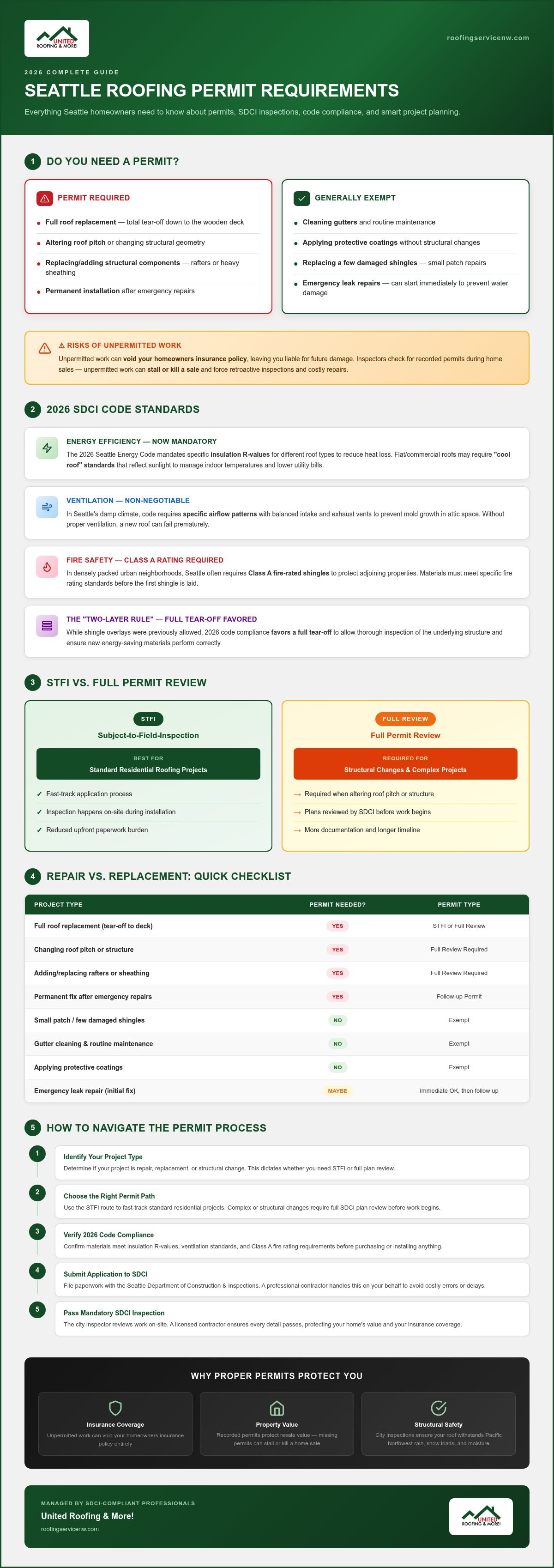
If you are planning a full Roof Replacement, you will almost certainly need a permit. This is especially true for projects involving a total tear-off of old materials down to the wooden deck. Any project that alters the roof pitch or changes the structural geometry of the house requires a full review. Replacing or adding new structural components like rafters or heavy sheathing also falls into this mandatory category. These roofing permit requirements seattle homeowners encounter are designed to prevent structural failure under the weight of snow or saturated materials.
Permit Exemptions for Seattle Homeowners
Not every small fix requires a trip to the SDCI office. You can usually perform routine maintenance without a formal permit. This includes cleaning gutters, applying protective coatings, or replacing a few damaged shingles. Small "patch" repairs are generally exempt as long as they do not involve structural changes or large surface areas. Emergency leak repairs can often start immediately to prevent water damage, though you may need a follow-up permit for the permanent Roof installation once the initial crisis is over.
Unpermitted work is a gamble that rarely pays off. It can void your homeowners insurance policy, leaving you responsible for any future damage claims. If you decide to sell your home, inspectors will check for recorded permits. Unpermitted work can stall a sale or force you to pay for retroactive inspections and repairs. United Roofing & More! specializes in handling the permit headache for our clients. We ensure every project passes mandatory city inspections. We also offer dedicated roofing financing to help cover necessary structural improvements required by current Seattle codes. Let us handle the paperwork while you enjoy a leak-free home.
Understanding Seattle’s SDCI Roofing Codes and Standards
The Seattle Building Code (SBC) sets the bar for every Roof installation in the city. These 2026 updates focus heavily on energy efficiency and long-term durability. Adhering to the roofing permit requirements seattle mandates means more than just following rules. It ensures your home remains a high-performing asset. One major question homeowners ask is the "Two-Layer Rule." While Seattle has allowed shingle overlays in the past, meeting modern roofing permit requirements seattle often favors a full tear-off. This allows for a thorough inspection of the underlying structure and ensures new energy-saving materials perform correctly.
Fire safety is another priority in dense urban neighborhoods. Your chosen materials must meet specific fire rating standards to protect your property and your neighbors. In neighborhoods with closely packed homes, the city often requires Class A fire-rated shingles. Professional contractors ensure these requirements are met before the first shingle is laid. Proper ventilation is also a non-negotiable standard. In our damp climate, the city requires specific airflow patterns to prevent mold growth in your attic space. Without balanced intake and exhaust vents, your new roof could fail prematurely.
The 2026 Seattle Energy Code and Your Roof
Energy efficiency is no longer optional for Seattle homeowners. The city now mandates specific insulation R-values for different roof types to reduce heat loss. If you have a flat or commercial property, you may need to meet "cool roof" standards that reflect sunlight. These materials help manage indoor temperatures and lower your utility bills. It is also vital to calculate roof pitch accurately. The steepness of your roof dictates which materials are code-compliant and how much insulation you need to pack into the attic space.
Structural Integrity and Load Requirements
Seattle roofs must handle more than just rain. The city requires designs that account for "snow load" and intense drainage during winter storms. Before a new roof goes on, the SDCI requires an inspection of the "decking" or wood sheathing. If the wood is rotted or soft, it must be replaced to pass inspection. Moisture protection is the final piece of the puzzle. The city requires a roof drip edge to direct water away from your fascia and into the gutters. Without this essential guard, your home is at risk for rot. If you are worried about the cost of these upgrades, you can explore our roofing solutions to keep your project moving forward without delay.
The Ultimate Seattle Roofing Permit Checklist: Repair vs. Replacement
Deciding between a quick fix and a total overhaul changes your paperwork path significantly. Seattle distinguishes clearly between minor maintenance and structural changes. Understanding the roofing permit requirements seattle residents face helps you avoid city fines and project delays. For many standard residential projects, you might qualify for an "over-the-counter" permit, which speeds up the process. However, larger projects require a more detailed submittal to the SDCI to ensure safety and code compliance.
Every formal application requires a specific set of documents. You'll need detailed site plans showing your property lines and the roof's footprint. You must also provide material specifications to prove your new shingles or metal panels meet local fire and energy standards. Finally, the city requires verified contractor information to ensure the work is performed by a licensed professional. If your home is in a historical district like Pioneer Square or Queen Anne, you'll need additional approval from the local landmark board before any work begins.
Checklist for Full Roof Replacement
A complete Roof Replacement is a major investment that requires careful documentation. Use this checklist to stay on track:
- Verify if a full tear-off is mandatory for your home's age to ensure the deck is sound.
- Confirm the weight limits of your new materials to prevent overloading existing rafters.
- Ensure your contractor is a master roofing specialist with a current Seattle business license.
- Submit a waste management plan for the disposal of old roofing debris.
Checklist for Major Roof Repairs
Extensive Roof repairs often trigger the same roofing permit requirements seattle mandates for full replacements. Keep these points in mind:
- Assess if your repair covers more than 25% of the total roof area; this usually requires a permit.
- Document structural damage with photos and professional reports to justify the repair scope.
- Apply for a "Subject-to-Field-Inspection" (STFI) permit for a faster turnaround on non-structural fixes.
- Check if the repair area requires updated insulation to meet 2026 energy codes.
United Roofing & More! simplifies this entire process. We manage the "Permit Headache" by handling every application and inspection for you. Our team ensures your Roof installation meets every city standard while providing flexible roofing financing to keep your project affordable. We believe in transparency and open dialogue, so you'll always know exactly where your permit stands.
How to Apply for a Seattle Roofing Permit (STFI vs. Full Review)
Applying for a permit doesn't have to be a nightmare. The city offers two main paths based on your project's complexity. For most residential Roof Replacement projects, you'll use the STFI route. This stands for "Subject-to-Field-Inspection." It's the most common way to meet roofing permit requirements seattle without long review wait times. Understanding which path to take saves you weeks of potential delays and keeps your home dry.
The application process follows a logical sequence. First, determine your permit type. If you aren't changing the roofline, STFI is likely your best bet. Second, gather your property data. You'll need the parcel number and a legal description of the property, which you can find on the King County Assessor website. Third, submit your application online. The Seattle Services Portal is the official hub for all building activity. Finally, pay the required fees and schedule your first inspection visit. Following these steps ensures your Roof installation stays on the right side of city law.
The STFI Fast-Track: What Homeowners Need to Know
What does "Subject-to-Field-Inspection" actually mean? It means the city skips the long plan-review phase. Instead, an inspector verifies code compliance while the work is happening. This is a huge win for your project timeline. STFI permits are issued much faster than standard building permits. However, they can be rejected if you're making structural changes or adding significant weight. If your rafters need reinforcing to handle heavy materials, you'll need a Full Review instead. Always be transparent about your plans to avoid a mid-project shutdown.
Scheduling and Passing Your SDCI Inspections
Inspections are the final hurdle in the process. The "Sheathing Inspection" is the most critical. The city needs to see the bare wood decking before new shingles go on. They check for rot, proper fastening, and structural integrity. Once the Roofing project is finished, the "Final Inspection" takes place. The inspector looks at flashing, attic ventilation, and those essential drip edges we discussed earlier. If an inspector finds a violation, don't panic. You'll receive a list of "corrections" to fix before the permit is officially closed. Passing these checks is the only way to guarantee your roof meets 2026 safety standards.
We know this sounds like a lot to manage. United Roofing & More! handles the entire process for you. We manage the SDCI paperwork from the initial application to the final sign-off. Our team ensures every detail is perfect so you don't have to worry about failed inspections. If you're ready for a stress-free project, contact us for professional roofing help today. We prioritize your peace of mind and provide the financial flexibility you need to get the job done right.
United Roofing & More!: Professional Seattle Permitting and Installation
Hiring a professional contractor isn't just about the physical labor. It's about protecting yourself from weeks of bureaucratic stress and potential legal errors. We understand the roofing permit requirements seattle homeowners must navigate in 2026. Our team takes the lead on the entire process. We manage the SDCI paperwork from the initial application until the final inspector signs off on the work. This total commitment to roof replacement excellence ensures your project stays on schedule and remains fully compliant with city law.
Many homeowners find themselves stuck between a leaking roof and a complex permit portal. We bridge that gap with expert knowledge and a no-nonsense approach. By handling the permitting logistics, we allow you to focus on your daily life while we secure your home's structure. Our deep familiarity with local building officials means fewer delays and faster project completions. Don't risk your property value by skipping the legal steps. Let us handle the details while you enjoy the results.
The United Roofing & More! Advantage
We bring localized expertise to every job site. Whether you live in Seattle, Renton, or Bellevue, we know the specific nuances of your local building department. Our communication is always transparent and direct. We keep you informed at every permit milestone so you never have to guess about your project's status. Our quality workmanship is designed to meet or exceed all 2026 Seattle Building Codes. We don't just aim to pass inspections; we aim for a level of proficiency that gives you long-term peace of mind. Our reputation is built on reliability and hardworking service for our community.
Financing Your Permitted Project
Don't let permit fees or structural mandates stall your project. Seattle's 2026 codes often require upgrades to insulation or decking that can impact your initial budget. We believe a safe roof should be accessible to everyone. You can explore roof financing near me to find flexible payment plans that fit your situation. These options help cover the cost of code-required structural repairs without draining your savings. Contact us today for a free, no-nonsense estimate that includes all permitting logistics. We offer the financial flexibility and professional authority you need for a successful Roof installation. Let's get your project started with a clear dialogue and a plan that works for you.
Secure Your Home with Confidence and Clarity
Mastering the roofing permit requirements seattle enforces is the best way to protect your property value and ensure structural safety. You now have the tools to distinguish between minor repairs and projects that require full SDCI oversight. The right permit is more than just a legal necessity. It's a guarantee that your home's new barrier can withstand the unique challenges of our Pacific Northwest climate. Proper ventilation and energy-efficient materials are now the standard for every modern Seattle home.
United Roofing & More! is your dedicated local partner for every step of this journey. We are fully licensed, bonded, and insured in WA. Our team brings expert knowledge of Seattle SDCI codes to handle the permit process for you. We also provide flexible roofing financing to ensure your project stays affordable while meeting all mandatory city standards. Let's work together to build a roof that lasts for decades.
Get Your Free Seattle Roofing Estimate and Permit Consultation Today! Our friendly experts are ready to help you navigate the paperwork and deliver a high-quality installation you can trust.
Frequently Asked Questions
Do I need a permit for a small roof leak repair in Seattle?
You don't usually need a permit for minor roof repairs like patching a small leak or replacing a few shingles. However; if the repair involves structural components or covers a significant portion of the roof area, the city may require one. We recommend documenting the damage before starting. If you're unsure, our team can provide a diagnostic service to determine if your project triggers specific roofing permit requirements seattle homeowners must follow.
How much does a roofing permit cost in Seattle for 2026?
Permit costs in Seattle are determined by the Seattle Department of Construction & Inspections based on the total value of the project. While we can't quote specific dollar amounts, these fees are a standard part of any legal roof replacement. We include all permitting logistics in our free, no-nonsense estimates. This ensures you have a clear understanding of the total investment required for your new roof installation without any hidden surprises during the process.
How long does it take to get a roofing permit from the SDCI?
The time it takes to receive approval depends on the complexity of your project and the current workload at the SDCI. Simple residential projects using the STFI process are typically processed much faster than those requiring a full plan review. We handle the paperwork and communication with the city to keep things moving as efficiently as possible. Our goal is to minimize delays so your home stays protected from the Pacific Northwest rain.
Can I pull my own roofing permit as a homeowner in Seattle?
Yes, homeowners in Seattle can apply for their own permits for work on their primary residence. However; you become legally responsible for ensuring the work meets all 2026 building codes and passing inspections. Most residents find it much easier to have a licensed contractor handle the application. We specialize in the local permitting process across Seattle and Renton, taking the permit headache off your plate while ensuring every detail meets city standards.
What happens if I replace my roof without a permit in Seattle?
Replacing a roof without a permit can lead to significant city fines and a stop work order. It can also void your homeowners insurance policy if a leak occurs later. When you decide to sell your home in Bellevue or Seattle, unpermitted work often appears during inspections, which can stall or even cancel the sale. We ensure your project is fully permitted and inspected to protect your long-term financial interests and property value.
Does Seattle allow shingle-over-shingle (overlay) installations?
Historically, Seattle allowed two layers of shingles, but 2026 codes often prioritize a full tear-off for energy efficiency and structural weight reasons. A full removal allows us to inspect the decking for rot and install modern insulation that meets current R-value requirements. We stay updated on the latest roofing permit requirements seattle enforces to ensure your project is code-compliant. Our team will verify the current standards for your specific neighborhood before we begin.
What is an STFI permit and does my roof qualify?
An STFI permit stands for Subject-to-Field-Inspection and is designed for standard residential projects that don't involve structural changes. Most simple roof replacements qualify for this fast-track path. It allows the work to begin sooner because the city reviews the compliance during the actual field inspections rather than through a lengthy upfront plan review. If your project involves changing the roof pitch or adding heavy materials, you'll likely need a full review instead.
Will my roofing permit expire if the project is delayed by rain?
Seattle building permits do have expiration dates, but they are generally valid for long enough to accommodate typical weather delays. If your project is stalled by heavy rain, you can often apply for an extension through the Seattle Services Portal. We monitor all permit timelines for our clients in Everett and Tacoma to ensure everything stays active. Our team works hard to schedule installations during safe weather windows while keeping your permit in good standing.


