
A metal roof can easily endure for 40 to 70 years, but passive durability alone will not protect your investment against persistent damp climates. Many homeowners believe these tough systems take care of themselves, only to end up battling heavy moss, accumulated pine needles, and tricky moisture traps along critical seams. If you are unsure how to wash your panels without damaging high-performance Kynar coatings or walking on slick metal surfaces, this comprehensive metal roof maintenance guide gives you a clear path forward.
We know how stressful it feels to balance roof safety with strict warranty rules, especially when trying to distinguish normal cosmetic weathering from failing fastener washers. In this guide, you will master essential seasonal inspection routines, safe debris removal techniques, and proactive care strategies that maximize long-term panel performance. You will gain the exact knowledge needed to preserve your roof finish, prevent moisture intrusion, and catch minor repairs before they escalate into serious structural water damage.
Key Takeaways
- Explore this metal roof maintenance guide to learn safe, ground-level visual inspection methods using binoculars or drones without stepping onto slick panels.
- Discover gentle cleaning solutions with mild biodegradable detergents and soft bristle brushes that wash away dirt without voiding factory paint warranties.
- Understand the vital differences between standing seam and exposed fastener systems, including how concealed clips significantly reduce ongoing fastener checks.
- Follow an actionable seasonal checklist built for Pacific Northwest weather patterns to clear debris before heavy rainfall hits.
- Know when normal surface weathering crosses into structural trouble, and learn when professional roof repairs protect your home and wallet.
What Is Routine Metal Roof Maintenance and Why Does It Matter?
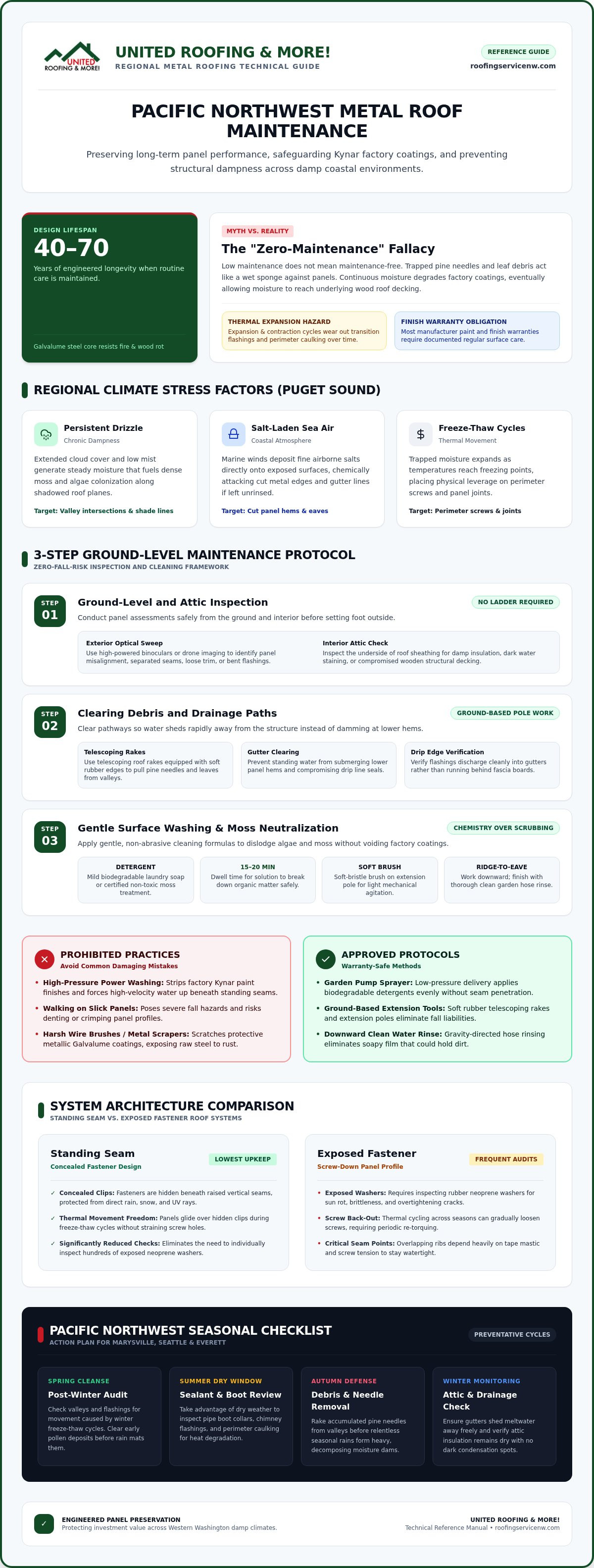
Routine care involves systematic visual inspections, surface cleaning, and checking critical fasteners or seam seals. While an engineered metal roof provides outstanding resilience, it still requires regular oversight. Consistent upkeep preserves that expected 40 to 70 year manufacturer lifespan. Left unchecked, pine needles and leaf debris pile up in roof valleys. This trapped organic matter acts like a wet sponge against your panels, holding moisture in place and slowly degrading factory coatings. When top layers break down, water eventually finds its way into the underlying wooden roof decking, threatening structural strength.
Following a dedicated metal roof maintenance guide protects your home from costly decking rot and interior leaks. Catching a loose trim seam early keeps water outside where it belongs. Routine attention ensures your panels perform exactly as designed year after year.
Debunking the Zero Maintenance Myth
Low maintenance does not mean maintenance-free living. Tough Galvalume steel resists fire and rot, but transition flashings and pipe boot sealants still face constant exposure. Intense seasonal heat and winter chills cause building materials to expand and contract, which wears out perimeter caulking over time. Most paint and finish warranties also require homeowners to document regular cleanings. Skipping simple care can leave you unprotected if finish defects emerge down the road.
Impact of Puget Sound Weather on Metal Panels
Western Washington brings unique environmental challenges that test any roofing material. Homes across Marysville, Seattle, and Everett deal with heavy seasonal dampness that demands practical attention:
- Persistent drizzle: Chronic cloud cover and slow mist fuel dense moss and algae growth across shadowed roof planes.
- Salt-laden sea air: Coastal winds around Puget Sound deposit airborne salts that attack cut metal edges and gutter lines if left unrinsed.
- Freeze-thaw cycles: Trapped dampness expands as temperatures drop near freezing, loosening perimeter screws and straining panel expansion joints.
Staying ahead of these regional elements keeps your property watertight. A solid metal roof maintenance guide helps you pinpoint surface issues before changing seasons cause structural trouble.
Step-by-Step Metal Roof Maintenance Guide: Safe Inspection and Cleaning
Manufacturer catalogs often showcase raw coil durability without telling you how to safely care for your roof at home. Regular washing does not require walking on slick panels or blasting surfaces with extreme pressure. High-pressure power washing can strip factory paint and force water up beneath standing seams, leading to hidden leaks. This practical metal roof maintenance guide breaks down safe inspection and cleaning protocols you can manage from ground level.
Step 1: Ground-Level and Attic Inspection
Start your assessment without a ladder. Use high-powered binoculars or drone imaging to spot panel misalignment, separated seams, loose trim, or bent flashings. Next, head inside to inspect your attic. Look for damp insulation, dark staining, or compromised wood sheathing. Proper evaluation also depends on understanding your home's slope, which you can determine by learning how to calculate roof pitch before planning any exterior work.
Step 2: Clearing Debris and Drainage Paths
Clear accumulated debris so water sheds quickly away from your home. Use telescoping roof rakes with soft rubber edges from the ground to clear valleys and transitions:
- Remove packed pine needles, twigs, and leaf litter trapped in low-slope valleys.
- Clean gutters thoroughly to stop standing water from backing up against lower panel hems.
- Inspect flashings to verify your roof drip edge channels storm runoff cleanly into gutters rather than behind fascia boards.
Step 3: Gentle Surface Washing and Moss Removal
Gentle chemistry beats aggressive scrubbing every time. Mix warm water with a mild biodegradable laundry detergent or a certified non-toxic moss treatment. Apply the solution using a low-pressure garden pump sprayer, letting it dwell for 15 to 20 minutes to break down grime. If light agitation is needed, use a soft bristle brush on an extension pole. Wash from the ridge caps downward toward the eaves, and rinse thoroughly with clean hose water so no soapy film remains. For technical guidance on sealant care and paint compatibility, consult the Metal Construction MCA technical resources.
If your inspection reveals extensive panel oxidation or loose flashing seams beyond reach, contact our local team for dependable roof repairs to keep your home completely dry.
Standing Seam vs. Exposed Fastener Roof Care: Key Differences
Every profile demands a distinct care strategy. Standing seam installations feature raised interlocking ribs secured with concealed clips under the metal surface. These clips glide smoothly along slotted channels, letting the roof expand and contract naturally without straining screw holes. Exposed fastener profiles, commonly called screw-down or corrugated panels, use thousands of external screws driven directly through the metal face. Because these fasteners bear the direct brunt of sun, wind, and rain, they require frequent diagnostic checks. Any solid metal roof maintenance guide must address these contrasting mechanical needs to help you plan upkeep effectively.
Exposed Fastener Care: Managing Neoprene Washers
Rubber sealing gaskets take a severe beating over time. Sunlight and heat cause standard neoprene washers to dry out, crack, and shrink within 10 to 15 years. Daily temperature swings also force panels to expand, which pulls at rigid screws and widens penetrations. Common installation errors make this wear worse:
- Over-tightened screws: Crushes the rubber washer outward, splitting the seal and creating an immediate water cup.
- Under-tightened screws: Leaves the gasket uncompressed, allowing wind-driven rain to slip past threads into the roof deck.
- Angled fasteners: Prevents the washer from seating flat against the metal flat, breaking the perimeter seal.
Remedying these trouble spots involves removing backed-out screws and seating larger diameter replacement fasteners with fresh EPDM washers.
Standing Seam Maintenance: Monitoring Concealed Movements
Concealed clip profiles drastically cut your fastener maintenance, but they still require periodic checks. Homeowners should observe how building envelope consultants approach metal roofing maintenance best practices by monitoring panel thermal movement along ridge lines, eaves, and valley locks. Check whether panel ribs glide freely without buckling or popping clips loose. Inspect exposed end-fold sealants and foam closure strips under ridge vents to ensure wind has not dislodged them.
If you discover widespread panel distortion, failing substrate fasteners, or rusted lap joints across an aging system, simple sealant patches will not solve the issue. In those situations, exploring a full professional roof replacement offers the safest, longest-lasting protection for your home.
Seasonal Metal Roof Maintenance Checklist for Pacific Northwest Homes
Weather patterns around Marysville, Seattle, and Everett create tough, wet conditions for residential roofs. Between torrential fall storms and damp winter chill, local panels endure steady atmospheric stress. Relying on an actionable, regional metal roof maintenance guide ensures your home stays ahead of every temperature shift. Late summer dry spells provide the perfect opportunity to inspect panel overlaps, clean off sap, and seal minor gaps before steady autumn rains begin.
Spring and Summer: Deep Cleans and Touch-Ups
Warmer weather offers the best window for detailed surface upkeep and paint touch-ups:
- Wash winter grime: Clear road soot, dirt films, and winter algae residue using low-pressure wash methods to restore the factory luster.
- Touch up exposed scratches: Coat minor surface scrapes with manufacturer-approved paint pens to stop rust from attacking bare steel.
- Cut back tree branches: Trim overhanging limbs at least ten feet away from your roofline to prevent abrasive branch rub and limit dropped debris.
Fall and Winter: Drainage Defense and Storm Readiness
Autumn leaves and wet evergreen needles bring significant drainage challenges across the Puget Sound basin. When saturated debris sits along eaves, it forces water behind panels during extended downpours. Focus on these defensive items before the cold sets in:
- Clear valleys and gutters: Remove stubborn Douglas fir needles and wet leaves so storm runoff drains freely toward your downspouts.
- Check penetrations: Inspect rubber pipe boots, skylight flashing, and chimney counter-flashings for cracked sealants before winter freezes widen them.
- Verify snow retention: Ensure snow guards along walkways and entry doors are tightly anchored to handle sudden wet snow loads and prevent dangerous roof avalanches.
Winter storms can still cause unexpected joint separation or concealed moisture intrusion around flashing points. If you spot signs of water penetration or loosened metal trim after heavy weather, schedule a professional roof inspection right away to protect your home before leaks reach the living space.
When to Call a Professional for Metal Roof Repairs and Restoration
Basic surface washing is easy to tackle from the ground, but structural troubleshooting requires skilled hands. Walking on steep-slope metal panels is dangerous, especially when wet morning dew or thin algae films turn steel slick as ice. Stepping on panel ribs also dents seam profiles, breaking factory weather locks. While our metal roof maintenance guide equips you to handle ground inspections and gentle debris clearing, hazardous high-pitch work belongs to trained experts with proper fall-arrest gear.
Red Flags That Require Licensed Roof Technicians
Certain structural warning signs indicate deeper substrate trouble that requires professional intervention:
- Galvanic corrosion: Direct contact between dissimilar metals, like copper pipes touching Galvalume steel, sparks rapid chemical decay that eats panel edges.
- Persistent penetration leaks: Water pooling around complex curb flashing, dormer junctions, or skylight frames signals underlying underlayment decay.
- Sagging roof decking: Soft spots visible beneath metal sheets indicate hidden rot inside structural plywood sheathing.
Hiring qualified crews ensures repairs follow strict building standards. Review our guide on master roofing practices to ensure your technician uses the right safety protocols and approved factory materials.
Professional Restoration vs. Full System Replacement
Targeted restoration solves isolated wear without unnecessary expense. Replacing degraded fasteners, applying high-grade sealants to perimeter joints, and securing lifted trim pieces restore watertight performance across solid metal systems. However, widespread structural deck failure, intense storm impacts, or pervasive rust across old panel runs make spot repairs impractical. When major failures occur, an engineered roof replacement protects long-term structural integrity.
Managing major home improvements should never cause financial strain. We provide flexible payment options, so explore roof financing near me to find structured plans tailored to your budget. Protect your investment today by scheduling a diagnostic assessment with United Roofing & More!, your reliable Pacific Northwest roofing specialists.
Protect Your Metal Roofing Investment for Decades to Come
Your metal roof offers incredible durability, but staying ahead of Pacific Northwest weather requires consistent care. Applying the seasonal tips and inspection steps in this metal roof maintenance guide keeps your factory finish pristine, protects your wooden decking, and ensures moisture drains freely away from vulnerable seams. Timely attention to backed-out fasteners and organic moss buildup prevents minor surface wear from turning into costly interior water damage.
Leave hazardous steep-slope work to trained professionals. With decades of combined Pacific Northwest roofing experience, United Roofing & More! provides comprehensive diagnostic assessments across Snohomish and King Counties. Whether your system needs precision roof repairs, protective tune-ups, or a complete replacement, we keep the process transparent and stress-free. We also offer accessible roofing financing options designed to comfortably fit your project into your household budget.
Ready to secure your home before the next storm season arrives? Schedule your professional metal roof inspection with United Roofing & More! and enjoy complete peace of mind under every rainfall.
Frequently Asked Questions
How often should you perform metal roof maintenance on a residential home?
You should inspect and maintain your residential metal roof at least twice a year, ideally in late spring and early autumn. Following a seasonal metal roof maintenance guide helps Seattle and Marysville homeowners clear evergreen debris before winter rains hit. Additional checkups are wise after severe windstorms. Catching blocked drainage valleys or shifting trim pieces early preserves the panel finish and stops minor wear from turning into costly structural issues.
Can you safely walk on a metal roof to clean gutters and remove debris?
Walking on a metal roof is generally unsafe for homeowners and can easily damage the panels. Morning dew, rain, and moss create an exceptionally slick surface across Puget Sound homes. Stepping on standing seams or high ribs can also buckle the metal and break watertight interlocks. Use extension poles and gutter rakes from a secure ladder instead, or call licensed roofing specialists equipped with proper fall protection harnesses.
What is the best cleaning solution for removing moss from metal roofing?
The best cleaning solution is a mild mixture of warm water and biodegradable laundry detergent or a certified non-toxic moss wash. Avoid bleach, abrasive scrubbing powders, or harsh wire tools because they strip protective Kynar coatings and void factory paint warranties. Apply the solution using a low-pressure garden sprayer, let it break down the organic growth for fifteen minutes, and rinse the panels clean using regular garden hose pressure.
How long do rubber washers on exposed fastener metal roofs usually last?
Neoprene rubber washers on exposed fastener metal roofs typically last between 10 and 15 years before degrading. Constant sun exposure, heat cycles, and wet winter weather across Western Washington dry out and crack the rubber gaskets. As washers shrink and become brittle, screws back out and create open paths for leaks. Replacing worn fasteners with fresh oversized screws and durable EPDM washers restores your weather seal.
Will pressure washing damage the protective coating on metal roofing panels?
Yes, high-pressure washing can quickly strip factory paint finishes and force water past panel seams into your roof deck. Blasting seams at high pressure breaks factory lap seals and damages delicate underlayment. Rely instead on soft-washing techniques using low-pressure nozzles and gentle cleansers. If you are following a reliable metal roof maintenance guide, prioritize chemical soaking over mechanical force to remove stubborn algae without harming the metal.
What causes galvanic corrosion on a residential metal roofing system?
Galvanic corrosion happens when two dissimilar metals come into physical contact in the presence of an electrolyte like rainwater. Common examples include installing copper pipes, brass fittings, or lead flashings directly against steel panels. The less noble metal rapidly corrodes and pits away. Preventing this damage requires using compatible fasteners, installing rubber isolation barriers, and ensuring clean runoff separation between different metal accessories.
Can scratches on painted metal roof panels cause the steel to rust?
Yes, deep scratches that cut through the protective paint and Galvalume zinc-aluminum coating will expose raw steel to moisture and rust. Surface scuffs from tree branches or installation tools need immediate attention in damp Pacific Northwest environments like Everett and Renton. Seal light surface scrapes promptly using manufacturer-matched touch-up paint pens. If rust has already started bubbling under the paint, schedule professional roof repairs to prevent panel degradation.


