
What if the 30-year warranty on your shingles doesn't actually mean your roof will last three decades? In the rainy Pacific Northwest, the reality of a roof's lifespan often clashes with the promises on the package. You're likely wondering how long does a roof last when every heavy downpour in Seattle or Marysville makes you listen for the drip of a new leak. It's stressful to deal with conflicting contractor advice while staring at the high price tag of a full replacement.
We believe your home should be a place of safety, not a source of financial anxiety. That's why we've created this 2026 guide to give you total clarity. You'll discover exactly how long your roof will last based on your specific materials and our unique PNW climate factors. We'll show you how to identify real damage before it becomes a crisis and share professional maintenance secrets to stretch your investment. We also cover flexible roofing financing options that make a new roof fit your budget. Let's get you the answers and the peace of mind you deserve.
Key Takeaways
- Discover how material choice sets your roof's initial timeline and why asphalt shingles often age faster in the unique PNW climate.
- Learn exactly how long does a roof last when facing the specific challenges of moss growth and persistent Seattle humidity.
- Identify the critical warning signs, like granule loss and shingle curling, that signal your roof is reaching its limit before leaks begin.
- Find out how simple maintenance habits and professional diagnostics can significantly extend your roof's useful life.
- Understand your options for professional roof replacement and how accessible roofing financing can make the process stress-free and affordable.
Understanding Average Roof Lifespans by Material Type
Your choice of material is the single biggest factor in determining your home's protection timeline. Think of it as an "expiration date" set the day of installation. However, in cities like Seattle and Marysville, the local weather often has the final say. When homeowners ask how long does a roof last, they're usually looking for a baseline. Understanding Average Roof Lifespans across different materials helps you plan for the future without the stress of sudden surprises.
Asphalt and Composite Shingle Expectations
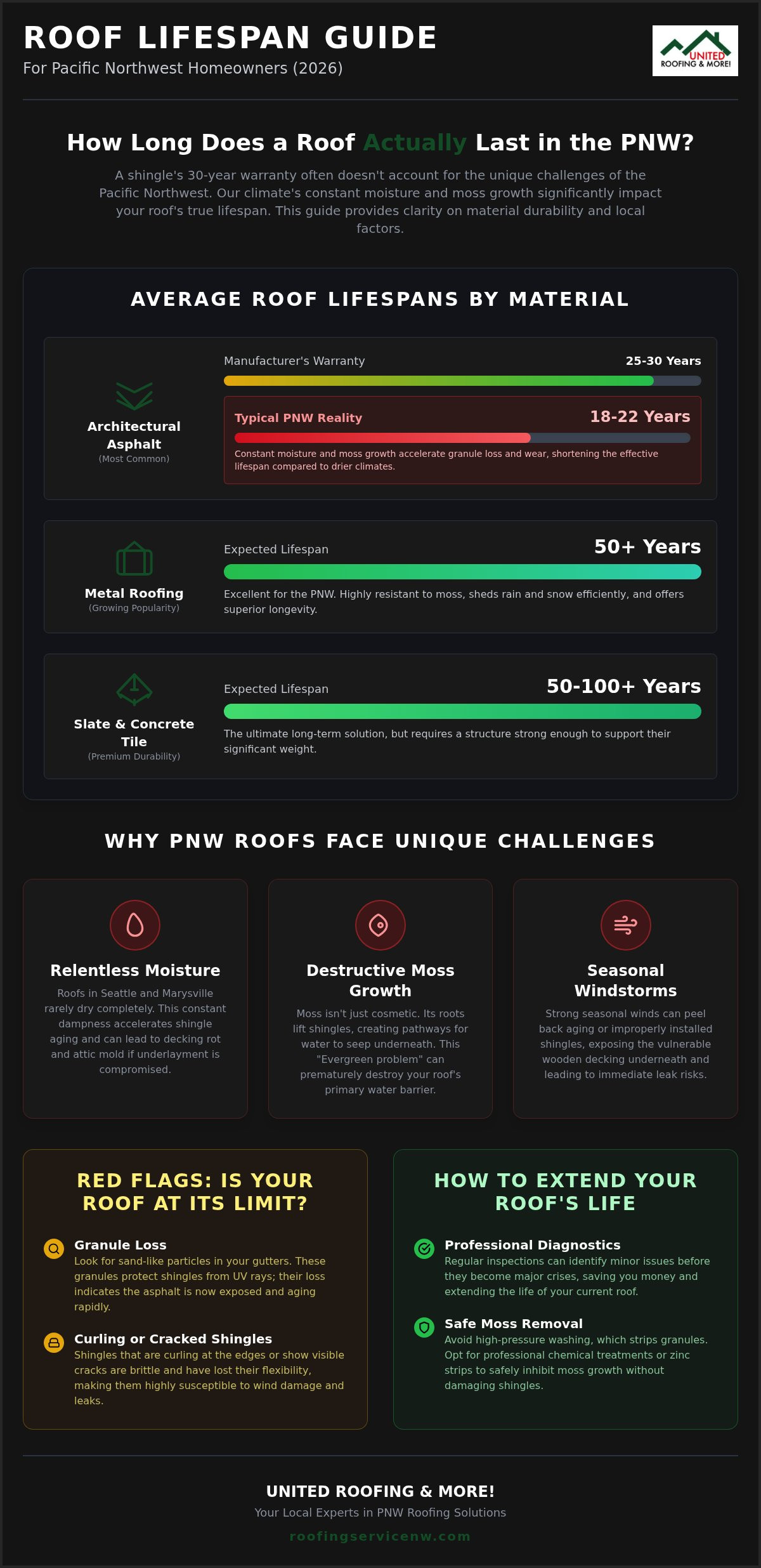
Asphalt shingles remain the most popular choice for local homes. But not all shingles are created equal. Traditional 3-tab shingles usually offer a 15 to 20-year window. In contrast, modern architectural shingles are the current standard, designed for 25 to 30 years of service. It's a significant difference in durability and aesthetic appeal.
In our region, you should watch for granule loss. These small, sand-like pebbles protect shingles from UV rays. Once they wash into your gutters, the underlying asphalt becomes brittle and prone to cracking. While national averages suggest longer timelines, the local average for asphalt shingle life in the PNW is often closer to 18-22 years. Persistent rain keeps these materials damp. This constant moisture accelerates wear compared to drier climates.
Long-Term Roofing: Metal, Slate, and Tile
If you want a "forever" solution, premium materials are the way to go. Metal roofing is quickly becoming a favorite across the Pacific Northwest. It offers 50 plus years of protection and handles our heavy rainfall with ease. It's a hardworking material that resists the moss growth so common in our area. It's also highly efficient at shedding snow during our occasional winter storms.
Slate and concrete tile are also incredibly durable, often lasting 50 to 100 years. However, these systems are heavy. Your home's structure must be strong enough to support the massive weight of stone or tile. While the upfront investment is higher, the cost-to-lifespan ratio is excellent. You're paying for peace of mind and a roof you'll likely never have to replace again.
We know that premium materials come with a higher initial cost. That's why we offer dedicated roofing financing options to help bridge the gap. We believe every homeowner deserves a roof that lasts, regardless of the material they choose. Our professional diagnostics can help you decide if a simple repair is enough or if a full roof replacement is the smarter long-term move for your property.
Why Your Pacific Northwest Roof Faces Unique Challenges
National roofing guides often provide advice that doesn't apply to our corner of the map. In the Pacific Northwest, moisture is the primary enemy. While an Average Roof Lifespan by Material might suggest 30 years in a drier state, our climate demands a different perspective. If you are asking how long does a roof last in Seattle or Marysville, you have to look at moss and humidity first. These local factors can shave years off even the best materials.
The Moisture Factor in Seattle and Marysville
Seattle's humidity creates a relentless environment for asphalt. Unlike drier regions, our roofs rarely get a chance to fully dry out between rain showers. This trapped moisture can seep into the decking, causing rot and attic mold. It's why we emphasize high-quality underlayment in high-precipitation zones. Without it, the structural integrity of your home is at risk. Standard shingles struggle when they're damp for months at a time. This constant exposure is why local lifespans often sit between 18 and 22 years rather than the national average.
Moss Growth: More Than Just an Aesthetic Issue
Moss isn't just a green decoration. It's a destructive force. Moss roots act like tiny wedges, lifting shingles and allowing water to bypass your primary barrier. This is the "Evergreen" problem that eats through shingles years before their time. Many homeowners try high-pressure washing to fix it. Don't do that. High pressure actually strips away the protective granules. Chemical treatments and physical barriers like zinc strips are much safer. They keep your roof intact without the risk of physical damage.
Seasonal windstorms also take a toll. They peel back loose shingles and expose the vulnerable wood underneath. A properly installed roof drip edge is essential here. It guides water into the gutters and prevents fascia rot, acting as a final guard for Marysville homes. If you're worried about hidden moisture damage, our team at United Roofing & More! can provide a thorough professional diagnostic to see if your roof is still holding strong. We focus on transparency so you know exactly where your home stands.
Identifying Red Flags: Is Your Roof Reaching Its Limit?
Knowing the age of your home is a great start. But physical evidence is the only way to be sure if your roof is still doing its job. When you ask how long does a roof last, you're really looking for signs of safety and structural integrity. In Marysville and Seattle, the visual cues of failure are often hidden under a layer of moss or rain. You need to know exactly what to look for before a small leak becomes a major flood.
Start by looking at the shingles themselves. Are the edges turning upward or curling? This happens when the asphalt loses its natural oils over time. It makes the shingles brittle and prone to wind damage. You should also check your downspouts after a heavy rain. If you see what looks like dark, coarse sand, those are granules. These granules act as armor for your shingles. Without them, the sun and rain eat through the material quickly. This is a clear sign that your roof is nearing its end.
Don't ignore neighborhood trends. Were most of the houses on your block built at the same time? If your neighbors are all scheduling a roof replacement, it's a strong signal that your home is in the same window of risk. It's not a final rule, but it's a valid warning that your materials are reaching their natural expiration date.
Visible Shingle and Flashing Damage
Bald spots appear when granules wash away completely. This leaves the shingle's base exposed to the elements. Cracked flashing around chimneys and vents is another high-priority repair. These metal barriers are your first line of defense at the roof's weakest points. You can calculate roof pitch to understand where water pools most. Steeper roofs shed water fast, while lower pitches are more prone to shingle damage and moisture buildup.
Structural and Interior Indicators
The "spongy" feel is a major warning. If the surface gives underfoot, the roof deck is likely rotting from trapped moisture. Tracing water spots on your ceiling is another crucial step. These stains often start small but point to a larger entry point above. A sagging roofline is the most urgent red flag. It suggests structural failure and needs a professional inspection right away. We offer transparent diagnostics to tell you exactly what's wrong. If you need a new roof, our roofing financing makes the process manageable and stress-free.
Maximizing Durability: How to Extend Your Roof’s Useful Life
The question of how long does a roof last isn't just about the weather. It's about how you fight back against the elements. While our local moisture is persistent, proactive care can add five to ten years to your roof's service life. You don't have to wait for a leak to take action. Small steps today prevent the high cost of a total replacement tomorrow.
Professional inspections are your best defense. We recommend a checkup every two to three years. These visits allow experts to spot minor issues before they escalate. Catching a loose shingle or a cracked seal now saves you from structural rot later. Investing in expert roof repairs is the most cost-effective way to protect your Marysville or Seattle home.
Never use a pressure washer on your shingles. It's a common mistake that causes permanent damage. The high-pressure stream strips away the protective granules that shield your home. This leaves the asphalt vulnerable to UV rays and rain. Instead, use a soft brush or a leaf blower to clear debris safely.
A PNW Homeowner’s Maintenance Checklist
Start with your gutters. Clean them at least twice a year. Clogged gutters lead to ice dams and water backing up under your shingles. This is a major cause of roof failure in our region. Next, trim any overhanging branches. These limbs drop debris and create shade. Shade keeps your roof damp, which is exactly what moss needs to thrive. Finally, check the sealants around your pipe boots and vents. Our temperature swings can cause these materials to crack over time.
Professional Moss Treatment and Prevention
Moss is the biggest threat to PNW roofs. You can fight it by installing zinc or copper strips along the ridge. When it rains, these metals release ions that prevent new growth. For existing moss, use professional-grade, eco-friendly treatments. Avoid DIY roof walking. Old shingles are brittle. Walking on them can cause more damage than the moss itself. Our team provides safe, thorough diagnostics to keep your home protected.
If you're worried about the state of your roof, don't wait. We offer professional roofing diagnostics to help you plan with confidence. Our flexible roofing financing options ensure that keeping your home safe is always affordable.
Moving Forward: Professional Replacement and Financing Solutions
Deciding when to stop patching leaks and commit to a new system is a major milestone for any homeowner. While we've explored how long does a roof last under the pressure of PNW rain, there comes a point where repairs are no longer a smart investment. At United Roofing & More!, we lead with professional diagnostics. We don't use high-pressure tactics. Instead, we provide a transparent look at your home's health so you can make an informed choice. Choosing a local Marysville expert ensures your long-term warranty is backed by someone who understands our specific climate needs.
Planning a roof replacement is about more than just picking a color. It's about structural integrity and future-proofing your biggest asset. We focus on high-quality workmanship and open dialogue throughout the entire process. Our goal is to replace your stress with confidence. We keep you informed from the first inspection to the final shingle.
Evaluating the Cost of a New Roof
Several factors influence your final quote. Material choice is the big one, but roof pitch and the number of existing layers also play a role. In the 2026 market, the "cheapest" bid often lacks the specialized ventilation and flashing required for PNW humidity. Cutting corners now leads to premature failure later. Always request a detailed estimate. A professional quote should clearly outline the costs for underlayment, ventilation, and debris disposal. This clarity prevents hidden fees from surprising you mid-project.
Flexible Payment Plans for Peace of Mind
We know that a new roof is a significant investment. That's why roofing financing is a core part of our service. Our flexible payment plans allow you to protect your home immediately while paying over time. The application process is fast, transparent, and designed with our community in mind. We want to make high-quality roofing accessible for every neighbor in Seattle and Marysville.
Waiting for a catastrophic leak can double your total costs. Water damage quickly spreads to attic insulation, rafters, and interior drywall. A planned replacement is always more affordable than an emergency restoration. Protect your home now and enjoy the peace of mind that comes with a job well done. Our team is ready to help you find a solution that fits your budget and your timeline.
Secure Your Home’s Future and Stay Dry
Your roof is your home's first line of defense against the relentless Seattle rain. We've seen that while material choice sets the baseline, local factors like moss and humidity are the real deciders in how long does a roof last. By staying ahead of red flags and keeping up with professional maintenance, you can protect your investment for years to come. Don't wait for a drip to start thinking about your shingles.
Don't let the stress of a potential leak keep you up at night. As a locally owned and operated team, we specialize in PNW-tough roofing systems that stand up to our unique climate. We offer expert roof replacement and flexible financing plans to keep your project affordable and transparent. We're dedicated to helping our neighbors in Marysville and Seattle feel confident in their homes.
Get Your Free Roof Inspection and Financing Quote Today!
We're here to help you navigate your roofing needs with clarity and ease. Let's work together to make sure your home stays dry, safe, and secure for the long haul. Our team is ready to provide the professional diagnostic services you need to move forward with total peace of mind.
Frequently Asked Questions
How long does a typical asphalt shingle roof last in Washington state?
In Washington state, a typical asphalt shingle roof usually lasts between 18 and 22 years. While national averages suggest a 30 year lifespan, our persistent rain and moisture levels accelerate the aging process. The damp climate prevents materials from drying out completely, which leads to faster granule loss and shingle brittleness. Regular maintenance is essential for local homeowners who want to maximize how long does a roof last in our specific evergreen environment.
Can I install a new roof over my old one to save money?
Installing a second layer of shingles over an old roof is rarely a good idea for PNW homes. This method traps heat and moisture between the layers, which can lead to rapid rot and structural damage. It also adds significant weight that your home's frame might not be designed to carry. Most local jurisdictions require a full tear off to ensure the underlying deck is healthy before a new roof installation begins.
Does moss growth actually shorten the life of my roof?
Moss growth is a major threat that significantly shortens the lifespan of your roofing materials. The roots act like tiny wedges that lift shingle edges, allowing wind driven rain to reach the vulnerable wood deck underneath. Moss also holds moisture against the surface for weeks at a time, rotting the asphalt and promoting mold growth. Physical barriers like zinc strips and professional eco friendly treatments are the most effective ways to prevent this damage.
How often should I have my roof inspected in the Seattle area?
You should schedule a professional inspection every two to three years in the Seattle area. Our region's high precipitation and seasonal windstorms can cause minor damage that isn't always visible from the ground. Catching a loose shingle or a cracked seal early prevents expensive interior water damage. These regular checkups provide a clear timeline for when you might need to plan for a future roof replacement or minor repairs.
What is the most durable roofing material for the Pacific Northwest?
Metal roofing is widely considered the most durable option for the Pacific Northwest, with a lifespan often exceeding 50 years. It is highly resistant to moss and algae growth, which are the primary causes of roof failure in our damp climate. When considering how long does a roof last, metal is the clear winner for longevity. We offer specialized roofing financing to help make these premium, long lasting systems more accessible for local families.
Will my homeowners insurance cover a roof that is just old?
Homeowners insurance typically does not cover a roof replacement if the issue is simply age or general wear and tear. Insurance policies are designed to cover sudden, accidental damage from events like fallen trees or severe windstorms. If your roof is reaching its natural expiration date, the cost of replacement is considered a standard maintenance responsibility. We recommend checking your specific policy details and scheduling a professional diagnostic to document any storm related damage.
How much does a roof replacement usually cost in Marysville?
The cost of a roof replacement in Marysville depends on several local factors, including the square footage of your home and the pitch of the roof. The average roof size in Washington is approximately 2,332 square feet, which influences the total material and labor required. Other factors like the number of existing layers to be removed and the choice of premium materials will also impact the final estimate. We provide transparent, detailed quotes and flexible payment plans.
What are the signs that my roof deck is rotting?
A spongy or bouncy feel when walking on the surface is a primary sign that your roof deck is rotting. You might also notice sagging sections in the roofline or dark water stains on the rafters inside your attic. These issues occur when moisture bypasses the shingles and saturates the underlying plywood. If you see daylight peeking through the boards or notice a persistent musty smell in the attic, you should seek a professional inspection immediately.


