

A leak doesn’t automatically mean you need a new skylight. Fixing a leaking skylight in Seattle may involve repairing serviceable flashing, an isolated seal, or nearby roofing. Replacement may make more sense depending on the skylight’s age and the extent of the damage. Address water as soon as you notice it, since leaks don’t fix themselves.
Condensation or a leak from the surrounding roof can be mistaken for a skylight problem. The right fix starts with tracing the moisture and assessing the skylight, flashing, and nearby roofing together.
Here, you’ll learn how to spot signs of damage, distinguish rainwater intrusion from condensation or a roof leak, and understand what affects repair or replacement costs. You’ll also see what to expect from a careful evaluation, so you can make a clearer decision about protecting your Seattle home.
Key Takeaways
- A leak doesn’t always mean a skylight needs replacing; the condition of the glazing, seals, flashing, and nearby roofing helps determine the right fix.
- Trace where water appears and consider the roof around the skylight before assuming the unit itself is leaking.
- Moisture on the inside surface may be condensation, which forms when warm, humid indoor air meets a colder skylight.
- Skylight work costs depend on factors such as unit size and type, roof material and slope, access, flashing complexity, and any framing or interior work.
- If roof replacement is planned, evaluating older skylights while nearby roofing is being disturbed can help inform the repair-or-replace decision.
How can I tell if my skylights need repair or replacement?
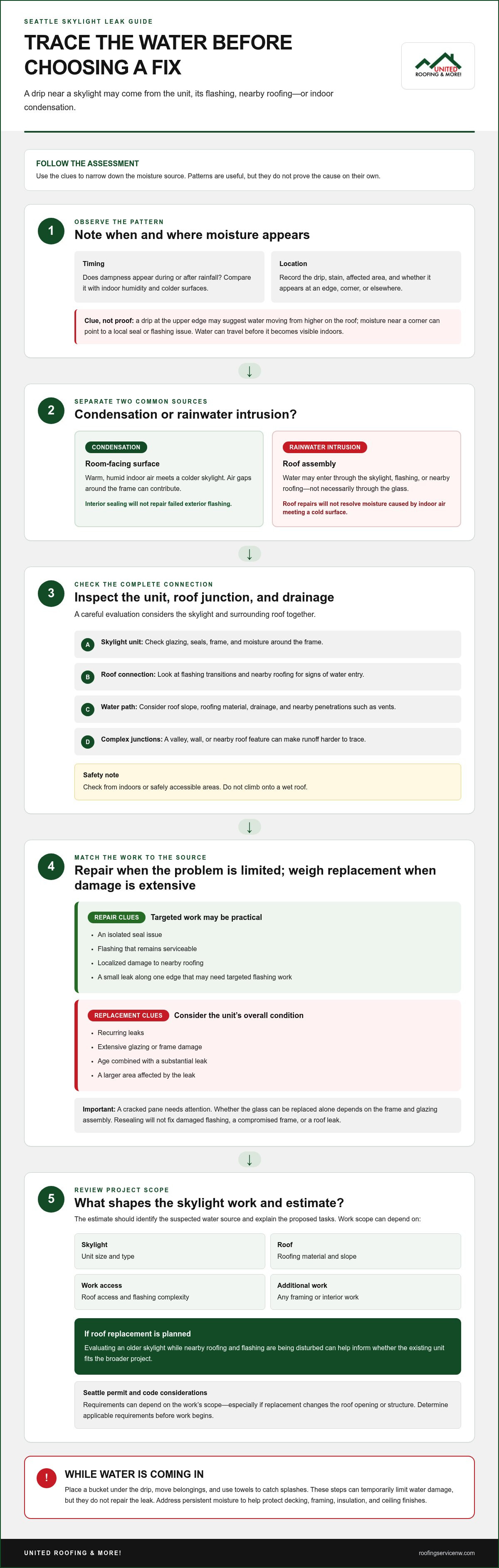
For homeowners fixing a leaking skylight in Seattle, the first step is identifying where water enters. A cracked pane, failed seal, loose flashing, or damp roofing can each call for a different repair. Don’t assume water beside the skylight came through the unit. Nearby roofing may be the source, especially if a stain appears downhill from the skylight.
Repair is often practical when the problem is limited and the skylight remains sound. A roofing professional can assess whether the flashing can be repaired, a seal restored, or nearby roofing addressed. For example, a small leak along one edge may need targeted flashing work rather than full replacement. Fixing a leaking skylight in Seattle starts with matching the repair to the actual entry point.
A cracked pane needs attention because it can let in water and may worsen. Whether the glass can be replaced alone depends on the condition of the frame and glazing assembly. Resealing may help when a seal has failed, but it won’t fix damaged flashing, a compromised frame, or a roof leak. The visible drip is a clue, not a complete diagnosis.
Replacement may make more sense when an older unit has recurring leaks, extensive damage, or a leak affecting a larger area. Consider the roof, too. If roof replacement is planned, evaluating an older skylight can be practical while nearby roofing and flashing are being disturbed. That timing helps determine whether the existing unit fits the broader project.
- Repair clues: An isolated seal issue, serviceable flashing, or localized roofing damage.
- Replacement clues: Recurring leaks, extensive glazing or frame damage, or age combined with a substantial leak.
- Inspection points: Glazing, seals, frame, flashing, slope, drainage, and nearby roof penetrations.
Across Seattle and the Eastside, roof material, slope, and skylight configuration shape the repair approach. A leak near the unit may require roof repairs rather than skylight work. The estimate should explain the suspected source and proposed tasks. The scope can depend on unit size and type, roof access, flashing complexity, and any framing or interior work. These details matter when fixing a leaking skylight in Seattle because the roof assembly affects the work involved.
Seattle permit and building-code requirements can depend on the work’s scope, especially if replacement changes the roof opening or structure. Determine applicable requirements before work begins, since a repair and a structural alteration may be treated differently.
During rain, place a bucket beneath the drip, move belongings, and use towels to catch splashes. Avoid climbing onto a wet roof. These indoor steps can temporarily limit water damage, but they won’t repair the leak.
Diagnosing skylight leaks versus surrounding roof leaks
Water near a skylight doesn’t prove the skylight itself is leaking. In Seattle’s rainy weather, moisture may enter through the unit, its flashing, nearby roofing, or condensation. Note when dampness appears, where it shows, and whether it follows rainfall. These clues help narrow down the source before repairs begin.
Check the ceiling and frame without climbing onto a wet roof. A drip at the upper edge may suggest water is moving from higher on the roof, while moisture near one corner can point to a local seal or flashing issue. Neither pattern proves the cause. Water can travel along roof decking or framing before becoming visible indoors.
Follow a practical assessment sequence: check the skylight glazing and frame, then look at accessible flashing and nearby roof surfaces. Consider the roof slope, roofing material, drainage path, and penetrations such as vents. A skylight beside a valley, wall, or complex roof junction needs particular attention because water flow can be harder to trace. These details show why an evaluation should consider the whole roof connection, not just the glass.
- Unit: Look for damaged glazing, worn seals, or moisture around the frame.
- Roof connection: Check flashing transitions and nearby roofing for signs of water entry.
- Drainage: Note whether a valley, wall, or roof feature directs runoff toward the skylight.
- Indoor conditions: Compare the timing of moisture with rain, indoor humidity, and colder surfaces.
Air gaps around the frame can let indoor air meet colder surfaces, contributing to condensation. Condensation tends to appear on the room-facing surface; rainwater intrusion comes from water entering through the roof assembly. The distinction matters: sealing an interior gap won’t fix failed exterior flashing, and roof repairs won’t resolve moisture caused by indoor air meeting a cold surface.
A persistent leak can soak roof decking, framing, insulation, and ceiling finishes. Damp materials can also support mold growth, so address moisture rather than simply covering stains with paint. Keep a record of rainfall, visible drips, and affected areas. Those observations help identify patterns during an evaluation.
Regular maintenance helps preserve skylight performance. Keep nearby drainage paths clear of leaves, and watch for cracked glazing, loose-looking flashing, or recurring indoor stains. Don’t use roof access during wet weather. If water returns after rain, a roofing assessment of the skylight connection can help distinguish unit, flashing, and surrounding-roof issues.
Local provider reviews and customer experiences
A Seattle customer reported that a 26-year-old VELUX skylight began leaking and was replaced. That experience shows how age can enter a repair-or-replacement discussion, but it doesn’t establish a replacement age for every skylight. A leak’s location, the condition of the frame and glazing, and the surrounding roof all matter when interpreting a customer story.
Reviews are most useful when they describe the work and its outcome. Look for details such as whether the crew identified the leak source, explained the proposed repair, and addressed nearby roofing or flashing. A comment saying “the leak stopped” offers less context than an account describing a cracked pane, a faulty seal, or water entering beside the frame.
Compare the review with your own observations. If it mentions water appearing after rain at one edge, note whether your leak follows the same pattern. If it describes condensation on the room-facing glass, that points to a different issue. Customer experiences can help you prepare focused questions, but they can’t diagnose your skylight.
Custom and multi-panel skylights need careful attention at their connections. Each panel, frame junction, and roof transition creates a point where water movement needs consideration. For example, a leak near the seam between two panels may call for a different repair than damage to one pane. Record which panel shows moisture and whether it appears after rainfall or in colder indoor conditions.
For a multi-panel unit, useful project details include:
- Panel location: Identify the affected panel and its position within the assembly.
- Visible condition: Note cracks, seal changes, stains, or damage around frame joints.
- Roof context: Describe nearby valleys, walls, and roofing transitions that may affect drainage.
- Work scope: Distinguish glass, seal, flashing, roof, and interior repairs in the estimate.
The scope of custom skylight work depends on the assembly, access, roof material, slope, and flashing complexity. Multi-panel layouts can involve several transitions, while a simpler unit may have fewer connections. Ask for an estimate that separates the observed problem from the proposed work. That makes it easier to understand whether the recommendation addresses one panel, the surrounding assembly, or related roofing.
Before an evaluation, keep a brief record: take indoor photos, note the weather, and mark where water appears. A dated photo showing a stain beside the frame, for example, can help connect the visible symptom to the leak pattern. Include the skylight’s age and type rather than relying on a review alone.
What Affects the Cost of Skylight Work?
Skylight work across Greater Seattle and Puget Sound varies with the roof and project scope. Repairing accessible flashing differs from replacing a unit or changing its roof opening. Local roof material, slope, access, skylight configuration, and drainage all affect the work. A useful estimate should identify the suspected problem and explain which parts of the roof assembly need attention.
Seattle’s long rainy seasons and wind-driven moisture make installation details especially important. The flashing sequence, underlayment transitions, and water flow around the skylight need to work together. Flashing must suit the roof material, slope, and skylight configuration. For example, a skylight near a valley may need more involved water-management details than one on a straightforward roof plane.
The main cost factors include:
- Project scope: A targeted repair differs from replacing the skylight or surrounding roofing.
- Unit size and type: The skylight’s dimensions and configuration affect installation work.
- Roof conditions: Material, slope, access, and flashing complexity shape the work required.
- Additional work: Framing or interior repairs can add steps to the project.
Replacement may involve removing the existing unit, preparing the opening, and integrating the new skylight with the roof. During roof replacement, evaluating an older skylight can be practical because nearby roofing and flashing are already being disturbed. That timing can help determine whether to retain a serviceable unit or include skylight replacement in the broader project.
Installing a skylight where none exists involves more than placing a unit on the roof. Creating a new opening may require framing and interior work, along with roofing and flashing integration. The roof’s slope, material, access, and proposed skylight configuration all shape the installation. A custom opening therefore has a different scope from replacing a skylight in an existing opening.
A project’s scope depends on the case and is set out in a quote. Unit size and type, roof material and slope, access, flashing complexity, and any framing or interior work can all affect the work involved. Ask for the tasks to be described separately: skylight removal or installation, flashing and underlayment transitions, related roofing, and interior work. Clear itemization helps you understand what the proposed work addresses.
For a Seattle-area home, compare the estimate’s scope with the visible issue and roof layout. Check that it accounts for drainage, nearby roof features, and the skylight’s connection to the roofing. If the project combines roof installation with skylight work, the sequence should explain how the opening and surrounding roof will be integrated to handle wind-driven moisture.
Condensation versus rainwater intrusion
Seattle’s long rainy seasons and wind-driven moisture make skylight flashing and water flow important during repairs. Distinguish rain entering through the roof assembly from indoor condensation before choosing a repair.
Identifying Condensation and Rainwater Intrusion
Condensation forms when warm, humid indoor air meets a colder skylight surface. Look for moisture on the room-facing glass, especially when indoor air feels humid and the weather is cool. Rainwater intrusion follows a different path: water enters through the skylight, flashing, or nearby roofing. Note whether dampness appears during or after rainfall, and where it first becomes visible.
A simple observation log can help clarify the pattern. Record whether water appears on the glass, frame, ceiling, or trim, and whether it was raining. Droplets spread across the interior glass, for example, suggest condensation, while a ceiling stain that grows after a storm points to water intrusion. These clues guide an evaluation, but the roof connection still needs to be assessed.
Air gaps can complicate the picture. Warm indoor air moving around a frame may meet cold surfaces and contribute to condensation. A roofing professional should distinguish that moisture from a failed seal or exterior flashing problem. Sealing an interior gap won’t correct a roof leak; repairing flashing won’t resolve condensation caused by indoor humidity. Matching the fix to the moisture source helps avoid unnecessary work.
Climate and Rainfall Effects on Repairs
Seattle’s extended wet seasons expose skylight details to repeated rainfall and wind-driven moisture. That makes the flashing sequence, underlayment transitions, and drainage path important parts of repair planning. Roof material, slope, skylight configuration, and nearby valleys or walls affect how water moves around the opening. A repair must account for these connected details, not just the point where water appears indoors.
During an evaluation, note the skylight’s position relative to roof valleys, walls, and other penetrations. These features can direct runoff toward the unit or create more involved drainage paths. Wind-driven rain can also reveal weaknesses in flashing transitions that may not show during lighter rainfall. Avoid climbing onto a wet roof; record indoor evidence and when the leak occurs.
Keep nearby drainage paths clear of leaves, and watch for recurring stains or moisture around the frame. After a storm, note whether the affected area changes. Regular maintenance supports skylight performance, while prompt roof repairs can address water entering through damaged roofing or flashing. A clear record helps connect the repair scope to the observed symptoms.
If moisture returns after rain, schedule a roof repair assessment to help identify whether the source is the skylight connection or surrounding roofing.
United Roofing & More!: Roof Replacement
United Roofing & More! provides roof repairs for leaks and roof replacement when broader roofing work is needed. If an evaluation points to damaged skylight flashing or surrounding roofing, roof repairs can address the source. If the roof needs replacement, evaluating the skylight during that project can help plan how it fits with the new roofing.
For a new roof or skylight-related roof work, roof installation is another option. The right scope depends on the roof’s condition and the cause of the water entry. Roofing financing is available to help manage project costs. Review the findings and proposed work to understand the next step for your home.
Contact United Roofing & More! or visit roofingservicenw.com to discuss your roofing needs.
Choose a Clear Next Step for Your Roof
A sound plan for fixing a leaking skylight in Seattle starts with deciding what you want the roof to do next. If the skylight issue is part of wider roof work, consider how the repair fits into your longer-term plans for the home. Addressing connected roofing needs together can help keep the project scope clear.
United Roofing & More! provides roof replacement and roof installation for projects that call for broader work. Roofing financing is also available to help manage project costs. The right path depends on the roof’s condition and the work required, so understand the proposed scope before moving ahead.
Take your observations and questions into the next conversation. A clear discussion can help you decide whether to pursue roof repairs now or plan a larger project. Contact United Roofing & More! to discuss your roofing needs and take the next step with confidence.
Frequently Asked Questions
What are the common causes of a leaking skylight?
Common causes include damaged flashing, a failed seal, cracked glazing, and water entering through nearby roofing. Condensation can also leave moisture that looks like a leak. Droplets forming across the inside glass on a cool morning, for example, differ from a drip that appears after rain. Note where moisture first appears and what the weather was doing. That record helps distinguish a skylight problem from roof runoff or indoor humidity.
How can I tell whether a skylight leak is coming from the flashing, seal, glass, or roof?
Consider the location and timing of the moisture, then compare it with visible clues. A crack or chip suggests glazing damage; dampness around a frame joint may point to a seal. Water appearing after rain near the roof opening can involve flashing or surrounding roofing. Because water can travel before reaching a ceiling, an indoor stain alone doesn’t identify the entry point. Share photos and rainfall timing during an evaluation.
How do you repair skylight flashing and reseal a skylight?
A sound repair starts by identifying the entry path, then addressing the affected roof connection. Flashing work may involve correcting damaged or poorly integrated transitions and restoring compatible underlayment and water flow. Resealing is appropriate only when the seal itself is the problem; applying sealant over a flashing or roofing issue can leave the source untouched. Your roofer should explain which joint or transition needs work and why.
When should a leaking skylight be repaired versus replaced?
Repair makes sense when the problem is limited to a serviceable seal, flashing, or nearby roofing and the skylight remains in suitable condition. Replacement may be better when the unit is older, has extensive glazing or frame damage, or has a larger recurring leak. If roof replacement is planned, consider the skylight as part of that scope. The estimate should connect the recommended work to the observed damage.
How much does skylight leak repair cost in Seattle?
The project scope depends on the specific case and is set out in a quote. It can be shaped by the repair, skylight size and type, roof material and slope, access, flashing complexity, and any framing or interior work. For example, repairing flashing on an existing unit differs from replacing the skylight or creating a new roof opening. Ask for the proposed tasks to be explained separately.
How can I find a reputable skylight repair contractor in Seattle?
Look for a clear explanation of the leak source, proposed work, and how the skylight connects with the surrounding roof. United Roofing & More! provides roof repairs, roof replacement, and roof installation, with roofing financing options. Serving the Seattle Metropolitan Area, the company works in Seattle, Bellevue, Kirkland, Renton, Everett, and nearby communities. For roofing work, Get a Free Quote! and discuss the issue affecting your home.


