

The biggest factor in chimney flashing repair cost in Everett is often the amount of work needed on the roof and chimney, not just the flashing material. A localized leak may need a focused repair, while widespread damage or a complex roof design can make the job more involved. Material, chimney size, access, and related damage all affect the scope.
It’s understandable to want a clear price before deciding what to do. The challenge is that a leak near the chimney may come from damaged flashing or water affecting nearby roof components, so the visible symptom doesn’t always reveal the full repair needed.
This article explains the factors that affect cost, signs of flashing damage, and what repair or installation can involve. You’ll also learn how damage and roof layout affect the work, helping you understand what a roofing assessment should cover.
Key Takeaways
- Repair and replacement costs differ, so identify whether the flashing needs a localized fix or more extensive work.
- Chimney size, flashing material, damage, roof layout, and access all influence the project scope and labor involved.
- Look for water stains, dampness, or visible gaps near the chimney, and consider how leaks may affect nearby roof areas.
- Learn what installation or repair can involve, and when broader roof repairs or replacement may be the more relevant next step.
What affects chimney flashing repair costs?
National estimates offer context, but local project scope and roof conditions shape the final cost. When comparing estimates, distinguish flashing repair from any added assessment, cleaning, or structural work.
Inspection and Flashing Type Costs
An assessment should examine the chimney and roof around the flashing, while the flashing type affects the installation scope. These details help distinguish assessment charges from installation work.
Average Repair Cost in Everett
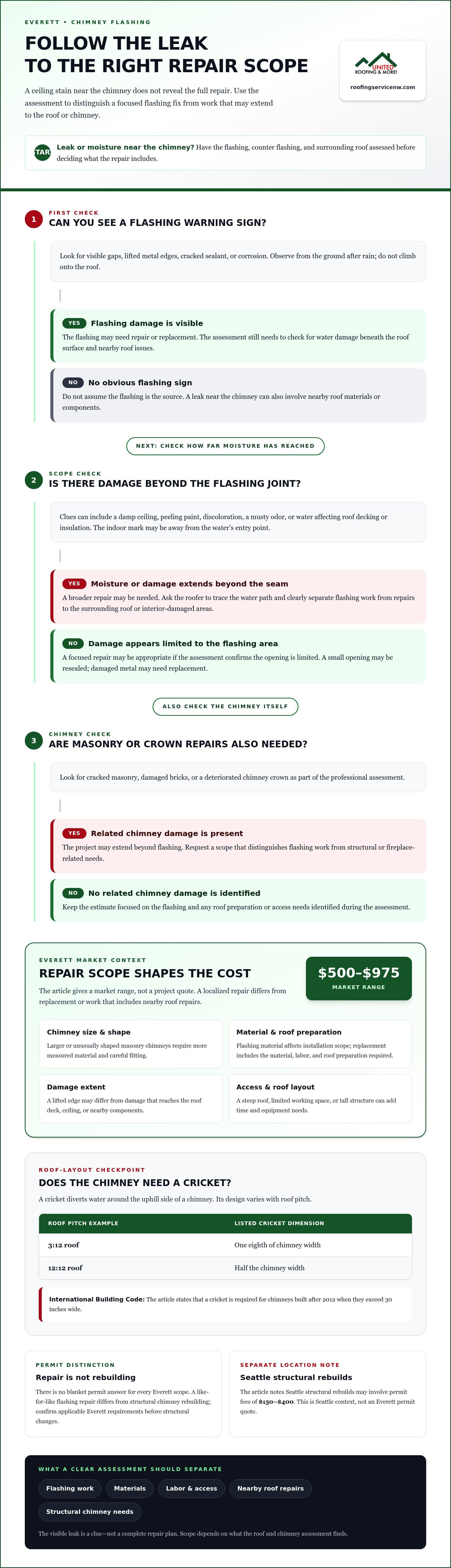
The chimney flashing repair cost in Everett varies with the repair scope, materials, roof design, and damage. The market range is $500 to $975. These market figures are context, not a project quote. A localized repair differs from work that includes replacement or nearby roof repairs.
There is no blanket permit answer for every scope in Everett. A like-for-like flashing repair differs from structural chimney rebuilding, where local permit requirements may apply; Seattle structural rebuilds may involve permit fees of $150-$400. Confirm the applicable Everett requirements before structural changes.
Material and access also affect the work. DIY repairs may reduce labor expense, but climbing onto a roof carries fall risks, and poor sealing can leave openings for water. Roofing professionals assess the flashing, counter flashing, and surrounding roof before determining whether a repair can seal the joint.
Cracked masonry, damaged bricks, or a deteriorated crown can require related repairs, expanding the project beyond the flashing. Ask for a scope that distinguishes flashing work from structural or fireplace-related needs.
Cost factors including chimney size, material, damage, labor, and access
Flashing replacement costs reflect the materials, labor, and roof preparation required. Chimney dimensions, visible damage, and access help explain why similar-looking leaks can require different scopes.
Chimney Size and Material
Chimney size and flashing material determine how much metal and fitting work a repair requires. Larger or unusually shaped masonry chimneys need more measured material and careful fitting.
Damage and Labor Factors
Damage affects the scope because repairs may extend beyond the visible gap. Water reaching the roof deck or ceiling can indicate more extensive work than resealing a lifted edge. The condition of the damaged area helps determine whether a targeted repair or full flashing replacement is appropriate.
Access and Repair Pricing
Access affects the time and equipment needed to reach the chimney safely. A steep roof, limited working space, or tall structure can complicate material handling and installation. A clear assessment should separate labor, materials, and access needs.
Roof shape matters, too. A cricket diverts water around the uphill side of a chimney, and its design varies with roof pitch. The listed dimensions range from one eighth of chimney width on a 3:12 roof to half its width on a 12:12 roof. The International Building Code requires a cricket for chimneys built after 2012 when they exceed 30 inches wide. For broader roof damage, roof repair services may address the surrounding surface as part of the work.
Signs of damaged or leaking chimney flashing
Flashing seals the joint where the chimney meets the roof, directing water away from this vulnerable seam. In Everett, freeze-and-thaw cycles can leave the connection vulnerable to water entry.
Signs of Flashing Damage
Visible gaps, lifted metal edges, cracked sealant, or corrosion can signal failing flashing. Check the roofline from the ground after rain, and note loose pieces without climbing onto the roof. Copper flashing can also show wear at seams or corners. A chimney sweep may notice damaged flashing during a chimney visit, but roof leaks can also come from nearby materials.
Record what you see and when it appears. For example, note whether a ceiling stain grows after steady rain or follows a storm. Photograph the stain and any visible exterior damage from a safe location. These details help connect indoor signs with the roof area that may need attention.
Potential Moisture Damage
Water entering around flashing can travel beyond the chimney joint before appearing indoors. You may notice a damp ceiling, peeling paint, discoloration, or a musty odor near the fireplace. Moisture can affect roof decking, insulation, and interior finishes, so pay attention to even a small stain. Everett’s freeze-and-thaw cycles can worsen water entry at the roof connection.
Keep a simple record of each leak: the date, weather, affected room, and any changes in the stain. Document a damp area before covering it. Roofing professionals can trace the path from the chimney junction to interior damage, since the visible ceiling mark may be away from the entry point.
For insurance documentation after weather damage, take dated photos of the interior stain and visible roof damage, and save repair estimates and receipts. Note when the leak began and the related weather event. Share the records with your insurer and keep copies. Documentation supports a clear account of the damage, while policy terms determine how a claim is handled.
Chimney flashing installation and repair
A sound installation creates a sealed transition between the chimney and roof, directing rain away from the joint. Repair may involve resealing a small opening, replacing damaged metal, or addressing water damage beneath the roof surface. The right scope depends on what an assessment reveals, not just the visible stain inside the home.
Installation typically involves fitting flashing around the chimney base and integrating it with the roof covering. Step flashing follows the roof slope along the sides, while counter flashing covers the upper edges and helps keep water out. At the uphill side, a cricket can direct water around a wide chimney. Poorly fitted seams or failed sealant can leave openings, even when the metal appears intact.
For a limited leak, a roofer may remove failed sealant, prepare the joint, and reseal it. Bent, corroded, or poorly joined metal may need replacement instead. Mortar condition matters because counter flashing is secured at the masonry joint. Loose or deteriorated mortar can undermine the seal, so the repair scope may need to address the connection.
A useful estimate should explain which flashing sections will be repaired or replaced, how the roof surface will be protected, and whether related damage is included. Ask how the scope distinguishes a localized leak from water damage beneath shingles or decking. Clearing debris and old sealant can expose the joint, but cleaning alone does not restore damaged flashing.
Chimney flashing work in the Seattle metro area typically takes half a day to a full day. The timing can vary with roof layout, access, and the extent of the damage. A repair may be less involved than full replacement, while neglected water damage can expand the work. A clear scope helps you understand what the estimate covers.
If a leak has reached the roof surface, request roof repair to address the affected area.
United Roofing & More!: Roof Replacement
United Roofing & More! can help when chimney flashing damage is part of a wider roofing problem. Roof repairs can address affected surrounding materials, while extensive wear may make roof replacement a relevant option. Roof installation is also available for new roofing projects.
For a flashing leak, first determine whether the issue is limited to the chimney joint or involves more of the roof. Roofing financing is available to help manage project costs. The right work depends on the roof’s condition and the project scope, not the flashing symptom alone.
Contact United Roofing & More! to discuss your roofing needs.
Choose the Next Step for Your Roof
Use what you’ve learned to make a clear plan: consider whether the leak is isolated or part of a broader roofing concern. Understanding chimney flashing repair cost in Everett can help you focus the conversation on the work your home needs, rather than just the visible stain. A clear scope gives you a practical starting point for deciding what to address.
United Roofing & More! offers roof installation and roof replacement for projects that call for broader work. Roofing financing is also available to help manage project costs. Start with a conversation about your roof’s condition and the work you’re considering, so you can make an informed next step.
Contact United Roofing & More! to discuss your roofing needs. A thoughtful next step can help protect your home and make the decision feel more manageable.
Frequently Asked Questions
Chimney Flashing Cost Factors: What Determines the Price?
The price depends on the amount of flashing work and the roof conditions around the chimney. A straightforward seam repair differs from replacing multiple sections or addressing damage beneath the roofing. For example, a chimney with several roof intersections may require more fitting than a simple, accessible shape. Check whether the estimate separates materials, labor, access needs, and related roof work.
Can chimney flashing just be resealed instead of replaced?
Resealing can suit a sound flashing section when a failed sealant joint is the source of water entry. It won’t correct metal that is corroded, detached, or bent out of shape. A small gap at an otherwise secure seam, for instance, differs from a loose flashing edge. The repair approach should match the condition of the metal and surrounding joint.
Is it cheaper to replace flashing during a roof replacement?
Replacing flashing during roof replacement can avoid splitting the work into separate roofing projects. The existing roof covering is already being removed or worked around, so the chimney junction can be included in the larger scope. The estimate should identify flashing as a separate line item and clarify what the roof project includes. Compare the written scopes, not just their totals.
What is the typical price range for chimney flashing repair in Snohomish County?
A market benchmark for chimney flashing repair is $500 to $975, with a median of about $720. That range comes from eight market price samples collected in October 2026, rather than a Snohomish County-only survey. In Everett, the final scope can differ depending on whether the work is a focused repair or part of a broader roof project. Treat the benchmark as market context, not a contractor’s quote.
How much does chimney flashing replacement cost compared with a repair?
Replacement generally requires removing and fitting more material than a localized repair, so its scope is broader. A repair can focus on a failed seam or small affected section; replacement addresses flashing sections that no longer serve their purpose. Ask the estimate to specify which parts will be repaired or replaced and whether surrounding roof materials are included. Those details make comparisons meaningful.
What factors affect chimney flashing repair costs, such as roof pitch, chimney size, and damage?
Roof pitch, chimney dimensions, and the extent of damage affect how the work is planned and completed. A steep roof changes access, while a wider chimney requires careful fitting around its perimeter. Damage beneath the shingles can also expand the repair beyond the visible joint. When reviewing an estimate, check that it describes the roof area involved and distinguishes flashing work from other repairs.


