
Choose Everett commercial roofers by comparing their commercial roofing experience, written replacement estimates, repair approach, credentials, and installation quality. A commercial roof in Everett can last 20 to 40 years, depending on its material, so its condition and repair history matter when weighing replacement against continued maintenance.
It makes sense to want a clear estimate before committing to a major roofing project. The scope depends on factors such as roof size, material, existing damage, access, and the work required. Estimates are easiest to compare when they explain the same work in detail.
This guide explains how to choose local commercial roofers, compare replacement estimates, address leaks, and assess credentials and workmanship. You’ll also learn what can affect project timing and how to weigh repairs against replacement, so you can plan the next step for your building.
Key Takeaways
- Compare commercial roofing estimates by checking that each explains the work, materials, and repair needs clearly.
- Track roof leaks and maintenance findings so you can spot recurring issues and make more informed repair decisions.
- Use relevant credentials and a clear installation plan as practical indicators when assessing a roofing contractor.
- Understand how roof condition, material choices, and project scope can shape scheduling and overall budget planning.
- Learn when repairs may address a roofing problem and when replacement is the more suitable path for your building.
How much does it cost to hire a roofing contractor to replace my roof near Everett, WA?
Commercial roof replacement costs depend on the building, roof condition, material, and project scope. A commercial roof in Everett can last 20 to 40 years, depending on its material. That lifespan is a planning guide, not a replacement schedule: leaks, surface damage, drainage problems, and past repairs also affect whether replacement makes sense. Ask for an estimate that describes the work and explains how these conditions shape the proposed system.
Commercial roofing involves more than installing a membrane. The work may include preparing the surface, addressing damaged areas, installing materials, and finishing edges, seams, and penetrations. Each detail matters: gaps around rooftop equipment or poorly finished seams can compromise protection. A flat roof describes the roof’s general shape, while EPDM, TPO, and PVC are different membrane options. Compare the proposed material and installation scope, not just the system label.
- EPDM: A synthetic rubber membrane used on low-slope commercial roofs. Its seams and edges need careful attention during installation.
- TPO: A single-ply membrane with seams joined through heat-welding. The estimate should describe membrane coverage and seam work.
- PVC: Another single-ply option, with heat-welded seams. Rooftop use and building needs help determine whether it fits.
- PMMA: A liquid-applied roofing system that forms a continuous surface, including around complex details.
- Fleece-back: A membrane with a reinforcing fleece backing. The assembly and attachment method affect the complete roof system.
- Metal retrofit: A new metal roofing assembly installed over an existing roof structure when the building and design suit that approach.
These systems aren’t interchangeable. Roof slope, drainage, existing layers, rooftop equipment, and the condition of the roof deck all influence system selection. A roof with multiple vents and equipment, for example, needs careful planning around penetrations. An estimate should identify the proposed system, explain preparation and attachment, and describe how transitions will be handled. Those details make bids easier to compare and clarify what the work covers.
The estimate depends on the building and project scope. Key factors include roof area, material, access, existing damage, and installation requirements. Residential and commercial projects can involve different layouts, roof systems, and work. A contractor’s estimate should reflect the specific property rather than treat a home and commercial building as the same project.
Commercial roof design and value engineering can help align the proposed system with a building’s needs and budget. Value engineering means reviewing practical design alternatives, not simply choosing the lowest-cost material. Compare membrane type, attachment, drainage details, and treatment around equipment. Ask how each option affects the complete roofing assembly and protection. A clear scope helps building owners weigh trade-offs and understand why proposals differ.
Leak repairs and preventative maintenance
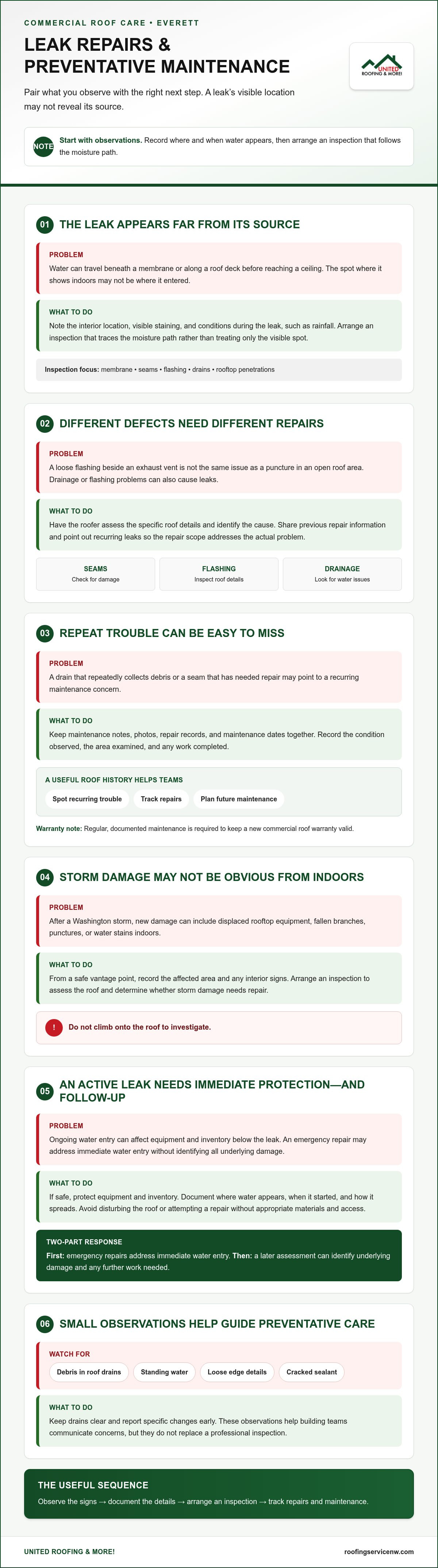
A roof leak can appear far from its source. Water may travel beneath a membrane or along a roof deck before reaching a ceiling. Start by noting the interior location, visible staining, and conditions during the leak, such as rainfall. Then arrange a roof inspection that traces the moisture path instead of treating only the spot where water appeared. This helps distinguish a damaged seam from a drainage or flashing issue.
A roofer can assess the membrane, seams, flashing, drains, and rooftop penetrations when evaluating a leak. Loose flashing beside an exhaust vent, for example, needs a different repair than a puncture in an open roof area. Share details about previous repairs and recurring leaks. This history can help determine whether a local defect needs repair or broader deterioration requires attention.
Regular, documented maintenance is required to keep a new commercial roof warranty valid. Keep notes, photos, repair records, and maintenance dates together. A useful record describes the condition observed, the area examined, and any work completed. This creates a clear history for future maintenance and helps building managers spot recurring trouble, such as a drain that repeatedly collects debris or a seam that has needed repair.
After a storm in Washington, look for visible changes from a safe vantage point, including displaced rooftop equipment, fallen branches, punctures, or water stains indoors. Don’t climb onto a roof to investigate. Record the affected area and any interior signs, then arrange an inspection to assess the roofing and determine whether storm damage needs repair. A prompt, documented assessment helps separate new damage from existing wear and guides the repair scope.
If a leak is active, protect equipment and inventory below the affected area, if it’s safe, and document where water is appearing. Avoid disturbing the roof or attempting a repair without appropriate materials and access. Emergency repairs address immediate water entry; a later assessment can identify underlying damage and any further work needed. Notes about the leak’s timing, location, and spread help the roofer evaluate the problem.
Preventative care also includes keeping roof drains clear and watching for standing water, loose edge details, or cracked sealant. These observations don’t replace a professional inspection, but they help building teams report specific changes early. If a leak or damaged seam needs attention, commercial roof repairs can address the affected area; maintenance records then help track the work and inform future care.
Contractor credentials and associations
Compare reviews, licensing, insurance, and warranties by looking for consistent details rather than relying on a single high rating. Read feedback about commercial projects, request applicable license details and current insurance documentation, and compare written warranty terms, including coverage, exclusions, and maintenance conditions.
Before hiring a commercial roofing contractor in Everett, ask who will supervise the work, which roof system the crew will install, and how the estimate defines the scope. Also ask how changes will be documented, how workmanship concerns are handled, and what warranty responsibilities apply after installation.
Reviews can show how a contractor communicates during a project. Look for comments about schedule updates, site cleanup, repair follow-through, or clear explanations when crews uncover existing damage. A review of a residential reroof may not demonstrate commercial experience, so give more weight to feedback about similar buildings and roofing systems.
Credentials offer another point of comparison. Ask what manufacturer training or certifications apply to the proposed system and what the credential means for the work. The word “certified” alone doesn’t explain a contractor’s experience, installation scope, or warranty terms. A credible roofing contractor can connect each credential to the roof system and explain who will perform the installation.
For example, GAF President’s Club Award three-star winners are Master Elite contractors who can offer the GAF President’s Club Limited Warranty. That distinction applies to contractors meeting the award’s criteria, but it doesn’t replace reviewing the warranty itself. Read its coverage, exclusions, and maintenance requirements alongside the installation proposal. Compare equivalent terms: a warranty’s title matters less than the coverage that applies to your roof.
- Reviews: Look for commercial project examples and specific comments about communication or follow-through.
- Licensing: Review applicable license details and confirm they correspond to the contracting business.
- Insurance: Request current documentation and check that it identifies the contractor performing the work.
- Warranty: Compare coverage, exclusions, maintenance conditions, and the work required to keep it valid.
Associations and manufacturer programs can indicate training or established working relationships, but they don’t replace a clear proposal. Compare the named contractor, installation team, and stated responsibilities. If a manufacturer credential applies to one roofing system, for example, ask how it relates to the system in the estimate. This keeps the credential relevant to your project.
Use a short written list of questions during each conversation. Ask how the contractor will protect the building during installation, document progress, and communicate if conditions differ from the estimate. Clear answers help you assess the contractor’s approach without relying on broad promises. Keep the answers with each proposal so you can compare contractors on the same practical points.
Estimates and project process
For a commercial roof replacement in Everett, requirements depend on the project scope and property. Include permit responsibility and code-related work in the written estimate before approving the project.
Estimates and Project Steps
A useful estimate connects the roof inspection to a defined scope, materials, and project sequence. One estimate described a two-level roof totaling about 20 squares, showing why levels and measured area matter. Check whether the document explains removal or overlay, surface preparation, material installation, and finishing details. It should also identify how the contractor will record changes if concealed conditions appear.
Permits and Building Code Requirements
Building codes in Western Washington have changed dramatically over the past 40 years. For an Everett project, ask the contractor to identify which permit and code requirements apply to the proposed scope, then state who handles each step. A replacement involving different work may require different review than a limited repair. Keep the answer and any related responsibilities in writing.
Use the estimate as a project map, not just a total. Compare proposals for the same roof area, material, and scope. If one includes roof removal while another describes an overlay, the totals don’t cover equivalent work. Ask for the difference in plain language before comparing prices. A detailed scope helps prevent assumptions about what the roofing contractor will complete.
Look for practical details that affect the building during installation. The plan, for example, can explain how crews will manage rooftop equipment, protect access points, and organize materials. It should describe how the contractor will communicate progress and document changes to the agreed work. These details matter at commercial properties where staff, tenants, or deliveries use the site.
Before signing, compare the proposed system with the assessment findings. If the estimate recommends replacing damaged decking, it should list that work separately from membrane installation. Ask how conditions discovered after the existing roof is opened will be documented. Clear records tie additional work to observed conditions instead of leaving decisions vague.
- Scope: Compare removal, preparation, installation, and finishing details.
- Materials: Match the named roofing system and components across proposals.
- Changes: Review how unexpected conditions and revised work will be recorded.
- Schedule: Check the sequence and how progress updates will be shared.
Keep the approved estimate, permit information, and project updates together. This file records the agreed scope and completed work. It can also help future maintenance teams understand which materials were installed and where repairs or transitions occurred. Good documentation makes each decision easier to track from assessment through completion.
Project scheduling, cost management, and installation quality
Commercial roof installation or re-roofing in Everett can take from a few days to a few weeks. The scope, building access, construction sequence, and weather all affect the schedule.
Before work begins, plan the roofing project around the building’s daily operations. Identify entrances, deliveries, rooftop equipment, and areas that need protection. Ask how the installation plan will manage access and communicate changes. A business with staff, tenants, or customers onsite may have different access needs than a home undergoing a shingle replacement.
Weather can affect when crews complete exposed work and how materials are handled. Ask how the schedule accounts for weather delays and how updates will be shared. A useful plan identifies the work sequence, expected disruption, and who will communicate schedule changes. This helps property teams plan around installation without assuming the building will be unaffected.
Cost Management
The estimate depends on roof area, selected system, access, existing conditions, and installation scope. Review how it separates included work from potential changes, such as repairs to concealed damage. Keep decisions and approved scope changes in writing. If financing is part of your plan, consider how the available payment option fits your project budget before work begins.
Avoid unnecessary expense by comparing proposals with matching scopes. Check whether each includes similar preparation, materials, edge details, and cleanup. A lower total may reflect a different installation approach or omitted work. Ask for differences to be explained plainly. This helps you compare the full project plan rather than choose by the headline total alone.
Installation Quality
Installation quality depends on following the selected system’s requirements across the whole roof, not just laying material over its surface. Review how the plan addresses seams, edges, drains, penetrations, and transitions. A clean membrane field, for example, won’t compensate for a poorly finished vent detail. Ask how completed work will be documented and how conditions found during installation will be addressed.
Use progress documentation to follow key stages. Photos and written notes can show surface preparation, substrate repairs, and completed details before they’re covered. At the end, keep the final scope and installation records with the building’s maintenance files. These records help future teams understand what was installed and where roof details or transitions need attention.
Set expectations before crews arrive: confirm the work sequence, site access, weather updates, and how changes will be approved. For a planned commercial roof installation, schedule your roofing project with a clear scope and communication plan.
United Roofing & More!: Roof Replacement
United Roofing & More! helps property owners plan roof replacement and installation when repairs no longer meet the building’s needs. Its roof repair services can address leaks and damage, and roof financing is available to help manage project costs.
Bring your questions and project priorities to the conversation. Understanding the proposed work can help you compare options and choose a practical next step for your property.
Contact United Roofing & More! or visit roofingservicenw.com to discuss your roofing needs.
Make Your Next Roofing Decision With Confidence
Turn your roof findings into a practical decision record. Note the areas needing attention, your building’s operating priorities, and the outcome you want. This provides a useful starting point for planning and keeps future discussions focused on your property.
As you compare Everett commercial roofers, use those priorities to guide the conversation. Consider how the proposed work fits your building’s operations and longer-term plans. A choice that looks sensible on paper should also work for the people who use and manage the property every day.
When you’re ready to discuss your commercial roofing needs, United Roofing & More! is a next step. Bring your project questions and priorities for a clear conversation about the work ahead. Contact United Roofing & More! Take the next step at your pace, with a clearer plan for your building.
Frequently Asked Questions
How do I find local roofers near Everett, WA?
Start with commercial roofers serving Everett who have experience with your type of building and roof system. Compare written estimates for matching scopes, then review project examples, licensing information, insurance documentation, and warranty terms. Ask who supervises installation and how updates are handled. United Roofing & More! provides commercial roofing services in Everett, giving local building owners a direct way to discuss replacement, installation, or repair needs.
How can I tell if my Everett commercial building needs a new roof?
Recurring leaks, widespread membrane deterioration, damaged roof edges, and repeated repairs can signal that replacement deserves consideration. A single leak doesn’t automatically mean the whole roof needs replacing; its location and cause matter. Review repair history alongside current roof condition, drainage, and any damage to interior spaces. Commercial roofs can last 20 to 40 years depending on material, but age alone doesn’t determine whether replacement is the right choice.
What kind of commercial roof warranties are available?
Commercial roofing warranties may cover materials, installation workmanship, or both, with terms that vary by system and document. Read what the warranty covers, excludes, and requires for maintenance. Regular, documented maintenance is required to keep a new commercial roof warranty valid. GAF President’s Club Award three-star winners are Master Elite contractors who can offer the GAF President’s Club Limited Warranty, so review the specific coverage rather than relying on the warranty name.
What commercial roofing contractors serve Everett, Washington?
United Roofing & More! serves Everett and communities across its local coverage area, including Marysville, Seattle, Renton, Lynnwood, Kirkland, Mount Vernon, Bothell, Edmonds, Shoreline, Sammamish, Redmond, Bellevue, Tacoma, and Kent. The company provides commercial roof replacement, installation, and repairs. For a building owner, the practical first step is identifying whether the property needs a repair or a larger roofing project, then discussing the scope with the roofing team.
Which Everett commercial roofers specialize in flat and low-slope roofs?
Look for commercial roofing experience with low-slope assemblies and roof details such as drains, rooftop equipment, and membrane transitions. Ask how the proposed system will handle those details and what the estimate includes. United Roofing & More! provides commercial roof installation, replacement, and repairs. Share your building’s roof type and project needs to focus the discussion on relevant work.
What commercial roofing services do Everett contractors offer, including repair, replacement, and maintenance?
Commercial roofing work can include leak and storm-damage repairs, full roof replacement, and new roof installation. Some contractors also provide ongoing maintenance to help building teams document roof condition and address developing concerns. United Roofing & More! provides commercial roof repairs, replacement, and installation. Describe the issue, such as a recurring leak near a rooftop unit, so the proposed work addresses the building’s actual roofing need.
What do commercial roof repairs and replacements cost in Everett, WA?
The estimate depends on the property and project scope. Roof area, selected materials, access, existing damage, and required work all affect it. A repair proposal and a replacement proposal cover different scopes, so compare what each includes before weighing totals. United Roofing & More! offers roofing financing for its services, which can be part of planning how to manage a roofing project.
What commercial roofing materials work best for Everett’s rainy climate?
No single material suits every Everett building. Roof slope, drainage design, existing assembly, and rooftop penetrations all matter. EPDM, TPO, and PVC are membrane options for commercial roofs, while metal systems may suit other project designs. Ask how the proposed system handles seams, edges, and water movement on your roof. Careful design and installation around drains and equipment are essential to a complete roofing decision.


