
The best roof for heavy rain isn’t always the material that looks toughest. In the Pacific Northwest, recurring downpours make leak concerns understandable, but a roof’s ability to shed water depends on more than its surface. Slope, underlayment, flashing, drainage, and installation all matter.
Comparing roofing materials can be confusing, especially when you’re trying to separate product features from the details that protect the whole roof system. This guide compares common options for rainy conditions and explains how their strengths and trade-offs may fit different homes.
You’ll also learn what to check beyond the material, from roof design and water flow to drainage and installation. Use these points to prepare for an informed conversation with a qualified local roofing professional, who can assess your roof’s condition and help you consider repair or replacement options for your property.
Key Takeaways
- The best roof for heavy rain depends on how well the full roofing system suits your home, not on material alone.
- Compare asphalt shingles and metal roofing by maintenance needs, installation considerations, and your priorities.
- Roof slope, drainage, flashing, and installation quality all influence how a roof manages water.
- Use a practical checklist to assess your roof’s condition, design, drainage, and needs before choosing a next step.
- A qualified local roofer can help you understand whether repair or replacement is worth discussing for your home.
What Makes a Roof Perform Well in Heavy Rain?
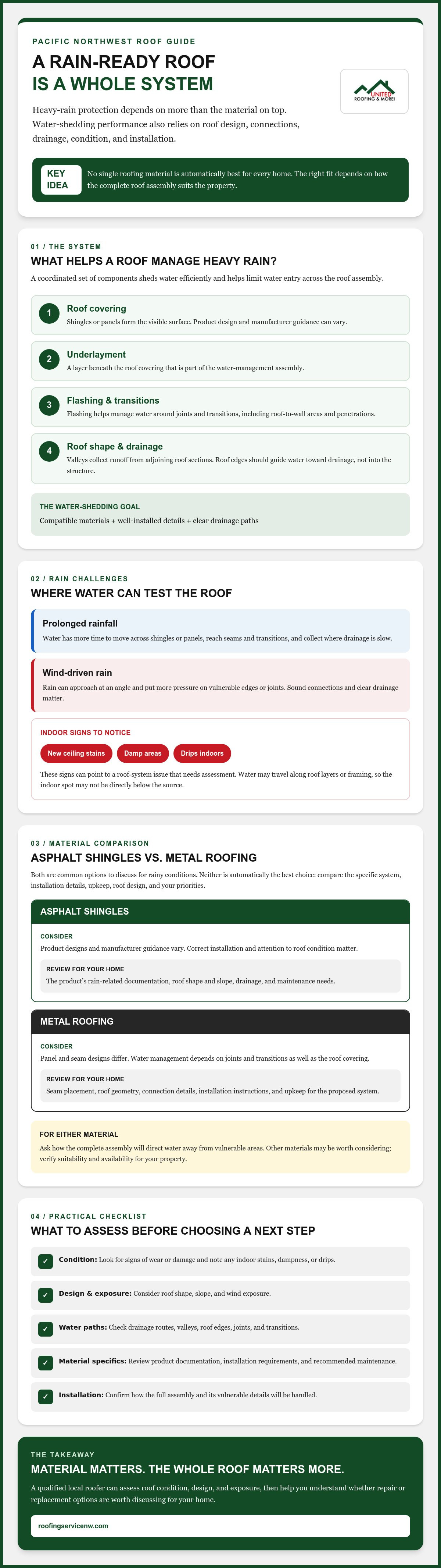
Repeated rain can make any homeowner wonder whether their roof is still doing its job. In Seattle and other Pacific Northwest communities, dependable rain protection relies on more than a tough-looking surface. A roof needs to shed water efficiently and limit water entry across the full assembly, including its covering, supporting layers, connections, and drainage paths.
That’s why there isn’t one best roof for heavy rain for every home. A material may perform well in the right application, but it can’t compensate for poor installation, neglected maintenance, or roof details that don’t suit the building. Wind exposure, roof shape and slope, and the roof’s overall condition all help determine what may work for a particular property.
How heavy rain challenges a roofing system
Prolonged rainfall gives water more time to move across shingles or panels, reach seams and transitions, and collect where drainage is slow. In ordinary rain, water falls onto the roof and follows its intended path. Wind-driven rain can approach at an angle and put more pressure on vulnerable edges or joints. That doesn’t mean every storm will cause a leak, but it makes sound connections and clear drainage important.
Watch for new ceiling stains, damp areas, or drips indoors. These signs can point to a roof-system issue that needs assessment. Water may travel along roof layers or framing before it becomes visible, so the spot where it appears inside may not be directly below the source.
Why the whole roof matters more than one material
Water protection depends on several details working together. Underlayment provides a layer beneath the roof covering. Flashing helps manage water around joints and transitions, including where the roof meets a wall or a penetration. Valleys collect runoff from adjoining roof sections, while roof edges need to direct water toward the drainage system rather than into the structure.
A rain-ready roof is a coordinated water-shedding system, with compatible materials, well-installed details, and clear drainage paths. Paying attention to the roof’s condition can help identify wear or damage, while careful installation supports the material’s intended performance. For a neutral overview of commercially available roofing materials, review common options before comparing which may suit your home.
Material is one part of the decision, not a promise that leaks can’t happen. A professional assessment can help connect your roof’s condition, design, and exposure to appropriate repair or replacement options.
Best Roof Materials for Heavy Rain: Compare the Main Options
Asphalt shingles and metal roofing are common options to discuss for rainy conditions, but neither is automatically the best roof for heavy rain. The right fit depends on the specific product, roof design, installation details, upkeep, and your priorities. Use the table as a starting point, then check the roof and the manufacturer’s requirements before deciding.
Asphalt shingles in rainy climates
“Asphalt shingles” covers products with different designs and performance claims, so review the manufacturer’s documentation for the specific option under consideration. Compare the roof’s current condition, the proposed installation approach, and the maintenance the manufacturer recommends. A contractor should also review roof slope and shape, drainage paths, exposure, and existing trouble spots before recommending shingles.
Metal roofing and other material options
Metal roofing also varies by product and system. Seams, transitions, roof geometry, and installation details all affect how water moves across the roof. Ask how those details will be handled and what upkeep is appropriate for the proposed system. Other materials may be worth considering, but verify their suitability and availability for your property before adding them to the comparison.
| Material category | General considerations | What to review for your property |
|---|---|---|
| Asphalt shingles | Product designs and manufacturer guidance vary. Correct installation and attention to roof condition matter. | Check the specific product’s rain-related documentation, roof shape and slope, drainage, and maintenance needs. |
| Metal roofing | Panel and seam designs differ. Water management depends on details at joints and transitions as well as the roof covering. | Review seam placement, roof geometry, connection details, installation instructions, and upkeep for the proposed system. |
For either option, ask how the complete assembly directs water away from vulnerable areas. Building Science Corporation’s Understanding Drainage Planes explains how drainage layers help manage water. A roofer should be able to describe how the selected material and roof details work together on your home, rather than relying on a broad claim that one material prevents leaks.
If you’re weighing options, a local roofing professional can assess your roof’s condition and help compare suitable materials and installation considerations. You can also review roofing services and options as a next step.
Is Material the Biggest Factor in Rain Protection?
No. A roof covering matters, but choosing a particular material by itself doesn’t prevent leaks. Rain protection depends on how the covering works with the roof’s pitch, drainage paths, flashing, and installation. Even a material suited to wet conditions can underperform if water backs up at a valley or enters through a poorly finished transition.
Keep material characteristics separate from system-wide details as you compare options:
- Material: Consider the product’s design, manufacturer guidance, maintenance needs, and fit with your preferences.
- Roof system: Check how the roof directs runoff, protects joints and openings, and connects to gutters and roof edges.
- Workmanship: Confirm that installation follows product requirements and accounts for the home’s roof layout.
These factors work together. The roof material shapes how water moves across the surface, while pitch and layout influence where it flows. Drainage details then need to carry runoff away without obstruction. A useful roof pitch calculation guide can help explain the terminology, but a suitable pitch depends on the specific roof and project requirements.
Pitch, runoff, and drainage details
Roof geometry affects how quickly water moves and where it concentrates. Valleys collect runoff from adjoining sections, and gutters and roof edges help manage water at the perimeter. Look for debris, visible blockages, or areas where water appears to linger. The roof drip edge guide offers more context on the edge detail that helps direct water away from vulnerable areas.
Underlayment, flashing, and workmanship
Underlayment sits beneath the visible covering, while flashing helps manage water at junctions. Both are often concealed after installation, so their condition and placement may require closer assessment. Pay particular attention to penetrations, chimneys, and roof-to-wall transitions, where surfaces meet and water needs a clear path out.
Material choice can’t make up for poor installation; the roof covering and its water-management details need to work as one system. Ask a roofer to explain how the selected material, flashing, underlayment, and drainage plan suit your home. That discussion can help distinguish a material limitation from an issue with roof design or workmanship.
How to Choose a Rain-Ready Roof for Your Home
Start with your home, not a material shortlist. The best roof for heavy rain is the option that fits the roof’s condition, layout, drainage, and your priorities. A step-by-step review can help you ask useful questions and compare recommendations without treating replacement as the automatic answer.
- Review the roof’s condition. Note visible damage, stains, or known leak locations, and share when and where you’ve noticed them. If there’s active leaking, damage, or uncertainty about what’s happening, arrange an on-site professional assessment rather than relying on a view from the ground.
- Describe the home and its exposure. Ask the roofer to consider the roof shape, existing material, and areas where sections meet. Wind-driven rain exposure and surrounding site conditions can vary from house to house, so recommendations should reflect your property rather than assume every Seattle home has the same needs.
- Review drainage paths. Discuss how water moves across the roof and toward valleys, edges, and gutters. Ask whether any drainage areas appear obstructed or need attention. Choosing a different material won’t resolve a drainage issue by itself.
- Separate preferences from performance details. Share your priorities for appearance and maintenance, then ask how each proposed option addresses water management. Confirm that the contractor installs the materials being recommended, and request manufacturer information for the specific products under consideration.
- Compare written proposals. Check what work is included, which materials are specified, and how underlayment, flashing, ventilation, and drainage details are addressed. Look for clear communication about the project scope and how questions or changes will be handled.
Ask how the recommendation was reached
A useful proposal should connect its recommendation to what was observed on your roof. Ask what findings support repair or replacement, and whether the assessment identified a localized issue or concerns across a broader area. If replacement appears appropriate, this complete roof replacement guide can help you understand the process and questions to raise.
Clear explanations matter. If two proposals recommend different materials or scopes, ask each contractor to explain the reasoning and how the system details suit your home. A locally owned Pacific Northwest roofing contractor such as United Roofing & More! can discuss roof repairs, installation, or replacement based on an assessment, rather than assuming one path fits every roof.
Discuss your roof’s condition and options with a roofing professional, and ask about available financing if it’s relevant to your decision. Confirm current financing details directly before relying on any terms.
Plan Your Roof Replacement or Repair With a Local Roofer
The best roof for heavy rain is a complete system suited to your home, not a material chosen in isolation. A local assessment can help clarify the roof’s condition and whether repair or replacement merits discussion. The right next step depends on what the assessment finds, so ask for clear explanations before deciding.
What to prepare before requesting a roof assessment
Make the conversation more useful by gathering a few details. Note where you’ve seen leaks or visible damage, and when symptoms occur, such as during prolonged or wind-driven rain. If available, collect roof records and details of past repairs. Write down questions about material options, installation scope, drainage details, and how the contractor will communicate about the work.
Understand the replacement process and next steps
Recommendations should follow from inspection findings and your home’s specific roof conditions. Ask what the roofer observed, how those findings support repair or replacement, and what work each option would involve. If replacement appears appropriate, the roof replacement planning guide offers more background without taking the place of an assessment tailored to your property.
United Roofing & More! is a locally owned Pacific Northwest contractor offering roofing, roof repairs, installation, and roof replacement. A roof discussion can connect your roof’s condition with practical options, rather than assume that one material or project is right for every home.
Before moving forward, review the proposed materials and project scope, and ask how key system details will be handled. If financing is part of your planning, ask about available roofing financing and confirm current terms directly. Availability, terms, and eligibility should be verified with the company.
Contact United Roofing & More! to discuss your roof and the repair or replacement options that may fit your home.
Choose a Roof System With Confidence
The best roof for heavy rain isn’t simply a material choice. A roof’s condition, design, drainage, and installation all shape how the system handles water. Compare material options alongside the details that protect seams, edges, and other vulnerable areas.
If you’ve noticed leaks or damage, a professional assessment can help clarify whether repair or replacement is worth discussing for your home. United Roofing & More! is a locally owned and operated Pacific Northwest roofing contractor offering roof repairs, installation, and replacement. You can also ask about roofing financing and confirm current details directly.
Request a roof assessment from United Roofing & More! Get clear information about your roof and possible next steps. With an assessment and the right questions, you can move forward with greater confidence and a roofing system selected for your home.
Frequently Asked Questions
What is the best roof material for heavy rain?
There isn’t one best material for every home. The best roof for heavy rain depends on the product, roof design, drainage, installation quality, and maintenance. Asphalt shingles and metal roofing are common options to compare, but check manufacturer guidance for the specific materials being considered. Ask a qualified roofer to assess your roof’s condition, slope, and layout before recommending a material or complete roof system.
Can a metal roof prevent leaks during heavy rain?
No roofing material can guarantee that leaks won’t occur. Metal roofing can shed water effectively when the selected system suits the roof and is installed according to its requirements. Seams, fasteners, flashing, roof edges, and transitions still need careful attention. If you’re considering metal, ask how the proposed system will handle joints and drainage on your home, and what maintenance the manufacturer recommends.
Are asphalt shingles suitable for rainy climates?
Asphalt shingles can be an option in rainy climates, but performance depends on the specific product and the condition and design of the roof. Ask for product-specific manufacturer information rather than relying on broad claims about all shingles. Correct installation, underlayment, flashing, drainage, and attention to roof condition also matter. A roofer can assess whether shingles fit your home’s layout and your maintenance preferences.
Does roof pitch affect how well a roof handles heavy rain?
Yes. Roof pitch influences how water moves across the roof and toward drainage paths. That doesn’t mean one pitch is right for every home: the suitable design depends on the roof, material, and project requirements. Ask a roofing professional to review your roof’s slope, valleys, edges, and drainage as a connected system. Keep gutters and visible drainage paths clear, and have persistent pooling or leakage assessed.
What happens if heavy rain causes a roof leak?
Water may stain ceilings, dampen walls or insulation, or drip inside. The visible spot may not be directly below the entry point because water can travel along roof layers or framing. If you notice a leak, protect belongings and keep clear of wet areas near electrical fixtures. Note where and when the water appears, then arrange a professional roof assessment to identify the cause and discuss repair options.
How can I tell whether my roof needs repair or replacement?
Visible damage, recurring leaks, or signs of moisture indoors are reasons to seek an assessment, but they don’t automatically mean the roof needs replacement. A roofer can examine the affected area and the broader roof condition, then explain whether repair or replacement merits discussion and what findings support that recommendation. United Roofing & More! offers roofing services in Seattle, Marysville, Renton, Everett, Lynnwood, Kirkland, Mount Vernon, Bothell, Edmonds, Shoreline, Sammamish, Redmond, Bellevue, Tacoma, and Kent.
Is roof underlayment important in heavy rain?
Yes. Underlayment sits beneath the visible roof covering and supports the roof assembly’s water management. It doesn’t replace a suitable roofing material, sound flashing, or careful installation. The appropriate underlayment depends on the roof design, selected material, and applicable project requirements. Ask your roofer which underlayment is proposed, how it will be installed, and how it works with the rest of the roof system to direct water away from vulnerable areas.


