

Imagine waking up to the sound of water dripping from your living room ceiling while snow is still piled high outside. You look out the window and see heavy icicles pulling your gutters away from the eaves. It's a stressful sight that many homeowners in Seattle and Marysville face every winter. Understanding what causes ice dams on roofs in washington is the first step toward protecting your investment. It isn't just about the freezing temperatures. It's about how your home manages heat and airflow during a storm.
We know how frustrating it is to hear conflicting advice about insulation versus ventilation. You need clear answers, not more confusion. This guide explains the specific weather factors and structural flaws that lead to ice buildup in the Pacific Northwest. We'll show you how to identify heat leaks in your attic and explain the local building codes designed to keep you safe. You'll learn how to prevent these issues permanently. We also provide a path to finding a local expert who offers helpful roofing financing to make your home repairs easy and affordable. Let's get your home ready for the next winter storm.
Key Takeaways
- Washington's unique freeze-thaw cycles create a "danger zone" where ice ridges trap melting snow and force water into your ceiling.
- Identify how poor attic insulation and ventilation are the primary factors in what causes ice dams on roofs in washington.
- Learn to spot early warning signs, like icicle curtains and gutter buildup, so you can schedule expert roof repairs before major leaks occur.
- Discover why a professional roof replacement with proper ice barriers is the only permanent way to stop recurring structural damage.
- See how local expertise and flexible roofing financing options make it easy to protect your home without the upfront financial stress.
What is an Ice Dam and Why are They Common in Washington?
An ice dam is a ridge of ice that forms at the very edge of your roof. It acts like a literal wall, preventing melting snow from draining into your gutters. To get a foundational perspective on What is an Ice Dam?, it's helpful to see how it requires a specific combination of snow, heat, and cold eaves. When water backs up behind this ridge, it doesn't just sit there. It leaks into your walls, ruins your insulation, and creates those dreaded water stains on your ceilings.
Our local weather makes this problem particularly difficult. We often deal with "Cascade Concrete," which is heavy, wet snow. This type of snow provides much more moisture for dams than dry, powdery snow found in the mountains. It creates a "Temperature Tug-of-War" where your heated home fights the cold outdoor air. This interaction is the core of what causes ice dams on roofs in washington during our winter months.
The Anatomy of a Washington Ice Dam
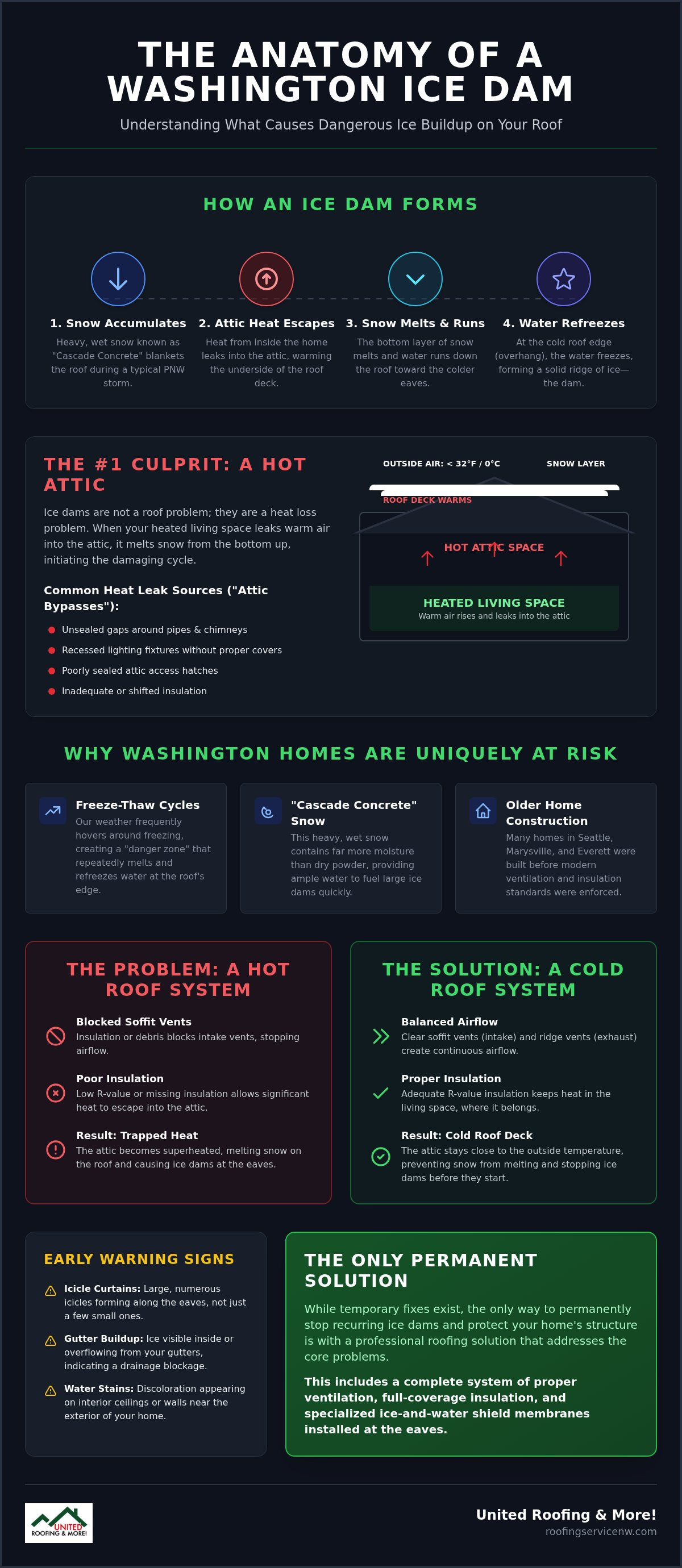
- Step 1: Snow accumulates on the roof during a typical PNW storm.
- Step 2: Internal heat from your home warms the roof deck above the attic space.
- Step 3: The snow melts on the warm upper roof and runs down toward the cold eave.
- Step 4: Water refreezes at the overhang, creating a solid physical barrier.
Why Seattle and Marysville Homes are at Risk
Local humidity levels make ice more "sticky" and prone to rapid build-up. This high moisture content helps the ice bond firmly to your shingles. Many older homes in Everett and Tacoma were built before modern ventilation standards existed. Without proper airflow, these attics stay too warm. This heat imbalance is exactly what causes ice dams on roofs in washington during a sudden cold snap.
The Puget Sound Convergence Zone also adds a layer of risk. This weather phenomenon can cause localized, heavy snowfall in specific areas like Marysville while leaving other nearby towns untouched. When heavy snow hits these pockets, the risk of ice damming spikes immediately. We see these patterns every winter; they can lead to sudden, expensive leaks if your roof isn't prepared for the weight and moisture.
The Primary Cause: How Attic Heat Leaks Melt Your Snow
A hot attic is the main culprit behind ice dam formation in Marysville homes. While the snow on your roof looks cold, the shingles underneath might be surprisingly warm. This happens when poor insulation allows expensive heat to escape from your living space directly into the attic. Once that heat is trapped, it warms the roof deck enough to melt the bottom layer of snow. This melted water flows down to the cold eaves and refreezes. This internal heat loss is fundamentally what causes ice dams on roofs in washington during our long winter months.
Many homeowners overlook "attic bypasses." These are unsealed gaps around pipes, light fixtures, and chimneys. They act as "heat chimneys," funneling warm air straight to the underside of your roof. Even a small gap can move a significant amount of heat. If your attic isn't properly sealed, you are essentially heating the outdoors through your roof shingles.
Common Insulation Gaps in PNW Homes
In older Renton or Lynnwood properties, insulation often degrades or shifts over time. We frequently see missing baffles in these homes. Baffles are essential because they prevent loose-fill insulation from blocking your soffit vents. If those vents are blocked, your attic can't breathe. When analyzing Washington’s Weather Cycles, you'll see that consistent airflow is the only way to keep the roof deck at a safe temperature during a freeze.
R-value measures the capacity of an insulating material to resist heat flow, which is a critical metric for maintaining a cold roof in Washington's specific climate zones.
The Role of Ventilation and Roof Pitch
Effective ventilation requires a partnership between ridge vents and soffit vents. Cold air enters through the soffits at the eaves and exits through the ridge at the peak. This constant stream keeps the roof deck cold. If this cycle breaks, heat builds up rapidly. Inadequate ventilation is a major factor in what causes ice dams on roofs in washington because it prevents the attic from reaching the same temperature as the outside air.
Roof pitch also plays a major role. Lower-pitched roofs, common in many local neighborhoods, are much more susceptible to water backup. Gravity doesn't pull the water away as quickly, giving it more time to refreeze at the edge. Complex roof geometries with valleys or dormers often create "dead air" spaces. These pockets trap heat and lead to localized ice dams that are hard to spot from the ground. If you suspect your attic is trapping heat, consulting a roofing professional is the best way to prevent structural damage before the next snow.
Washington’s Weather Cycles: The Freeze-Thaw Trap
Washington winters are a constant balancing act. Our local temperatures often hover right around the 32°F mark. We call this the "danger zone" for your roof. This specific temperature range is precisely what causes ice dams on roofs in washington to become a recurring nightmare for homeowners. During the day, radiant heat from the sun melts the snow on your shingles even if the air temperature stays below freezing. Once the sun sets, the temperature crashes. That melted water stops flowing and turns into a solid block of ice at your eaves.
The "Marine Push" is another unique local factor. Moist air from the Pacific Ocean can sweep in suddenly, bringing a mix of rain and wet snow. This moisture saturates the existing snow on your roof and adds incredible weight. It turns slush into a thick, impenetrable ice barrier almost overnight. This cycle of melting and flash-freezing is a primary driver of structural roof damage in the Seattle and Marysville areas.
Radiant Heat and the Sun's Impact
Your roof color plays a surprising role in how ice forms. Dark-colored shingles absorb more solar energy than lighter materials. This extra heat accelerates the melt-freeze cycle significantly. South-facing roof slopes are usually the most vulnerable because they get the most direct sunlight during the day. This causes more melting on the south side, which then refreezes as it hits the cold, shaded eaves. Trees and shadows also create uneven melting patterns. When one part of the roof is shaded and another is in the sun, the water often hits a cold spot and freezes before it can reach the gutter.
Heavy Wet Snow vs. Ice Dams
Washington is famous for "heavy" snow. This moisture-rich snow puts immense pressure on your drainage system. When your gutters are already filled with ice, the added weight of wet snow can actually rip the metal right off the fascia. A thick snow blanket also acts as an insulator. It traps the heat coming from your attic, keeping the roof surface even warmer than the outside air. This insulation effect is a major component of what causes ice dams on roofs in washington homes. While clearing snow with a roof rake is a good temporary fix, it doesn't address the underlying thermal issues. You need a permanent solution to protect your home's structure from these relentless weather cycles.
Detecting and Preventing Ice Dams Before Damage Occurs
Catching an ice dam early can save you thousands of dollars in restoration costs. Prevention is always cheaper than emergency roof repairs. You should start by looking for visual cues from the ground. "Icicle curtains" hanging from the gutters are a classic sign of trouble. If you notice ice forming behind the gutters or along the fascia board, the dam is already well-established. These physical signs are direct results of what causes ice dams on roofs in washington, and they require immediate attention.
Internal signs are just as critical. Check your ceilings for new water stains or bubbling paint. Go into your attic with a flashlight to look for damp insulation or frost on the underside of the roof deck. Annual gutter cleaning is also a non-negotiable task. If your gutters are clogged with needles and leaves, melting snow has no path to the ground. This trapped water freezes faster and builds up higher, pushing moisture under your shingles.
Immediate Steps for Homeowners
When snow starts to pile up, use a roof rake to safely remove it from the first 3-6 feet of your eaves. This simple action removes the source of the meltwater. However, stay on the ground. Never climb a ladder in icy conditions. You should also never use a hammer or shovel to chip away at the ice. One wrong swing can destroy your shingles or puncture the roof deck. Many homeowners in Everett and Marysville use de-icing cables as a temporary fix. These heat cables create small channels for water to escape. While helpful, they are a "band-aid" solution that doesn't fix the underlying attic heat issues.
Long-Term Prevention Strategies
To stop the problem forever, you must address the root cause. A professional attic energy audit is the best way to find hidden heat leaks. Installing a proper roof drip edge is another essential guard. This metal flashing protects the roof's edge and ensures water flows directly into the gutter rather than behind it. Upgrading your roof to master-level standards provides the best thermal protection available. If you're tired of worrying every time it snows, reach out to us for a comprehensive inspection of your roofing system today.
Professional Solutions for Ice Dam Damage and Prevention
When an ice dam leads to active leaks, you cannot afford to wait for the spring thaw. The moisture trapped behind that solid ice ridge is already working its way into your home's structural skeleton. United Roofing & More! specializes in identifying the root cause of these winter issues, not just treating the visible symptoms. We look beyond the icicles to see exactly what causes ice dams on roofs in washington homes like yours. Our team provides comprehensive solutions tailored to the Pacific Northwest. These services range from targeted ventilation upgrades to a complete roof replacement if your roof deck is compromised. We want you to have total peace of mind before the next heavy snow falls in Snohomish County.
Why Professional Inspection Matters
Ice dams often hide the true extent of the damage they cause. While you might only see a small water spot on the ceiling, the ice is often rotting the roof deck and fascia boards out of sight. This hidden decay leads to costly structural failures that a simple patch cannot fix. Trapped moisture in the attic also creates a breeding ground for mold and mildew. This ruins your indoor air quality and can lead to health concerns for your family. Our local experts provide a precise diagnosis. We determine if your specific problem stems from a lack of insulation or a total failure in your attic ventilation system. Getting an authoritative answer is the only way to stop the damage for good.
Making Quality Roofing Affordable
A winter roofing emergency shouldn't cause unnecessary stress for your family. We understand that sudden repairs or a full roof installation can feel like a financial burden. That is why we prioritize transparency and accessibility in everything we do. You can explore our flexible roofing financing options to find a payment plan that fits your monthly budget. We believe every homeowner in Seattle, Marysville, and Everett deserves a safe and dry home regardless of the season. United Roofing & More! is your hardworking local partner for storm protection. Don't let the confusion of what causes ice dams on roofs in washington lead to a disaster. Reach out today for a complimentary diagnostic service. Let's secure your home together.
Secure Your Home Before the Next Washington Storm
Protecting your property from winter damage starts with being proactive. You now understand that what causes ice dams on roofs in washington is a combination of attic heat leaks and our region's specific freeze-thaw cycles. By addressing insulation gaps and improving ventilation, you can stop the cycle of melting and refreezing that threatens your shingles. Don't wait for a dripping ceiling or sagging gutters to tell you there's a problem. Early detection is the key to avoiding expensive emergency restoration costs.
United Roofing & More! is your dedicated local expert for storm protection. We provide expert roof repairs and professional replacements throughout Marysville, Seattle, and the entire PNW. Our team focuses on transparent communication and high-quality workmanship. We also make home safety accessible by offering flexible payment plans to fit your budget. Get a Free Roof Diagnostic and Explore Financing! We are ready to help you secure your home against whatever the next winter season brings. Your peace of mind is our top priority. Stay safe and warm out there.
Frequently Asked Questions
Do gutters cause ice dams to form on my roof?
Gutters do not cause ice dams, but they do provide a convenient place for ice to collect and anchor. The actual problem starts higher up on the roof where heat escapes from your attic and melts the snow. While gutters trap the refrozen water, removing them won't solve the thermal issues in your home. You must focus on fixing heat leaks to prevent ice from ever reaching your eaves.
Can I use salt or chemical de-icers to melt ice dams?
You should never use standard rock salt on your roof because it's highly corrosive to shingles and metal nails. It can also kill the landscaping around your home when the snow eventually melts. If you must use a chemical, calcium chloride is a safer alternative for roofing materials. However, these chemicals are only temporary fixes and won't address the structural issues that lead to ice buildup.
Will a new roof prevent ice dams from happening again?
A new roof installation is the perfect time to fix the root causes of ice buildup. Simply replacing shingles isn't enough to solve the problem. You must also ensure your contractor installs high-quality ice and water shields and corrects any ventilation flaws. When done right, a new system addresses what causes ice dams on roofs in washington by keeping the roof deck at a consistent, cold temperature.
Is ice dam damage covered by my homeowner's insurance in Washington?
Most standard Washington insurance policies cover the water damage caused by a leak, but they rarely pay for the ice dam removal itself. If an ice dam causes a ceiling to collapse or ruins your walls, you're likely covered for those repairs. Always check your specific policy details. We recommend documenting all damage with photos before calling your adjuster to ensure a smooth claims process.
How much snow is too much for a Washington roof to handle?
Most residential roofs in the Seattle area are built to handle at least 20 to 25 pounds per square foot. Because Washington snow is often wet and heavy, just one foot of "Cascade Concrete" can push your roof to its weight limit. If you see interior doors sticking or hear new creaking sounds during a storm, the weight might be reaching a dangerous level for your home's structure.
What is the safest way to remove an existing ice dam?
Low-pressure steam is the safest and most effective way to remove an ice dam without damaging your shingles. Never use a hammer, ice pick, or shovel to chip away at the ice. These tools will almost certainly puncture your roof membrane or destroy the shingle granules. Professional steam removal melts the ice quickly and allows water to flow freely into your downspouts again without harming the roof.
Why do I have icicles but my neighbor doesn't?
Icicle patterns vary between houses because of differences in attic insulation and ventilation. Your neighbor might have a cooler attic or better-sealed bypasses around their light fixtures. Even small things, like the location of a furnace or a bathroom exhaust fan, can change how heat moves through a home. Understanding these thermal differences helps explain what causes ice dams on roofs in washington on one house but not another.
Can poor attic ventilation cause roof leaks in the summer too?
Poor attic ventilation is a year-round problem that can lead to moisture damage in every season. In the summer, trapped heat can reach 150°F, which "bakes" your shingles and causes them to crack prematurely. This heat also creates condensation that can rot your roof deck from the inside out. While you won't see ice, the resulting leaks and structural damage can be just as expensive to repair as winter leaks.


