
In Washington, moss is not just a lush plant; it is a structural parasite that exploits our damp climate to bypass your home’s defenses. You likely moved here for the beautiful greenery, but seeing that same green carpet take over your shingles is a genuine cause for concern. It starts small. However, with over 150 days of rain each year in many parts of the state, those tiny spores quickly turn into a heavy, moisture-trapping threat. You are right to worry about the long-term impact on your property value and safety.
This 2026 guide explains exactly how roof damage from moss washington occurs and what you can do to stop it. You will discover the critical signs that differentiate a simple cleaning from a necessary structural fix. We will also clarify the confusion between DIY methods and professional removal while outlining the criteria for roof repairs versus a full replacement. We even cover flexible roofing financing options to ensure your home stays protected without breaking your budget. It's time to safeguard your biggest investment from the PNW elements.
Key Takeaways
- Understand how the humid PNW climate transforms simple moss into a structural parasite that compromises your roof's integrity.
- Discover the "Sponge Effect" and how trapped moisture rots roof decking while moss roots pry up shingle edges.
- Spot the critical warning signs of roof damage from moss washington homeowners often miss, such as "balding" shingles and granule loss.
- Learn why common DIY removal methods like pressure washing can void your warranty and lead to an expensive, early roof replacement.
- Explore how professional inspections and flexible roofing financing can protect your home’s value without straining your budget.
Why Moss is a Structural Threat to Washington Roofs in 2026
Many Washington homeowners think a bit of green on the roof adds Pacific Northwest charm. It doesn't. That "Green Roof" aesthetic is actually a major red flag for your home's structural health. Moss belongs in the forest, not on your shingles. Scientifically, mosses are non-vascular flowerless plants that lack true roots. Instead of drawing nutrients from the soil, they absorb moisture directly from the air and the surfaces they cling to. This makes your asphalt shingles the perfect host for a destructive colony.
When left unmanaged, roof damage from moss washington can lead to premature failure of your entire roofing system. Unlike surface-level grime, moss grows deep into the gaps between shingles. It isn't just sitting on top; it's actively prying your home's primary defense apart. This isn't a cosmetic surface growth. It is a deep-rooted structural infestation that bypasses the protective granules of your roof. It turns a durable surface into a fragile one in just a few seasons.
The Washington Climate: A Breeding Ground for Damage
Our local weather is moss's best friend. With over 150 days of rain annually in parts of Western Washington, moisture is constant. Even during our rare dry spells, heavy morning dew provides enough hydration to keep moss active and growing. This is especially true in shaded areas like Marysville or the heavily wooded neighborhoods of Seattle. Tall trees provide the shade moss needs to thrive without being dried out by the sun.
North-facing roof slopes are the most vulnerable. They stay damp longer and receive less direct sunlight. This allows moss to colonize rapidly. Once a colony starts, it creates its own microclimate. It holds onto water long after the clouds clear. This cycle of constant dampness is what leads to significant roof damage from moss washington. It creates a playground for rot and decay right above your head.
Moss vs. Algae: Identifying the Real Culprit
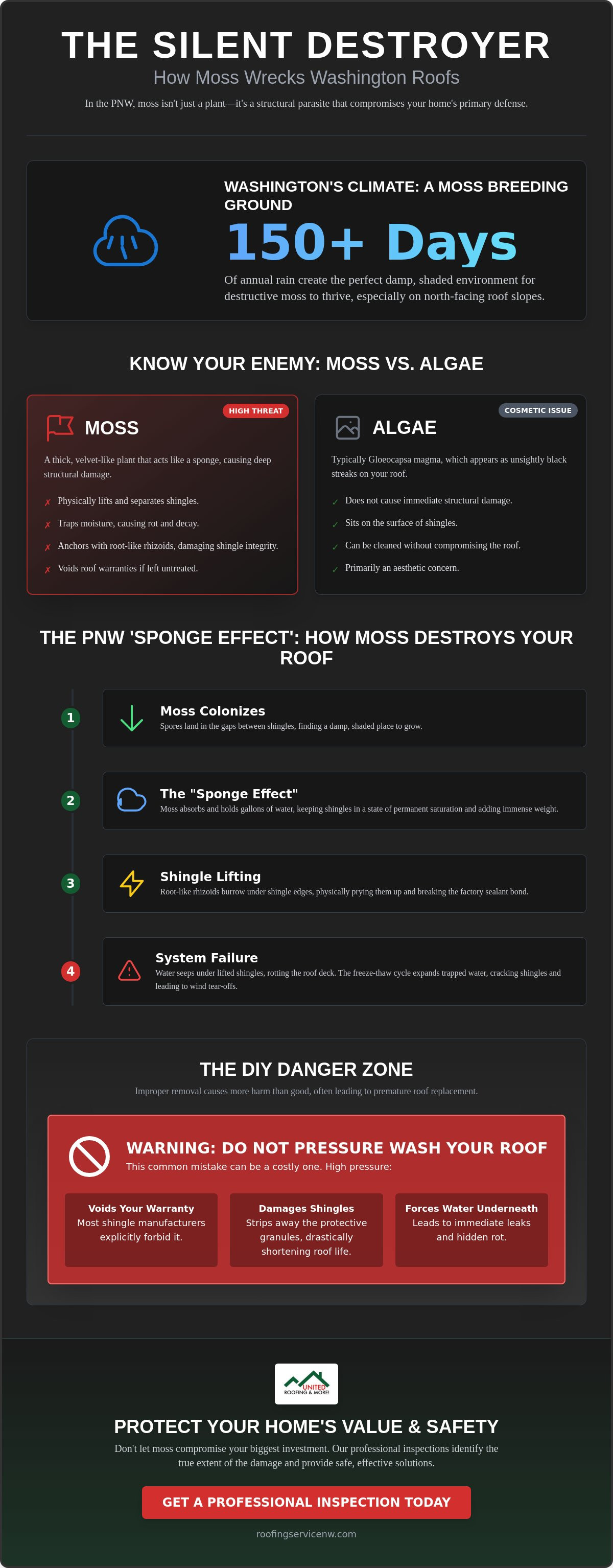
You might see black streaks on your roof and assume it's moss. Usually, those dark stains are caused by Gloeocapsa magma, a type of hardy algae. While algae is unsightly, it doesn't cause the same level of immediate structural havoc. Moss is different. It grows in thick, velvet-like cushions that act like heavy sponges.
Moss is a moisture-trapping organism that degrades asphalt shingles by keeping them in a state of permanent saturation.
This constant wetness rots the organic components of your shingles. It leads to structural decay that often requires professional intervention or even a full roof replacement. We believe in total transparency when assessing these issues. Our team helps you understand exactly what's happening up there so you can make an informed decision. We offer clear dialogue and helpful roofing financing options to make sure your home stays safe and dry without the stress of unexpected costs.
The PNW 'Sponge Effect': How Moss Growth Destroys Shingle Integrity
Moss doesn't just sit on your roof. It acts like a massive sponge. In the Pacific Northwest, moss can hold onto gallons of water for weeks at a time. This creates a constant, heavy weight on your shingles. It also keeps your roof surface in a state of permanent saturation. This moisture is detrimental to asphalt shingle performance because it leads to the rapid degradation of the protective granule layer. Without these granules, your shingles are exposed to UV rays and heat. They quickly become brittle, crack, and fail to protect your home.
The biological mechanism of moss is even more aggressive than the weight alone. Moss uses rhizoids to anchor itself. These are tiny, root-like structures. They don't just cling to the surface; they pry into the spaces between shingles. As they grow, they physically lift the edges of the asphalt. This creates gaps that allow even more water to enter. In Washington, we face a specific freeze-thaw cycle. When the water trapped in these moss-filled gaps freezes, it expands. This expansion forces the gaps wider and breaks the shingle's internal structure. It's a slow-motion destruction of your roof's integrity.
Shingle Lifting and Wind Vulnerability
Modern shingles rely on a factory-applied sealant strip to stay in place. Moss growth is strong enough to break this seal. Once that bond is gone, your roof is defenseless. During our notorious PNW windstorms, these lifted shingles act like sails. They catch the wind and tear away easily. This level of damage often means a simple patch won't work. You might need a professional roof replacement to restore your home's safety and curb appeal. If you're worried about your roof's wind resistance, our team can help you evaluate your current risk level.
Root Penetration and the Roof Deck
The real danger lies beneath the surface. When rhizoids pry up shingles, they create a direct path for water to reach the plywood roof deck. This is where roof damage from moss washington turns from a surface issue into a structural crisis. Constant moisture leads to wood rot. You might notice soft spots or structural sagging when you look at your roofline from the street. This rot also invites mold development inside your attic space. It's a chain reaction that compromises your entire home. If you suspect your roof deck is soft, consider checking out our roofing services to catch the problem before it spreads. We provide clear assessments and helpful roofing financing to keep your project manageable and your home safe.
Warning Signs: When Moss Damage Signals a Need for Roof Repairs
Homeowners in Seattle and Everett often ask how to tell if their roof is truly failing. You don't need to wait for a waterfall in your living room to identify roof damage from moss washington. Early detection saves you thousands. Start by walking your property line during a clear day. Look for these specific indicators:
- Thick green cushions along shingle overlaps.
- Shingles that appear "bald" or have smooth, dark patches.
- Edges that curl upward or look brittle.
- Damp smells or dark spots on the plywood in your attic.
When moss grows, it strips away the protective granules. These granules are your roof’s armor. "Balding" shingles mean the asphalt is now exposed to the sun and rain. This causes the shingle to dry out and curl. Once curling begins, the shingle is no longer shedding water. It is collecting it. This trapped moisture accelerates the rot process we discussed in the previous sections. If you see these signs, it's time to act.
Moss and the Failure of the Roof Drip Edge
Moss loves the cool, damp eaves of your home. When it thickens at the roof’s edge, it creates a dam. Water can't reach the gutters. Instead, it wicks backward behind the roof drip edge. This leads to hidden fascia board rot that you might not see until it's too late. If you notice water dripping behind your gutters rather than into them, you likely need specialized roof repairs. Our team provides clear estimates to fix these perimeter issues before they compromise your rafters. We keep you informed through every step of the diagnostic process.
Gutter Clogs and Granule Loss
Check your gutters. If you find piles of what looks like coarse sand, your shingles are dying. This "sand" is actually the granule layer being scoured off by moss rhizoids. As moss grows larger, heavy clumps will break off and tumble into your downspouts. These clumps cause secondary drainage failures. They trap water on the roof and accelerate the roof damage from moss washington homeowners fear most. If more than 20% of your roof shows these signs, a repair might just be a temporary bandage. We offer transparent advice on whether to fix or replace. We also provide flexible roofing financing to help you handle the costs of protecting your home’s value without the stress.
The DIY Danger: Why Improper Removal Leads to Faster Roof Replacement
DIY moss removal sounds like a great way to save money on a Saturday afternoon. It usually isn't. Many homeowners attempt to tackle the problem themselves but end up accelerating the exact roof damage from moss washington weather already started. Taking a scraper or a high-powered tool to your shingles can do more harm than decades of rain. You risk your personal safety and the structural lifespan of your home. We've seen countless roofs that could have lasted another ten years destroyed in a single afternoon of improper cleaning.
The Pressure Washer Trap
Pressure washing is the fastest way to ruin a perfectly good roof. It is equivalent to 20 years of natural wear in just 20 minutes. High-pressure water scours the surface and strips the protective granules away instantly. Granule loss is permanent and leads to rapid UV degradation. Once those granules are gone, the sun bakes the asphalt until it becomes brittle and cracks. Even worse, the force of the water often pushes moisture up and under the shingles. This causes immediate internal leaks that rot your plywood deck from the inside out. You aren't just cleaning the roof; you're inviting a flood into your attic.
Chemical Scams vs. Professional Treatment
Those "quick fix" sprays from big-box stores are often a waste of your time and money. They might turn the top layer of moss brown, but they rarely kill the deep rhizoids we discussed earlier. Furthermore, harsh DIY chemicals can be highly corrosive. They often eat away at your metal flashings, valley liners, and gutter systems. A professional approach is much safer for your home. We use gentle, low-pressure brushing combined with pH-balanced treatments that kill the moss at the root without hurting your shingles.
Sometimes, a roof is simply too far gone for a cleaning to be effective. If the moss has already broken the factory seals or caused significant shingle curling, a cleaning might actually reveal hidden leaks. In these instances, a new roof is the only way to truly protect your investment. Don't risk a dangerous fall on a moss-slicked surface. Let a local expert provide a safe, professional assessment. If you're concerned about the cost of a professional restoration, we offer transparent dialogue and flexible roofing financing to help you get the job done right. We are here to lower the barrier to a safe home with helpful, no-nonsense service.
Restoring Your Home’s Safety: Professional Solutions and Financing
United Roofing & More! stands as the trusted local authority for Washington roof restoration. We understand the unique challenges our humid climate presents. When you suspect roof damage from moss washington, our process begins with a comprehensive, professional inspection. We don't just look at the surface of your shingles. Our experts examine shingle seals, the drip edge, and the attic space to find hidden rot or moisture damage. We prioritize your home's structural safety above all else. This thorough assessment ensures you have all the facts before making a decision. We keep you informed throughout the entire diagnostic process.
Choosing between a repair and a full replacement is a critical decision for any homeowner. For roofs with deep-rooted moss infestation, "band-aid" repairs often fail to provide lasting security. Moss roots and trapped moisture can compromise the entire roofing system from the deck up. A full replacement provides a fresh start and guaranteed protection. It eliminates the cycle of decay and immediately restores your home's resale value. We lead with professional credentials and clear dialogue to help you choose the most cost-effective path forward. Our goal is to alleviate your stress by offering reliable, hardworking solutions.
Flexible Roofing Financing in Marysville and Seattle
Emergency roof replacements shouldn't cause financial panic for your family. We offer flexible roofing financing to make high-quality protection accessible immediately. Our no-nonsense approach to payment plans fits your specific budget requirements and long-term goals. We believe that peace of mind is an essential part of homeownership. You shouldn't have to delay a vital project due to high upfront costs. Our team is here to help you navigate your options with complete transparency. We aim to lower the barrier to entry with a welcoming and helpful demeanor.
Why Local Expertise Matters in the PNW
We have extensive experience serving homeowners across King, Snohomish, and Pierce counties. We know exactly how roof damage from moss washington behaves in our specific environment. Our commitment to high-quality workmanship ensures your new roof can withstand our 150+ days of annual rain. We are your supportive partner in home maintenance and restoration. We value long-term trust over high-pressure tactics. Our energetic team is ready to provide the results-oriented service you deserve. Don't let moss dictate the lifespan of your property. Contact United Roofing & More! for a professional moss damage assessment today. We are ready to help you protect your biggest investment with proficiency and care.
Secure Your PNW Home Against Moss Damage Today
Don't let moss turn your roof into a heavy, moisture-trapping sponge. Washington's climate turns simple greenery into a serious structural threat. You now understand the warning signs and the significant risks associated with improper DIY cleaning. Roof damage from moss washington is a persistent problem that requires a professional touch to resolve safely. Our team serves Seattle, Marysville, and the Greater PNW with expert roof replacement and repairs. We focus on high-quality workmanship and long-lasting protection for your property.
We believe that every homeowner deserves a safe, dry home without financial stress. That's why we offer flexible financing options to make your restoration project manageable. We prioritize clear dialogue and transparency throughout every inspection. Stop the cycle of decay before it compromises your home's value and safety. Get a Professional Moss Damage Inspection & Quote today. We're ready to be your supportive partner in maintaining a strong, reliable roof. Your home is worth the investment.
Frequently Asked Questions
Does moss on a roof always mean I need a full replacement?
No, a full replacement isn't always necessary if you catch the growth early. If the moss is only on the surface and hasn't broken the shingle seals or caused the wood deck to rot, a professional cleaning and minor repairs can save the system. However, if our inspection reveals soft spots or widespread shingle curling, a new installation is the safest way to protect your home. We provide clear dialogue to help you understand the exact state of your roof.
Can I just use a broom to sweep the moss off my roof?
You should never use a stiff broom or a scraper to forcefully remove moss. This aggressive physical contact strips away the protective granules that shield your shingles from UV rays. While a soft-bristle brush is sometimes used by professionals, it's only one part of a delicate process. Improper sweeping can void your manufacturer warranty and lead to leaks. It's best to let an expert handle the removal to ensure the integrity of your asphalt remains intact.
How much does moss damage typically cost to repair in Washington?
The price for fixing roof damage from moss washington homeowners face depends on the square footage and the severity of the structural decay. Simple shingle replacements are more affordable than fixing a rotted roof deck or damaged fascia boards. We offer transparent estimates and helpful roofing financing options to ensure these vital fixes fit your family budget. Our goal is to provide a no-nonsense path to a safe and secure home.
Will my homeowners insurance cover roof damage caused by moss?
Standard insurance policies in Washington typically don't cover damage resulting from moss. Most providers view moss growth as a maintenance issue rather than a sudden, accidental peril. If you neglect regular cleanings, the insurer may deny claims for related leaks or structural failure. It's also important to note that roofs older than 20 years are often settled at Actual Cash Value rather than full Replacement Cost Value. Regular maintenance is your best defense against out-of-pocket expenses.
How often should I have my roof inspected for moss in the Seattle area?
You should schedule a professional inspection at least once a year. Parts of Washington receive over 150 days of rain annually, which creates a constant breeding ground for spores. An annual check-up allows us to catch roof damage from moss washington before it requires a total replacement. We focus on identifying early warning signs on north-facing slopes and shaded areas. Staying ahead of the growth is the most cost-effective way to manage your property.
What is the best time of year to treat or remove moss in the PNW?
Late spring and early fall are the ideal times for moss treatment and removal. You want a window of dry weather so that professional treatments can soak into the moss and kill the rhizoids at the root. Treating the roof before the heavy winter rains begin prevents the "Sponge Effect" from saturating your shingles for months on end. We are ready to help you schedule a service that aligns with our local weather patterns for the best results.
Are there shingles that are resistant to moss and algae growth?
Yes, many modern asphalt shingles feature copper or zinc-infused granules designed to inhibit growth. These metals release ions when it rains, creating an environment where moss and algae can't thrive. If your home is in a heavily wooded area or has significant shade, ask us about these specialized materials during your next roof installation. Investing in resistant shingles can significantly reduce your long-term maintenance requirements and protect your home's curb appeal.
How does roof pitch affect how fast moss grows on my home?
Lower pitch roofs are much more susceptible to rapid moss growth. They drain water more slowly and stay damp for longer periods after a rainstorm. This lingering moisture allows moss spores to anchor and spread quickly. Steeper roofs shed water and debris more efficiently, which naturally discourages growth. Regardless of your roof's pitch, we provide localized expertise to ensure your specific drainage needs are met and your home stays dry.


