
What if the biggest threat to your Marysville home isn't the rain falling outside, but the air trapped inside your attic? You already know that the Pacific Northwest climate is incredibly tough on your roof. Between the constant dampness in Seattle and the humid summer days, your home's exterior stays under pressure. If you've noticed musty smells upstairs or seen your energy bills climb, you're likely dealing with an airflow issue. Understanding the importance of proper roof ventilation is the most effective way to stop moisture from rotting your structure from the inside out.
It's frustrating to watch your shingles wear down years before they should. You want a home that stays dry and a roof that lasts. This guide reveals how a well-ventilated system protects your property from mold, lowers your monthly utility costs, and extends the life of your shingles in our unique climate. We'll cover everything from Washington State ventilation codes to the best vent types for local homes, ensuring your next roof replacement is built to endure. Let's look at how proper airflow keeps your attic dry and your wallet full.
Key Takeaways
- Learn how roof ventilation acts as the lungs of your home to maintain a continuous flow of fresh air through your attic space.
- Understand the importance of proper roof ventilation in preventing trapped summer heat from cooking your shingles and winter moisture from causing wood rot.
- Identify five critical warning signs that your attic isn't breathing, including excessive upstairs heat and hidden mold growth on your rafters.
- Discover why the Pacific Northwest's high humidity makes moisture management even more vital for your roof's lifespan than simple heat cooling.
- Find out how a professional assessment and flexible roofing financing can help you upgrade your ventilation system during your next roof replacement.
What is Roof Ventilation and Why Does Your Home Need It?
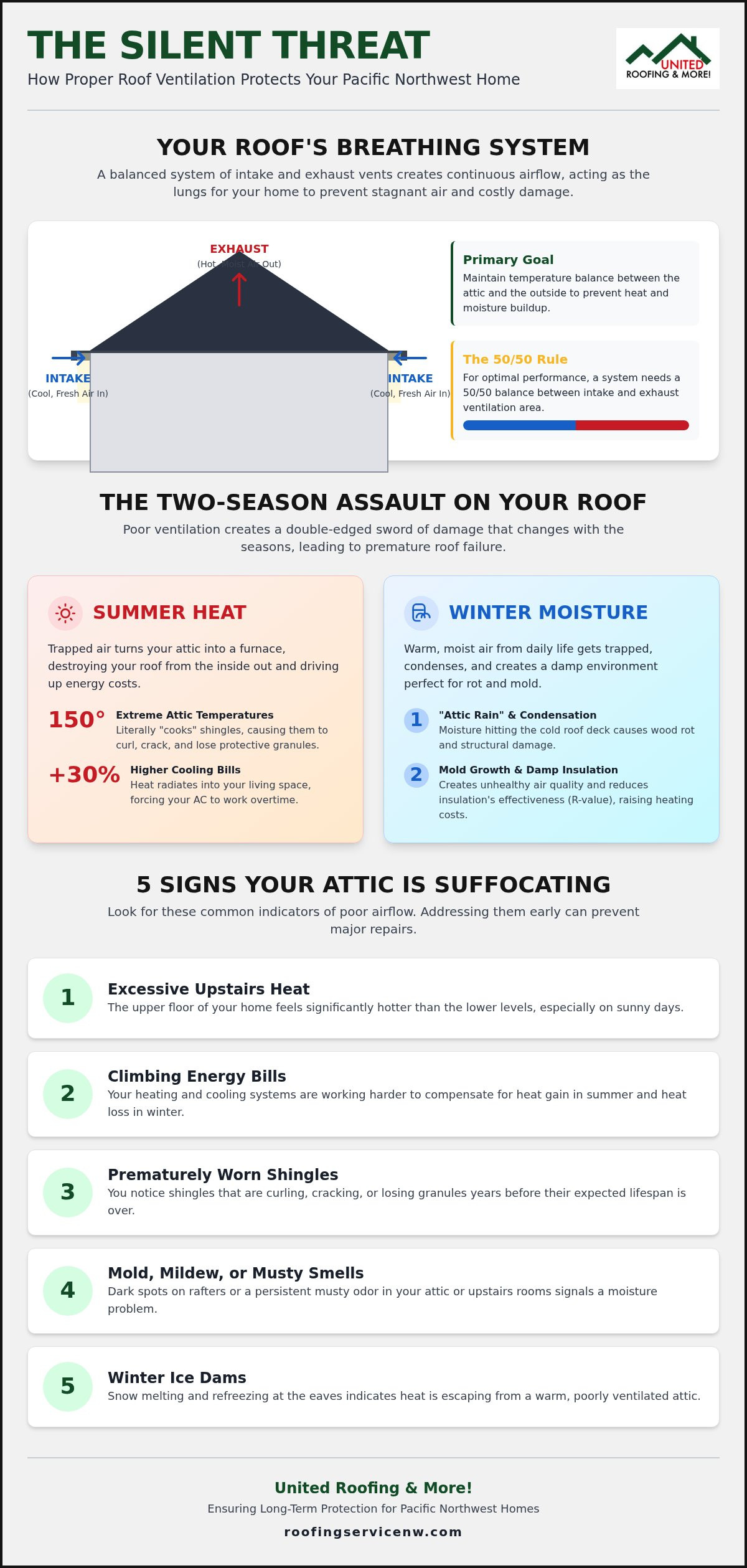
Roof ventilation is a high-performance system of intake and exhaust vents designed to move air through your attic. It's not just a collection of holes in your roof; it's a precision-engineered airflow strategy. Ventilation acts as the lungs of your home's roofing system. Without this constant breath, your attic space traps stagnant air, which leads to a host of expensive problems. The primary goal is to maintain a consistent temperature balance between the attic and the outside air. When these temperatures are aligned, your home stays protected from the elements.
Without a functional system, your roof essentially suffocates. This lack of airflow causes heat to build up to dangerous levels, which can warp your roof deck and destroy your shingles from the bottom up. In our local climate, the importance of proper roof ventilation cannot be overstated. Whether you live in Marysville or Seattle, your roof needs to breathe to handle the unique moisture challenges of the Pacific Northwest. A well-ventilated attic prevents structural damage and ensures your home remains a healthy environment for your family.
The Concept of Intake and Exhaust
A functional ventilation system requires two parts working in perfect harmony. Intake vents, typically located at the soffits or eaves, pull cool, fresh air into the lower portion of the attic. Exhaust vents, placed at the ridge or gables, allow the rising hot, moist air to escape at the top. For the best performance, you need a balanced system. We recommend a 50/50 split between intake and exhaust area. This balance ensures that air moves continuously throughout the entire space rather than stagnating in corners where mold and mildew thrive.
Passive vs. Active Ventilation Systems
Most homes in Everett and the surrounding areas use passive systems. These rely on natural convection and wind pressure to move air. If you're wondering, What is Passive Ventilation?, it's essentially using the laws of physics to protect your home without mechanical help. Hot air naturally rises and exits through the ridge while pulling cool air in from the bottom. Active systems, however, use motorized fans or solar-powered turbines to force airflow. Choosing the right system depends on your specific roof pitch and attic volume. Our team at United Roofing & More! can help you determine which setup provides the maximum lifespan for your roof replacement.
The Dual Threat: How Poor Ventilation Damages Your Home
Poor airflow is a silent killer for homes in the Pacific Northwest. It attacks your structure in two distinct ways depending on the season. Understanding the importance of proper roof ventilation means recognizing that your attic environment changes throughout the year. If your roof can't breathe, you're looking at a double-edged sword of heat and moisture damage. This lack of circulation is the primary reason many roofs fail long before their expected lifespan.
Summer Heat and Shingle Degradation
In the summer, your attic can become a furnace. Trapped heat often reaches 150°F. This extreme temperature literally cooks your shingles from the inside out. They begin to curl, crack, and lose the protective granules that shield them from the sun. This heat doesn't stay in the attic; it seeps into your living space. Your air conditioner has to work twice as hard to keep up. Research shows that proper airflow can reduce attic temperatures by up to 30 degrees. By utilizing the Year-Round Benefits of Roof Ventilation, you protect your investment and keep your cooling costs manageable.
Winter Moisture and the Mold Problem
Winter brings a different set of risks to Marysville and Seattle homes. Daily activities like showering and cooking release warm, moist air into your home. Without an escape route, this air gets trapped in the attic. When it hits the cold underside of your roof deck, it turns into condensation. This is often called "attic rain." This moisture is a primary cause of wood rot and mold growth. Damp insulation is another casualty. It loses its R-value, which makes your home harder to heat. If you spot dark spots on your rafters, you may need professional roof repairs to address the damage before it spreads.
These combined factors make poor airflow the leading cause of a premature roof replacement. You don't want to pay for a new system decades before you should. High energy bills and musty smells are clear signals that your system is failing. If you're concerned about your attic's health, our team can help. It's often better to catch these issues early with expert roofing services rather than waiting for a total structural failure.
5 Warning Signs Your Roof Isn't Breathing Properly
Your roof often signals for help long before a major leak occurs. Identifying these red flags early can save you thousands in future costs. In the Pacific Northwest, these signs are frequently subtle but persistent. If you ignore them, you're essentially allowing your home's structure to degrade from the inside out. Understanding the importance of proper roof ventilation helps you spot these issues before they require a full roof replacement. Our team at United Roofing & More! recommends a quick walk-through of your home at least twice a year to look for these specific indicators.
- Second-Story Heat: If your upper floor feels significantly warmer than the main level during summer, your attic is likely trapping heat.
- Attic Rust: Check for rust on metal nails, vent pipes, or light fixtures in your attic space. High humidity causes this corrosion.
- Blistered Shingles: Heat trapped under the roof deck can cause shingles to bubble or "blister," even if they are only a few years old.
- Ice Dams: During cold snaps in Seattle or Everett, look for thick ridges of ice along your eaves. This indicates heat is escaping into the attic.
- Mold Growth: Visible mildew on rafters or insulation is a definitive sign that moisture isn't being exhausted properly.
Interior Red Flags
The signs of a "suffocating" roof aren't always in the attic itself. Sometimes, they show up in your living spaces. Look closely at your ceilings and walls. Peeling paint or bubbling wallpaper near the ceiling line often points to excessive attic moisture. You should also monitor your HVAC system. If your air conditioner or heater cycles constantly without ever reaching the set temperature, it might be fighting an unventilated attic. Another common sign is dampness on the attic floor or insulation. This isn't always a leak; it's often the result of heavy condensation. If you notice these issues, it's time to schedule a professional inspection in Marysville to protect your home's air quality.
Exterior Visual Cues
Recognizing the importance of proper roof ventilation starts with a simple visual check of your home's exterior. Take a look at your roofline after a light snowfall. If the snow melts unevenly or in patches, it means heat is concentrating in specific areas of your attic. This uneven temperature is a major cause of warping. You may see "wavy" shingles, which suggest the plywood decking underneath is buckling from moisture. Finally, check your soffit vents located under the eaves. Many homeowners in our area accidentally clog these vents with bird nests, debris, or even several layers of paint. If the air can't get in at the bottom, it can't get out at the top. Keeping these clear is a simple but vital part of maintaining your roof's health.
Why Ventilation is Critical for the Pacific Northwest Climate
The Pacific Northwest presents a unique set of challenges for any roofing system. While homeowners in drier climates focus primarily on cooling, local residents must prioritize moisture management. The importance of proper roof ventilation in our region is tied directly to our "Evergreen" environment. Cities like Renton and Kirkland face heavy, consistent rainfall that puts a strain on every layer of the roof. If air doesn't move through your attic, that moisture has nowhere to go. It sits against the underside of your roof deck, causing it to soften and eventually rot over time.
Proper airflow is also your first line of defense against moss. This green growth thrives on damp, shaded rooftops in Marysville. By keeping your roof deck dry, you make it much harder for moss spores to take hold and spread. We also see frequent freeze-thaw cycles in Everett and Seattle. These temperature swings cause structural materials to expand and contract rapidly, which can lead to cracks. A well-ventilated attic stabilizes these temperatures, reducing the physical stress on your home's structure.
Managing the 'Evergreen' Humidity
Humidity levels in the PNW often exceed 70% for months at a time. This constant dampness requires specialized vent spacing to ensure air actually moves through the space. Standard ventilation layouts used in other states often fail here because they don't account for such heavy, moisture-laden air. Proper circulation prevents your roof deck from absorbing moisture like a sponge. For more details on how we handle these regional requirements, check out our guide on Master Roofing Standards.
Preventing Ice Dams in Seattle and Bellevue
Cold snaps bring the risk of ice dams to homes in Bellevue and Seattle. This happens when warm air trapped in your attic melts the snow on your roof. That water then runs down and refreezes at the cold eave, creating a block of ice. This block forces water back up under your shingles. A well-ventilated roof keeps the entire deck at a consistent, cold temperature, which prevents this melting process from starting. This protection is vital for your gutters and your roof drip edge. If you want to ensure your home is ready for the next winter storm, contact our team for a professional roofing inspection today.
Ensuring Long-Term Protection with United Roofing & More!
We believe a roof is only as good as the air moving beneath it. That is why United Roofing & More! includes a full ventilation assessment with every roof inspection in Marysville and Seattle. Our team doesn't just check for leaks; we evaluate your entire attic ecosystem. Many homeowners don't realize the importance of proper roof ventilation until they see the damage caused by stagnant air. Professional installation is vital because it prevents common DIY mistakes, such as mixing ridge vents with gable vents. Mixing these types can actually cause the system to short-circuit, pulling air from the wrong places and leaving your attic "suffocating."
Protecting Your Roof Warranty
Shingle manufacturers have specific airflow requirements that must be met to maintain coverage. If your roof doesn't meet these standards, they may void your warranty entirely. We ensure your ventilation meets or exceeds these manufacturer requirements to keep your protection valid. Our team provides all the necessary documentation to prove your system is high-quality and code-compliant. We prioritize long-term durability because we want your roof replacement to be the last one you need for a very long time. Our experts are dedicated to keeping your home safe and your investment secure.
Affordable Upgrades for Peace of Mind
We know that home repairs can be stressful for many families. You shouldn't have to choose between a functional roof and your monthly budget. Upgrading your ventilation can be seamlessly included in our flexible roofing financing plans. These payment options make it possible to do the job right the first time, ensuring your home is protected against the damp Everett climate. Investing in proper airflow now prevents expensive structural repairs and mold remediation later. Our goal is to make high-quality roofing accessible to everyone in our community.
Our "no-nonsense" approach means you get clear answers and expert results every time. We serve Marysville, Seattle, and the surrounding PNW area with a focus on long-term trust. We are here to be your supportive partner in home maintenance. Contact United Roofing & More! for a professional ventilation audit today to ensure your home stays dry and efficient for years to come.
Protect Your Home's Health with Professional Airflow
Your roof is more than just a cover; it's a complex system that needs to breathe to survive the Pacific Northwest climate. By now, you understand the importance of proper roof ventilation in preventing wood rot and keeping your summer cooling costs low. A dry, well-ventilated attic is the foundation of a healthy home. Whether you live in Marysville, Seattle, or Everett, addressing airflow issues today is the smartest way to avoid a premature roof replacement tomorrow.
Don't let hidden moisture compromise your home's structure. At United Roofing & More!, we bring expert local knowledge of the PNW climate to every diagnostic service. We provide certified workmanship for long-lasting protection and offer flexible roofing financing to ensure your upgrades are always affordable. Take the first step toward a mold-free home and total peace of mind. Schedule your free roof ventilation assessment with United Roofing & More! today. We are ready to help you protect your investment with professional care and transparent, honest service.
Frequently Asked Questions
Can I have too much roof ventilation?
Yes, it is possible to over-ventilate, though an imbalanced system is a much more common problem. If you have too many exhaust vents without enough intake air from your soffits, the system may begin pulling conditioned air from your living space. This makes your HVAC work harder and increases your utility costs. We focus on a balanced 50/50 ratio to ensure air flows correctly through your attic without creating a vacuum effect.
Will roof vents let rain or snow into my attic during PNW storms?
High-quality vents are specifically engineered to keep out wind-driven rain and snow common in the Pacific Northwest. When installed by professionals in Seattle or Everett, modern ridge vents and baffles use internal weather guards to block moisture while still allowing air to escape. If you notice water in your attic after a storm, it is usually a sign of a damaged vent or a flashing failure rather than a design flaw.
How much does it cost to add vents to an existing roof?
The total investment for adding vents depends on your roof's material, the type of vents selected, and the complexity of your attic structure. While we don't provide flat rates, we do offer flexible roofing financing to make these essential upgrades accessible for families in Marysville. Improving your airflow is a cost-effective way to prevent a premature roof replacement. We recommend a professional audit to determine the exact needs of your specific home.
Do I need roof vents if I have a finished attic or vaulted ceilings?
Yes, ventilation is still required for vaulted ceilings to prevent moisture from getting trapped against your roof deck. In these cases, we use specialized baffles or rafter vents to create a narrow channel for air to flow between the insulation and the wood. This prevents the wood from rotting and protects the structural integrity of your home. Without this airflow, the condensation from your living space will quickly damage your shingles and decking.
How do I know if my soffit vents are actually working?
You can perform a simple tissue test to see if your intake vents are clear. Hold a single sheet of toilet paper or a tissue near the vent opening on a breezy day. If the tissue is pulled toward the vent, air is moving correctly. If it stays still, your vents might be clogged with bird nests, debris, or layers of paint. Many homeowners in Renton find that their vents were accidentally covered during a previous insulation project.
What is the best type of roof vent for the Seattle area?
A combination of continuous ridge vents and soffit intake vents is generally the most effective setup for the Seattle climate. This passive system uses natural convection to move air constantly without the need for mechanical parts that can fail. Given the high humidity in the Pacific Northwest, this breathable design is the most reliable way to exhaust moist air before it causes mold. We customize every installation to match your home's specific pitch.
Does proper ventilation really lower my energy bills?
Absolutely. The importance of proper roof ventilation is most visible on your monthly utility statements. In the summer, it prevents your attic from reaching 150 degrees, which keeps your second story cooler and reduces the load on your air conditioner. In the winter, it keeps your insulation dry. Wet insulation loses its ability to hold heat, forcing your furnace to run more often to maintain a comfortable temperature in your home.
Can I mix different types of exhaust vents, like ridge vents and turbines?
No, you should never mix different types of exhaust vents on the same roof. Doing so causes a short-circuit in the airflow. For example, a turbine vent might pull air from a nearby ridge vent instead of drawing fresh air from the soffits at the bottom. This leaves the lower parts of your attic stagnant and damp. Our team ensures a uniform exhaust strategy to provide consistent protection for your roof replacement and overall home structure.


