

When roofing work pauses, it’s natural to worry about rain reaching exposed areas, an uncertain completion date, and whether the explanation makes sense. Knowing how to handle roofing project delays starts with finding out what changed, how it affects the work, and what happens next.
Some delays have practical causes, including unsafe weather, material or labor shortages, permit and inspection steps, or hidden damage found after old roofing comes off. A reasonable setback should still come with an explanation and a plan for the next update. If part of your roof is exposed, ask how it will be protected during the pause and promptly report any signs of water getting inside.
This guide explains common causes of delays and their possible impact, how to discuss a revised schedule, and what to document. You’ll also find practical questions to ask about temporary protection, communication, and project milestones, so you can replace uncertainty with a plan for your home.
Key Takeaways
- Learn how to handle roofing project delays by clarifying the cause, its impact, and the next agreed milestone.
- Use your contract and project records to understand which expectations may need updating.
- Keep a written record of changes and agree on a point of contact and update schedule.
- Before added work proceeds, make sure scope changes are documented according to your agreement.
How to Handle Roofing Project Delays: Start by Finding the Cause
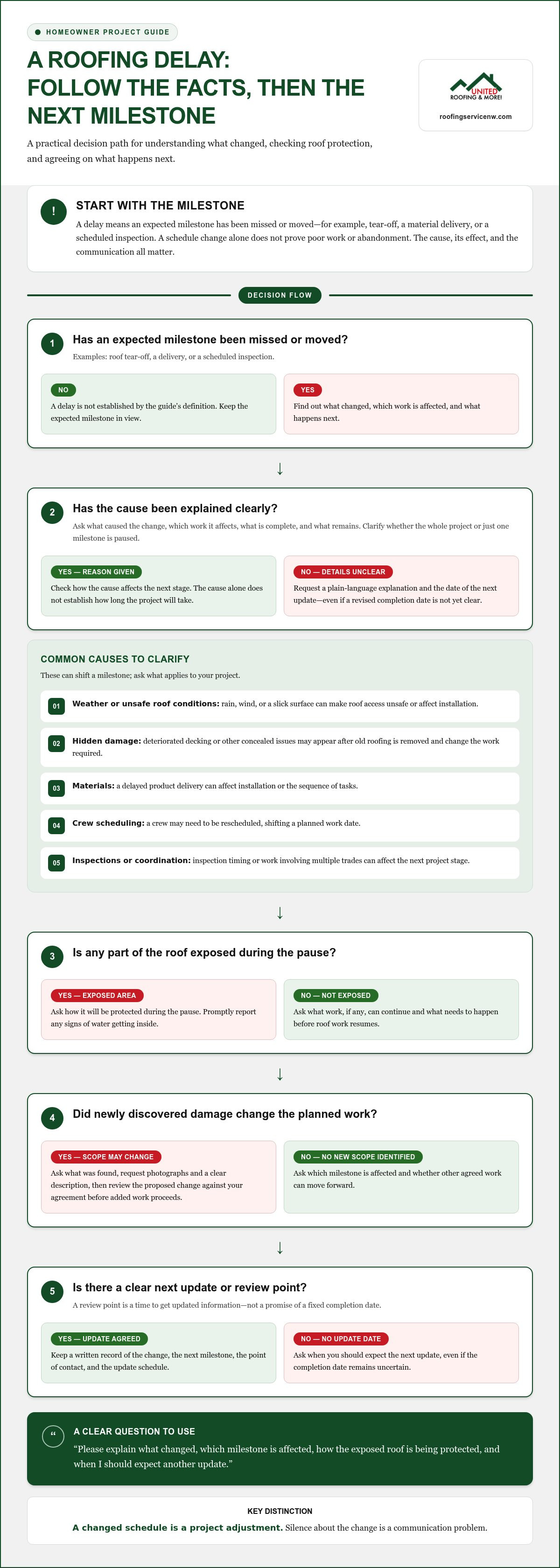
A roofing delay can disrupt household plans and leave you wondering whether rain might reach exposed parts of your home. Start by identifying what changed. A delay means an expected milestone has been missed or moved, such as the start of tear-off, a material delivery, or a scheduled inspection. A schedule change alone doesn’t prove that the work is poor or that the project has been abandoned. The cause, its effect on the remaining work, and the quality of communication all matter.
Roof work depends on safe access and suitable installation conditions. In Seattle and across the Pacific Northwest, rain, wind, or a slick roof surface can make exterior work unsafe or affect how it proceeds. Other causes may become clear as the project unfolds. To understand construction delays, distinguish the cause of a delay from its effect on the schedule.
A changed schedule is a project adjustment. Silence about the change is a communication problem.
- Weather: Rain, wind, or unsafe roof conditions can pause work that requires crews to access the roof.
- Hidden decking damage: Deteriorated roof decking may only become visible after old roofing is removed, changing the work required.
- Materials: A delayed delivery can affect when installation moves forward.
- Crew scheduling: A crew may need to be rescheduled, shifting a planned work date.
- Inspections: Inspection timing can affect the next project stage.
- Coordination: Work involving multiple trades may need to be sequenced around other tasks.
Which roofing delays are understandable?
A pause can be reasonable when conditions make roof access unsafe or prevent proper installation. It may also make sense to reassess the plan if removing old roofing reveals concealed damage. Material delivery, inspection timing, and crew availability can also shift a milestone. These reasons don’t establish how long a project will take. Ask how the issue affects the next stage and whether any exposed area needs protection during the pause.
What details should the contractor explain?
Ask for a plain-language update: What caused the delay? Which work is affected? What’s complete, and what remains? Clarify whether the entire project is paused or only one milestone has moved. If hidden damage changes the work, ask how the proposed scope relates to your agreement before the added work proceeds. Request the date of the next update, even if a new completion date isn’t clear, and ask what measures are protecting your home in the meantime.
Keep the conversation calm and specific. For example: “Please explain what changed, which milestone is affected, how the exposed roof is being protected, and when I should expect another update.” This gives both sides a clear starting point and helps distinguish a schedule change with a concrete reason from an unresolved communication gap.
How Weather, Hidden Damage, and Materials Change a Roofing Schedule
A roofing schedule depends on more than crew availability. Work must be safe to perform, materials must meet the project’s requirements, and the roof must be in suitable condition for the next step. A delay can affect one task without stopping the entire project. Knowing how to handle roofing project delays means understanding what changed and how it affects the sequence of work.
Weather pauses and scope changes are different. A rain delay may move roof work to a safer time, while newly discovered damage can add work that wasn’t visible before tear-off. A material delay can shift the order of tasks if a needed product hasn’t arrived. The cause and duration vary, so don’t assume either. Ask which milestone is affected and what work, if any, can continue.
Why Pacific Northwest weather can pause roof work
Rain can make roof surfaces slippery and complicate tear-off, installation, or temporary protection. Wind may make roof-level work unsafe or interfere with handling roofing materials. In Seattle, conditions can change, so a planned workday may need to be reassessed. A safe pause is preferable to keeping an unsafe schedule. Ask what protection is in place and what conditions need to improve before work resumes, rather than relying on a guessed restart date.
When hidden roof conditions affect the scope
Once old roofing is removed, damaged decking or other concealed issues may become visible. The contractor should explain what was found and how it changes the planned work. Ask for photographs and a clear description, then review any proposed scope change against your agreement before additional work proceeds. For more context about project stages, see this roof replacement project guide.
Materials can affect sequencing, too. If a product needed for installation is delayed, the crew may need to rearrange tasks or wait for that item before completing a particular stage. That doesn’t automatically mean the whole project is at a standstill. Ask what’s waiting, whether other agreed work can move forward, and when the schedule will be reviewed again. Don’t assume the supplier, weather, or another factor is responsible without an explanation.
A revised milestone should name the reason for the change and the next point when the schedule will be reviewed. That review point isn’t a promise of a fixed completion date. It gives you a specific time to get updated information and discuss what happens next.
Clear explanations help protect both the roof and the working relationship. For information about roof replacement and repairs, explore roofing support.
Is Your Roofing Project Delayed for a Good Reason? Signs to Assess
A delay’s cause matters, but so does how it’s handled. Weather, material delivery, or a newly identified repair need can explain a schedule change. They don’t explain repeated missed updates, unclear changes to the work, or uncertainty about how an exposed area is protected. Look for specific information you can compare with the project scope and schedule, rather than judging the situation by the delay alone.
A communicated schedule change has a reason and a next step. A delay without a plan leaves you guessing.
Use this comparison to organize the conversation. Even an understandable reason deserves an explanation and updated expectations.
| Situation | Information to expect | Useful next action |
|---|---|---|
| Work pauses because roof conditions are unsafe | Which work is paused, how conditions affect it, and how exposed areas are being protected | Ask what must change before work can safely resume and when the schedule will be reviewed |
| Additional damage is found after work begins | What was found, where it is, and how it may change the agreed work | Request a clear description and supporting photos, then compare the proposed change with your written scope |
| A material or inspection affects a milestone | Which task is waiting and whether other project work can continue | Ask for a revised milestone or a date for the next update |
| Updates are repeatedly missed or the roof appears unprotected | A direct response about current status, protection, and the communication plan | Record what you observe and request a written explanation |
Signs the schedule change is being managed
A well-explained change connects a specific reason to the work it affects. You should be able to understand whether the crew is waiting on conditions, a delivery, or another project step. The contractor should also explain how the home and exposed roof areas are being protected. Look for a revised milestone or a clear date for the next update, even if the final completion date remains uncertain.
When to document concerns and seek clarity
Keep a simple record of dates, messages, site conditions, and changes to the agreed work. Save relevant photos and note when an expected update or milestone passes. Compare new commitments with the written scope and schedule terms. If questions remain, send a calm written request that identifies the specific concern and asks for a response. If concerns persist, follow the communication process stated in your agreement.
Pay attention to patterns. One rescheduled update may have a straightforward explanation; repeated missed updates without a new review point make it harder to plan and protect your home. An unexplained scope change also deserves clarification before you treat it as part of the agreed work. Avoid jumping to conclusions about intent or contract rights. Focus on what the agreement says, what has changed, and what response you need to move forward with a clear understanding.
What to Do During a Roofing Delay: A Homeowner Action Plan
A clear process can make a pause easier to manage. If you’re unsure how to handle roofing project delays, focus on what you can verify and record, while leaving roof work to the crew. Take these steps in order, and keep your messages calm, specific, and in writing.
- Review your documents. Check the written scope, schedule, and messages about planned milestones. Note what was expected, what has changed, and any terms describing project updates or scope adjustments. This gives you a reference for your questions without requiring assumptions about what the agreement means.
- Request a focused update. Ask what changed, which work or milestone is affected, and whether you need to make a decision. If relevant, ask about materials, inspections, and temporary protection. Request a realistic next update point rather than pressing for a completion date no one can support yet.
- Document changes. Keep dated copies of messages, schedule updates, and descriptions of added or revised work. If the scope changes, record what was found and how the proposed work differs from the original plan. Written records make it easier to track decisions and compare updates with the project documents.
- Protect your home safely. Ask how exposed areas will be secured and who to contact if conditions change. Don’t climb onto the roof or enter restricted work areas to inspect or make repairs. Photograph visible concerns from a safe location. If water is getting inside, note where it appears and follow the contractor’s repair guidance.
- Track milestones and follow-ups. Keep a list of completed work, pending tasks, promised updates, and new review dates. If an update doesn’t arrive, refer to the agreed date and request a revised point of contact or next step. This helps keep the conversation constructive and the project status clear.
How to request a useful project update
Keep the request brief and concrete: “What changed, which work is affected, what’s the current status, and when should I expect the next update?” Add questions about materials, inspection timing, or temporary protection if they apply. Ask whether you need to make a decision, and have any changed scope explained in writing. A specific review point is more useful than an unsupported promise of a finish date.
How to protect your home while work is paused
Confirm what protection is in place and what to do if rain or a leak creates a new concern. Keep dated photos and notes, but take them only from a safe location. For active leaks, document affected indoor areas and follow the contractor’s repair guidance. Don’t attempt roof repairs yourself or disturb temporary coverings. For more about replacement planning, see the Marysville roof replacement guide.
Clear records and practical questions can turn a stressful pause into a more manageable plan. United Roofing & More! provides professional roofing repairs and replacement. Learn more about the company’s roofing services.
How to Get a Roofing Project Back on Track Without Guesswork
A useful recovery plan doesn’t depend on guessing when the roof will be finished. It turns the latest update into clear responsibilities, revised milestones, and a set time to review progress. If weather or concealed conditions still create uncertainty, the plan can acknowledge that while making the next decision point clear.
Agree on revised milestones and communication
After discussing the delay, write down the revised work sequence. Note which tasks are complete, what depends on materials or inspections, and which milestone comes next. Identify who will share updates, how often you’ll receive them, and how urgent changes will be communicated. Set a next update date even if a dependable completion date isn’t available. If conditions remain uncertain, agree to review the plan again rather than treating an estimate as a guarantee.
Keep the written plan practical. For example, it can state that a pending delivery affects installation, identify the next milestone once the material is available, and set a date to check the status. This gives you something specific to follow without assuming the reason for a delay or promising a restart date.
Document scope changes before work proceeds
If the work needs to change, ask for a written description of what was found, what additional work is proposed, and how it affects project milestones. Review the change against your agreement, including any steps it sets out for approving revisions. Keep copies of the updated scope and related messages. Clear documentation helps ensure everyone is working from the same plan and reduces confusion about what was agreed.
Schedule recovery shouldn’t mean rushing essential work or skipping a discussion about changes. The aim is to make informed decisions, protect the home, and maintain durable workmanship. That’s a more useful measure of progress than simply trying to return to the original dates.
Discuss repair, replacement, or financing options
The right roofing work depends on the roof’s observed condition and the project scope. A repair may address a localized issue, while replacement may be appropriate when the project calls for broader work. If a scope change affects household budgeting, financing is one option to consider. The roof financing options guide offers context for payment planning, alongside a review of your project’s details.
Use the process in how to handle roofing project delays to get the reason, responsibilities, and next review point in writing. United Roofing & More! provides professional roof repairs and replacement, with roofing financing options to help homeowners and businesses manage project costs. Learn more about roofing repair and replacement.
Move Forward With a Clearer Roofing Plan
A delay doesn’t have to leave you stuck in uncertainty. Use the next conversation to establish what you need to make a confident decision, whether that’s a clearer project plan, a documented change, or a better understanding of the next milestone. You don’t need to predict every obstacle. You do need a practical way to address new information as it comes up.
Knowing how to handle roofing project delays can help keep the process focused on your home’s needs instead of unanswered questions. Prioritize clear expectations and work suited to your roof, and use the next update to agree on a practical step forward.
United Roofing & More! provides roofing repairs, replacement, and financing in Marysville, Seattle, Renton, Everett, Lynnwood, Kirkland, Mount Vernon, Bothell, Edmonds, Shoreline, Sammamish, Redmond, Bellevue, Tacoma, and Kent. Discuss your roofing project with United Roofing & More!
Frequently Asked Questions
For homeowners in Seattle and nearby communities, including Marysville, Renton, Everett, Lynnwood, Kirkland, Mount Vernon, Bothell, Edmonds, Shoreline, Sammamish, Redmond, Bellevue, Tacoma, and Kent, these answers offer practical guidance for common roofing delays.
What should I do first when my roofing project is delayed?
Start by checking the written agreement and latest schedule, then send a concise written request asking which commitment changed and what the next step is. Include the affected milestone, any new work requiring approval, and a date for the next update. This is a practical first step in how to handle roofing project delays, especially if household plans or access to part of the home are affected. Save the reply with your project records.
How long can a roofing project be delayed by rain?
There’s no reliable universal number of days because the pause depends on the conditions, the stage of work, and which tasks can safely continue. A shower during one phase may have a different effect from persistent wet weather while the roof is open. Ask which work is affected and what conditions need to be suitable before it resumes. Treat any restart estimate as a working update, not a guaranteed date.
Can I cancel a roofing contract because of delays?
Possibly, but a delay alone doesn’t establish that you can cancel without consequences. Review your agreement for terms about schedule changes, notice, cancellation, and dispute resolution. Keep communications in writing and ask the contractor to explain how the delay relates to those terms. Because the answer depends on the contract and circumstances, seek qualified legal advice before taking action that could affect your obligations.
What happens if a roofing project is delayed after the old roof is removed?
The exposed roof should have a protection plan while work is paused, but the exact measures depend on the project and conditions. Ask what covering or other protection is in place, how its condition will be monitored, and who to notify if you see water entering. Keep a record of any interior moisture or damage. Don’t climb onto the roof to inspect it, even if the covering looks loose.
Should I pay a roofing contractor if the project is delayed?
Use your written agreement and current invoice to understand what payment is due and when. A delay doesn’t automatically determine whether a particular payment is owed, so don’t rely on assumptions or stop payment without reviewing the terms. If an invoice doesn’t match the completed work or an approved change, raise the specific discrepancy in writing and request an explanation before making a decision.
How can I tell whether a roofing delay is a warning sign?
Look for a pattern, not just a single moved workday. A weather-related pause can be understandable; concern grows if explanations keep changing, promised updates repeatedly don’t arrive, or added work appears without a clear written description. Note dates and compare messages with your agreement. Ask for a direct explanation of the current status and the next communication point. A clear response helps you assess what needs attention.
Can a roofing contractor change the project timeline after finding damage?
Finding concealed damage can affect the schedule if the work needed differs from the original plan. The contractor should explain what was discovered, how it changes the scope, and which milestones may move. Review the proposed change against your agreement and follow its process for documenting or approving revisions before additional work proceeds. Ask for the updated plan in writing so the revised expectations are clear to everyone.


