
Could a single number save you thousands on your next roof replacement? Many homeowners in the Puget Sound feel overwhelmed by construction jargon when they just want to know if their home is protected. If you are searching for the 4/12 pitch in degrees, the exact conversion is 18.43 degrees. This specific angle is a favorite for local residential projects because it strikes a perfect balance between performance and affordability.
It's normal to worry about moss growth or drainage issues in our rainy climate. You need to know if your roof can handle the weather without triggering expensive "steep charges" from contractors. We promise to clarify exactly how this slope impacts your home's durability and your wallet. You'll learn why this "walkable" pitch is so installer-friendly and which materials offer the best protection for your investment.
This article provides a clear look at material safety, labor costs, and why a 4/12 slope is ideal for homes from Seattle to Marysville. We're here to replace confusion with confidence so you can make the best choice for your property.
Key Takeaways
- Discover the exact calculation for a 4/12 pitch in degrees and why this 18.43-degree angle is the industry standard for residential homes.
- Learn why this specific slope is the "Goldilocks" choice for shedding heavy Pacific Northwest rain while maintaining excellent wind resistance.
- Identify which roofing materials, from cost-effective asphalt shingles to durable metal panels, perform best at this common angle.
- Understand how a walkable 4/12 pitch can lower your labor costs by eliminating the need for specialized steep-slope safety equipment.
- Find out how to get a professional diagnostic assessment to verify your roof's integrity and explore flexible financing options for your project.
What is a 4/12 Pitch in Degrees? The Geometry Explained
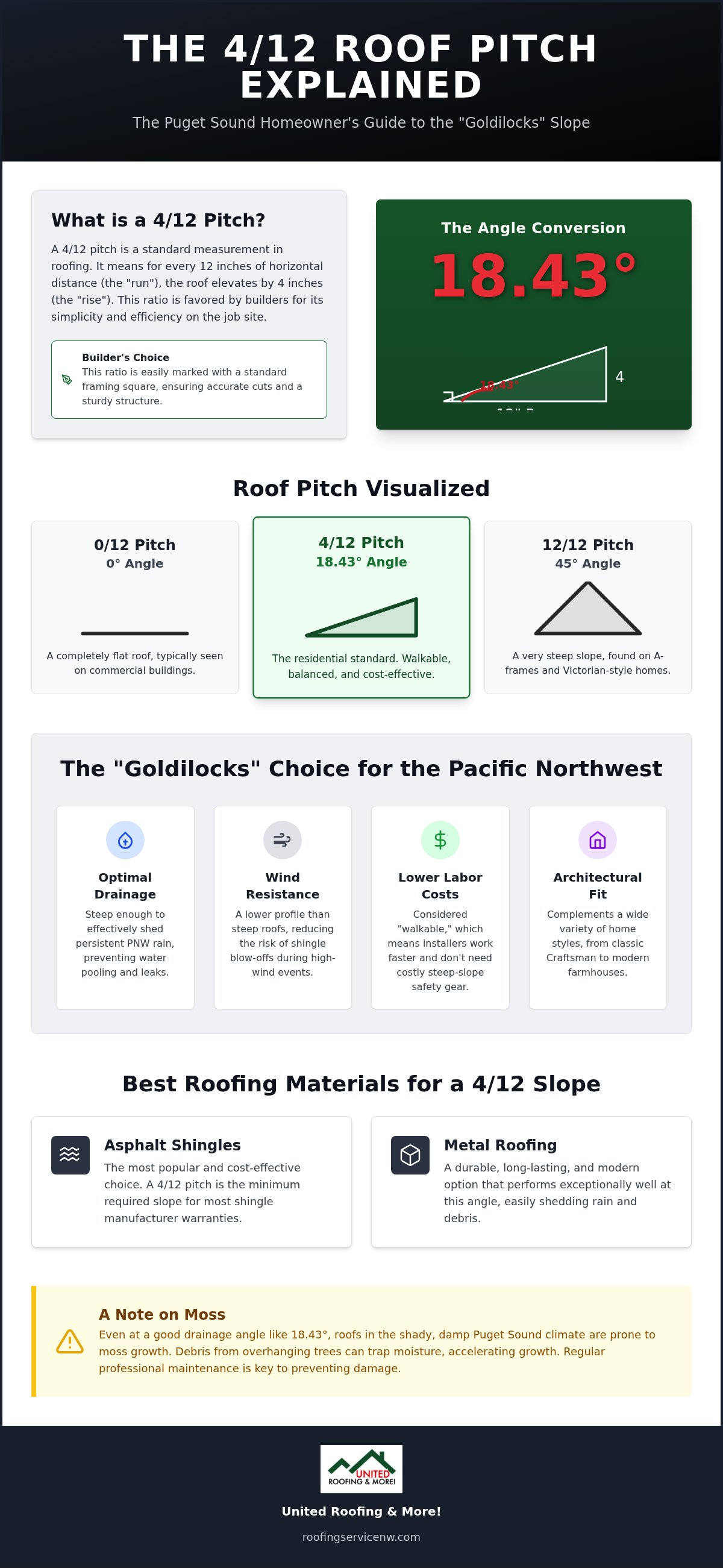
A 4/12 roof pitch is a fundamental measurement in the construction world. It represents a specific ratio where the roof rises exactly 4 inches for every 12 inches of horizontal "run." If you're looking for the exact measurement of a 4/12 pitch in degrees, the answer is 18.43. This angle is classified as a low-to-moderate slope. It's a staple in American residential architecture because it perfectly balances aesthetic appeal with functional drainage.
You might wonder why we use ratios like 4/12 instead of just measuring degrees with a protractor. The reason is rooted in job-site efficiency. Traditional roofing relies on ratios because they're easier to manage with a standard framing square. A carpenter can quickly mark a 4-inch vertical and a 12-inch horizontal line on a rafter to get the perfect cut every time. It's a no-nonsense approach that has worked for centuries, ensuring your home stays dry and sturdy.
The Math Behind the Angle
Calculating the degree isn't just for show. It helps engineers and architects ensure the structure can handle weight loads from snow or wind. To find the angle, we use the inverse tangent (arctan) of the rise over the run. In this case, 4 divided by 12 equals 0.333. When you run that through the arctan formula, you land on 18.43 degrees. To help you visualize where this fits on a scale, consider these comparisons:
- 0/12 Pitch (0°): This is a flat roof, common in commercial buildings or modern minimalist homes.
- 4/12 Pitch (18.43°): This is roughly the same angle as a standard indoor staircase. It feels stable and is relatively easy for pros to walk on.
- 12/12 Pitch (45°): This is a very steep slope. It's often found on A-frame cabins or Victorian-style homes in the Pacific Northwest.
Pitch vs. Slope: Is There a Difference?
If you're chatting with a neighbor or a local builder, you'll hear "pitch" and "slope" tossed around constantly. Technically, pitch is the ratio of the roof's total rise to its entire span. Slope is the incline of a single rafter. In the roofing industry across the Puget Sound, most pros treat them as the same thing. They just want to know how steep the surface is to determine the best approach for your home.
Why does this matter for you? Knowing your 4/12 pitch in degrees is the first step toward a successful project. It dictates which materials are safe to use and how much labor is required. Getting a clear understanding of your roof's geometry helps you secure a precise roof replacement quote. It ensures your contractor in Marysville knows exactly what they're walking into before they even set foot on your property.
Why 4/12 Roof Pitch is the Standard for Seattle & Marysville Homes
Walk through any residential neighborhood in Marysville or Seattle. You'll see the 4/12 pitch everywhere. It's the "Goldilocks" of roofing. It is steep enough to shed our persistent Pacific Northwest rain but low enough to keep installation simple. For local homeowners, understanding the 4/12 pitch in degrees (18.43°) is about more than just math. It's about ensuring your home can withstand our unique climate while staying cost-effective.
High-wind events are a regular occurrence in King and Snohomish counties. A 4/12 slope offers a lower profile than massive, steep gables. This makes the structure less likely to catch the wind and suffer shingle blow-offs. It is also an architecturally versatile choice. Whether you own a classic Craftsman in Everett or a modern farmhouse in Shoreline, this pitch fits the aesthetic perfectly. It provides that traditional look without the extreme maintenance needs of a steeper roof.
Moss is another local headache you can't ignore. Even though 18.43 degrees provides good drainage, shaded roofs in the Puget Sound are still prone to growth. Trees in neighborhoods like Lake Stevens or Marysville can drop debris that traps moisture. Regular maintenance is key to preventing this. If you're concerned about your roof's health, you can always schedule a professional diagnostic assessment to catch issues before they turn into leaks.
Drainage Performance in the PNW
Water pooling, or ponding, is a shingle killer. At an 18.43-degree angle, gravity does the heavy lifting. Water moves quickly toward the gutters instead of sitting on the surface. Knowing your 4/12 pitch in degrees helps you understand why this is the minimum pitch required for most standard asphalt shingle warranties. To keep your home dry, a high-quality roof drip edge is essential. This component directs water away from the fascia and into the gutters, preventing rot in our damp environment.
Snow Load Considerations
We don't get snow every day, but when we do, it's often "Cascade Concrete." This heavy, wet snow puts immense pressure on a roof. A 4/12 slope doesn't shed snow as quickly as a steep 8/12 pitch. This means your home needs strong structural support to prevent sagging over the decades. In Washington, the 2021 building codes require specific underlayment techniques for slopes in this range to ensure maximum moisture protection. We always verify these requirements during every project to keep your home up to code and structurally sound.
Best Roofing Materials for a 4/12 Pitch Angle
Choosing the right material for your home is much simpler when you have a 4/12 slope. This specific angle is widely considered the "sweet spot" for almost every residential roofing material on the market today. Because the 4/12 pitch in degrees converts to 18.43, it provides enough of an incline for water to run off without being so steep that it limits your design options. It's the perfect middle ground for homeowners who want a balance of durability, style, and cost-effectiveness.
Asphalt shingles remain the most popular choice for this slope. They're versatile, budget-friendly, and come in a massive variety of colors. For those looking for a long-term investment, metal roofing is a fantastic alternative. Standing seam or corrugated panels offer a modern look and can last decades longer than traditional shingles in the Pacific Northwest. If you want a luxury appearance, synthetic slate or tile provides the beauty of stone without the structural weight issues that real slate might cause on a moderate slope.
Shingle Requirements for Moderate Slopes
At an 18.43-degree angle, your installation requirements are generally straightforward. Unlike a low 2/12 pitch that requires expensive double-coverage underlayment to meet code, a 4/12 roof usually only needs standard protection. This keeps your upfront costs down while still providing a high level of moisture resistance. In coastal areas like Edmonds or Shoreline, we always recommend "high-wind" nailing patterns. This extra step ensures your shingles stay put when those Puget Sound gusts kick up. Most major manufacturers offer full warranty coverage for this pitch, which gives you total peace of mind for your investment.
Metal Roofing on a 4/12 Pitch
Metal is a powerhouse on a 4/12 slope. The 18.43-degree angle is steep enough to allow for sophisticated hidden fastener systems. These systems tuck the screws away under the panels, protecting them from the elements and creating a sleek, unbroken surface. Water sheds incredibly fast on metal, which is a huge advantage in our rainy climate. This rapid drainage prevents the rust and seal failures that can plague flatter roofs over time. Plus, having a 4/12 pitch in degrees provides just enough "face" for the metal to be visible from the street, significantly boosting your home's curb appeal and overall market value.
The Real-World Impact of a 4/12 Slope on Your Roof Replacement
Geometry isn't just for textbooks; it directly affects your bank account when it's time for a new roof. Understanding the 4/12 pitch in degrees (18.43°) gives you a clearer picture of why your project might be more affordable than your neighbor's. This slope is a favorite for roofing crews because it's efficient, safe, and reduces material waste. When a roof is easier to work on, those savings often pass down to you through lower labor premiums.
One of the biggest financial wins with a 4/12 slope is the lack of "steep charges." Most roofing companies apply a price increase once a roof hits a 7/12 pitch or higher. These steeper angles require specialized staging, scaffolding, and more time for every shingle laid. Because an 18.43-degree incline is manageable, the project moves faster. This accessibility also makes it easier for you to handle basic maintenance like gutter cleaning or identifying when you need expert roof repairs after a heavy storm.
Is a 4/12 Pitch Walkable?
In the roofing industry, "walkable" means a pro can navigate the surface without needing ropes or toe boards to stay upright. Most installers can walk a 4/12 pitch comfortably. While OSHA still requires safety harnesses for all heights, the ability to move freely speeds up the installation process significantly. For a home in Marysville, this could mean the difference between a two-day job and a four-day ordeal. However, DIYers should stay cautious. A roof that is easy to walk when dry becomes a skating rink when it's wet or covered in Pacific Northwest moss.
Calculating Your Roof Surface Area
Don't make the mistake of ordering materials based on your home's "flat" square footage. Every incline adds surface area. To get an accurate estimate, you need the "slope factor." For a 4/12 pitch, that multiplier is 1.054. This number helps you turn a flat footprint into the actual amount of roofing material required. For example:
- Flat Footprint: 2,000 sq. ft.
- Slope Multiplier: 1.054
- Actual Surface Area: 2,108 sq. ft.
Knowing how to use this factor prevents budget surprises and ensures you don't over-order or run short mid-project. If you're still unsure about your measurements, learning calculating roof pitch accurately is the best way to prepare for a contractor's visit. Ready to get a precise look at your home's needs? Contact us for a professional roof assessment today.
Professional Pitch Assessment and Financing Your Roof Project
Accuracy is the foundation of any successful home improvement project. You might think you have a 4/12 pitch in degrees (18.43°) based on a quick glance or a smartphone app. However, older homes in the Pacific Northwest often hide surprises that a simple tool can't detect. Multiple layers of old shingles or subtle roof deck sagging can easily distort your measurements. An expert eye is essential to verify the structural integrity of your home before you commit to a full installation.
United Roofing & More! specializes in these comprehensive diagnostic assessments. We serve homeowners from Bellevue to Marysville with a commitment to total transparency. We don't just give you a number; we explain how your roof's unique geometry impacts your total roof replacement cost. Our team checks your rafters, ventilation, and current underlayment to ensure your new system is built to last. Our goal is to eliminate guesswork so you can plan your budget with total confidence.
The United Roofing & More! Difference
We bring a no-nonsense approach to every project we touch. Our team uses high-quality materials specifically designed to withstand the damp, moss-prone environment of the Puget Sound. We understand the specific underlayment needs for moderate-pitch roofs and never cut corners on local building codes. We prioritize your peace of mind by keeping you informed throughout the service process. We're locally owned and operated, which means we treat your home like it's part of our own neighborhood. Contact us today for a friendly, community-oriented consultation and let us handle the heavy lifting.
Roofing Financing Made Easy
A new roof is a major investment in your home's future. We believe financial logistics shouldn't stand in the way of your family's safety. That's why we offer dedicated roofing financing options for every budget. Whether your home features a standard 4/12 pitch in degrees or a complex, steep gable system, our flexible payment plans lower the barrier to entry. We offer various solutions to help you manage the cost without draining your savings.
We maintain an open dialogue about project costs and financial logistics from day one. Our application process is straightforward and designed to get you the protection you need without the typical stress of home repairs. We're here to help you navigate the paperwork and find a plan that fits your monthly budget. Trust a local partner who values your financial flexibility as much as your roof's long-term durability. Reach out now to see how easy it is to get started on your roof replacement.
Secure Your Home with Expert Roof Slope Knowledge
Understanding your 4/12 pitch in degrees is the first step toward a successful home improvement project. This 18.43-degree angle offers the perfect balance of weather protection and cost-efficiency for homeowners across the Puget Sound. You now know how this slope reduces labor premiums and allows for a wide range of durable materials like asphalt shingles and metal panels. Don't let confusing jargon or hidden structural issues slow you down.
United Roofing & More! is here to simplify the process. We provide expert roof replacement and repair services across Marysville, Seattle, and the surrounding areas. Our team ensures your roof is measured accurately and installed to the highest local standards. We also offer flexible roofing financing options to make your project accessible and stress-free. We believe in transparency and clear dialogue every step of the way.
Take the next step for your home's safety and value today. Get a Professional Pitch Assessment and Roof Quote from United Roofing & More! We are ready to help you build a roof that lasts for decades.
Frequently Asked Questions
What is a 4/12 roof pitch in degrees?
A 4/12 roof pitch is exactly 18.43 degrees. This measurement tells you the roof rises 4 inches vertically for every 12 inches of horizontal run. It's a very common residential slope because it offers a reliable balance between structural stability and effective water drainage for homes in the Puget Sound.
Can I use asphalt shingles on a 4/12 pitch?
Yes, asphalt shingles are a perfect fit for this slope. Since a 4/12 pitch in degrees is over 18 degrees, it meets the standard requirements for shingle installation. You won't need the specialized, expensive waterproofing techniques required for flatter roofs, which helps keep your overall installation costs more manageable.
Is a 4/12 roof pitch easy to walk on?
Generally, a 4/12 roof is considered walkable for most roofing professionals. While it feels relatively stable underfoot, safety is always the top priority. Professional installers still use harnesses and specialized footwear to prevent slips, especially in our damp local climate. Homeowners should exercise extreme caution and avoid walking on their roofs when they're wet or mossy.
How do I calculate a 4/12 slope factor?
The slope factor for a 4/12 pitch is 1.054. You find your actual roof surface area by multiplying the horizontal square footage of your home's footprint by this specific multiplier. This calculation is vital for accurate material ordering. It ensures you don't overpay for extra shingles or run short in the middle of your project.
Does a 4/12 pitch require a special drip edge?
While this slope typically uses a standard drip edge, a high-quality version is highly recommended. A proper drip edge prevents water from wicking back under your shingles during heavy Pacific Northwest rainstorms. It acts as a critical guard for your fascia and roof deck, preventing rot and ensuring your roofing system stays dry for years.
Is 4/12 pitch good for solar panels?
Yes, a 4/12 pitch is an excellent angle for solar panel efficiency. The 4/12 pitch in degrees provides enough of an incline for rain to naturally wash away dust and debris from the panel surfaces. This angle also makes the mounting process easier for installers, which can help keep your transition to renewable energy more affordable.


