
What if the most expensive part of your new roof isn't the shingles, but the fine print you never saw coming? In the Pacific Northwest, our weather doesn't give second chances. You probably feel the pressure to find a pro who can handle the relentless rain, yet the fear of "storm chasers" or future leaks makes the hiring process feel overwhelming. It's natural to feel anxious about whether a warranty will actually hold up when a winter storm hits Marysville or Seattle.
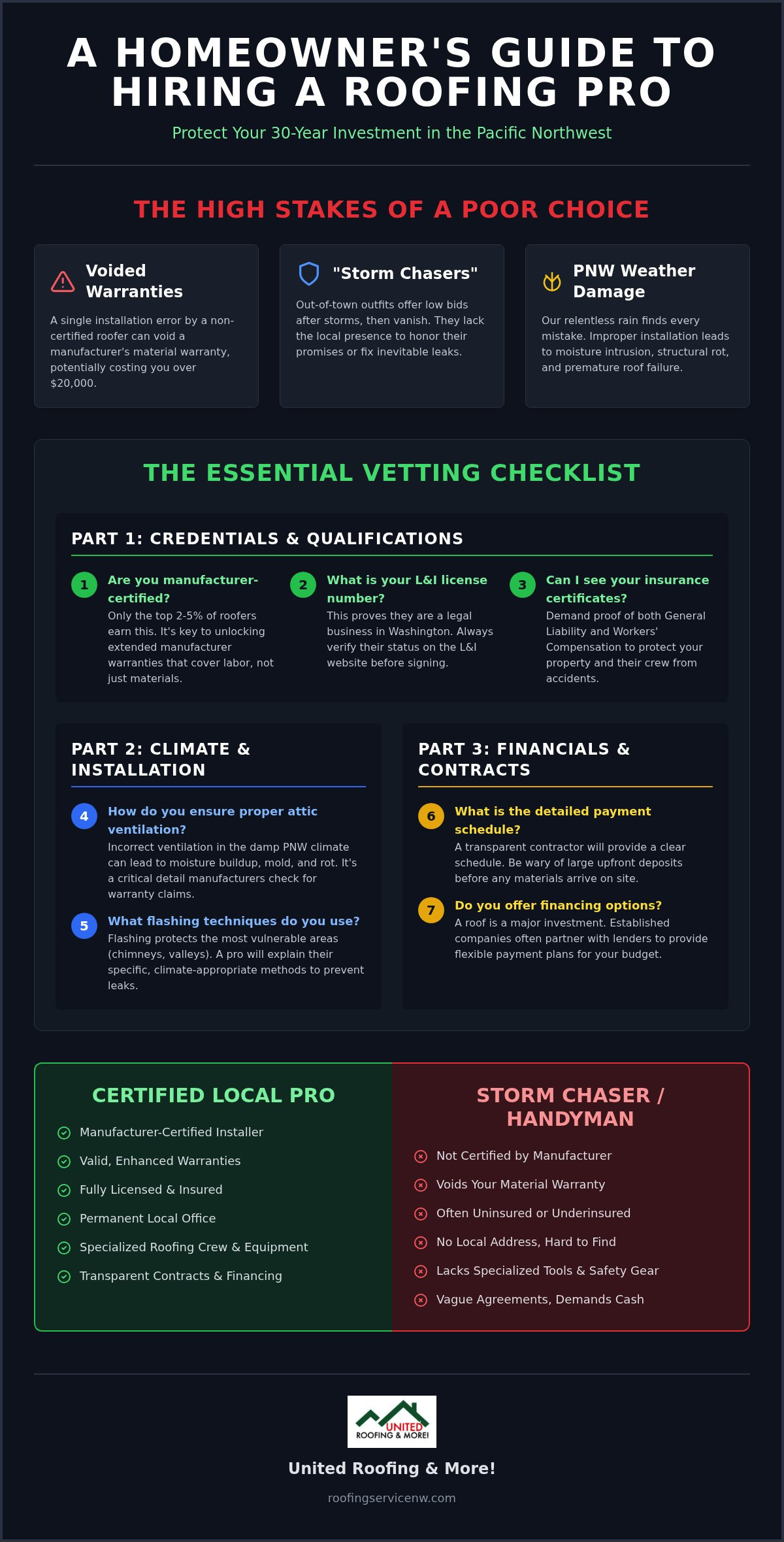
We're here to replace that stress with a solid plan. This guide provides the exact questions to ask a roofing contractor to ensure your home stays dry for 30 plus years. By using this expert-vetted list, you'll learn how to secure a valid manufacturer-backed warranty and a transparent roofing financing plan that works for your budget. We'll walk you through fifteen essential checkpoints, covering everything from technical installation standards to the clear financial dialogue you deserve.
Key Takeaways
- Treat your roof as a 30-year investment by vetting contractors on technical skill rather than just the lowest bid.
- Verify manufacturer certifications to ensure your installation meets the high standards required for a valid warranty.
- Master the climate-specific questions to ask a roofing contractor to prevent moisture intrusion and ventilation issues common in the PNW.
- Demand financial transparency with clear payment schedules and explore roofing financing options to keep your project stress-free.
- Identify the red flags of storm chasers by insisting on local expertise and documented proof of proficiency in wet-climate installations.
Why Vetting Your Roofing Contractor is Critical in 2026
Your roof is more than just shingles. It is a complex system designed to keep your family safe and dry through decades of wind and rain. In 2026, rising material costs and evolving labor standards mean you cannot afford to choose a contractor based on the lowest bid alone. You are looking at a thirty year investment that requires extreme precision. A qualified roofing contractor is a licensed, insured, and factory-certified professional. Without these specific credentials, you are essentially leaving your property's safety to chance.
Homeowners in Everett and Marysville are frequent targets for "storm chasers." These companies often arrive after heavy winds, offer a "deal" that seems too good to be true, and then vanish before the first leak appears. They lack the local roots needed to stand behind their work. Having a reliable set of questions to ask a roofing contractor is your best defense against these fly-by-night operations. It ensures you hire a professional who will actually be around to honor their promises.
The High Stakes of Poor Workmanship
Modern roofing systems are highly engineered. A single installation error can void a material warranty worth twenty thousand dollars or more. Manufacturers are incredibly strict about their requirements. If the ventilation is wrong or the flashing is loose, they will not cover the damage. The hidden costs of cheap labor are never worth the initial savings. You might save money today, but you will pay for it in structural rot and premature failure tomorrow.
Our Pacific Northwest rain is relentless. It finds every small gap and turns it into a catastrophic problem within weeks. Learning about roofing materials and construction helps you see why every detail matters. Quality workmanship is the only thing standing between your ceiling and a flood. When you vet a contractor properly, you are protecting your home from the inside out.
Avoiding the "Handyman Trap"
Do not confuse a general handyman with a specialized roofing crew. A handyman might be helpful for small repairs, but they lack the specialized tools and safety equipment required for a full roof installation. Roofing is a distinct trade that demands specific expertise. A professional crew knows how to handle heavy materials safely and follows strict protocols that protect your property. It is also vital to ensure your contractor has a permanent local office in the Seattle metro. You need to know where to find them if you have a question next year. A physical location proves they are a stable part of the community. Using the right questions to ask a roofing contractor ensures you hire a partner who values long-term trust over a quick paycheck.
Essential Questions About Certification and Credentials
Credentials aren't just paperwork. They are your financial safety net. A basic business license tells you a company can legally operate, but it doesn't prove they can install a roof that survives a decade of PNW storms. One of the most vital questions to ask a roofing contractor is: "Are you a manufacturer-certified contractor for the shingles you install?" This simple query separates the experts from the amateurs.
This certification is a game changer for your warranty. It means the manufacturer trusts the contractor enough to back their labor with an extended warranty. If a non-certified roofer makes a mistake, you pay for it. If a certified master roofer makes a mistake, the manufacturer often steps in to cover the costs. This level of consumer protection from roofing scams is essential for your peace of mind. You want a team that has already been vetted by the people who make the materials.
Always verify these claims before signing anything. You can check the status of any company through the Washington Department of Labor & Industries (L&I) website. It takes five minutes and can save you thousands. A reputable company will happily provide their license number and proof of standing because they have nothing to hide.
Manufacturer Certification vs. Basic Licensing
Think of a license as the bare minimum. Every roofer should have one to work in Washington. Certification is different. It is an earned badge of excellence that manufacturers only grant to the top 2-5% of roofing companies. These elite teams must undergo regular training and pass rigorous inspections. This commitment is what separates standard work from master roofing standards in 2026. It ensures your installation follows the exact specifications required for long-term durability and maximum protection.
Insurance and Liability Coverage
Never assume a contractor is covered. Ask for current certificates of general liability and workers compensation insurance before anyone steps onto your property. If a worker gets injured on your roof and the company isn't insured, you could be held liable for their medical bills. This is a massive risk that no homeowner should take. Always ensure the coverage is valid for your specific city, whether you live in Bellevue or Tacoma. Local regulations and building codes vary, so your contractor must be prepared for the specific requirements of your area. Asking these questions to ask a roofing contractor early on prevents legal headaches later. Checking these credentials is the first step toward a successful roof replacement that lasts.
Climate-Specific Questions for Pacific Northwest Homes
Washington state weather is unforgiving. Our relentless rain and high humidity levels require a specialized approach that generic roofing guides often ignore. In a drier climate, a basic underlayment might suffice for a few years. Here, the quality of your underlayment is the primary barrier between a dry home and a moldy attic. It is one of the most technical questions to ask a roofing contractor because the answer determines the longevity of your roof installation. You need a solution built for the coast, not the desert.
Precision matters when the clouds open up. You must know if your team understands the physics of water shed. Ask your pro: "Do you install a roof drip edge on every project?" This small metal flashing prevents water from curling under the shingles and rotting your fascia boards. Without it, your new roof is vulnerable from day one. You also need to confirm their strategy for high-humidity environments. Proper ventilation isn't just a suggestion; it is a requirement for a valid manufacturer warranty.
Addressing Moss and Moisture Management
Moss is a silent killer for PNW roofs. It acts like a sponge, holding moisture against your shingles and accelerating rot. Ask if the contractor offers copper or zinc strips for shaded areas. These metal ions naturally inhibit moss growth and extend the life of your roof replacement. Your contractor should also have a clear plan for flashing. Chimneys and skylights are notorious leak points. A professional crew will replace old flashing rather than simply applying sealant over old metal. Speed is also a factor. The crew must "dry in" the roof quickly to protect the structure from unpredictable Seattle rain showers.
Ventilation and Attic Health
A roof that cannot breathe will fail prematurely. Ridge vents are essential in our region to prevent heat and moisture buildup. This buildup leads to wood rot and reduced shingle life. Do not accept a "one size fits all" approach. Ask for a calculated ventilation plan tailored to your specific square footage. Homes in Sammamish or Redmond often have complex rooflines that require a mix of ridge and intake vents. A qualified expert will explain how air flows from your soffits to the peak. This level of detail ensures your attic stays cool and dry. Keeping your home healthy is much easier when you start with the right questions to ask a roofing contractor. We believe in total transparency; this is why we offer flexible roofing financing to ensure these critical climate upgrades are affordable for every family.
Financial Transparency and Contract Details
A roof is a significant investment. You deserve to know exactly where every dollar is going. Never sign a contract that doesn’t clearly outline the payment schedule. A professional contractor won't ask for the full amount upfront. Instead, they will set milestones based on project progress. This creates accountability. It ensures the work meets your expectations before final payment is made. One of the most important questions to ask a roofing contractor involves their financial flexibility. Ask: "What roofing financing options do you provide?"
Solid businesses offer these plans because they understand the financial pressure of a sudden home repair. It shows they are stable and customer-centric. You should also demand a "lien waiver" in your contract. This document protects you if the contractor fails to pay their material suppliers or subcontractors. Without it, you could be held financially responsible for those debts even if you already paid your contractor in full. Transparency is a core promise of any reliable local expert.
Reviewing the Roofing Quote
Look beyond the bottom line. A detailed quote must identify potential hidden fees like debris removal or permit processing. If these aren't listed, they might appear as surprise charges later. Your quote should also specify the exact brand and line of shingles being used. Generic terms like "architectural shingles" aren't enough. You need to know you're getting high-quality materials designed for our wet climate. Beware of low-ball bids. These often lead to expensive "change orders" once the project is underway. A clear, fixed-price quote is the only way to avoid budget creep.
Warranty Upgrades and Workmanship Guarantees
Ask: "Does your workmanship warranty cover labor and materials?" There is a massive difference between a ten year contractor guarantee and a fifty year manufacturer warranty. The contractor guarantee covers their specific installation work. The manufacturer warranty covers the shingles themselves. You want both. Confirm that the warranty is transferable if you sell your Seattle home. This adds significant resale value. It gives the next owner peace of mind. Getting these answers early makes the entire process stress-free and highlights why these are the right questions to ask a roofing contractor before work begins. If you're ready for a transparent experience, schedule your roof replacement consultation today to see our clear dialogue in action.
United Roofing & More!: Your Transparent Local Experts
United Roofing & More! stands for clarity. We believe every homeowner should feel empowered and informed during their project. We prioritize open dialogue and customer education at every step of the process. When you are compiling questions to ask a roofing contractor, our team is ready with direct facts and technical expertise. We specialize in professional roof replacement across the greater Seattle area. Our team is factory-trained to meet the highest durability standards for 2026. We know that a new roof is a massive investment. We make quality accessible through dedicated roofing financing and punchy, direct communication. We don't use fluff; we use proven expertise to protect your home.
Our brand name reflects our mission. We unite high-quality materials with expert installation to create a roofing system that lasts for decades. We are a supportive partner in your home improvement journey. By consistently highlighting payment solutions and providing clear diagnostic services, we aim to lower the barrier to entry for every homeowner. We want you to feel confident in your choice. Our personality is that of a reliable, hardworking, and transparent local expert. We lead with our professional credentials and a tenure that proves our stability in the community. Our persona is approachable and eager to please, suggesting a business that values long-term trust over high-pressure tactics.
Serving Marysville, Seattle, and Beyond
Our local roots run deep. We have extensive experience in local neighborhoods from Renton to Lynnwood and Everett. Every project benefits from our thorough understanding of local building codes and permit requirements. Whether you are in Snohomish or King county, we navigate the red tape for you. This ensures your project is legal and fully compliant with all local standards. We have a commitment to keeping our Pacific Northwest neighbors dry and protected. We understand the unique moisture challenges and high-humidity environments of our region. Our crews are hardworking and stay organized throughout the service process. We believe in a "no-nonsense" approach to communication that prioritizes your peace of mind.
Book Your Free Diagnostic Today
Take the first step toward a safer home. We offer no-pressure evaluations to identify exactly what your property needs. Sometimes a repair is enough to extend the life of your system. Other times, a full replacement is the only way to protect your interior from catastrophic damage. We provide a clear diagnostic service to help you make an informed decision. Our flexible roofing financing options allow you to choose the best protection without financial stress. You don't have to compromise on quality because of a budget. Experience the peace of mind that comes with a "United" roofing solution. We stay in constant contact throughout the service process. You will always know the status of your project. Our goal is to make the entire experience helpful, welcoming, and entirely stress-free. It's the right time to get the answers to your questions to ask a roofing contractor from a team that cares.
Secure Your Home’s Future with Confidence
A new roof is a massive step toward protecting your family and your property. You now have a complete list of questions to ask a roofing contractor to ensure your next project is a total success. Remember that manufacturer certification is your best defense against voided warranties. It’s equally important to verify that your contractor uses climate-specific techniques like proper drip edges and calculated ventilation to fight PNW moisture. These technical details make the difference between a roof that fails early and one that stays dry for thirty years.
United Roofing & More! is locally owned and operated in the Pacific Northwest. We lead with transparency and provide expert installation with flexible financing options to fit your life. Our team is highly rated for quality workmanship and clear, honest communication. Don't leave your biggest investment to chance. It's time to get the protection you deserve. Book Your Free Certified Roof Diagnostic Today! We are ready to help you build a durable, leak-free future for your home.
Frequently Asked Questions
Are certified roofers more expensive than non-certified ones?
Certified roofers may have slightly higher initial bids because they use premium materials and factory-trained crews. This small difference is an investment in your home's long-term protection. Non-certified installers often cut corners to lower prices, which leads to expensive repairs later. A certified installation ensures your warranty is valid, saving you thousands over the life of your roof.
How do I know if my roofer is actually licensed in Washington state?
You can verify a contractor's status through the Washington Department of Labor & Industries (L&I) "Verify a Contractor" tool. Simply enter their business name or license number to see their current standing. This tool shows you if their license is active, if they have bond coverage, and if they have any outstanding infractions. Never hire a contractor who cannot provide a valid Washington license number.
Does a roof warranty cover labor if the installer was not certified?
Most standard manufacturer warranties only cover material defects, not the labor to fix them. If your installer is not certified, the manufacturer will likely deny any labor claims related to poor installation. Certified contractors can offer "enhanced" warranties that cover both materials and labor for up to 50 years. This is why certification is one of the most critical questions to ask a roofing contractor before signing.
What is the most important question to ask during a roofing consultation?
The most important question is: "How do you specifically protect my home from moisture during the installation process?" In our wet climate, a roof must be "dried in" quickly to prevent structural damage. You need to know their plan for handling unpredictable rain and how they manage critical areas like chimney flashing and ridge vents. A vague answer is a major red flag for any local project.
Can I get roofing financing if I have a complex project?
Yes, roofing financing is available for projects of all sizes and complexities. Whether you need a simple shingle update or a complex multi-level replacement, flexible payment plans can help manage the cost. We offer dedicated options that allow you to start your project immediately while paying in manageable monthly installments. This ensures you don't have to delay essential protection for your home.
How long should a typical roof replacement take in the Seattle area?
A typical residential roof replacement usually takes between one and three days. Larger homes or complex rooflines may require more time. Weather is the biggest variable in the Seattle area. A professional crew will monitor the forecast closely and only strip your roof when they can guarantee it will be dried in before the next rain shower arrives.
What happens if a roofing contractor goes out of business after my installation?
If you hired a manufacturer-certified contractor, your material and labor warranties are often backed by the manufacturer itself. This means your protection remains valid even if the original company closes. If you hire an uncertified installer who disappears, you are left with no recourse for installation errors. This highlights the importance of choosing stable, locally owned experts with a permanent office.
Is a business license the same as a manufacturer certification?
No, a business license is a legal requirement to operate, while a manufacturer certification is an earned credential. A license proves a company is registered with the state and carries a bond. Certification proves the crew has been specifically trained to install a brand's products to the highest standards. You should always look for questions to ask a roofing contractor that verify both their legal status and their technical proficiency.

