
Imagine waking up to the rhythmic sound of a drip hitting your attic floor after another week of relentless Marysville rain. For many Pacific Northwest homeowners, this isn't just a nuisance; it's a signal that your home's first line of defense is failing. Our local climate doesn't just wear a roof down. It wages a constant war of moisture, moss, and rot. You likely already know that ignoring a small leak today leads to a massive repair bill tomorrow. Recognizing the specific signs you need a roof replacement is the only way to stay ahead of catastrophic structural damage.
We believe that protecting your home shouldn't be a source of constant stress or financial strain. This guide will show you exactly how to identify critical damage before it compromises your home's safety. You'll get a clear checklist of red flags tailored to our unique environment and discover how our flexible roofing financing makes necessary upgrades affordable. We'll walk through everything from shingle health to structural integrity so you can regain total peace of mind about your home's future.
Key Takeaways
- Understand how the unique Pacific Northwest climate of constant moisture and moss significantly accelerates the aging process of your roofing materials.
- Identify the 7 critical exterior signs you need a roof replacement to stop moisture from compromising your home’s structural integrity.
- Learn how to perform a simple attic inspection to uncover hidden rot and leaks that aren't yet visible from your living areas.
- Master the "Rule of 50" to determine if a targeted repair or a full roof installation is the smartest financial move for your property.
- Discover how dedicated roofing financing can turn an urgent home improvement into an affordable, manageable investment with clear payment options.
Understanding Your Roof’s Lifespan in the Pacific Northwest
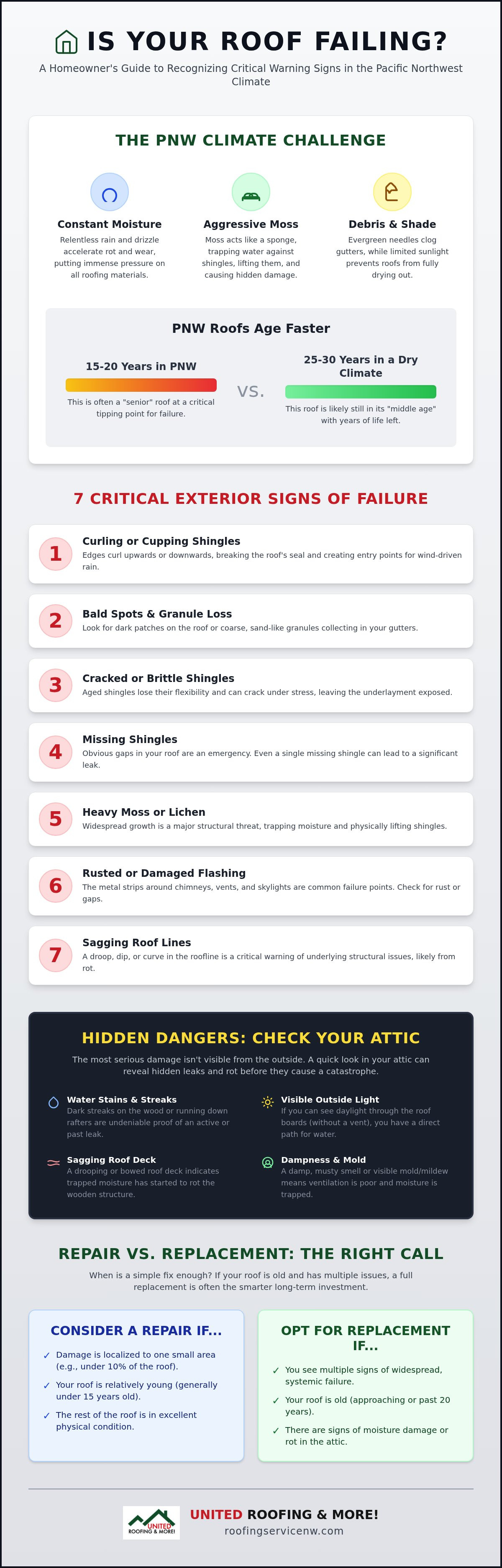
A roof in the Pacific Northwest doesn't just sit there; it battles the elements every single day. While manufacturers often rate asphalt shingles for 25 or 30 years, our local climate tells a different story. Persistent moisture and limited sunlight create a perfect environment for moss and algae. These aren't just cosmetic issues. They trap water against the shingles and accelerate rot. Roof failure happens the moment your underlayment is no longer protected by the outer layer. Once that barrier breaks, moisture reaches your home's structural bones. Proactive monitoring is the only way to avoid emergency repairs. Identifying the early signs you need a roof replacement saves you from the stress of a sudden, high-cost disaster.
The Age Factor: When Does a Roof Become "Old"?
In many parts of the country, a 20-year-old roof is just reaching middle age. In Marysville or Seattle, that same roof is likely a senior citizen. The 20-year milestone is a critical tipping point for standard asphalt shingles. A 15-year-old roof here is often in worse shape than a 25-year-old roof in a drier state. Waiting until the very end of a shingle's life is a gamble you shouldn't take. If the surface is brittle, it can't shed water. This leads to deck rot and mold. We focus on transparency, helping you understand if your roof is truly "old" or just needs a professional touch-up. Managing these costs is easier when you plan ahead with flexible roofing financing.
Environmental Stressors Specific to Seattle and Marysville
Our region presents unique challenges that standard roofing guides often ignore. Constant drizzle puts immense pressure on roof drip edges, which must channel water away from your fascia boards. If these fail, your eaves will rot. Wind-driven rain is another culprit. It forces water into tiny gaps in aging flashing around chimneys and vents. Nearby evergreen trees also play a role. They drop needles that clog gutters and hold dampness against the roof surface. Getting Professional Inspections regularly is the best way to catch these stressors before they turn into leaks. We provide clear dialogue about your roof’s health so you always know where you stand. Our goal is to make your next roof installation a smooth and predictable process.
7 Critical Exterior Signs You Need a Roof Replacement
Identifying the early signs you need a roof replacement doesn't require a degree in engineering. It just takes a keen eye and a few minutes of your time. After a major PNW wind storm, take a walk around your property. Look for these specific visual cues from the ground or a safe vantage point on a ladder. If you spot multiple issues appearing at once, it usually indicates a systemic failure. A single missing shingle is a repair; seven different red flags mean your roof's structural integrity is compromised. We focus on a no-nonsense identification process to give you clarity without the guesswork.
- Curling or cupping shingle edges
- Bald spots where granules are missing
- Cracked or brittle shingles
- Missing shingles after moderate wind
- Heavy moss or lichen growth
- Rusted or pulling flashing
- Sagging roof lines or visible dips
Shingle Deformities: Curling, Buckling, and Cracking
As asphalt shingles age, they lose the volatiles that keep them flexible. This causes them to "cup" or curl upward at the edges. You might also notice buckling, which looks like a wave running up the roof surface. Another red flag is the "bald spot" effect. This happens when the protective granules wash away, often collecting in your gutters like coarse sand. Missing shingles are an immediate invitation for leaks. If you see wood or underlayment where a shingle should be, your home is already at risk. For more localized safety tips, consult a Pacific Northwest Homeowner Guide.
The Moss and Algae Trap
In Marysville and Seattle, moss is a major structural threat. Many homeowners think it’s just an aesthetic issue, but that's a dangerous mistake. Moss acts like a heavy sponge, holding water directly against your shingles for weeks on end. Over time, moss roots lift the shingles up. This allows wind-driven rain to bypass your primary barrier entirely. Never use high-pressure washing as a "fix" for an old roof. It strips away the remaining granules and destroys what little protection is left. If moss has taken over, it’s often a sign that the shingles are too damp to survive much longer.
Compromised Flashing and Gutter Debris
High-risk zones include the areas around your chimney, skylights, and vents. These spots rely on metal flashing to keep water out. If the flashing is rusted, cracked, or pulling away, a leak is inevitable. Check your gutters for "sand." If they are full of shingle granules, your roof is shedding its protective layer at an accelerated rate. Proper installation follows master roofing standards to ensure these joints stay watertight. If you're seeing several of these symptoms, you should request a professional roof diagnostic to evaluate your options. We provide clear dialogue about the health of your exterior so you can make an informed decision.
Hidden Interior Clues: What Your Attic Is Telling You
Don't wait for a puddle in your kitchen to check on your roof. Many of the most reliable signs you need a roof replacement are hidden away in your attic. By the time water stains appear on your living room ceiling, the damage is often extensive and expensive. We recommend a quick, safe attic inspection twice a year. It's a simple way to catch moisture issues before they compromise your home's air quality or structural safety. Grab a flashlight and look for these internal red flags during the next heavy Marysville rainstorm.
Light and Moisture: The Attic Daylight Test
One of the easiest tests requires no tools at all. Turn off all the lights in your attic on a bright day. Look up at the roof boards. If you see pinpricks of light peeking through the rafters, you have a problem. If light can get in, water can too. Next, use your flashlight to inspect the rafters and the underside of the roof decking. After a typical Seattle drizzle, look for dark spots or active dampness. Pay close attention to the wood's texture. If the roof decking feels soft or looks like it's sagging between the rafters, it requires immediate replacement. This level of decay suggests that the wood is no longer strong enough to support the weight of the shingles.
Mildew, Mold, and Poor Ventilation
Your nose is often as good a tool as your eyes. A persistent musty smell in the attic is a clear warning of trapped moisture. In our damp climate, a failing roof doesn't just leak; it creates a breeding ground for mold and mildew. This "slow kill" can ruin your insulation and affect the air your family breathes. Mold thrives in dark, damp spaces with poor airflow. Recognizing these interior signs you need a roof replacement allows you to act before the rot spreads to your rafters.
When we perform a new roof installation, we prioritize modern ventilation systems. Proper intake and exhaust vents keep your attic dry and cool. This prevents the heat buildup that "cooks" shingles from the inside out. If you notice black streaks or white fuzzy growth on your attic walls, it's a sign that your current system is failing. We believe in transparency and will show you exactly what's happening above your head. Staying informed helps you choose the right financial path for your home's protection. Dedicated roofing financing can help address these hidden issues before they spread to your living space.
Repair vs. Replacement: Making the Right Financial Decision
Deciding between a quick fix and a total overhaul is a major financial crossroads for any homeowner. We believe in providing a clear framework to help you choose the smartest path for your property. One reliable industry standard we use is the "Rule of 50." If your repair estimates reach 50% of the value of a new installation, a full replacement is usually the better investment. Evaluating the signs you need a roof replacement often leads to this tough choice. A temporary patch might save money today, but it doesn't offer the long-term protection of a full warranty. We prioritize clear dialogue so you understand exactly where your money is going before any work begins.
When a Professional Roof Repair is Sufficient
Not every problem requires a full crew and a dumpster. If your roof is less than 10 years old and the damage is isolated, a repair is often the best move. Think about a single fallen limb or a few shingles blown loose during a high-wind event. If the surrounding structure is sound, expert roof repairs can effectively bridge the gap. Regular maintenance also plays a huge role in this decision. Keeping your gutters clear and addressing minor flashing issues can extend the life of your current system significantly. Our goal is to be a supportive partner, not just a sales team. We'll tell you honestly if a repair is all you need to keep your home dry.
The Cost of Delay: Why Waiting Can Double Your Bill
Procrastination is the most expensive mistake a homeowner can make when dealing with a failing roof. In the Pacific Northwest, a $500 leak can quickly become a $5,000 structural rot nightmare if ignored. Water travels down rafters, soaks into your insulation, and ruins your home's energy efficiency. Wet insulation loses its R-value immediately. This means your HVAC system has to work twice as hard to keep your home warm during a cold Marysville winter. Correctly identifying the signs you need a roof replacement early allows you to act before the damage spreads to your ceiling and walls. Addressing damage promptly also makes the insurance claim process much smoother. If you're unsure which path to take, schedule a clear diagnostic assessment today. We offer flexible roofing financing to help you manage these costs without the stress.
Taking Action: Professional Inspections and Financing Solutions
Once you've spotted the signs you need a roof replacement, it's time to move from observation to action. You don't have to face this process alone. We specialize in helping Marysville and Seattle homeowners navigate the transition from a damaged roof to a secure home. The steps are straightforward and designed to eliminate your stress. Our team at United Roofing & More! is ready to step in as your reliable local partner. We lead with professional credentials and a hardworking attitude to ensure your home remains structurally sound for years to come.
What to Expect During a Professional Roof Inspection
A professional roofing diagnostic is more than a quick glance from the street. Our no-nonsense approach involves a thorough 360-degree evaluation of your home's exterior and interior components. We climb the ladder to check shingle adhesion, granule loss, and the integrity of your flashing seals. We also head into your attic to verify the health of your decking and ventilation systems. You'll receive a detailed written estimate that provides total clarity on the scope of work. This document is essential for your personal budgeting or for starting an insurance claim. It's vital to choose a local contractor who truly understands Pacific Northwest building codes and our unique weather patterns. This expertise ensures your new roof installation can handle everything from heavy snow to persistent autumn drizzle.
Removing the Barrier: Roofing Financing Options
The biggest hurdle for most homeowners isn't identifying the damage. It's figuring out how to fund the solution. We believe that budget concerns shouldn't force you to live under a failing roof. Our flexible roofing financing plans make a necessary replacement affordable immediately. These payment options remove the barrier to entry, allowing you to prioritize your family's safety without draining your savings.
Financing also allows you to choose high-quality materials rather than settling for the cheapest option. A new roof is a significant investment in your home's resale value and long-term durability. It provides immediate peace of mind and protects your equity from the rot and mold we've discussed. By addressing the signs you need a roof replacement today, you prevent a manageable project from turning into a financial disaster. We are committed to transparency and open dialogue throughout every step of your project.
Protect Your Home and Your Peace of Mind
Your roof is your first line of defense. It battles relentless Pacific Northwest moisture every day. We have explored the critical exterior and interior signs you need a roof replacement, from curling shingles to hidden attic mold. Understanding these red flags early is the key to preventing expensive structural rot. We believe in total clarity. Our team provides open dialogue throughout the entire process. As locally owned PNW experts, we build long-term trust with our community.
Don't let the cost of a new roof installation keep you awake. Our flexible roofing financing options make high-quality protection accessible for every budget. We are here to help you navigate the diagnostic process. Our no-nonsense approach prioritizes your home's safety. It's time to stop worrying about the next storm. Start planning for a secure future. Get a Professional Roof Inspection and Explore Our Financing Options Today! We are ready to be your supportive partner in keeping your home dry and sound.
Frequently Asked Questions
How much does a new roof cost in the Seattle area?
The total investment for a new roof depends on several factors. These include your home's square footage, the roof's pitch, and your choice of high-quality materials. Every project is unique. We provide a detailed written estimate after a professional diagnostic to ensure total transparency. If the upfront cost is a concern, our dedicated roofing financing offers flexible payment plans to make your replacement manageable and affordable immediately.
Can I just shingle over my existing roof to save money?
Shingling over an old roof is generally discouraged in our damp climate. This practice traps moisture between the layers and accelerates rot in your roof decking. It also prevents us from inspecting the structural bones of your home for hidden damage. A clean tear-off is the only way to ensure your new roof installation has a solid foundation. This approach protects your long-term investment and home safety.
Is moss on my roof a sign that it needs to be replaced?
Moss is a major structural threat in the Pacific Northwest. It acts like a sponge, holding water against your shingles and eventually lifting them. This allows rain to bypass your primary barrier. While a small amount of moss might just need cleaning, heavy growth is often one of the signs you need a roof replacement. We evaluate the shingles underneath to see if the moisture has caused permanent damage.
How long does a typical roof replacement take to complete?
Most residential roof replacement projects are completed within one to three days. The exact timeline depends on the size of your home and the extent of any required structural repairs. We prioritize efficiency and keep you informed throughout the service process. Our goal is to minimize disruption while ensuring expert workmanship. We work hard to get your home dried in and protected as quickly as possible.
What is the best time of year to replace a roof in the PNW?
July through September typically offers the best weather for a roof installation in Seattle and Marysville. These dry months allow shingles to seal properly and quickly. However, our local experts are equipped to work year-round. We monitor local forecasts to find safe windows for installation during the rainier months. Don't wait for a perfect summer day if your roof is actively leaking and causing damage.
Does homeowners insurance cover roof replacement?
Homeowners insurance usually covers roof replacement if the damage results from a sudden, accidental event. This includes wind storms, hail, or fallen branches. Policies generally do not cover damage caused by age or lack of maintenance. We provide clear dialogue and professional documentation to help you understand the state of your roof. This information is essential when you are communicating with your insurance provider about a potential claim.
What happens if I ignore a small leak in my roof?
Ignoring a small leak is a recipe for a financial disaster. Moisture spreads quickly once it enters your attic space. It ruins insulation, promotes mold growth, and eventually rots your rafters. What starts as a simple repair can quickly escalate into a full structural overhaul. Identifying the signs you need a roof replacement early is the best way to protect your home's equity and your family's health from moisture-related issues.
What are the most common roofing materials used in Marysville?
Asphalt shingles are the most common choice for Marysville homeowners due to their durability and variety of styles. They handle our local moisture well when installed with proper ventilation. Metal roofing is another excellent option for its long lifespan and resistance to moss growth. We help you select the best materials for our unique climate. Our goal is to ensure your new roof installation provides lasting protection and enhances your home's curb appeal.


