

A new roof can sometimes be installed over existing shingles, but only if the underlying roof is suitable for another layer. Damage, trapped moisture, or an uneven surface may make removing the old roofing the better option. For Eastside Seattle homeowners, the right choice depends on the roof’s condition, not just the appeal of avoiding tear-off.
It’s reasonable to want a clear answer before planning a roofing project. The wrong approach can leave underlying problems in place, while a full replacement may be needed to address them properly. Roofing contractors in Eastside Seattle can assess the roof and explain which option suits your home.
This guide explains when an overlay may work, what licensing, insurance, and warranties mean for homeowners in Seattle and Bellevue, and what to expect from a residential roofing project. Use it as a practical starting point for deciding what to do next.
Key Takeaways
- Before choosing an overlay, look at the existing roof’s condition and whether adding another layer could conceal damage or moisture.
- For painted surfaces in pre-1978 homes, the U.S. Environmental Protection Agency says paid contractors must be certified and employees trained in lead-safe work practices.
- Understand how workmanship coverage differs from manufacturer coverage, and what maintenance the roof may need to support its service life.
- Seattle and Bellevue’s wet conditions make roof design, drainage, and material selection important parts of planning a residential roofing project.
Can I install a new roof over my existing one?
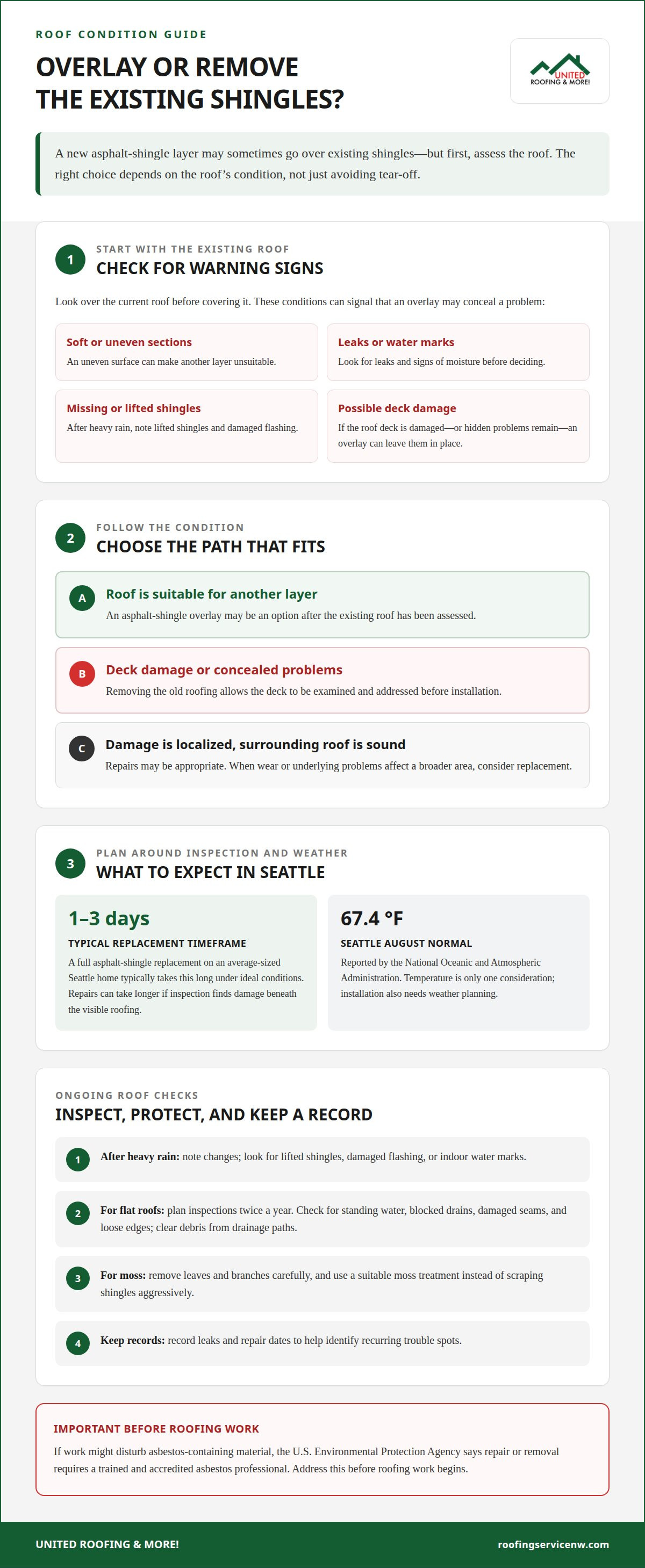
Sometimes, a new asphalt-shingle roof can go over existing shingles. First, assess the current roof before covering it. Look for soft or uneven sections, leaks, missing shingles, and signs of moisture. If the roof deck is damaged or the existing layer hides problems, an overlay can leave those issues in place. Removing old roofing allows the deck to be examined and addressed before installation.
Seattle’s seasonal conditions make timing and inspection practical parts of planning. The National Oceanic and Atmospheric Administration reports an August normal of 67.4 °F °F for Seattle. Temperature is only one consideration; roofers also need to plan around weather during installation. A full asphalt-shingle replacement on an average-sized Seattle home typically takes 1-3 days under ideal conditions. Repairs can take longer when inspection reveals damage beneath the visible roofing.
After heavy rain, note any changes and look for lifted shingles, damaged flashing, or water marks indoors. Flat roofs need a different inspection routine: plan inspections twice a year and look for standing water, blocked drains, damaged seams, and loose edges. Clearing debris from drainage paths helps water flow off the roof. Record leaks and repair dates to make recurring trouble spots easier to identify.
Moss can hold moisture against roofing materials, especially in shaded areas. Carefully remove leaves and branches, and use a suitable moss treatment instead of scraping shingles aggressively. Cleaning should preserve the roof surface, not loosen granules or damage flashing. If moss returns near a particular tree or roof valley, note that spot and whether drainage is affected.
Choose repairs when damage is localized and the surrounding roof remains sound; consider replacement when wear or underlying problems affect a broader area. Repairs around skylights, chimneys, and valleys require careful attention to flashing and water paths. If work might disturb asbestos-containing material, the U.S. Environmental Protection Agency says repair or removal requires a trained and accredited asbestos professional. Address that before roofing work begins.
Contractor licensing and insurance
Red flags include pressure to sign immediately, vague paperwork, or requests for full payment before work begins. Before committing to a roofing project, compare the written scope, insurance documents, and payment schedule.
In the Pacific Northwest, storms can expose weak shingles and unfinished work. A clear agreement should identify the roof areas involved, materials, removal and cleanup responsibilities, and how changes will be documented. Check that these details match the project. A scope that says only “replace roof” leaves important questions unanswered, such as whether damaged decking or flashing is included.
Licensing, registration, and bonding are separate details, not interchangeable labels. Review the company’s identity and registration information, then make sure the agreement names the same business. Insurance documents should identify the insured business and show the coverage period. Liability coverage and workers’ compensation address different risks; both matter when crews work overhead or move materials across your property.
- Compare the written scope with the roof areas and work discussed.
- Check that business names match across the agreement and insurance documents.
- Read the payment schedule and change-order process before signing.
- Keep copies of project records, including material details and completion paperwork.
For painted surfaces in pre-1978 homes, paid contractors must be certified and their employees trained in lead-safe work practices, according to the U.S. Environmental Protection Agency. This is especially relevant when roof work affects painted surfaces around eaves, trim, or adjacent structures. Include that condition in project planning, rather than treating it as ordinary shingle removal.
For homeowners, warning signs also include inconsistent answers about storm damage, unclear insurance details, and missing written terms. Reviewing the paperwork helps make responsibilities clear before work starts. A defined scope and documented coverage give you a practical basis for comparing project plans and understanding what protection applies during the work.
Use roofing project planning to explore the steps and details that shape a residential roofing project.
Craftsmanship and manufacturer warranties
Specialization varies: Eastside roofers may focus on asphalt shingles, metal, tile, or flat roofs. Match the roofing company’s experience to your roof design and selected material before planning installation.
Distinguish workmanship coverage from manufacturer coverage. Workmanship terms address installation-related issues, while manufacturer terms concern the roofing material under stated conditions. Neither label alone explains what a homeowner can claim. Read the warranty documents and compare covered defects, exclusions, maintenance requirements, and claim steps before approving roof replacement.
For example, if a shingle edge lifts after installation, the cause matters. A material defect and an installation problem may fall under different coverage. Keep the contract, product details, completion records, and dated photos together. If you need a roof repair later, those records help show what material was installed and when.
Manufacturer certifications can indicate that a roofer has completed training related to a specific roofing system. They don’t automatically define your warranty or replace its written terms. Ask for the applicable manufacturer document and confirm the product name matches the material in your project paperwork. A certification and a warranty are related, but they serve different purposes.
- Identify the material and system covered by each document.
- Compare workmanship terms with manufacturer coverage and exclusions.
- Save project records, maintenance notes, and repair documentation.
Washington homeowners should also understand how upkeep affects coverage. Follow the maintenance instructions in the warranty, such as keeping roof drains clear on a flat roof or addressing visible damage promptly. Record the date and nature of any inspection or repair. These details can help establish whether maintenance requirements were followed.
Good workmanship shows in specific installation details: aligned shingle courses, secure flashing around roof openings, and clean transitions at roof edges. On a flat roof, seams and drainage details deserve close attention. During a final walkthrough, compare the completed work with the written scope, note unfinished items, and keep the closing paperwork. These steps make future warranty questions easier to address.
Residential roofing in Seattle and Bellevue
Seattle and Bellevue homes face wet weather, wind, and varied roof designs. A suitable residential roofing plan accounts for the roof’s condition, composition, and drainage needs.
Contractor Reviews
When comparing Eastside contractors, look for consistent homeowner feedback about completed projects, communication, and follow-through. Read reviews for specific examples, such as whether crews kept the work area orderly or explained a repair clearly. Compare recent comments across multiple review platforms and look for patterns, rather than relying on one unusually positive or negative account.
When comparing roofing contractors in Eastside Seattle, assess estimates by matching the work and materials included. Check whether each estimate describes materials, removal, flashing, ventilation, and cleanup. A proposal for composition shingles should specify the work around valleys and roof edges. Clear details make differences between roofing services easier to understand.
Contractor Service Areas
Roofing contractors in Eastside Seattle serve communities such as Bellevue when those locations are within their service area. United Roofing & More! serves the Seattle Metropolitan Area, including Seattle, Bellevue, Kirkland, Redmond, Bothell, and other nearby communities. Match the company’s service area to your property before comparing project plans.
Ask how the proposed schedule accounts for access, roof design, and weather exposure. Seattle receives 39.3 inches of annual precipitation, making drainage and moisture management practical planning priorities. Complex designs with dormers or skylights can also require more involved installation work than a straightforward roof.
Material choice matters across the region. Composition shingles suit many sloped residential roofs, while a membrane system is designed for flat or low-slope areas. Metal roofing involves a different installation approach. Choose based on roof shape, drainage, and project scope, not appearance alone.
Seattle winter wind gusts can reach 50-70 mph, creating a risk of shingle uplift. During an inspection, note loose edges, damaged flashing, and areas where water collects. For replacement planning, compare estimates that explain how the proposed material and installation address those conditions. Plan your residential roofing project with the roof’s design and local exposure in mind.
United Roofing & More!: Roof Replacement
United Roofing & More! provides roof replacement and installation for homeowners planning a full roofing project. Consider replacement when wear or damage affects broad areas; roof repairs address more localized issues.
A clear project plan starts with the roof’s condition, design, and material needs. Discussing these details helps define the work and distinguish replacement from repair. Roofing financing is also available to help homeowners manage project costs.
Whether you’re planning a replacement or addressing a specific roofing problem, contact United Roofing & More! to discuss your project.
Turn your roof concerns into a clear next step
You don’t need to settle every roofing decision at once. Start by identifying your priority: stopping a recurring leak, addressing visible wear, or planning a broader project. Note where problems appear and what you’ve observed from the ground. That gives your conversation with roofing contractors in Eastside Seattle a useful starting point, focused on your home rather than assumptions.
Gather relevant roof records and any photos taken safely from ground level. Write down your priorities and unresolved questions. A short, organized project brief can make the next discussion more focused and easier to follow.
United Roofing & More! can be a next step when you’re ready to discuss your roofing project. Contact United Roofing & More! and move forward with a clearer plan for your home.
Frequently Asked Questions
What signs indicate I need roof repairs or a full replacement?
Recurring leaks, water stains, loose shingles, and visible daylight in the attic can signal roof trouble. The pattern can help distinguish repair from replacement: damage limited to one flashing area may call for a targeted repair, while widespread deterioration can point to a larger project. Note where signs appear and whether they return after rain. Those details help clarify the next step.
How can I tell if it's time to contact a roofer in Seattle?
Contact a roofer when water enters the home, shingles are missing, or flashing has pulled away around a chimney or skylight. Don’t wait for an indoor stain to grow before addressing visible damage. From the ground, note the affected roof area and take photos if you can do so safely. Sharing those observations helps focus the conversation on the problem.
How do I know which roofing material is right for my property?
Start with the roof’s shape and slope, then consider drainage, appearance, and the material already in place. Composition shingles are commonly used on sloped residential roofs, while flat or low-slope areas call for a suitable membrane system. A roof with several angles or skylights may also affect material selection. Compare how each option fits your home’s design and project priorities.
What do Eastside roofing contractors charge for roof repairs and inspections?
Charges depend on the work involved, including the damaged area, access, materials, and whether hidden issues affect the repair. Inspection fees also depend on the scope requested. United Roofing & More! offers a free estimate for roof repairs, with project details established through a quote request. Share the problem’s location and any visible signs to help frame that request.
Are Eastside Seattle roofers licensed, bonded, and insured in Washington?
Registration and bonding are separate business records, so don’t assume every roofer has the same status. For the company handling your project, compare its registration and bond details with the name on its insurance documents. Make sure the records correspond to the same business and cover the planned work period. Consistent names and dates help clarify which business is responsible.
How can I compare roofing contractor estimates, warranties, and materials?
Compare proposals line by line, including material identification, project scope, exclusions, payment schedule, and how changes are handled. Then read warranty documents for maintenance conditions, claim steps, and any transfer terms. A lower estimate may describe a different scope, so compare the included work before weighing options. Keep the signed agreement and product paperwork together for future reference.


