
Your roof isn't just a cover; it's a complex battleground where thermal transfer meets frozen drainage. Most homeowners in the Pacific Northwest don't realize that a roof that stays dry during a summer downpour can still fail spectacularly under a few inches of snow. It's incredibly stressful to stare at a fresh ceiling stain and wonder how much an emergency repair will cost. You deserve to feel safe and dry in your own home without the constant anxiety of a sudden leak.
We understand the unique challenges of our local climate from Seattle to Everett. This 2026 guide provides the professional strategies you need for preventing roof leaks in winter. You'll discover practical DIY steps to keep your gutters flowing and learn the science behind ice dam prevention. We'll also clarify when a quick fix is enough and when it's time to consider professional roof repairs or a full installation. Our goal is to give you total confidence and a leak-free season. We even offer complimentary diagnostic services and flexible roofing financing options to keep your peace of mind affordable.
Key Takeaways
- Understand how the "Freeze-Thaw" cycle and ice dams turn small cracks into major leaks during PNW winters.
- Learn the five essential pre-frost steps for preventing roof leaks in winter, including gutter maintenance and professional inspections.
- Discover safe "Roof Raking" techniques to manage snow load and prevent ice buildup in vulnerable roof valleys.
- Explore the "Cold Roof" concept to balance attic temperatures and stop condensation from damaging your home's interior.
- Identify the signs that require professional roof repairs and learn how flexible roofing financing makes necessary fixes accessible.
What Causes Roof Leaks in Winter? Understanding the Mechanics
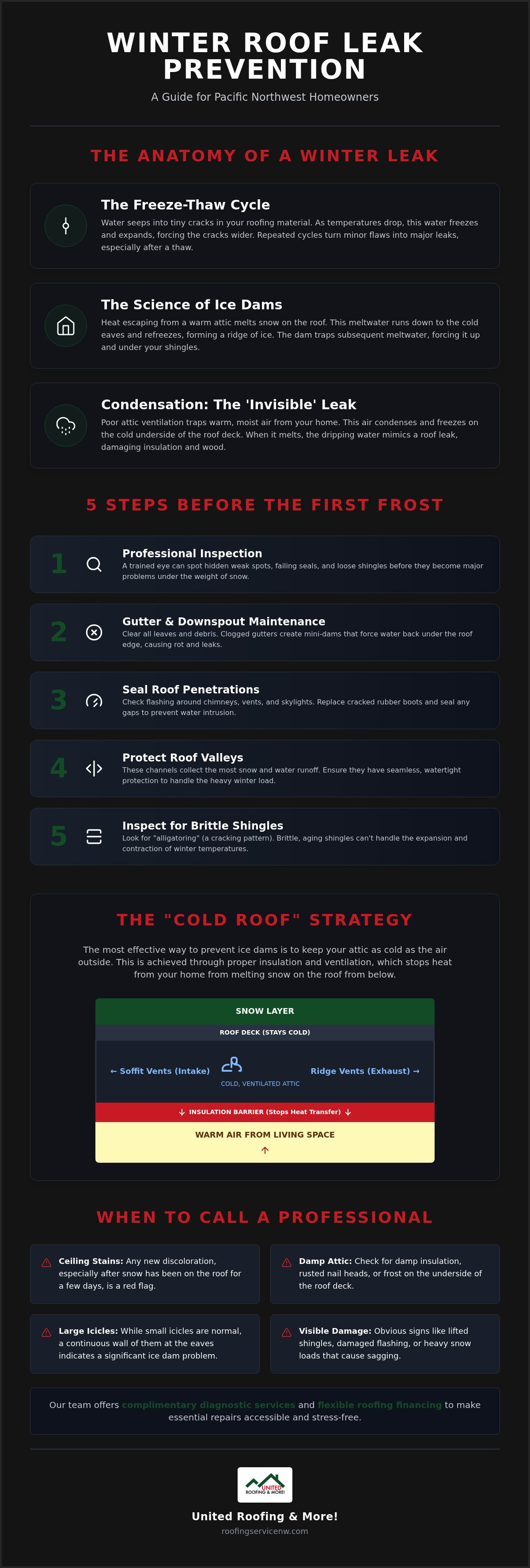
Winter weather in Seattle and Marysville puts your home through a brutal stress test. Many homeowners assume a roof that survives a November downpour is safe for the rest of the season. That is not always the case. Winter leaks often stem from ice dams, failed flashing, or hidden condensation issues. The primary culprit is the "Freeze-Thaw" cycle. When temperatures fluctuate, water enters tiny cracks and freezes. This ice expands, widening the gaps until they become major entry points for moisture. Understanding these mechanics is the first step in preventing roof leaks in winter.
There is a major difference between rain leaks and snow-melt leaks. Rain leaks are immediate and predictable. Snow-melt leaks are sneakier. They often start days after a storm ends. If you see ceiling stains while the sun is shining but snow is still on the roof, you have a drainage physics problem. An ice dam is a ridge of ice at the eave that prevents meltwater from draining. This trapped water has nowhere to go but up and under your shingles.
The Science of Ice Dams
Ice dams form when your attic is too warm. Heat from your home rises and warms the roof deck, melting the snow from the bottom up. This liquid water flows down to the eaves, which stay at freezing temperatures because they extend past the heated walls. The water refreezes there, creating a literal dam. What is an ice dam? It is a barrier that forces standing water to pool on your shingles. Asphalt shingles are not waterproof; they are water-shedding. When water sits still, it finds its way under the layers and into your rafters. This process can destroy your roof installation if left unaddressed.
Condensation: The 'Invisible' Leak
Not every drip comes from a hole in the shingles. Poor ventilation creates "invisible" leaks through condensation. Warm, humid air from your living space gets trapped in the attic. When this air hits the cold roof deck, it turns into frost. When that frost melts during the day, it looks exactly like a roof leak. You might see damp insulation or rusted nails in the attic. It is vital to distinguish between a structural leak and a ventilation issue. Our team provides free diagnostic services to help you identify the true source without the stress of guessing. Whether you need minor roof repairs or a full roof replacement, we keep the process transparent and offer roofing financing to fit your budget.
5 Steps for Preventing Roof Leaks Before the First Frost
Don't wait for the first freeze to start preventing roof leaks in winter. In cities like Marysville and Everett, the transition from heavy autumn rain to freezing snow can happen overnight. Taking proactive steps now is the best way to ensure your home stays dry. A small amount of preparation prevents the stress of an emergency repair during a blizzard. It also protects your long-term investment in your home.
Start by scheduling a professional inspection. A trained eye finds weak spots that most homeowners miss. We offer free diagnostic services to take the guesswork out of your maintenance. Our experts look for loose shingles, failing seals, and hidden damage that could turn into a major leak under the weight of snow.
Gutter Maintenance for Frozen Climates
Clear all debris from your gutters and downspouts. Wet leaves and pine needles act like sponges. They hold moisture against your roof edge and accelerate rot. This debris creates a "dam" effect that forces water back under your shingles. Ensure your downspouts direct water at least five feet away from your foundation. This prevents basement flooding and soil erosion. Properly installed roof drip edges are also essential. They guide water directly into the gutter and protect your fascia boards from moisture damage.
Seal any gaps around roof penetrations. Your chimney, skylights, and vent pipes are the most common leak points. Inspect the flashing for signs of lifting or rust. If the metal is pulling away, it needs immediate attention before the ice sets in.
Sealing the Building Envelope
Flashing is your roof's first line of defense. Replace any cracked rubber boots on plumbing vents. These small gaps become major entry points during PNW "Rain-on-Snow" events. When heavy rain falls on top of existing snow, the runoff is massive. Following expert ice dam prevention tips helps keep this water moving off your roof instead of into your attic. Check the valleys of your roof as well. These areas collect the most snow and require seamless protection to stay watertight.
Finally, check your shingles for "alligatoring." This cracking pattern means the asphalt is drying out and becoming brittle. Brittle shingles cannot expand and contract with temperature changes. They often snap under heavy snow loads. If you notice widespread damage, it might be time for a professional roof installation. We provide dedicated roofing financing options to make these critical upgrades affordable and stress-free for our community.
Managing Snow Load and Ice Buildup Safely
Snow in the Pacific Northwest is famously heavy and wet. Locals often call it "heart attack snow" because of its extreme density. This weight creates a massive burden for your roof structure, especially in areas like Marysville and Everett where weather shifts quickly. Monitoring snow accumulation is a vital part of preventing roof leaks in winter. Pay close attention to roof valleys and the areas behind chimneys. These spots act as natural traps for drifting snow and ice. If you notice interior doors sticking or hear unusual creaking sounds from your attic, your roof may be reaching its weight limit.
Never use a metal shovel or rock salt on your shingles. Shovels can easily catch the edge of a shingle and rip it away, leading to immediate structural damage. Rock salt is equally dangerous. It is corrosive to roofing materials and can kill the landscaping around your home when it melts. Instead, focus on safe, non-destructive methods to manage the load before it becomes a crisis. Our team is always ready to help you navigate these challenges with professional expertise and clear communication.
Safe Snow Removal Practices
The safest way to clear your roof is with a long-handled roof rake. Always stay on the ground while working. Climbing onto an icy roof is incredibly dangerous and can lead to serious injury. When raking, pull the snow toward you in small, manageable sections. Don't try to scrape the roof completely bare. Leaving a thin layer of snow, about an inch or two, protects the protective granules on your asphalt shingles. If the snow is too deep or frozen to move from the ground, call a professional. We provide expert diagnostic services to assess if the weight has caused any underlying damage that requires roof repairs.
Emergency Ice Dam Mitigation
If an ice dam has already formed, don't reach for an axe or a hammer. Hacking at the ice will likely void your warranty and cause more harm than good. A popular and safe temporary fix is the "Calcium Chloride Sock" method. Fill a long mesh sock or a pair of pantyhose with calcium chloride crystals. Lay it vertically across the ice dam so it hangs over the gutter. This creates a channel for meltwater to escape safely. While this is a helpful stopgap, it doesn't solve the root cause. Long-term structural fixes, like improved ventilation or a full roof replacement, are often necessary to prevent recurrence. We offer flexible roofing financing to help you address these structural needs without financial stress.
Improving Attic Ventilation and Insulation
Many homeowners focus only on the exterior of their home when winterizing. However, the internal environment of your attic is just as critical for preventing roof leaks in winter. A well-ventilated attic is the #1 defense against ice dams. The goal is to maintain a "Cold Roof" concept. This means your roof surface stays at the same temperature as the outdoor air. When the roof deck stays cold, snow doesn't melt prematurely from the underside. This prevents the cycle of melting and refreezing that creates dangerous ice ridges at your eaves.
Effective airflow requires a balanced system of intake and exhaust. Soffit vents, located under the eaves, pull cool air into the attic space. Ridge vents, installed along the peak of the roof, allow warm air and moisture to escape. If your soffit vents are blocked by insulation or debris, the system fails. This trapped heat warms the roof deck and triggers the very leaks you're trying to avoid. Our team ensures your ventilation is optimized during every roof installation to protect your home for years to come.
The Importance of Air Sealing
Insulation alone isn't enough if warm air is leaking through your ceiling. These are called "bypass leaks." Warm air from your living space escapes through gaps around recessed lights, plumbing stacks, and attic hatches. This escaped heat creates hot spots on your roof deck. Sealing these gaps with foam or weatherstripping is vital for a dry home. Proper air sealing complements your roof replacement strategy by keeping the attic temperature stable. It also reduces the workload on your furnace, saving you money on monthly energy costs.
Evaluating Your Attic's R-Value
Check your insulation levels before the temperature drops. In the Pacific Northwest, current standards suggest an R-value of R-49 to R-60 for attic spaces. If you can see your ceiling joists, you likely need more insulation. Look for signs of damage from previous leaks. Matted or discolored insulation loses its effectiveness and can harbor mold. Upgrading your insulation is a smart investment that pays for itself through lower energy bills and a longer roof lifespan. If you're worried about the cost, we offer dedicated roofing financing to make these essential improvements accessible. Schedule your free diagnostic service today to see if your attic is ready for the frost.
When to Call a Marysville Roofing Professional
DIY maintenance is a great start for preventing roof leaks in winter. However, some problems require more than a roof rake or a simple gutter cleaning. If you find yourself chasing multiple drips or noticing structural sagging, it's time to call in the experts. Professional diagnostics are essential for finding the hidden source of a leak. Often, water travels far from the actual entry point before it hits your ceiling. We use our local expertise to pinpoint these failures before they cause extensive interior damage. Our team serves Marysville, Seattle, and Everett with a no-nonsense approach to home protection.
Emergency Repair vs. Planned Replacement
A late-winter leak is often a warning sign that your system is failing. It isn't just bad luck; it's a structural signal. Repeated patching on an aged roof is a temporary fix that can lead to higher long-term costs. If your shingles are shedding granules or curling at the edges, your roof may be at the end of its functional life. United Roofing & More! provides expert roof repairs in Seattle and Marysville to stop immediate damage. We offer emergency tarping and leak stops to protect your home during the worst storms. Winter is also a strategic time to plan a full roof replacement for the coming spring. Planning now ensures you are first in line when the weather clears.
Affordable Solutions with Roofing Financing
Unexpected roofing issues cause immediate financial stress. We understand the anxiety of a sudden ceiling stain and the worry over repair costs. We believe that a safe, dry home should be accessible to everyone in our community. Our roofing financing options provide flexible payment plans that fit your budget. Taking immediate action is vital for preventing roof leaks in winter from turning into health hazards. Moisture leads to toxic mold and structural rot. These issues are far more expensive to fix if you wait until the summer. The application process for Marysville and Seattle homeowners is simple and transparent. We keep you informed at every step of the service process. Our goal is your peace of mind. Let us be your supportive partner in keeping your home watertight.
Secure Your Home Before the Next Storm
Winter in the Pacific Northwest doesn't have to be a season of roofing anxiety. By understanding the science of ice dams and maintaining proper attic ventilation, you've already taken the biggest steps toward a dry home. Proactive maintenance is far cheaper than emergency repairs. Success in preventing roof leaks in winter starts with a clear plan and a reliable partner. We want you to feel confident every time the snow starts to fall.
United Roofing & More! is a locally owned and operated expert serving Marysville, Seattle, and the greater PNW. We lead with transparency and a commitment to keeping our community safe. Whether you need professional roof repairs or a complete roof installation, we are ready to help. We even provide flexible roofing financing to ensure that a watertight home fits your budget. Don't wait for a drip to become a disaster.
Get a Free Winter Roof Diagnostic with United Roofing & More!
Stay warm and dry this season. Our team is just a call away and eager to help you protect your investment!
Frequently Asked Questions
Is a small roof leak in winter an emergency?
Yes, even a minor drip is considered an emergency because moisture trapped in your attic leads to rapid mold growth and structural rot. In the Pacific Northwest, persistent humidity prevents these areas from drying out naturally. A small stain on your ceiling often indicates that your insulation is already saturated. We recommend immediate roof repairs to stop the damage. Our team provides free diagnostic services to find the hidden source before it becomes a costly disaster.
Can you replace a roof in the winter in Washington state?
You can absolutely schedule a roof installation during a Washington winter. Modern shingles and specialized adhesives are designed to perform well even in cooler temperatures. While we need a dry window for the actual tear-off, our experienced crews are experts at navigating the local climate. Choosing a winter replacement often means faster scheduling before the busy spring season begins. We also offer roofing financing to help you manage the investment during the holidays.
How much snow can a roof hold before it's dangerous?
Most residential roofs are engineered to support about 20 pounds per square foot. However, Pacific Northwest snow is often wet and heavy, which increases the load quickly. Fresh snow is light, but just three to five inches of packed ice or "slush" can approach dangerous weight limits. If you notice interior doors sticking or hear creaking sounds, the load is likely too high. Monitoring accumulation is a key part of preventing roof leaks in winter.
Why does my roof only leak when the snow starts to melt?
This is the classic sign of an ice dam. When snow on the upper part of your roof melts, the water flows down and hits the frozen eaves. It refreezes there, creating a ridge that traps liquid water behind it. Because shingles are designed to shed water downward, they cannot stop standing water from backing up underneath them. This trapped meltwater is a primary cause of interior damage and requires professional intervention to resolve safely.
Will my homeowners insurance cover a winter roof leak?
Coverage typically depends on the cause of the leak. Most policies cover "sudden and accidental" damage, such as a roof collapse from heavy snow or a leak caused by a storm. However, insurance companies often deny claims if the leak resulted from poor maintenance or an aging roof. It is important to document the damage and call us for a professional assessment. We can help provide the clear dialogue and documentation your insurance adjuster needs to process your claim.
How do I know if my attic has enough ventilation?
You can check for a few key signs in your attic. During cold snaps, look for frost on roofing nails or damp spots on your insulation. These indicate that humid air is trapped and condensing. If your attic feels significantly warmer than the outdoor temperature, your airflow is likely restricted. Proper ventilation is your best defense for preventing roof leaks in winter. We can evaluate your soffit and ridge vents to ensure your system is balanced and efficient.
What is the best way to remove an ice dam safely?
The safest DIY method is using a mesh sock filled with calcium chloride. Place the sock vertically across the ice dam to melt a drainage channel for the trapped water. Never use an axe, hammer, or shovel to chip away at the ice. These tools will easily puncture your shingles and lead to permanent structural damage. If the dam is too large to handle safely from the ground, it is time to call a Marysville roofing professional for help.
Does a new roof replacement include better ice dam protection?
A professional roof replacement from our team includes the installation of high-quality ice and water shields. This is a waterproof membrane applied to vulnerable areas like eaves and valleys. Unlike standard felt paper, this shield creates a watertight seal around every nail. This provides a critical secondary layer of protection against the standing water created by ice dams. We prioritize these advanced materials to ensure your new roof installation can withstand the toughest PNW winters for decades.


