
What if those brand-new shingles you are considering are actually just a cosmetic bandage on a structural wound? It is a common fear for homeowners in the Pacific Northwest. You might notice a soft spot while cleaning gutters or see a dark stain on your attic ceiling and immediately wonder, "is my roof decking bad?" This uncertainty creates real anxiety. You worry about hidden rot spreading through your home's spine and the unexpected replacement costs that come with it. We understand that you need clarity, not more confusion between shingles and the wood beneath them.
This article will teach you exactly how to identify failing roof decking and understand the serious structural risks involved. You don't have to be a contractor to spot the warning signs of decay. We will walk you through five clear criteria to judge your roof's health and explain the cost-benefit of repair versus full replacement. You will also discover how modern financing options and local expertise can turn a stressful structural fix into a manageable home improvement. We are here to provide the transparent, no-nonsense advice you need to keep your home safe and dry.
Key Takeaways
- Understand how roof decking serves as the structural foundation that keeps your shingles secure and your home dry.
- Identify five critical warning signs, such as sagging rooflines, to help you determine "is my roof decking bad" before major damage occurs.
- Learn why ignoring rotted wood can lead to shingles blowing off or structural failure during heavy Pacific Northwest weather.
- Discover the difference between a simple patch repair and a full deck replacement to ensure your home has long-lasting protection.
- Explore flexible roofing financing solutions that help manage the costs of essential structural repairs without the stress.
What is Roof Decking and Why Does It Fail?
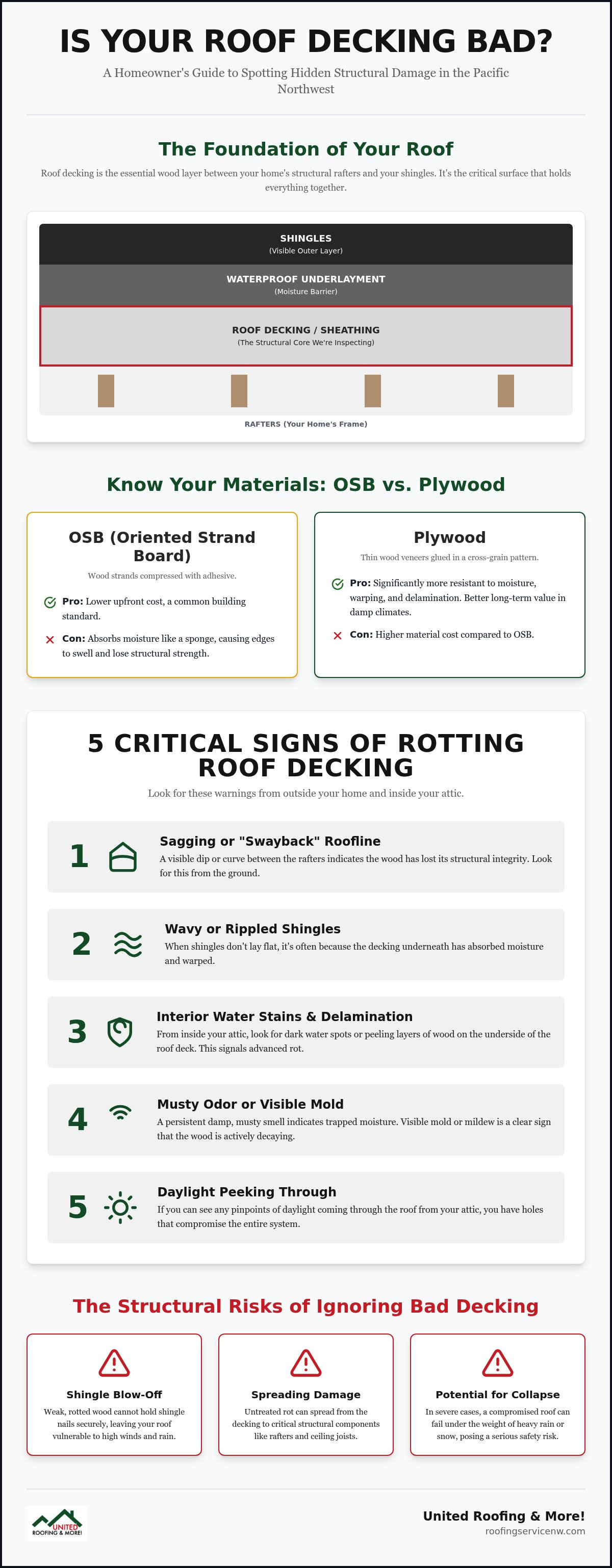
Roof decking is the structural foundation of a roof system. This essential layer of wood sits directly between your rafters and your shingles. It acts as the critical nailing surface that keeps your entire roofing system secure against the elements. Without a solid deck, your shingles have nothing to grip, which leaves your home vulnerable to wind and rain. In the Pacific Northwest, moisture is the number one enemy of roof decking integrity. When constant rain or high humidity penetrates the outer layers, the wood begins to deteriorate. You might start wondering, "is my roof decking bad?" if you notice damp spots in your attic or a changing roofline from the driveway.
Common Materials: OSB vs. Plywood
Most homes today are built using Oriented Strand Board (OSB). This material consists of wood strands compressed and bonded with adhesive. While OSB is a standard and cost-effective building material, it can act like a sponge when exposed to consistent leaks. It tends to swell at the edges and loses its structural strength more quickly than other options. In damp climates like Marysville, plywood often provides better long-term value. Plywood is constructed from thin layers of wood veneer glued together in a cross-grain pattern. This design makes it significantly more resistant to moisture-related warping and delamination. The specific material under your shingles often determines how long your roof will last before it requires a structural replacement.
The Role of Attic Ventilation in Decking Health
Your roof can fail even if your shingles look perfectly intact from the street. Poor attic ventilation is a silent killer for wood sheathing. When airflow is restricted, heat and moisture from your kitchen, bathrooms, and laundry get trapped in the attic space. This creates a "cook from the inside" effect that causes premature wood rot. High humidity levels lead to mold growth and structural softening over time. Following master roofing standards means ensuring your roof system can breathe. Expert installers always prioritize proper intake and exhaust vents to protect the wood from internal condensation damage. If your attic is too hot or smells musty, your decking might already be at risk.
Structural integrity starts with the wood. If your decking is compromised, your shingles cannot do their job effectively. We focus on identifying these hidden issues early to save you from the stress of major structural failure. Checking the health of your decking is the first step toward a secure, long-lasting home.
5 Signs Your Roof Decking is Rotting or Damaged
Identifying structural rot early can save you thousands of dollars in emergency repairs. You might ask yourself, "is my roof decking bad" when you notice subtle changes in your home's appearance or performance. While some signs are obvious, others require a closer look from both inside and outside your property. These five indicators will help you determine if your roof's foundation is still solid or if moisture has begun to compromise the wood sheathing.
Exterior Visual Cues
Start your inspection from the safety of the ground using binoculars. Look for "wavy" or "rippled" shingles that don't lay flat against the roof surface. This texture often indicates that the wood sheathing underneath has warped from moisture absorption. You should also check the roofline for any dipping or sagging between the rafters. If the ridge of your roof looks like it has a "swayback" appearance, the structural integrity is likely failing. A comprehensive roof replacement guide always begins with a thorough deck inspection because the surface shingles are only as good as the wood beneath them.
The Interior Attic Inspection
The attic often tells the real story of your roof's health. Grab a flashlight and look for dark, water-stained patches on the underside of the decking. Pay close attention to "delamination," which is when the layers of plywood or OSB begin to peel apart. This is a clear sign of advanced rot. If you see pinpoints of light peeking through the wood, you have holes that go all the way through your roofing system. Don't ignore your nose, either. A persistent musty odor or the visible presence of mold and mildew suggests that moisture is trapped and actively eating away at your home's spine.
Professional roofers also look for rusted nails or "nail pops" during a site visit. When wood swells and shrinks due to high moisture levels, it can actually push nails upward. This loosens the shingles and creates even more entry points for rain. If you notice these issues, it's time to act before the damage spreads to your rafters and ceiling joists. If you suspect moisture is winning the battle against your home, a professional roofing diagnostic can provide the clarity you need to move forward with confidence.
The Structural Risks of Ignoring Bad Roof Sheathing
Ignoring structural rot is a gamble that most homeowners eventually lose. If you're asking yourself, "is my roof decking bad," the answer carries significant weight for your home's safety. Your roof decking is the spine of your house. When it softens, the entire system begins to fail. In the Pacific Northwest, heavy rain and winter snow put immense pressure on your roof. Rotted wood loses its load-bearing capacity quickly. This can lead to visible sagging or even localized collapses during a major storm. Beyond the wood itself, the damage spreads. Mold often migrates from rotted decking into your attic insulation and eventually your drywall, creating a health hazard for everyone inside.
Your shingles also rely on the decking to stay in place. Roofing nails require solid, dry wood to provide a secure "bite." When wood is soft or "spongy," those nails can pull out easily. This is why you see shingles blowing off during moderate wind gusts. Without a firm foundation, even the highest-quality shingles are just a cosmetic layer waiting to fail. Replacing a few shingles won't fix the underlying problem if the wood beneath them is decaying.
Safety Hazards for Your Family
A compromised roof is a safety liability. Localized collapses can happen without warning, especially during routine maintenance or when a heavy snowpack accumulates. This isn't just about the roof; it's about the safety of anyone walking on the surface or living beneath it. Bad decking is also a massive red flag during home inspections. If you plan to sell your home, rotted sheathing will appear on every report. It can tank your resale value or even kill a deal entirely. Addressing a small soft spot now prevents the massive structural bills that come when rot spreads to your rafters and joists.
Warranty and Insurance Implications
Manufacturer warranties are often the first thing to disappear when decking is bad. Companies like GAF and other industry leaders have strict standards for installation. They won't warrant new shingles installed over rotted or unstable wood. If your contractor cuts corners and leaves bad wood in place, your shingle warranty is effectively void from day one. Insurance companies are equally strict. If they determine that a leak or collapse was caused by long-term neglect rather than a sudden event, they may deny your claim. You must ensure your roof drip edge is properly installed and functioning to protect those vulnerable deck edges from moisture. Protecting your investment requires a solid, dry foundation that meets professional standards.
Structural integrity is non-negotiable. We help you identify these risks before they become emergencies. By choosing to act early, you protect your family, your warranty, and your home's long-term value.
Can You Repair Bad Decking or Do You Need a Full Replacement?
Deciding between a targeted repair and a full replacement is a critical choice for your budget and your home's safety. If you've been wondering, "is my roof decking bad," the answer usually depends on the scope of the rot. When damage is limited to a small area, such as around a chimney or a specific valley, a localized patch is often a safe and effective fix. Swapping out one or two sheets of wood restores the critical nailing surface without requiring a total overhaul. However, if the rot has spread across more than 20% to 25% of the roof, a full redeck is necessary to ensure long-lasting protection.
It's significantly more cost-efficient to replace bad wood during a full roof replacement. Since the shingles are already removed, our crews can swap out rotted sheets quickly without the extra labor of stripping the roof twice. This proactive approach saves you money. It ensures your new shingles are anchored to a foundation that will actually last for decades. Replacing the wood while the roof is already open is the best way to avoid higher labor costs later.
The Decision Framework for Repairs
We use a clear set of criteria to help you make an informed choice. Our team evaluates the percentage of deck damage and the age of the remaining wood. If the majority of your sheathing is over 20 years old and showing signs of brittleness, patching one spot may only be a temporary fix. We recommend consulting with certified roofers who provide an honest, transparent assessment of your roof's health. Getting a professional opinion early helps you avoid the stress of unexpected structural failures. If you need a clear diagnosis of your roof's condition, schedule a professional roof inspection to see where you stand.
What Happens During a Redeck?
A full redeck is a systematic process that starts with stripping every layer of old shingles and underlayment. Once the wood is exposed, our team removes all rotted or delaminated sheets. We then install fresh, high-quality sheathing. In the Pacific Northwest, we pay close attention to local building codes. This includes using H-clips to secure the panels and maintaining a 1/8-inch expansion gap at all edges. This specific spacing allows the wood to move naturally as moisture levels change without warping. New decking provides a perfectly flat surface, which improves the aesthetic and longevity of your new roof installation. A solid foundation is the only way to guarantee your home stays dry for the long haul.
Financing Your Roof Decking Replacement in the PNW
Discovering structural rot is a stressful experience for any homeowner. You might have spent weeks asking yourself, "is my roof decking bad," while worrying about the potential impact on your bank account. We believe that structural safety should never be a financial burden. United Roofing & More! prioritizes financial flexibility because we know how quickly moisture can compromise a home in our wet climate. Delaying a necessary redeck only leads to more expensive repairs down the road. We offer a professional diagnostic inspection to find hidden rot before it spreads to your rafters. This service gives you a clear, honest starting point for your project without the guesswork.
United Roofing & More!: Your Local Decking Experts
Our team is committed to keeping Marysville homes safe, dry, and structurally sound. As a locally owned and operated business, we understand the specific challenges of Pacific Northwest weather. We have seen exactly how our local humidity and rain cycles impact different wood materials over time. Working with a local team means you get experts who know PNW rot inside and out. We focus on "no-nonsense" communication at every step. You won't deal with high-pressure sales tactics or confusing industry jargon. We provide high-quality workmanship and keep you informed throughout the entire service process. Our goal is to be a supportive partner that values long-term trust over a quick sale.
Affordable Solutions for Structural Peace of Mind
Structural repairs are a vital investment in your home's longevity and resale value. We help you protect that investment by breaking down the cost of a redeck into manageable monthly payments. Our roofing financing options remove the barrier to essential repairs. You don't have to choose between your monthly budget and your family's safety. We offer flexible payment plans that fit your specific financial needs and help lower the barrier to entry. This transparency ensures there are no surprises when the project begins.
We lead with professional credentials and a tenure of success in the North Sound area. Our process is designed to alleviate consumer stress by emphasizing ease and trust. Contact us today for a free structural health check. We will provide a transparent, jargon-free quote so you can stop wondering "is my roof decking bad" and start enjoying a secure, protected home. Whether you need a small patch or a full replacement, we are ready to help you find the right solution for your home and your wallet.
Protect Your Home with a Solid Foundation
Identifying structural rot early is the best way to prevent a minor leak from becoming a major collapse. You now know the five critical signs to look for and why ignoring damaged sheathing can void your manufacturer warranty. If you are still asking, "is my roof decking bad," it is time to get a professional answer. Your roof is more than just a surface for shingles. It is the structural spine that keeps your family safe during heavy Pacific Northwest storms. A healthy deck ensures your shingles stay anchored and your attic stays dry.
We specialize in expert structural repairs and provide flexible financing for every budget. Serving Marysville, Seattle, and the greater PNW, our local team is ready to deliver the clarity and transparency you deserve. We make it easy to manage the cost of essential repairs while ensuring high-quality workmanship. Don't let hidden damage compromise your home's long-term value or your peace of mind. Get a Free Structural Inspection and Financing Quote Today! We look forward to being your supportive partner in keeping your home dry and secure for years to come.
Frequently Asked Questions
How much does it cost to replace roof decking?
The total cost for replacing your wood foundation depends on the square footage of your home and the material you choose. Plywood typically costs more than OSB but offers better moisture resistance in the Pacific Northwest. Labor rates also vary by region, with Seattle and Marysville often seeing higher rates than national averages. We focus on providing transparent quotes that break down these costs clearly. Flexible payment plans can help manage this investment without draining your savings.
Can you put new shingles over rotted decking?
You should never install new shingles over rotted wood. If you're asking "is my roof decking bad" and find rot, covering it up only hides a structural failure. Shingle nails require solid wood to provide a secure grip. Installing over rot will void your manufacturer warranty and leave your roof vulnerable to wind damage. It is a safety hazard that eventually leads to much more expensive repairs or total system failure.
Is roof decking covered by homeowners insurance?
Homeowners insurance generally only covers decking replacement if the damage results from a sudden, covered peril. This includes falling trees or severe windstorms common in the Everett and Renton areas. Insurance typically denies claims for rot caused by long-term neglect or a lack of maintenance. We help you navigate the diagnostic process so you can provide clear proof of damage to your insurance provider when a covered event occurs.
What is the best type of wood for roof decking in Seattle?
Plywood is widely considered the best choice for roofing in Seattle and the surrounding damp areas. It handles moisture better than OSB and dries out more quickly if a small leak occurs. While OSB is a popular budget-friendly alternative, plywood's cross-grain construction provides superior structural stability in our humid climate. Choosing high-quality materials ensures your home remains protected against the constant rain cycles typical of the Greater PNW region.
How do I know if my roof is sagging because of the decking or the rafters?
A sagging roofline usually indicates one of two issues. If you see dipping between the rafters, the decking is likely soft or rotted. If the entire ridge or large sections of the roof are bowing, you may have a structural issue with the rafters or trusses. Our local experts can perform a detailed inspection to determine if "is my roof decking bad" or if your home needs more extensive structural support to remain safe.
How long does roof decking typically last?
Roof decking usually lasts between 20 and 30 years if your attic is properly ventilated and your shingles stay intact. However, its lifespan significantly shortens if moisture gets trapped against the wood. In high-humidity areas like Marysville, poor airflow can cause wood to rot in as little as 10 years. Regular inspections help you catch minor issues before they compromise the integrity of your entire roofing system and require a full replacement.
Can a roof leak for years without the decking rotting?
It is nearly impossible for a roof to leak for years without causing rot. Wood sheathing acts like a sponge when exposed to consistent moisture. Even a small nuisance leak will eventually lead to delamination, mold growth, and structural softening. If you have ignored a leak for several seasons, there is a high probability that the underlying wood is compromised. Addressing leaks immediately is the only way to protect your home's foundation.
Should I replace all my decking if only one area is rotted?
You don't always need a full replacement for localized damage. If the rot is confined to a specific area, such as around a leaky vent or chimney, we can often replace just those specific sheets. However, if our team finds that the wood is brittle or soft across multiple sections, a full redeck is the safer, more cost-effective choice. We prioritize an honest assessment to ensure you only pay for the repairs your home actually needs.


