

The answer to how much a roofing permit costs in Seattle depends first on whether your project needs a permit at all.
It’s easy to assume every roof replacement requires a permit, but Seattle distinguishes routine re-roofing from work that changes the building envelope or involves structural modifications. This guide explains when a permit is generally required, what additional approvals may apply, and how to estimate residential permit fees based on the project scope and the city’s fee estimator. You’ll have a clearer starting point before planning the work.
Key Takeaways
- Separate minor repairs from work that changes the building envelope or affects structural support; the scope can determine whether a permit is needed.
- Plan the application around intake appointments, which may be scheduled from two weeks to over six months ahead.
- Roofing that involves rooftop equipment or affects drainage may also call for separate trade or environmental approvals.
- Use Seattle’s fee estimator and account for project scope, review time, and any additional permits to build a more realistic permit budget.
Can I do roofing work without a permit in Seattle?
Seattle treats routine residential re-roofing differently from structural construction or commercial roof replacement. Start by checking the project scope, then estimate the permit requirements and possible charges.
-
Identify Work That Requires a Permit
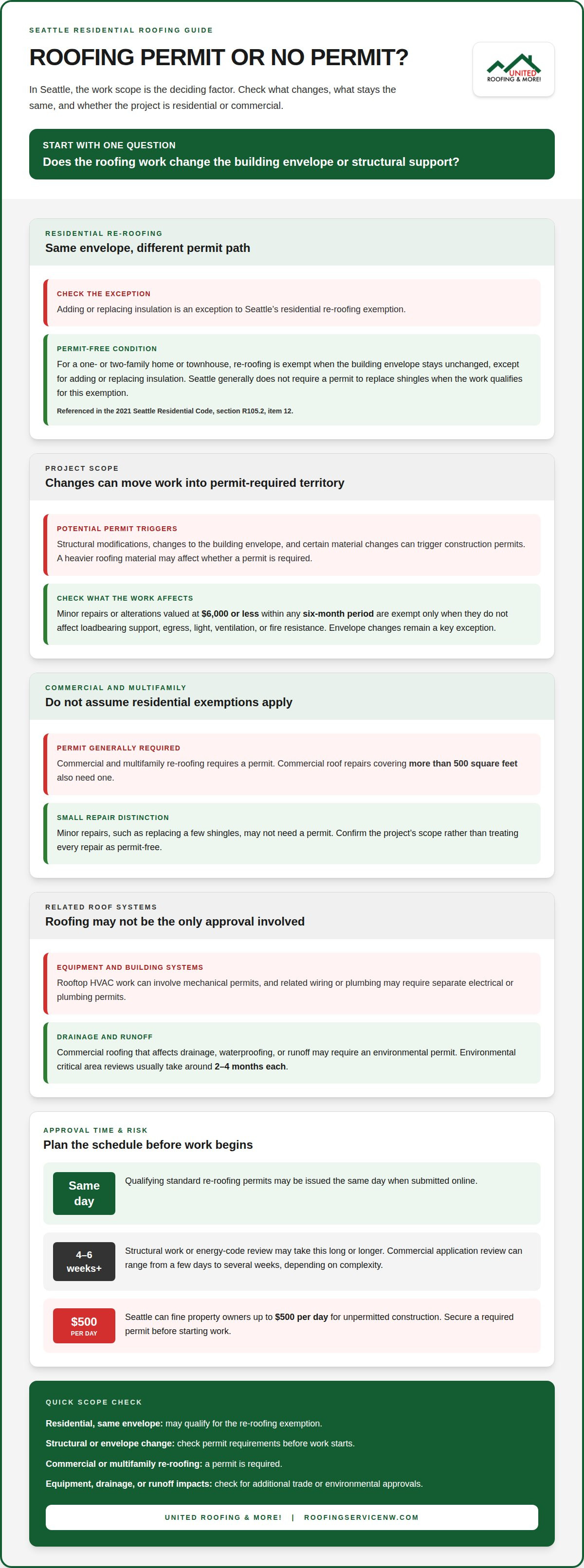
Start by identifying whether the project changes structural support or the building envelope. Seattle requires permits for envelope changes, even when the job is small. Commercial and multifamily re-roofing also requires a permit. Commercial roof repairs covering more than 500 square feet need one, while minor repairs, such as replacing a few shingles, may not.
Structural modifications and certain material changes can trigger construction permits. Switching to a heavier roofing material may affect whether a permit is required. Rooftop HVAC work can also involve electrical, plumbing, or mechanical permits. When planning commercial work, account for those trade requirements instead of treating the roofing permit as the only approval that may apply.
-
Check Residential Exemptions and Permit-Free Work
For a one- or two-family home or townhouse, determine whether re-roofing leaves the building envelope unchanged. Seattle exempts this work from a permit when the envelope stays unchanged, except for adding or replacing insulation. This residential exemption appears as item 12 of the 2021 Seattle Residential Code, section R105.2.
Seattle generally doesn’t require a permit to replace roof shingles if the work qualifies for that residential re-roofing exemption. New roofing material may also be permit-free if it isn’t heavy. Minor repairs or alterations valued at $6,000 or less within any six-month period are exempt when they don’t affect loadbearing support, egress, light, ventilation, or fire resistance. Envelope changes remain a key exception.
-
Consider Approval Time and Penalties
Before scheduling construction, match the approval timeline to the project. Seattle can issue standard re-roofing permits the same day for qualifying applications submitted online. Structural work or energy-code review may take 4-6 weeks or longer. Commercial application review can range from a few days to several weeks, depending on complexity.
Don’t begin work that requires a permit without securing it. Seattle can fine property owners up to $500 per day for unpermitted construction. That exposure makes the exemption decision important before work starts, especially when the plan includes structural changes, envelope alterations, or a commercial roof replacement.
Pre-application and site visits
Prepare the application based on the project scope, property, and review requirements. Seattle’s intake schedule and required materials can affect when the review begins.
- Schedule the intake appointment before setting construction dates. Seattle permit intake appointments may be available from two weeks to over six months ahead. That range matters when planning a roof replacement, including work on a family home. Allow time for the appointment and any requested review materials. A site visit can help clarify existing roof conditions and the proposed work, especially when structural changes or energy-code review are involved. Keep the project description consistent with the work you plan to do.
- Build the application package around the scope of work. Seattle commercial roofing applications typically include project details and a work description. They may also require structural drawings or roofing plans, along with information on energy codes and fire safety standards. A permit intake submission may require three copies of the drawings. Include relevant plans for structural changes and show how the proposed roof work relates to the building. Make sure the scope includes all related work.
- Meet the scheduled intake deadline with a complete upload. Seattle applicants must upload drawings and other forms before 7 a.m. on the scheduled intake date. Missing that deadline can mean a fine and a new intake date, adding another appointment to the process. Organize drawings and forms together, then make sure the application reflects the same project details throughout. For a residential project, roof replacement planning can help clarify the work scope before permit materials are prepared.
Additional trade and environmental permits
Yes, some Seattle roofing projects need approvals beyond the building permit. A commercial project affecting drainage, waterproofing, or runoff may require an environmental permit. Environmental critical area reviews usually take around 2-4 months each.
- Identify every trade involved in the roof work before submitting the application. Seattle may require separate electrical, plumbing, or mechanical permits alongside a building permit. For example, adding rooftop HVAC equipment can involve mechanical work, while related wiring may need electrical approval. List each part of the project so the permit package covers the full scope, not just the roofing materials.
Trade permits are often approved and issued within a day. This differs from environmental review, so account for each approval separately when planning the project schedule. The required permits depend on which systems the work affects.
- Identify environmental effects before finalizing the project scope. In Seattle, commercial roofing that affects drainage, waterproofing, or runoff may require an environmental permit. Environmental critical area reviews usually take around 2-4 months each, so an affected site can add substantial review time before construction proceeds.
Historic-district status alone is not identified here as a specific additional roofing fee. In environmentally regulated areas, consider whether the project affects drainage, waterproofing, or runoff, as those impacts may trigger environmental review.
- Organize the permit package by approval type, then track each item through the application process. Keep the roofing plans, trade-permit details, and environmental information together. If the project changes insulation or involves an energy-code review, include those elements in the scope. This helps keep the proposed work consistent across building and trade applications.
Account for inspections and review time as separate planning items. A residential re-roofing exemption does not automatically resolve additional approvals for work affecting other systems or environmental conditions. Clear documentation helps show which parts of the project need review and which approvals apply. For roof replacement planning, use roof replacement guidance to clarify the work scope.
Estimated Seattle residential permit costs
If you’re asking, “How much does a roofing permit cost in Seattle?” start by determining whether the project is exempt.
Seattle re-roofing fees are calculated at 50% of the base fee, plus a Washington State surcharge and technology fee. Other cost factors include project size, complexity, work value, extra permits, review time, inspections, and technology fees.
- Determine whether the residential project is exempt or requires a permit. Keep this permit estimate separate from your roofing quote, which covers the roofing work itself.
- Use Seattle’s 2026 fee estimator to calculate a project-specific amount. The re-roofing permit fee uses 50% of the base fee, then adds the Washington State surcharge and technology fee. Structural changes, additional approvals, and review requirements can affect the total. The building code classification also helps determine which fee calculation applies.
- Account for project size and declared work value. Seattle permit costs vary with the project’s size, complexity, and work value, not just the number of shingles being replaced. Multifamily and commercial projects have different permit requirements from qualifying one- or two-family home re-roofing. Don’t apply a residential exemption estimate to those buildings.
- Include review and inspection-related charges in the overall estimate. Seattle lists application and plan-review time, inspection fees, additional permits, and technology fees among the cost factors. To estimate your project’s permit cost, account for the approvals and review its scope may require. Treat inspection fees as a possible part of the final total.
United Roofing & More!
United Roofing & More! handles roof replacement, installation, and repair projects in Seattle. Once you understand whether your project needs a permit, the next step is to define the roofing work and how it fits your property.
Turn to United Roofing & More! when you’re ready to discuss roof replacement, installation, or repairs. Roofing financing is also available to help manage project costs. Permit fees and roofing work are separate budget items, so keep the city’s permit estimate distinct from your roofing quote.
For a leak or roof damage, repairs may address the immediate issue; replacement may suit a broader roofing project. Contact United Roofing & More! to discuss your roofing needs.
Turn your permit estimate into a clear project plan
A permit estimate is most useful when it helps you decide what work your roof needs and how that work fits your property plans. Keep city permitting costs separate from your roofing quote, then discuss the project scope before setting your budget and schedule. This gives you a practical basis for moving from research to action without treating the permit estimate as the full cost of the roofing work.
If you’re still weighing how much a roofing permit costs in Seattle, use the estimate as a planning tool, not a substitute for a project-specific roofing discussion. United Roofing & More! can help you talk through the roofing work you’re considering. Contact United Roofing & More! to discuss your project and take the next step with a clearer plan.
Frequently Asked Questions
Do You Need a Permit?
Not always. The building type and exact work matter. For example, a qualifying re-roof on a one- or two-family home may be exempt, while commercial and multifamily re-roofing requires a permit. A small repair may also require approval if it changes the building envelope. Describe the actual work, including insulation or structural changes, before deciding which permit path applies.
How Much Does It Cost?
Those are permit estimates, not roofing-service prices. For a useful project budget, separate city fees from your roofing quote, then account for any trade approvals and review requirements tied to the work.
How Much Does a Building Permit Cost in Seattle?
Seattle building permit fees don’t follow one flat rate for every project. Roofing estimates depend on the permit category and project details, while other construction projects use their own fee calculations. For a roofing application, enter the relevant project information into Seattle’s fee estimator and distinguish the building permit from any separate electrical, plumbing, or mechanical approvals.
Does every city in the Seattle area require a permit?
No. Roofing rules differ by jurisdiction, so a Seattle exemption doesn’t automatically apply elsewhere. Bainbridge Island requires permits for all re-roofing work, while Bellevue has specific exemptions for some residential sheathing and lightweight material work. Tacoma’s exemption also depends on material weight, removal of existing layers, and whether structural changes are involved. The property’s jurisdiction is key to determining permit requirements.
How Much Do Permits and Code Requirements Add to the Cost?
There isn’t one dependable add-on amount for every roof project. The total depends on required permit types, plan review, inspections, and whether energy-code or structural review applies. Keep the city’s permit estimate separate from roofing work in your budget. A project requiring only basic re-roof approval differs from one involving structural changes or additional trade permits.
What Seattle permits are required for roof structural repairs or changes?
Structural roof repairs or changes generally require a building permit, with plans or structural drawings when required for review. Separate trade permits may apply if the project also changes electrical, plumbing, or mechanical systems, such as rooftop equipment. For example, replacing roof framing and relocating rooftop wiring can involve distinct parts of the application, so describe each scope clearly in the project documents.


