

Sound shingles don’t guarantee sound installation. If you’re asking what a workmanship warranty for roofing means, it generally covers roof damage caused by installation errors, not defects in the shingles themselves. The written terms define which work, repairs, and resulting damage qualify.
It’s reasonable to expect a “warranty” to mean one broad promise, but roof coverage depends on who provides it and what failed. A contractor’s workmanship warranty focuses on installation errors; a manufacturer’s or material warranty focuses on defects in roofing products. Neither label alone tells you whether a specific repair, interior leak damage, or replacement labor is included. This article explains what workmanship coverage generally addresses, common exclusions, and how to distinguish it from manufacturer, contractor, and material warranties. You’ll also learn why the written terms matter when a roof problem comes up, so you can identify what kind of coverage may apply and what it is designed to address.
Key Takeaways
- Read the written warranty terms to understand what repairs, labor, and resulting damage may qualify for coverage.
- Separate installation problems from storm, impact, and other damage that commonly falls outside workmanship coverage.
- Look at who issued the warranty and what it covers before deciding which type of claim may apply.
- When a roof problem appears, identifying its likely cause can help clarify whether the issue concerns installation or roofing materials.
Differences between manufacturer and contractor warranties
Manufacturer and contractor warranties assign responsibility to different parties. That distinction matters when a roof issue stems from installation rather than a defective product.
Warranty Providers and Responsibilities
A workmanship warranty is generally provided and honored by the roofing contractor, while a manufacturer warranty addresses defects in roofing products. If improper shingle placement causes a leak, contractor coverage may apply; a factory defect falls under the manufacturer’s terms. Manufacturer warranties may exclude flashing, pipe boots, and vents, so shingle coverage doesn’t automatically cover every roof component.
Manufacturer certification can affect available coverage. For example, a GAF Master Elite certified contractor can offer up to 25 years of workmanship coverage. Certification and system requirements help determine whether that extended coverage applies.
Written Terms and Contractor Reliability
A written workmanship warranty identifies the installation errors and repairs covered by the contractor. It should appear in the contract, a signed scope of work, or a signed letter after completion. These terms matter because “covered” can mean labor only, or labor and repair materials, depending on the agreement.
A contractor’s ability to honor the warranty matters too. A long warranty has limited practical value if the business can’t fulfill it. Consider the written terms and the contractor’s commitment to customers. Training and installation documentation can clarify how the work was performed. Contractors may use photographs to document installation and support certain manufacturer warranty requirements.
Coverage Duration and Contractor Closure
Contractors set workmanship warranty terms. Standard contractor warranties often last 2 to 10 years, while the wider range can run from 1 to 25 years depending on certification. Some certified installation systems extend factory-backed labor coverage to 25 years or more. The written warranty sets the actual term and scope for the roof installed.
If a contractor goes out of business, its workmanship promise may be difficult to use because the contractor provided it. A manufacturer warranty may still address factory defects, but it doesn’t automatically replace the contractor’s coverage. Some extended manufacturer warranties include workmanship protection when system requirements are met, so the warranty documents determine what remains covered.
What are the most common roof warranty exclusions?
Workmanship coverage focuses on installation errors, not every cause of roof damage. Weather, later alterations, maintenance terms, and transfer limits can all affect a claim.
Common Workmanship Exclusions
Workmanship exclusions identify damage the contractor’s warranty won’t cover, helping homeowners distinguish an installation failure from another cause. Storms, high winds, hail, impact, and wind-driven debris commonly fall outside workmanship coverage. So do leaks caused by falling tree limbs, ice dams, or foot traffic.
Later roof alterations can also affect coverage. For example, damage after equipment is added may be excluded if the alteration affects the installed roof. A leak caused by incorrect flashing, however, is an installation concern. Read the warranty’s cause-of-damage language, not just its general coverage summary.
Interior damage deserves attention too. A workmanship-related leak may require both roof correction and repairs to water damage inside the home. Warranty terms differ on whether this consequential damage is covered or capped. Identify separately what the warranty covers for roof repairs and resulting interior damage.
Exclusions and Inspection Requirements
Inspection and maintenance clauses can make coverage depend partly on documented roof care. Some manufacturer warranties require maintenance records and periodic inspections. If a warranty requires annual inspections, missing one may jeopardize coverage, so note the schedule and retain each inspection document.
Care methods matter as well. Pressure washing can strip shingle granules and accelerate wear, potentially affecting warranty coverage. Before adding rooftop equipment, such as solar panels or HVAC units, manufacturer approval may be needed to avoid jeopardizing the roof warranty.
Transfer rules can add another condition when a home changes owners. A workmanship warranty may transfer, but its terms can impose a deadline, fee, or other limitation. Keep the original warranty and maintenance records together; those documents help clarify coverage after a sale.
If a roof issue needs attention, roofing guidance for damage and leaks can help connect the visible problem with its likely cause.
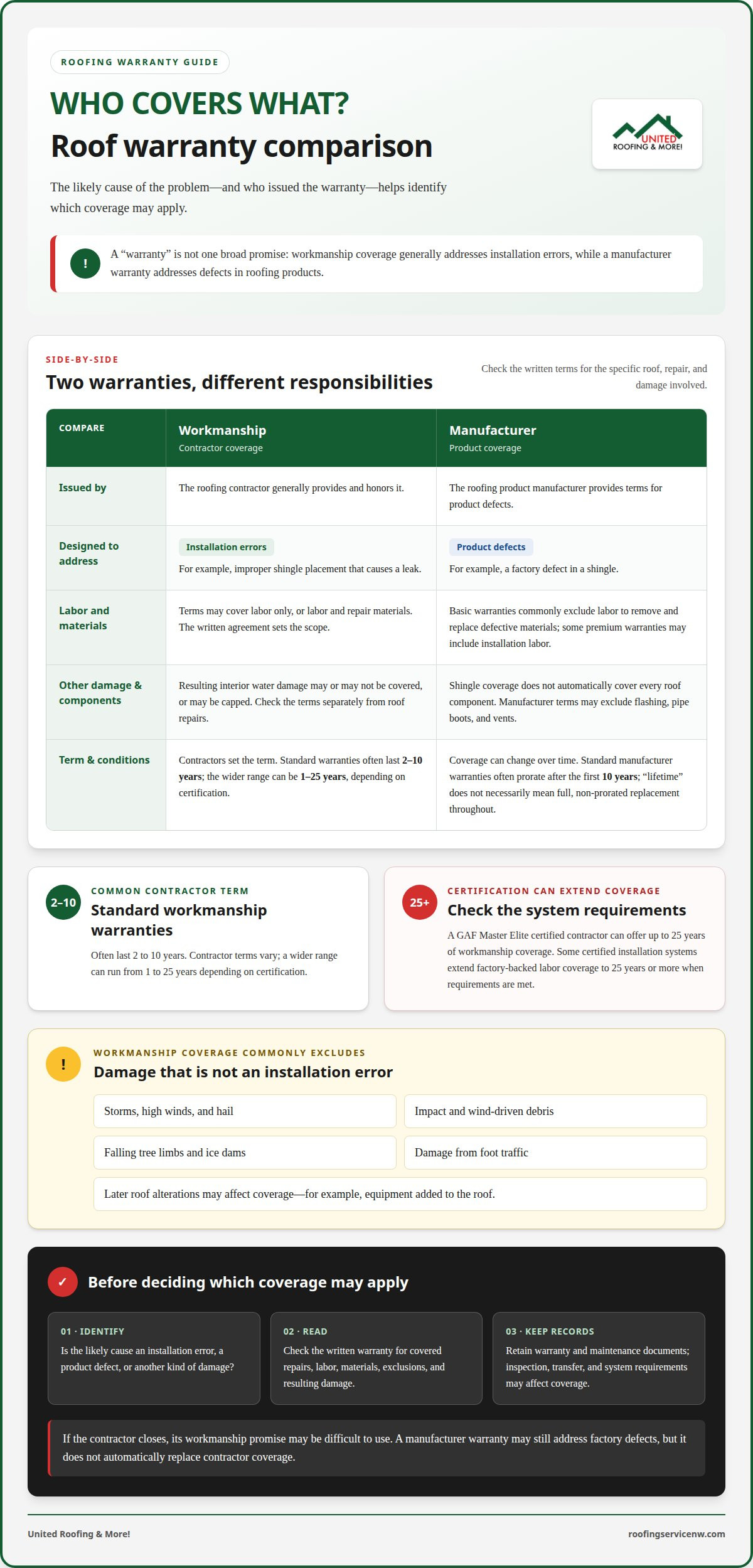
Differences between manufacturer and workmanship warranties
A manufacturer warranty addresses defects in roofing products; workmanship coverage addresses installation errors. The distinction helps owners identify whether a failed shingle, flashing detail, or ventilation issue points to a product or installation problem.
For defective shingles, the manufacturer’s written terms determine which material replacement costs qualify. Basic warranties commonly exclude labor to remove and replace defective materials, while some premium warranties may include installation labor. Coverage can also change over time: standard manufacturer warranties often prorate after the first 10 years. A “lifetime” label describes the warranty term, not necessarily full, non-prorated replacement coverage throughout that period.
By contrast, a workmanship warranty focuses on the roofer’s work. If an installation error causes a leak, the contractor’s terms determine whether labor, repair materials, or related damage are covered. A manufacturer may reject a claim if a shingle failed because it was installed incorrectly. Likewise, contractor coverage may not apply when the cause is a defective product rather than faulty installation.
Manufacturer-certified systems can combine product and labor protection, but extended coverage depends on the warranty’s conditions. Some extended warranties cover installation errors when the roof meets system requirements. Those requirements may address compatible roofing components and attic ventilation. Certification alone does not make every roof issue eligible; the installed system and warranty registration terms matter.
Roofing workmanship warranty rules can vary by state because written terms and state-specific consumer protections may affect coverage or disputes. The contract and applicable rules both shape what a homeowner can pursue.
The cost depends on the warranty and roof project, with the amount provided after a quote request. Factors include the roof system, materials, labor coverage, and whether the warranty is standard or extended.
To make a claim, contact the contractor that performed the work so it can assess the issue. When working with United Roofing & More!, describe the symptoms and provide the warranty document; the cause of the failure helps determine whether contractor or manufacturer coverage applies.
A workmanship warranty may transfer to a new homeowner, but its terms can set a deadline, fee, or other limit. Before a sale, review the transfer clause and preserve the original warranty paperwork.
Differences between workmanship and material warranties
To understand what a workmanship warranty for roofing is, separate the installation from the products installed. A workmanship warranty concerns the contractor’s work; a material warranty concerns defects in the roofing product. That distinction helps narrow down which document applies when a roof develops a problem.
For example, a shingle that fails because of a manufacturing defect may fall under material coverage. If it fails because it was installed incorrectly, the issue may relate to workmanship. The cause matters because the warranties can provide different remedies. One may address replacement materials, while the other may address labor to correct the installation.
A material warranty usually accompanies the roofing product. A receipt or invoice can help connect the product to its purchase record, even when the roofing contractor bought it. Keep those records with the warranty paperwork so the materials used on the roof can be identified later.
Understanding what a workmanship warranty for roofing covers also means looking at repair details. The terms may specify whether labor, repair materials, or both are included. For instance, replacing a defective shingle may involve product coverage, while correcting the way surrounding shingles were installed may involve workmanship coverage.
Read both documents together. Identify the covered product, the work covered, and the remedy each warranty describes. An inspection can help establish whether a concern involves the roofing material or its installation. The practical takeaway is simple: match the likely cause of the problem to the warranty responsible for that part of the roof.
If a roof problem needs repair, request roofing repairs to discuss the work involved.
United Roofing & More!
United Roofing & More! provides roof repairs, installation, and replacement when a roof problem needs attention. If you’re deciding what work your roof needs, the team can help with the next step after you’ve reviewed what workmanship and material warranties cover.
Roof financing is also available to help manage project costs. The right work depends on the roof’s condition and the issue involved, whether it’s a repair or a larger replacement. Clear information about the roof concern helps guide the conversation.
Contact United Roofing & More! to discuss your roofing needs.
Plan Your Next Roofing Project With Clarity
Understanding what a workmanship warranty for roofing means can shape how you plan your next project. Treat the warranty as one part of the decision, alongside the roof’s condition, the work required, and the paperwork you’ll keep. That approach helps you set clear expectations before work begins, rather than trying to interpret terms under pressure after a problem appears.
United Roofing & More! provides roof installation and replacement for projects that call for a new roof, with roofing financing available to help manage project costs. Consider discussing your roofing needs when planning work or weighing the next step for your property. A clear conversation can help connect the project scope with the service that fits.
Ready to talk through your roof project? Contact United Roofing & More! Take the next step with confidence.
Frequently Asked Questions
What Does a Workmanship Warranty Actually Mean?
A workmanship warranty is the contractor’s written commitment to address roof damage caused by faulty installation, within the stated scope and term. For example, improperly secured shingles that let water in may lead to a workmanship claim. It isn’t blanket protection for every leak. The written conditions define eligible repairs, exclusions, and the steps for submitting a claim.
How Can You Ensure Your New Roof Is Fully Protected?
Keep the signed contract, product paperwork, installation records, and manufacturer registration confirmation together. Record the materials installed and their corresponding warranty terms. United Roofing & More! serves homeowners in Marysville, Seattle, Renton, Everett, Lynnwood, Kirkland, Mount Vernon, Bothell, Edmonds, Shoreline, Sammamish, Redmond, Bellevue, Tacoma, and Kent. For replacement or repair planning, call now for FREE Estimate!
How are Warranties Provided?
A contractor’s workmanship warranty is typically provided in the contract or signed scope of work, or in a signed letter after completion. A roofing material warranty usually comes with the product, with a receipt or invoice serving as purchase proof. Store both documents with registration confirmation and project records. Keeping them together makes it easier to identify which warranty applies if a problem appears.
What does a roofing workmanship warranty cover?
It generally addresses roof damage caused by poor installation, such as incorrectly placed shingles or flashing. The written terms determine the remedy: coverage may include labor, repair materials, or both. If a leak appears, record when it began and which area shows damage. Those details can help the contractor assess whether the cause relates to installation and whether the warranty applies.
What is excluded from a roofing workmanship warranty?
Exclusions commonly include damage from severe weather, impact, foot traffic, ice dams, or later roof alterations. These causes differ from an installation error, even if both result in a leak. Review the warranty’s language on maintenance and damage from outside events. For example, storm-related damage is generally handled through insurance rather than a workmanship claim.
How does a workmanship warranty differ from a roofing material warranty?
A workmanship warranty concerns the quality of the installation; a material warranty concerns a product defect. For example, a shingle that fails because of a manufacturing flaw points to material coverage, while one that fails because it was installed incorrectly points to workmanship. The documents may cover different costs, so identify the likely cause before determining which claim route applies.


