
Dark streaks do not necessarily mean a roof has lost its ability to protect a home. Algae-resistant shingles are designed to help limit this discoloration, making algae resistant shingles in Washington a useful option for roofs that stay shaded or damp. Their granules help resist algae growth, but protection and warranty terms vary by product.
It’s understandable to focus on both appearance and long-term value when choosing shingles. This guide explains how algae-resistant granules work, what warranty language covers, and how to compare the factors that shape roofing costs. Installed cost depends on roof area, material choice, and project scope, and is provided after a quote request. You’ll also see why local moisture and shade matter, so you can weigh algae protection against the coverage and overall cost of a roofing option.
Key Takeaways
- Use roof shade, slope, and debris to understand why some surfaces stay damp longer and face greater growth pressure.
- Learn how protective granules help limit dark streaks and what to consider about runoff.
- Compare warranty terms carefully: algae-resistance coverage and the shingle’s broader warranty may have different conditions.
- See which project factors shape overall roofing costs and when replacement, installation, repairs, or financing may fit your needs.
What Are Algae Resistant Roof Shingles?
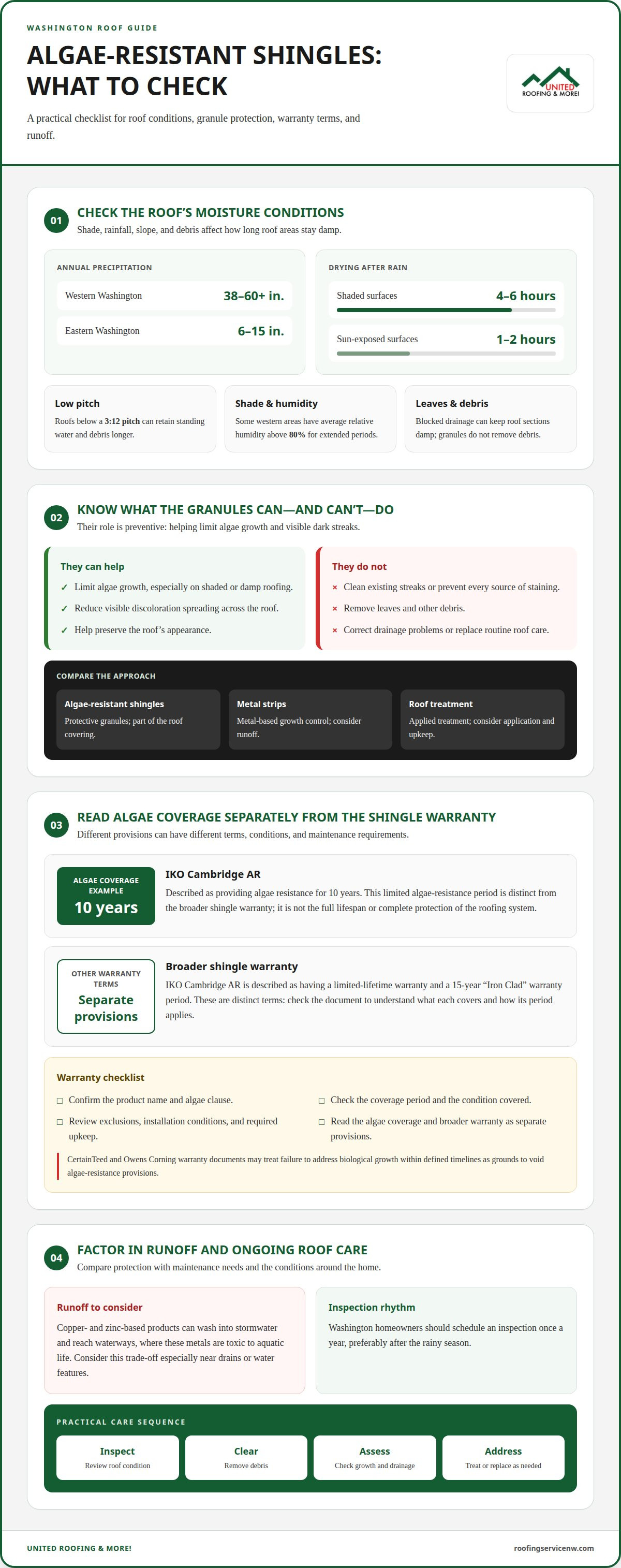
Algae-resistant shingles in Washington are asphalt shingles designed to help limit algae growth and the dark streaks it can leave. Roof exposure matters: Western Washington receives 38 to 60+ inches of annual precipitation, while Eastern Washington areas receive 6 to 15 inches. A shaded, damp roof section faces different conditions from a sunny, dry slope.
Shade, slope, roofing material, and debris all affect how long moisture remains. Shaded surfaces can take 4 to 6 hours to dry after rain, compared with 1 to 2 hours on sun-exposed surfaces. Roofs below a 3:12 pitch can retain standing water and debris longer. In the northwest, leaves can also obstruct drainage and keep sections damp. Algae can create brown or black streaks; according to Owens Corning, this discoloration doesn’t affect shingle performance.
Are algae-resistant shingles effective in Washington’s wet climate? They can help limit streaking, especially on shaded or damp roof areas, but exposure still affects growth. In Western Washington’s Puget Sound lowlands, Olympic Peninsula, and southwestern areas, average relative humidity stays above 80% for extended periods. Algae-resistant shingles in Washington can help address streaking, but don’t remove debris or fix drainage problems.
Compare shingles, metal strips, and roof treatments by coverage, upkeep, and runoff concerns. Algae-resistant shingles use protective granules, while strips and treatments address growth differently. Copper- or zinc-based materials can wash into stormwater and harm aquatic life. Low-pressure chemical treatment is the standard approach to moss removal; ARMA advises against high-pressure washing as a standard method.
| Option | Approach | Key comparison |
|---|---|---|
| Algae-resistant shingles | Protective granules | Part of the roof covering |
| Metal strips | Metal-based growth control | Consider runoff |
| Roof treatment | Applied treatment | Consider application and upkeep |
What Washington rules apply to shingle replacement? Under WAC 51-50, biological growth itself isn’t a permit trigger; reroofing prompted by growth-related deterioration is subject to local permitting requirements.
A practical sequence is inspection, debris removal, assessment of growth and drainage, then treatment or replacement as needed. Washington homeowners should schedule an inspection once a year, preferably after the rainy season. Choose based on roof shape, shade, material condition, and exposure, weighing granule protection against strip or treatment needs.
Algae-resistant shingle granules and dark streak prevention
Dark streaks on asphalt shingles often come from algae growing across the roof surface. Algae-resistant granules help limit that growth, especially on shaded roofing that stays damp. Their purpose is preventive: they reduce conditions that allow visible discoloration to spread, rather than cleaning existing streaks. They can help preserve a roof’s appearance, but they do not remove debris or correct drainage problems.
Some asphalt shingles use copper- or zinc-containing granules. Rain can release small amounts of these metals across the shingle surface, where they help discourage algae growth. A copper-lined granule design incorporates copper into the granule layer instead of relying only on a separate roof accessory. Formulations vary, so compare each product’s stated algae-resistance coverage with its other specifications.
In the Pacific Northwest, runoff is an important trade-off to consider. Copper granules can wash into stormwater and potentially raise copper levels. Copper- and zinc-based products used to prevent or remove algae can also reach waterways, where these metals are toxic to aquatic life. This matters particularly on properties with nearby drains or water features.
Granules also contribute to the color and appearance of architectural asphalt shingles. A shaded roof section, for example, may show streaks more visibly than a sunny slope, even when both use algae-resistant materials. Granules help limit one cause of discoloration, but do not prevent every source of staining or replace routine roof care.
For a practical comparison, weigh algae protection, warranty terms, appearance, and potential runoff together. If you’re planning a roofing project, review roofing project options alongside the shingle materials that suit your home.
Algae-resistance and product warranties
Shingle warranties can cover different things, so compare algae protection separately from coverage for the shingles themselves. Check the product name, coverage period, and maintenance conditions.
Algae-Resistance Warranty Coverage
Algae-resistance coverage addresses discoloration from algae, not every effect of weather, moisture, or roof wear. For example, IKO Cambridge AR shingles are described as providing algae resistance for 10 years. That period is distinct from the shingle’s broader warranty, so it shouldn’t be read as the full lifespan or complete protection of the roofing system.
Read the algae clause for the condition it covers, its duration, and any upkeep requirements. CertainTeed and Owens Corning warranty documents may treat failure to address biological growth within defined timelines as grounds to void algae-resistance provisions. Gutters, shade, and lingering debris can contribute to damp roof conditions, so review maintenance terms alongside the stated coverage.
Shingle Warranty Considerations
A shingle warranty concerns the product’s broader warranty terms, which differ from a limited algae-resistance period. IKO Cambridge AR shingles are described as having a limited-lifetime warranty and a 15-year “Iron Clad” warranty period. These terms refer to distinct warranty provisions; read the actual document to understand what each covers and how its period applies.
Compare the algae clause with the broader warranty rather than treating one as a substitute for the other. Note exclusions, required upkeep, and installation conditions. United Roofing & More! can explain how selected shingles fit the roofing system and what project records accompany the work.
Washington’s wet weather makes moisture management relevant, but warranty coverage depends on the written terms, not climate alone. Keep the warranty document and installation records together. If algae appears, follow the document’s maintenance steps promptly, especially when it specifies a response timeline.
Algae-resistant shingle costs
The total price depends on the case and is given after a quote request. For homeowners, the key is comparing the complete roofing scope, not just the shingle label. Roof size, shape, slope, existing-layer removal, and the condition of the roof deck affect the work involved. A complex roof facing several directions takes different planning than a simple roof with broad, accessible slopes.
Material selection matters too. Compare standard asphalt shingles with algae-resistant options by granule composition, appearance, warranty terms, and stated algae-resistance period. A rating or coverage period describes a specific product claim, not the project’s total value. Copper-containing granules are one design approach; weigh their stated protection and appearance against the roof’s needs and surroundings.
A complete installation may involve underlayment, flashing, ventilation components, and work to address damaged decking. Existing ventilation and drainage influence the plan because moisture and debris affect roof conditions. Ask for a clear scope distinguishing shingle materials from preparation, installation, and related roofing work.
- Roof layout: Shape, slope, access, and the number of roof sections affect labor and installation planning.
- Existing condition: Removal needs and any damaged areas change the work included.
- Material choice: Compare granules, appearance, warranty, and algae-resistance coverage together.
- System details: Include ventilation and other components in the same project comparison.
Durability is part of value, but it shouldn’t be judged by algae protection alone. Review warranty terms alongside material selection and installation scope. A roof that needs replacement also calls for a different cost comparison than one needing limited repairs. For a project estimate based on your roof’s size, shape, and condition, request a roofing quote.
United Roofing & More!
United Roofing & More! can help when algae-related discoloration leads you to consider roofing work. If shingles are worn or the roof needs a full update, roof replacement or roof installation can address the larger project. For isolated damage, roof repair may be the practical next step.
Discuss the roof’s condition, shingle options, and project scope to determine which approach fits your home. Roofing financing is available to help manage project costs. The right choice depends on whether the concern is limited to appearance, involves damaged roofing, or calls for broader replacement.
Contact United Roofing & More! to discuss your roofing needs.
Make Your Next Roofing Decision With Confidence
Choosing algae-resistant shingles in Washington is also an opportunity to plan for your roof’s next stage. Look beyond the surface: the project should suit the home, its exposure, and the existing roof’s condition. A clear scope helps distinguish work that addresses current needs from choices that shape the longer-term plan.
United Roofing & More! provides roof installation and roof replacement when a new roofing system is the right direction. Roofing financing is also available to help manage project costs. Start with a conversation about your roof and the outcome you want, then discuss a practical path forward.
Contact United Roofing & More! to talk through your roofing project and take the next step with confidence.
Frequently Asked Questions
What is the best shingle brand for the Pacific Northwest?
There isn’t one best brand for every Pacific Northwest roof; the right choice depends on the home and product terms. Compare algae-resistance coverage, the broader shingle warranty, appearance, and compatibility with the roof design. A homeowner in Seattle, for example, may prioritize algae protection on a shaded slope, while another property may need a different balance of features.
How does Washington weather change the shingle decision?
Washington’s regional weather makes roof exposure important when choosing shingles. A home in a damp, shaded part of western Washington faces different conditions from a property in drier eastern areas. Consider how rain, shade, and debris affect each roof section, then choose materials and warranty terms suited to those conditions. Local weather also matters when planning installation.
How should you match the shingle to your home and site?
Match shingles to the roof’s shape, nearby trees, and the home’s appearance. Hips, valleys, and intersecting roof sections affect the layout, while nearby trees can increase shade and leaf buildup. Consider how the selected color and profile complement the house. For homes around Seattle or Tacoma, exposure can vary between roof faces, even on the same property.
What is Algae Growth?
Algae growth occurs when microscopic organisms develop across a surface with sufficient moisture and suitable conditions. On roofs, it can appear as dark discoloration or streaks. Unlike moss, algae does not form a thick, leafy mat. Identifying the type of growth matters because algae staining and moss buildup call for different approaches to roof care.
What are algae-resistant shingles and how do they work?
Algae-resistant shingles are designed to make algae growth less likely to discolor the roof. Their granules can contain copper or zinc, which rainwater moves across the shingle surface. This helps limit algae development, but does not remove existing stains or address moss, blocked drainage, or other roof concerns. Check the specific product’s warranty for its algae-related terms.
Which shingle brands offer algae-resistant products in Washington state?
IKO, CertainTeed, and Owens Corning are brands associated with algae-resistance products or warranty provisions. IKO Cambridge AR shingles are one named algae-resistant option. Product names and warranty terms differ, so compare the exact shingle and its coverage rather than relying on the brand alone. For a home in Everett, Bellevue, or another Washington community, roof exposure also informs the decision.


