

A roof warranty can transfer to a new owner, but the transfer isn’t automatic and the warranty’s terms control the process. For commercial properties, transfers often must be completed within 30 days of closing. That makes timing a key part of transferring a roof warranty to a new owner.
It’s reasonable to expect a roof warranty to stay with the property, especially when coverage could matter after a sale. But manufacturer product warranties and contractor workmanship warranties can have different transfer rules, deadlines, and exclusions. Missing a deadline or paperwork can put coverage at risk.
This guide explains how to determine whether a warranty can transfer, what to do if the seller can’t find the documents, and which coverage limits to review. It also covers why commercial transfers can be time-sensitive, including incomplete submissions and requirements that vary by manufacturer. Follow a clear process, focus on the terms that matter, and don’t assume a warranty transfers automatically with the sale.
Key Takeaways
- Separate manufacturer product coverage from contractor workmanship coverage, then review each warranty’s transfer terms.
- If the seller can’t find the paperwork, proof of purchase and the roof installation date can help track down the warranty details.
- Look for coverage changes tied to roof age, maintenance records, repairs, and later roof alterations.
- For commercial properties, organize documents by manufacturer and submit complete transfer materials within the applicable timeline.
Are Roofing Warranties Transferable?
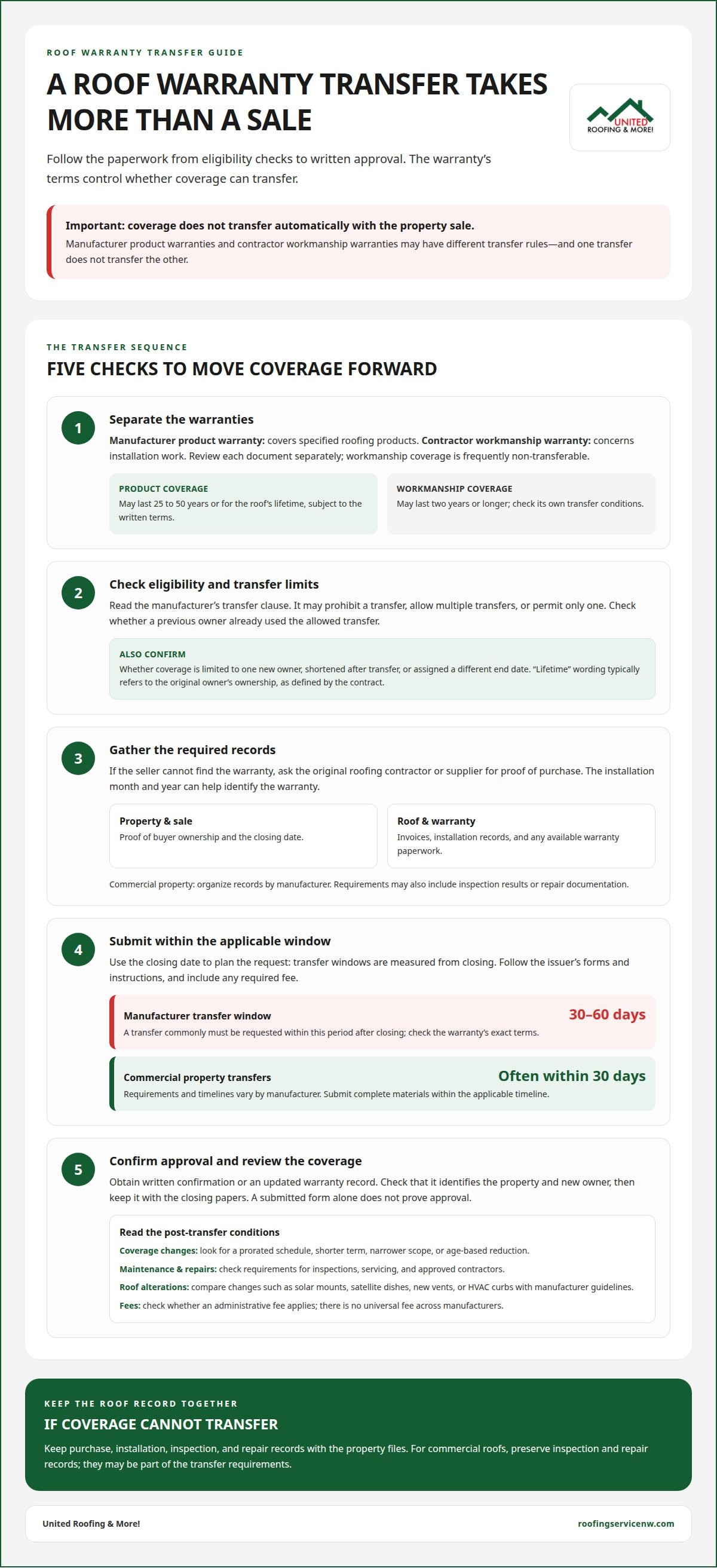
A roof may have separate manufacturer product and contractor workmanship warranties, each with its own transfer rules. Transferring a roof warranty to a new owner requires a specific request and paperwork; the home sale alone doesn’t transfer coverage.
- Separate the two warranties before reviewing transfer eligibility. A manufacturer warranty generally covers specified roofing products, while a contractor workmanship warranty concerns installation work. Manufacturer product warranties may last 25 to 50 years or for the roof’s lifetime. Contractor workmanship warranties may last two years or longer, but are frequently non-transferable under their terms. Keep the documents separate because one warranty’s transfer doesn’t transfer the other.
-
Check Manufacturer Transfer Requirements
Read the manufacturer’s transfer clause and identify whether the warranty allows a transfer. Some manufacturers prohibit transfers, while others allow multiple transfers; many permit only one. Check whether a previous owner already used that transfer. A transfer commonly must be requested within 30 to 60 days after closing, so use the closing date to plan the paperwork. Don’t assume the buyer receives coverage automatically.
-
Review Product Warranty Terms
Review the product warranty’s duration and the conditions that apply after a transfer. A lifetime warranty typically lasts as long as the original owner owns the home, subject to the contract’s definition. That wording can affect coverage after a sale. Check whether the terms limit the transfer to a single new owner, shorten coverage, or set a different end date. The manufacturer’s written terms govern product coverage.
-
Confirm Transfer Fees
Check the warranty terms for an administrative transfer fee. Roofing manufacturers may charge a fee to update their records, with the amount specified in the warranty terms. There is no universal fee across manufacturers. Confirm whether a fee applies and include it with the transfer request if required. Also review the contractor’s workmanship warranty for separate transfer conditions; it may not transfer even if the product warranty does.
What if the seller doesn’t have the warranty documents?
Start by locating the warranty terms, which determine whether and how coverage can transfer. If the seller can’t find a copy, proof of purchase and the month and year the shingles were installed can help identify the roof warranty.
-
Gather Transfer Documents
If the seller’s files are incomplete, ask the original roofing contractor or supplier for proof of purchase. Provide the property address, the month and year the shingles were installed, and any available invoices or installation records. The warranty document specifies which details and forms the issuer requires. For a commercial roof, organize records by manufacturer; transfer requirements may also include inspection results or repair documentation.
-
Provide Ownership and Closing Proof
Prepare documents showing that the buyer owns the property and when the sale closed. The closing date matters because transfer windows are measured from closing, while proof of ownership connects the new owner to the property. Submit copies that clearly identify the property and buyer. If the seller can provide an original invoice or product paperwork, include it with the closing documents instead of relying on an incomplete description of the roof.
-
Verify Transfer Approval
Submit the transfer request and required documents to the warranty issuer, then obtain written confirmation or an updated warranty record. Check that the record identifies the property and new owner, and keep a copy with the closing papers. A submitted form alone doesn’t prove the transfer was approved. If the issuer requests missing information, provide it and keep the response with the completed submission.
- If the warranty can’t transfer, keep the roof’s purchase, installation, inspection, and repair records with the property files. These documents give the new owner a clear maintenance history, even without transferred coverage. For a commercial roof, preserve inspection and repair records because they may form part of the transfer requirements. If the roof needs attention while paperwork is gathered, arrange professional roof repairs to address the issue.
How to review warranty coverage and exclusions
Review the written warranty alongside the transfer paperwork. These three steps help identify exclusions, reduced coverage, and maintenance conditions.
-
Identify Work That Can Void Coverage
Check the warranty’s requirements for repairs, inspections, and alterations. Unapproved repairs can end manufacturer coverage if the terms require a certified or approved contractor. Missing inspection or servicing records may count as missing maintenance when the warranty requires them. Also compare roof changes with manufacturer guidelines: solar mounts, satellite dishes, new vents, or HVAC curbs installed outside those guidelines can void material coverage.
-
Check Reduced Coverage After Transfer
Read the transfer clause for changes tied to the roof’s age. Coverage may be reduced through a prorated schedule, a shorter term, or a narrower scope. For example, a 30-year roof warranty transferred after 13 years of homeownership would have seven years remaining before expiration, if it transfers. That example describes time left on the original term, not the effect of any separate transfer reduction.
-
Review Post-Transfer Coverage Limits
Compare the original coverage with the terms that apply to the new owner. Note which components remain covered, how long coverage lasts, and whether the transfer changes what work is covered. Review ventilation and drainage alterations, too. Changes that take the roof outside the product warranty’s specified conditions can affect material coverage. Keep the updated warranty and maintenance records with the closing documents so homeowners can refer to the applicable limits when repairs arise.
Commercial roof warranty transfer timelines
For commercial properties, the transfer request often must be completed within 30 days after closing. Treat that deadline as part of acquisition planning, not an administrative task to leave until later.
- Identify every roof warranty during acquisition due diligence. A commercial property or portfolio may include roofs covered by different manufacturers, each with its own transfer requirements. Create a record for each building, manufacturer, warranty, and closing date. This helps buyers avoid treating a portfolio as a single transfer when each roof may need separate paperwork.
- Start the transfer request as soon as the transaction timeline is clear. Commercial transfers often have a 30-day deadline after closing, and manufacturers may reject submissions that arrive late or incomplete. Use the closing date to set an internal deadline before the manufacturer’s cutoff. The seller usually doesn’t handle the transfer for the buyer, so assign responsibility during the acquisition process.
- Gather the documents each manufacturer requires before submitting a request. Commercial transfer requirements vary and may include inspection results or repair documentation. Match each document to the correct roof and warranty, then review the submission for missing items. A late or incomplete request can be rejected, and missing a transfer step can void the warranty.
- Confirm the transfer status for each roof after submission. Keep the manufacturer’s response with the property’s acquisition and roof records, and note any remaining requirements. For a portfolio, track each manufacturer separately; approval for one building doesn’t establish approval for another. Include the transfer process in due diligence so the buyer can account for different deadlines and documentation requirements.
If due diligence identifies roofing work beyond the warranty transfer, discuss roofing solutions for the property.
United Roofing & More!
United Roofing & More! provides roof repairs, roof replacement, and roof installation for roofing needs that arise during a property sale or after a warranty review. If a review of the roof or its records reveals damage, leaks, or aging materials, these services may be the practical next step. The right work depends on the roof’s condition and the project.
For buyers considering necessary roofing work, roofing financing can help manage project expenses. A roofing project does not replace a warranty transfer request, so handle the transfer paperwork and roofing plans separately. Contact United Roofing & More! to discuss your roofing needs.
Keep the Roof’s Next Chapter in View
Once ownership changes, keep the roof’s history connected to the property, not just to the person who managed it. That gives future owners a clearer starting point for routine decisions and supports continuity if the building changes hands again. A concise property file can keep warranty status alongside records of roof work and coverage correspondence. Update it whenever the roof is repaired, altered, or inspected, and before a future sale begins. This habit separates what the warranty says from what has happened to the roof over time. It also creates a useful basis for planning roofing work without assuming the warranty will cover every future need. A clear record can make transferring a roof warranty to a new owner part of an organized handoff, not a last-minute task. If roofing work is part of your next step, contact United Roofing & More! to discuss your project and move forward with clarity.
Frequently Asked Questions
How and when do I have to arrange for a transfer?
Start as soon as the sale closes, following the warranty’s transfer instructions. When transferring a roof warranty to a new owner, identify each separate warranty first: product coverage and contractor workmanship coverage may require separate requests. Keep copies of every submission and the issuer’s response with the property records. This gives the new owner a clear record of which warranties were addressed and their status.
Is there a deadline for the transfer?
Yes. Residential transfer windows commonly run 30 to 60 days from the closing date, while commercial transfers often need completion within 30 days after closing. Use the closing date shown in the transaction records to set the timeline. For commercial properties with roofs from different manufacturers, track each request separately because requirements and deadlines may differ. Late or incomplete submissions can be rejected.
What if the seller cannot find the paperwork?
Ask the original roofing contractor or supplier for proof of purchase, and gather the month and year the shingles were installed. These details can help identify the applicable warranty. Keep invoices, installation records, and roof-related correspondence together. For a commercial building, retain inspection results and repair documentation too, since a manufacturer may require them for a transfer.
Who submits the transfer, the buyer or the seller?
For a commercial property, the buyer should lead the process rather than assume the seller will handle the transfer. The seller can share available purchase and roof records, but the buyer needs to keep the request moving through the acquisition. For a home sale, follow the warranty’s instructions to identify who must submit the paperwork and ensure that person has the closing details.
Can a roof warranty be transferred to a new homeowner?
Sometimes. The manufacturer’s written terms determine whether product coverage can transfer to a new homeowner, while contractor workmanship coverage follows its own rules. Some warranties don’t allow transfers, while others permit one or more. Check whether a prior transfer has already occurred and whether the ownership change affects the remaining coverage. A home sale alone doesn’t update the warranty record.
How do I transfer a roof warranty to a new owner?
First, locate the warranty terms and identify the issuer. Then gather the required transfer paperwork, proof of purchase, installation details, and closing information. Submit the request according to the warranty instructions, including any required inspection or repair records for a commercial roof. Keep the submission and written approval with the property file, and record any updated coverage terms for future owners.


