
The best cool roof options for Washington homes depend on the region and roof type. They include reflective asphalt shingles, coated metal panels, and reflective surfaces for low-slope roofs. A roof’s color alone doesn’t show how much sunlight a specific product reflects. Compare measured performance for the exact material and color.
That distinction matters across Washington. In the east, reducing solar heat absorption can help with hot summer roof and attic conditions. In the west, consider year-round performance too: reflective roofing can reduce solar heat absorption in winter as well as summer.
This guide explains how cool roofs work, compares options for western and eastern Washington, and shows why insulation, air sealing, and attic ventilation matter alongside roof color. Use these factors to assess a roof replacement or installation without assuming one color or material suits every home.
Key Takeaways
- Match roofing choices to your side of Washington, where seasonal conditions shape what “cool” performance should mean.
- Look beyond a roof’s color: solar reflectance and thermal emittance affect how its surface handles heat.
- Consider attic ventilation and insulation alongside reflective roofing when addressing indoor comfort.
- Compare cool-colored tiles by their measured performance, not appearance alone.
Roofing choices for western and eastern Washington climates
Roofing priorities vary across Washington, from wet western conditions to hotter eastern summers. Compare local weather, roof structure, and your home’s seasonal heating and cooling needs.
Regional Climate Considerations
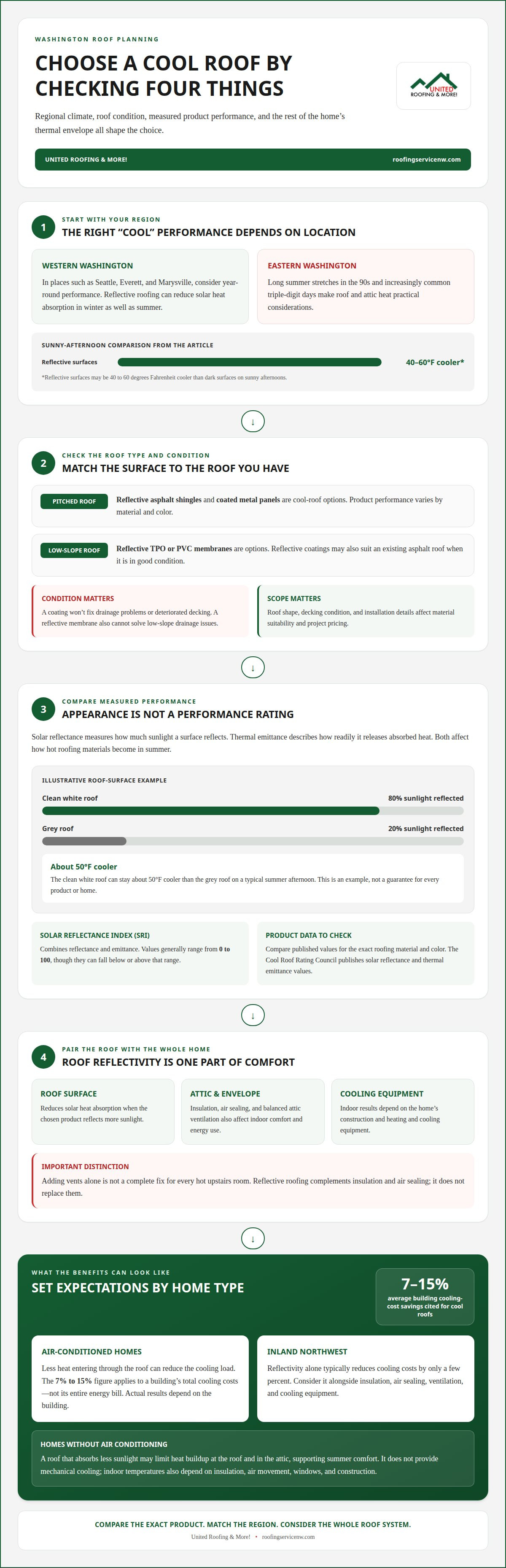
Regional climate considerations mean selecting roofing that suits local weather and home construction. In Western Washington communities such as Seattle, Everett, and Marysville, reflective roofing should be considered for year-round performance because it can reduce solar heat absorption in winter as well as summer. Eastern Washington’s long summer stretches in the 90s and increasingly common triple-digit days make roof and attic heat practical concerns. On sunny afternoons, reflective surfaces may be 40 to 60 degrees Fahrenheit cooler than dark surfaces. Regional conditions can help shape material and color choices.
Material Costs and Long-Term Value
Material costs and long-term value depend on the roofing material, roof shape, decking condition, and installation details. Project pricing depends on those factors and is provided after a quote request. Metal roofing has a rated service life of 40–70 years, while properly installed and maintained wood shakes can last more than 30 years. On a low-slope roof, a reflective membrane cannot solve drainage problems or repair deteriorated decking, so those conditions affect project scope and material suitability.
Lifespan, Fire Resistance, and Maintenance
Lifespan, fire resistance, and maintenance vary by roofing material and product. Slate can last up to 150+ years and is described as completely fireproof. Some metal roofing products offer warranties of up to 50 years, while some slate products have 100-year limited warranties. Warranty terms differ by product. Overhanging branches and accumulated needles can affect maintenance regardless of roof color, so ask the contractor how the proposal addresses debris, drainage, decking, underlayment, and flashing.
For insulation entirely above deck, R-38ci is the continuous insulation R-value, according to Washington State Building Code Council. This code value addresses insulation, not roof color. An energy-efficient roof may qualify a homeowner for a tax credit; eligibility depends on applicable program terms.
What helps more: a reflective roof or better attic ventilation?
Roof surface properties affect solar heat absorption, while attic ventilation helps manage heat below the roof deck. Reflective coatings can be applied to existing asphalt roofs, but they’re best suited to low-slope roofs in good condition.
Reflectance and Thermal Emittance
Solar reflectance measures how much sunlight a roof surface reflects, while thermal emittance describes how readily it releases absorbed heat. Both affect how hot roofing materials become in summer, so reflectance alone doesn’t tell the whole story.
For example, a clean white roof reflecting 80% of sunlight can stay about 50°F cooler on a typical summer afternoon than a grey roof reflecting 20%. The Solar Reflectance Index combines reflectance and emittance; its values generally range from 0 to 100, though they can fall below or above that range. These measurements help explain performance beyond appearance.
Reflective Shingles and Cool-Roof Membranes
Reflective asphalt shingles, coated metal panels, and reflective low-slope membranes can all provide cool-roof performance. A shingle’s color name doesn’t establish its measured reflectivity. Performance varies by product and color, so published data for the exact roofing material is more useful than a color swatch.
The Cool Roof Rating Council publishes solar reflectance and thermal emittance values to help compare roofing products. For low-slope roofs, reflective TPO or PVC membranes are options, but membrane choice and roof condition both matter. A reflective surface complements insulation and air sealing; it doesn’t replace them.
Reflective and emissive coatings can convert an existing asphalt roof, typically with one coat of each. The roof must be in good condition: a coating won’t fix drainage problems or deteriorated decking. Consider these limits before choosing a coating instead of replacement.
Balanced attic ventilation and adequate insulation can contribute more to summer comfort and energy savings than roof color alone. Reflective roofing works alongside these measures. Adding vents alone isn’t a complete fix for every hot upstairs room.
For a roofing project, roofing installation options can help connect roof-surface choices with the home’s overall construction.
Benefits for air-conditioned and non-air-conditioned homes
A cool roof changes how much solar energy the roof absorbs, but indoor benefits depend on the home’s insulation, construction, and heating and cooling equipment. For an air-conditioned home, less heat entering through the roof can reduce the cooling load. Cool roofs can save an average of 7% to 15% of a building’s total cooling costs, though actual results depend on those building conditions.
That figure applies to cooling costs, not the entire energy bill. In the Inland Northwest, reflectivity alone typically reduces cooling costs by only a few percent. That’s why solar reflectance should be considered alongside attic insulation, air sealing, ventilation, and cooling equipment. A reflective surface addresses solar heat at the roof, while the rest of the home’s envelope affects how heat moves indoors.
Homes without air conditioning may benefit differently. A roof that absorbs less sunlight can limit heat buildup at the roof and in the attic, which may support indoor comfort in summer. It doesn’t provide mechanical cooling, and indoor temperatures still depend on insulation, air movement, windows, and the home’s construction. For example, a shaded room under a well-insulated ceiling may feel different from an exposed upstairs room with weak insulation.
Architectural color is another factor. A lighter or specially coated roof surface may reflect more sunlight than a dark one, but appearance alone doesn’t establish solar reflectance. Compare published performance for the exact product and color, then consider the home’s climate and seasonal heating needs. In Western Washington, reflective roofing can reduce solar heat absorption in winter as well as summer, so year-round performance matters. In Eastern Washington, summer roof and attic heat may be a greater concern. Choose based on the home’s cooling setup, insulation, and local weather, not color alone.
Cool-colored roof tiles
Choosing cool roof options for Washington homes means distinguishing a tile’s appearance from its measured performance. “Cool-colored” describes a visual impression, not how much sunlight a particular tile reflects. Compare the exact product and color, and consider whether the roof style, material, and slope suit the home’s design.
Color choices can be broader than white. A light or specially coated roof surface can reflect 25% or more of the sunlight hitting it, while a dark asphalt shingle can reflect less than 10% on a July afternoon. These figures illustrate why a color label alone isn’t enough. The same shade name can represent different performance across products, so published data for the specific tile or shingle is more useful.
Tile selection also involves how the material behaves throughout the day. Clay tiles absorb heat and release it at night, which can help keep heat out of the home. This differs from a surface chosen chiefly for reflectivity. Roof shape and installation details matter too, so evaluate the complete assembly rather than choosing from a sample alone.
The best cool roof options for Washington homes balance architectural preferences with local weather and measured product performance. In western areas, year-round performance is relevant; in eastern areas, summer roof heat may guide the decision. Comparing colors, materials, and product data helps narrow the options without assuming the palest tile is automatically best.
For a new roof, plan a roof installation around both appearance and measured performance.
United Roofing & More!
United Roofing & More! helps Washington homeowners connect cool-roof considerations with practical roofing work. For a roof replacement or installation, the team can discuss your home’s design, roof condition, and regional climate as you consider materials and colors. Roof repairs can address existing problems before you decide whether a larger project makes sense. Roofing financing is also available to help manage project costs.
A reflective surface is only one part of roof performance. The roof assembly, insulation, and ventilation also influence comfort and energy use. Share your plans and concerns about your current roof, whether they involve summer heat, wear, or a planned replacement. Contact United Roofing & More! to discuss your roofing needs.
Plan a roof choice around your home
Before choosing a color or material, decide what you want your next roof to do. Your priorities might include reducing summer heat, preserving a particular architectural look, or balancing seasonal performance. Consider those goals alongside the roof’s condition and the rooms that feel warmest. This gives your roofing project a practical starting point instead of letting appearance alone drive the decision.
The right cool roof options for Washington homes depend on how the roof, attic, and living space work together. A project discussion can connect those details with suitable roofing choices and clarify the next steps for your home.
United Roofing & More! can help you consider the roofing work that fits your needs. Contact United Roofing & More! to discuss your project and move forward with a clearer plan.
Frequently Asked Questions
How Does a Cool Roof Work?
A cool roof reflects more sunlight and releases absorbed heat, limiting how much solar warmth reaches the roof assembly. This can reduce heat transfer into the attic and ease the cooling load in an air-conditioned home. Without air conditioning, it may help limit heat buildup overhead. The result also depends on roof construction, insulation, and how the attic connects to living spaces.
Do I have to get a white roof to gain any benefit?
No. White roofing isn’t the only option: different materials, colors, and coatings can provide reflective performance. If you prefer a darker architectural look, compare published performance for the exact product and color rather than relying on its name. That lets you weigh appearance and solar performance together. Measured reflectance is more informative than whether a shade is called “cool” or “light.”
Does the Inland Northwest get hot enough to matter?
Yes. In the Inland Northwest, sunny summer weather can make roof and attic heat a concern, especially in homes with warm upstairs rooms. A reflective surface may reduce heat absorbed at the roof, while insulation and air sealing affect how much warmth reaches living areas. In an air-conditioned home, the roof can influence cooling demand; without air conditioning, the goal may be greater comfort during hot spells.
What are the best cool roofing materials for homes in Washington state?
There isn’t one best material for every Washington home. Reflective asphalt shingles suit homeowners who want a familiar shingle appearance; coated metal panels offer a different style with cool-roof performance. Reflective membranes are an option for low-slope roofs. Compare the exact product’s performance, roof shape, and regional climate. Roof condition and design also affect whether a material suits a replacement.
How do cool roof shingles, metal roofs, tile, and coatings compare in cost and energy savings?
Each option differs in installation scope, appearance, and heat behavior, so no single cost or savings ranking fits every project. Shingles and coated metal are roofing choices; tile has its own material characteristics, while coatings depend on the existing roof’s condition and suitability. Energy savings also depend on insulation, air sealing, ventilation, and cooling equipment, not material alone.
What are typical cool roof installation costs in Washington per square foot?
There isn’t one typical per-square-foot figure for every Washington roof. Project costs depend on roof dimensions, slope, chosen material, removal needs, and the condition of decking and flashing. United Roofing & More! offers roofing financing and invites homeowners to request a project quote. Homeowners in Marysville, Seattle, Renton, Everett, Lynnwood, and nearby communities can Get a Free Quote!


