
What if the smallest piece of metal on your roof is the only thing preventing a $20,000 structural disaster during the next Seattle downpour? It's a question that keeps many homeowners awake as the rainy season approaches. You know that damp spot on the ceiling won't fix itself. However, the uncertainty around your potential roof flashing repair cost can feel just as overwhelming as the leak itself. It's completely normal to feel anxious about hidden rot or complex labor charges when you're just trying to keep your home dry and safe.
We're here to take the mystery out of your roofing budget for 2026. This guide provides a clear look at the real-world factors driving repair prices in the Pacific Northwest, from labor shifts in Marysville to the rising cost of specialized materials. You'll learn which types of flashing demand a premium and how to identify quality workmanship that lasts. We will also show you how to navigate regional price increases while ensuring your home stays protected against our unique climate. By the end of this article, you'll have the confidence to choose a local expert and secure a fair deal for your home's long-term health.
Key Takeaways
- Understand how different materials like galvanized steel and premium copper impact the longevity and initial price of your roof's most critical leak protection.
- Learn why labor and roof accessibility drive your final roof flashing repair cost more than the actual metal components used.
- Identify the major differences between simple vent boot fixes and complex chimney flashing projects to set realistic budget expectations for your home.
- Discover the "20-year rule" and other signs that tell you whether a targeted repair is a smart investment or just a temporary bandage.
- Explore how professional diagnostics and flexible financing options can help you address leaks before they lead to expensive structural rot.
What is Roof Flashing and Why Does It Fail?
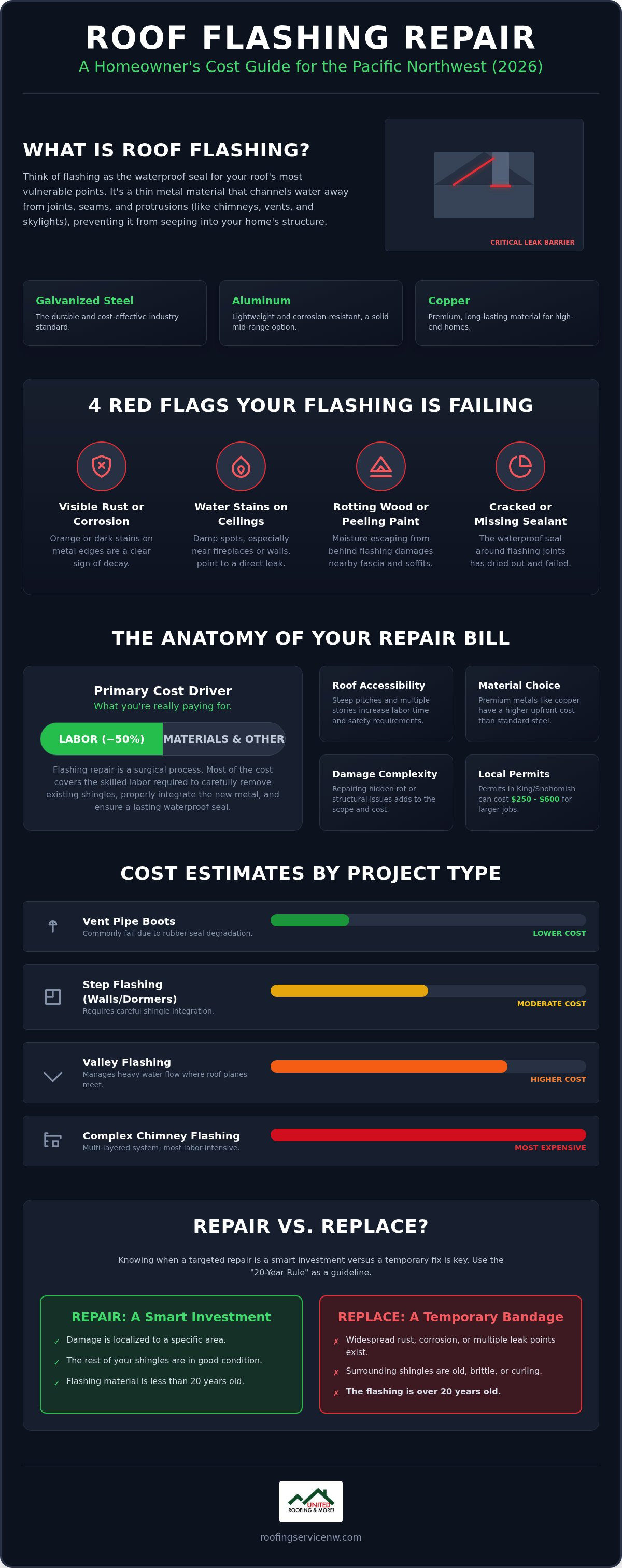
Think of your roof as a waterproof shield. While shingles cover the flat surfaces, they can't protect the "joints" where things like chimneys or pipes poke through. That's where flashing comes in. What is Roof Flashing? It's the critical bridge between your shingles and any protrusion. It diverts water away from vulnerable seams and into your gutters. In 2026, we see three main materials used in the Seattle area: galvanized steel for durability, lightweight aluminum, and high-end copper for premium homes. Using the right material is a major factor in your long-term roof flashing repair cost.
In Seattle and Marysville, flashing works overtime. Our constant moisture cycles mean metal is almost always wet. If your sealant dries out or the initial installation was rushed, water finds a way in. Rust is another silent killer. Once a small pit forms in the metal, the rain does the rest. Why does it fail? In the PNW, it's usually the weather. Our rain is relentless. If the original installer didn't use high-quality sealant, it will eventually dry out and crack. Once that seal is gone, your home is open to the elements. Understanding these variables helps you plan for your roof flashing repair cost before the next storm hits. We often see homeowners waiting too long, turning a simple fix into a structural headache.
Common Types of Flashing Found on Local Homes
Different areas of your roof require specific protection. Each type requires a different level of skill to fix properly. We specialize in these core types:
- Step flashing: These are the critical L-shaped metal pieces used along walls and dormers.
- Chimney flashing: This is a multi-layered system designed to protect your fireplace from heavy runoff.
- Valley flashing: This manages the heaviest water flow on your roof where two slopes meet.
- Vent pipe boots: These are the rubber and metal seals around plumbing exhausts that often fail first.
Signs Your Flashing Needs Immediate Repair
You don't always need to climb a ladder to spot trouble. Keeping an eye on your home's exterior can save you thousands in the long run. Look for these red flags:
- Visible rust or corrosion on metal edges near your chimney or vents.
- Water stains on the ceiling, especially near dormers or fireplaces.
- Peeling paint or soft, rotting wood on the fascia and soffits.
- Sealant that looks cracked, brittle, or is missing entirely from metal joints.
Roof flashing failure is the primary cause of residential roof leaks in 2026.
Factors That Determine Your Flashing Repair Bill
Your final roof flashing repair cost isn't just about the price of a few metal strips. In the Pacific Northwest, labor is the primary driver of your invoice. Most homeowners are surprised to learn that labor often accounts for about half of the total project cost in Seattle. This is because flashing is woven into your roof's structure. It's a surgical process, not a simple patch job. Our local experts spend more time carefully handling your existing shingles than they do installing the actual metal.
Roof pitch and accessibility also play a massive role in your estimate. A steep, two-story home in Marysville requires specialized safety equipment and more time to navigate. If your roof is difficult to access, the safety requirements increase, which naturally impacts the final price. Material choice is the third major factor. While galvanized steel is common, homes near the salty coastal air of the Sound may benefit from copper or high-grade aluminum. These materials resist corrosion better but come with a higher upfront price tag. Finally, we must consider the "PNW Factor." Moss growth and moisture-trapping debris can hide the extent of the damage. Clearing this debris to reach the flashing adds time to the project but is essential for a lasting seal.
The Hidden Cost of Shingle Integration
Flashing cannot be slapped on over existing shingles. To do the job right, we must delicately remove the surrounding shingles without breaking them. This allows the new metal to be tucked underneath the water-shedding layers. Many low-cost contractors try "caulk-only" fixes. These are temporary bandages that often fail within a single rainy season. Proper integration takes time and skill, but it prevents the need for a full roof replacement later.
Permits and Inspections in King and Snohomish Counties
Building codes in our region are strict. In Seattle, a permit is usually required if you are replacing more than 25% of the total roof area within a year. These permits can cost between $250 and $600. Even for smaller repairs, professional documentation is vital. It proves to future home buyers that the work meets a master roofing standard. We handle the paperwork to ensure your repair is fully compliant with local King and Snohomish County regulations. This transparency gives you peace of mind and protects your home's resale value.
Average Roof Flashing Repair Costs by Project Type
Not every leak requires the same level of attention. Your final roof flashing repair cost depends entirely on the location and complexity of the joint. Some fixes are quick and straightforward; others require deep integration with your home’s masonry or structural valleys. We prioritize transparency, ensuring you understand exactly what goes into each specific project type before work begins. Our goal is to provide a lasting seal that stands up to the unique Marysville and Seattle weather patterns.
- Vent Pipe Boot Replacement: This is the most frequent repair we perform. These rubber and metal seals dry out and crack over time. It's an affordable, high-impact fix that prevents attic leaks.
- Chimney Flashing Repair: This is the most complex task. It involves multi-layered metal systems that must be cut into the brick or siding to create a waterproof barrier.
- Valley Flashing: These channels handle the highest volume of water on your roof. Repairing them often requires removing shingles from two different roof planes to ensure proper drainage.
- Drip Edge Repair: This protects the very edge of your roof. Without a functional drip edge, water wicks back into your fascia and soffits, causing hidden rot.
Typical Pricing Ranges for Common Repairs
We categorize repairs based on the time and materials required to do the job right. Small repairs, like replacing a single vent boot or applying high-grade sealant, typically fall into the $250 to $500 range. Medium projects involve dormer walls or partial valley work, often costing between $500 and $1,200. Large-scale tasks, specifically full chimney re-flashing, can range from $1,500 to over $3,000. In the Seattle metro area, the 2026 regional average for specialized labor on complex chimney flashing reflects the high demand for skilled masonry integration and weatherproofing expertise.
The Cost of Neglect: What Happens if You Wait?
Waiting to address a minor leak is a gamble you won't win. A small $500 flashing fix today prevents a massive $20,000 bill next year. When water bypasses your flashing, it doesn't just sit there. It travels down into your attic, soaking insulation and promoting mold growth. Drywall repair and professional mold remediation can quickly double your initial repair estimate. Even worse, constant moisture weakens your structural trusses. This damage often leads to an early roof replacement that could have been avoided with a simple diagnostic visit. We help you stay ahead of the rain with proactive solutions and flexible financing options to keep your home safe.
Repair vs. Replace: Making the Right Call for Your Roof
Deciding whether to patch a leak or invest in a new system is the most significant financial choice a homeowner faces. Your immediate roof flashing repair cost might be manageable; however, if your roof is nearing the end of its life, that money might be better spent on a permanent solution. We believe in total transparency. We won't recommend a $2,000 chimney repair on a roof that needs to be torn off in eighteen months. The right choice depends on three factors: the age of your shingles, the extent of the failure, and your long-term goals for the property.
If your shingles are over 20 years old, flashing leaks are often the "canary in the coal mine." At this stage, the asphalt has become brittle. Trying to weave new metal into old, fragile shingles often causes more damage than it fixes. Conversely, if you plan to sell your home in Marysville or Seattle soon, a professional repair with full documentation can satisfy a home inspector and keep the sale on track. If you're staying for the next 30 years, budgeting for a full roof replacement often provides a better return on investment by resetting the clock on your home's protection.
When a Repair is Sufficient
A targeted repair is usually the smartest move when the damage is isolated and the rest of the roof is healthy. This is common after a heavy PNW windstorm where debris might have dented a valley or pulled a piece of step flashing loose. We recommend repairs in these scenarios:
- Physical damage from fallen branches on an otherwise young roofing system.
- Isolated vent boot failure on a roof that is less than 10 years old.
- Minor sealant cracking at the top of a chimney where the metal itself is still structurally sound and leak-free.
When It's Time for a Full Roof Replacement
Sometimes, your roof is simply finished. Systemic flashing failure usually happens because the entire roof was installed poorly or has reached its expiration date. You should consider a full replacement if you notice multiple leaks occurring simultaneously in different zones of your home. Widespread shingle granule loss combined with visible rust on most metal edges is another clear sign of trouble. Check our 5 signs your home needs a roof replacement guide for a deeper dive into these warning signs. Generally, if the total cost of multiple flashing repairs exceeds 25% of the cost of a new roof, the "bandage" approach is no longer financially sound. We offer flexible roofing financing to help you transition from constant repairs to a permanent solution.
Affordable Solutions with United Roofing & More!
We know that a sudden roof leak is more than just a home maintenance issue. It's a direct threat to your family's peace of mind. At United Roofing & More!, we specialize in identifying the exact root cause of your leaks through professional flashing diagnostics. We don't believe in guesswork or temporary fixes. Our team provides a clear, line-item breakdown of your roof flashing repair cost upfront. You won't find hidden fees or surprise surcharges in our estimates. We serve Marysville and Seattle residents with the honesty and transparency you expect from a hardworking local partner. We believe in open dialogue throughout the entire service process.
Quality starts with the right materials for our specific environment. We use heavy-duty galvanized steel and premium copper options designed to withstand the moisture and corrosive coastal air of the Sound. These materials provide a superior, long-lasting seal that outlasts standard hardware store patches. If an emergency repair isn't in your immediate budget, our roofing financing makes the process manageable. We offer flexible payment plans that allow you to secure your home's integrity now and pay over time. Our goal is to lower the barrier to entry for critical repairs. Don't let a small flashing failure turn into a $20,000 replacement because of financial stress.
Why Local Expertise Matters in the Seattle Climate
The Puget Sound region presents unique challenges for any roofing system. We deal with high-velocity wind and relentless horizontal rain that aggressively tests every metal joint on your roof. Our local experts understand these specific weather patterns intimately. We take extra precautions to keep your home dry and protected during the actual repair process. Every flashing job we perform comes with the United Roofing & More! guarantee on repair workmanship. We stand by our proficiency and our professional credentials. We are committed to keeping our community's homes safe and dry through every storm and every season.
Getting Started with Your Flashing Repair
Taking the first step to protect your home is simple and stress-free. We offer a complimentary roof health assessment to give you the concrete facts you need to make an informed decision. Our technicians will thoroughly inspect your chimney, valleys, and vent boots to provide an accurate diagnosis. If you need financial assistance, our application process for flexible payment plans is fast and straightforward. We prioritize clear dialogue and professional service from the moment you call us. Contact United Roofing & More! today for a clear dialogue on your roof's health.
Secure Your Home Against the Next PNW Storm
Protecting your property from relentless Seattle rain starts with addressing small leaks before they compromise your structure. You now understand how labor intensity and material choices like copper or galvanized steel influence your total roof flashing repair cost. Whether you need a simple vent boot fix in Marysville or a complex chimney re-flashing in Seattle, acting quickly prevents expensive structural rot. A proactive approach today saves you from a massive replacement bill tomorrow.
At United Roofing & More!, we make professional repairs accessible and stress-free. Our locally owned team of PNW experts provides complimentary diagnostic assessments to find the exact source of your trouble. We believe in transparency and clear dialogue. If you're worried about the budget, we offer flexible payment plans to keep your home dry without the financial burden. We're here to be your supportive partner in home maintenance, ensuring your roof stands up to the unique challenges of the Sound.
Ready to protect your investment? Explore Roofing Financing Options for Your Flashing Repair and schedule your assessment today. Your peace of mind is just one professional repair away. Stay dry and stay safe.
Frequently Asked Questions
Is roof flashing repair covered by my homeowners insurance?
Homeowners insurance typically covers roof flashing repairs if the damage results from a sudden, accidental event like a windstorm or a fallen branch. However, most policies exclude coverage for gradual wear and tear or simple neglect. If your flashing fails because the sealant reached the end of its natural lifespan, you'll likely pay the roof flashing repair cost out of pocket. We recommend reviewing your policy and documenting any storm damage immediately after an event occurs.
Can I just use roof cement or caulk to fix a flashing leak myself?
Using roof cement or caulk is a temporary solution that rarely addresses the root cause of a leak. While it might stop water for a few weeks, these sealants eventually crack and pull away from the metal. Professional repairs involve removing shingles and installing new metal to create a mechanical barrier. DIY "patch jobs" often trap moisture against your roof's wooden deck, leading to hidden rot that's much more expensive to fix later.
How long does a typical roof flashing repair take to complete?
Most flashing repairs are completed within a few hours to a single business day. A simple vent pipe boot replacement usually takes about two to three hours. More labor-intensive projects, such as a full chimney re-flashing or valley repair, require a full day of work to ensure every shingle is integrated correctly. Our team works efficiently to minimize the time your roof is exposed to the elements during the service process.
What is the difference between step flashing and counter flashing?
Step flashing consists of individual L-shaped metal pieces woven into each layer of shingles along a wall. Counter flashing is a separate piece of metal embedded into a chimney's mortar joints or tucked under siding. It hangs down over the top of the step flashing to create a double layer of protection. This overlapping system is vital for keeping water out of the transition points where your roof meets a vertical surface.
Will I need to replace my whole roof if only the chimney flashing is leaking?
You don't need a full roof replacement if the leak is isolated to the chimney and your shingles are still in good condition. Targeted repairs are very common for chimney and vent issues. However, our technicians will assess the surrounding shingles during our complimentary diagnostic assessment. If the asphalt is brittle or losing granules, we'll provide a clear dialogue on whether a repair or a full replacement is your best long-term option.
How much does it cost to replace a roof vent pipe boot in 2026?
The total roof flashing repair cost for a vent boot depends on the material used and the pitch of your roof. High-quality lead or heavy-duty plastic boots are more durable than standard rubber versions. Because labor is the primary driver of this service, your estimate reflects the time needed to safely access the vent and integrate the new boot with your shingles. We provide transparent, line-item quotes for these repairs to ensure clarity.
Does United Roofing & More! offer emergency flashing repairs during rainstorms?
United Roofing & More! prioritizes rapid response for active leaks in the Seattle and Marysville areas. While we can't always perform permanent metal work during a heavy downpour for safety reasons, we offer emergency tarping and temporary sealing to stop immediate water damage. Once the weather clears, we return to complete the professional repair. Our goal is to provide immediate relief and long-term structural integrity for every homeowner we serve during the rainy season.
What are the most durable flashing materials for homes near the Puget Sound?
For homes near the Puget Sound, stainless steel and copper are the most durable flashing materials due to their natural resistance to salt air corrosion. Galvanized steel is a popular and effective choice for most Marysville residents, provided it's coated correctly for our environment. While aluminum is lightweight and affordable, it can react poorly to the high moisture and salt content in our coastal areas. We help you choose the best material for your micro-climate.


