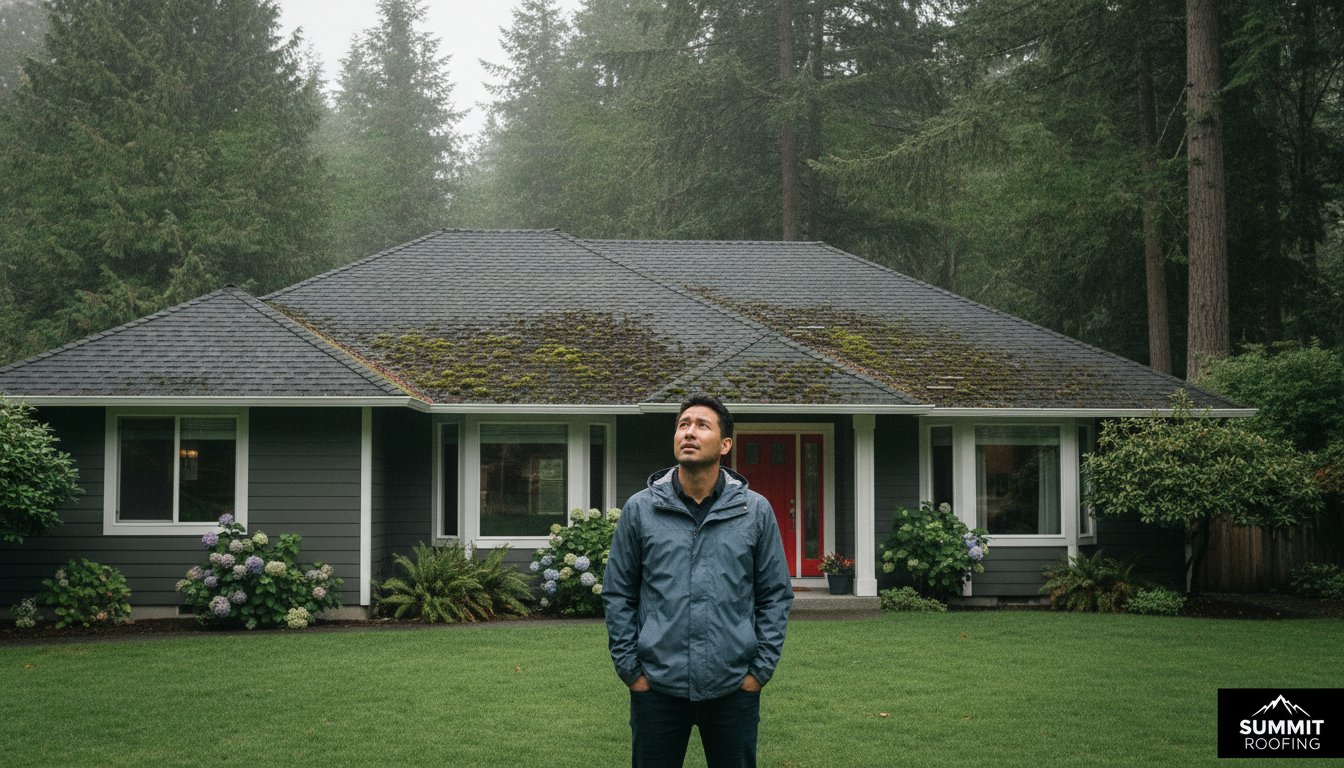
In the Pacific Northwest, your roof doesn’t just wear out; it weathers out through a relentless cycle of moisture-trapping moss and wind-driven rain. You might look at those green patches and wonder if they’re just an eyesore or a sign of looming structural failure. Identifying the specific signs you need a new roof washington state homeowners often overlook is the difference between a simple fix and a massive restoration bill. It’s stressful to watch the clouds gather when you aren’t sure if your attic is staying dry.
We know that the high cost of construction in Washington makes any home project feel like a major hurdle. You want to protect your family and your investment without breaking the bank. This 2026 guide gives you the clarity to make a confident decision for your home. We'll provide a clear checklist to help you decide whether to repair or replace, explain how our unique climate impacts shingle life, and show you how to find local experts who offer the flexible financing and tax credit guidance you deserve. Let's get your home back in tip-top shape before the next storm rolls in.
Key Takeaways
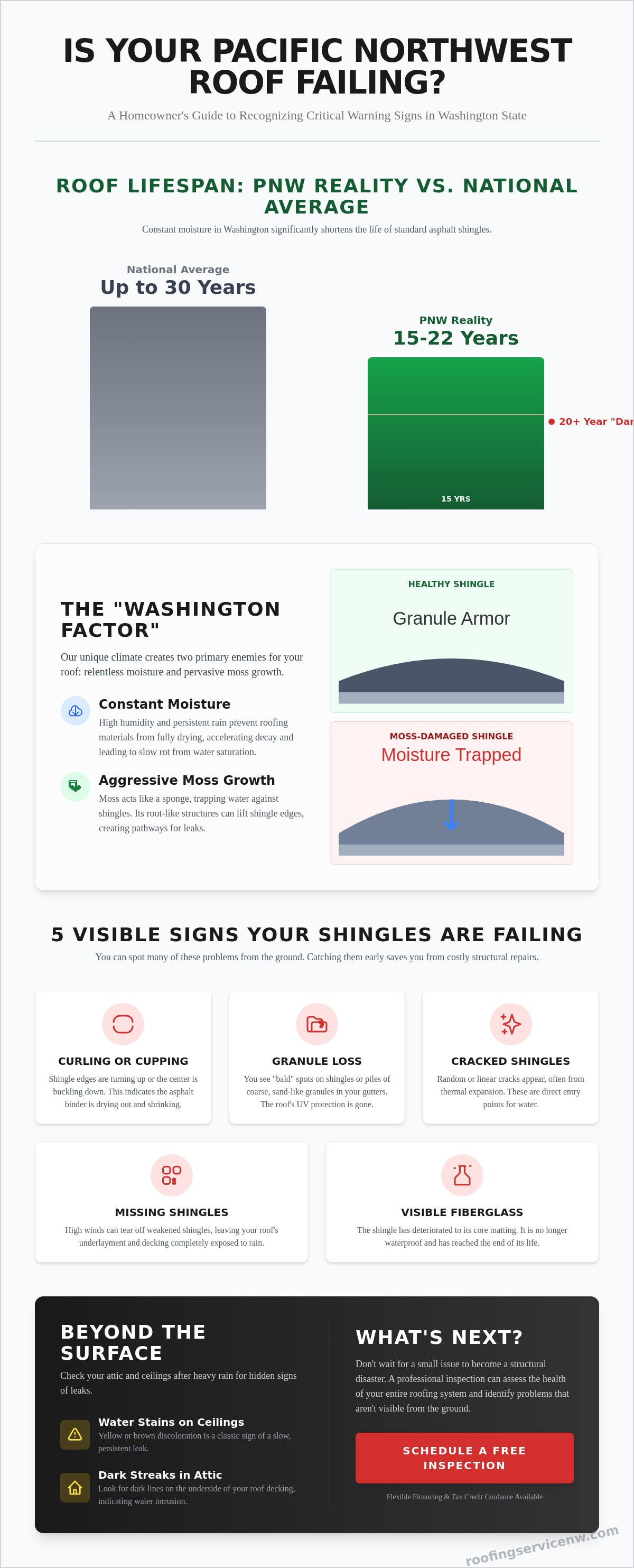
- Learn why standard asphalt shingles in Washington typically last between 15 and 22 years due to consistent moisture exposure.
- Identify the critical signs you need a new roof washington state homeowners must watch for, including curling shingle edges and granule loss.
- Spot hidden interior damage by checking for water stains on ceilings or dark streaks on your attic decking after heavy rain.
- Understand how moss growth acts as a sponge, trapping moisture against your shingles and lifting edges to allow leaks.
- Discover the importance of professional inspections and how to utilize roofing financing to protect your home's structural integrity.
Understanding Roof Lifespan in the Pacific Northwest
Roof lifespan is the period before the underlayment loses its waterproof integrity. In our region, this timeframe looks very different than it does in the Sun Belt. While national averages suggest asphalt shingles can last three decades, standard shingles in Washington typically last 15 to 22 years due to constant moisture exposure. High humidity and persistent dampness prevent materials from ever fully drying out. This accelerates the degradation of the organic components in your roofing system. Recognizing the signs you need a new roof washington state homeowners often ignore can prevent a minor leak from turning into a total structural failure.
Your specific material type significantly changes the replacement timeline. Traditional 3-tab shingles are thinner and more prone to wind damage. Modern architectural shingles offer better protection but still face local challenges. Tree canopy and heavy shade can shave years off a manufacturer’s warranty. Moss thrives in these dark, damp spots. It holds water against the surface and eats away at the granules that protect your home. If your house sits under a thick grove of evergreens, your roof is working twice as hard as a home in a clear meadow.
The 20-Year Rule for Washington Homes
Once a local roof hits the 20-year mark, it enters the "danger zone." In Seattle and surrounding areas, our lack of intense UV rays actually helps shingles stay flexible longer. However, the trade-off is brutal. Constant moisture seeps into the decking below. In drier climates, heat is the primary killer of roofs. In the Pacific Northwest, it's the slow rot caused by water saturation. If your system is over two decades old, it's time for a professional diagnostic check. We prioritize transparency, helping you understand if your structure is still sound or if it's failing from the inside out.
Material Differences: Asphalt vs. Metal vs. Tile
Architectural shingles are the local standard for balancing cost and durability. They are thicker than 3-tab options and better at hiding the "waves" that can occur in older decking. For homeowners in high-wind areas like Marysville and Everett, metal roofing offers incredible benefits. It sheds rain quickly and resists the moss growth that plagues asphalt. Reviewing your roof replacement options is the first step toward long-term peace of mind. We offer clear dialogue and helpful financing solutions to make these upgrades accessible for every family. Choosing the right material ensures you aren't searching for signs you need a new roof washington state residents fear again in just a few years.
5 Visible Signs Your Shingles Are Failing
You don't always need a ladder to spot serious trouble. A quick walk around your yard can reveal the most obvious signs you need a new roof washington state weather has left behind. Look closely at the texture and shape of your shingles. Are the edges lifting or the surfaces looking smooth and shiny? These visual cues are your first line of defense against a major leak. Catching these early can save you thousands in structural repairs.
- Curling or cupping: This happens when the asphalt binder in the shingle dries out and shrinks, pulling the edges up or pushing the center down.
- Bald spots: Significant granule loss leaves shingles "bald" and unprotected from the elements.
- Cracked shingles: These are often caused by thermal expansion and contraction over many seasons.
- Missing shingles: High winds from a standard "Pineapple Express" storm can easily tear away weakened or improperly fastened shingles.
- Visible fiberglass: Visible fiberglass matting means the shingle is no longer waterproof and has reached its absolute end of life.
Granule Loss: The "Sand" in Your Gutters
It is common to see a few granules in the gutters of a brand-new roof as it settles. However, terminal granule shedding looks like piles of coarse sand blocking your downspouts. These granules act as the "armor" layer for your roof. Their primary job is to protect the underlying bitumen from UV rays. When this layer is gone, the shingles become brittle. They will crack rapidly during our cold, wet winters. If you see your gutters filling with silt, your roof is losing its ability to shed water.
Curling and Buckling Patterns
There is a distinct difference between curling and cupping. Curling occurs when the edges of the shingle turn upward. Cupping happens when the center of the shingle becomes concave. Both are clear indicators that the material is failing. In many older Washington homes, improper attic ventilation is the culprit. This lack of airflow causes shingles to "bake" from the underside. You may also notice "fish-mouthing," which is a jagged bowing in the middle of the shingle. These patterns show that your roof's lifespan is nearly over. If you notice these changes, it's a good idea to get a professional opinion before the next rainy season begins.
We believe in transparency and clear dialogue. Seeing these signs doesn't always mean a total replacement is required today, but it does mean your home is at risk. Our team focuses on providing helpful, no-nonsense advice to keep your family dry. We offer flexible roofing financing to help you address these issues before they become emergencies. Don't wait for a ceiling stain to take action. Identifying the signs you need a new roof washington state experts look for is the best way to protect your investment.
Beyond the Surface: Interior and Attic Warning Signs
While shingle damage is visible from the curb, the most critical signs you need a new roof washington state homeowners discover are often hidden in the dark corners of the attic. You shouldn't wait for a steady drip on your dining table to take action. By the time water penetrates your living space, the structural damage is already well underway. We believe in proactive care. Taking ten minutes to inspect your upper floor can save you from a massive restoration project later.
Look for yellow, brown, or gray rings on your ceilings or walls. These stains typically appear after sustained, heavy rainfall. If you notice these marks, your roof's underlayment has likely failed. This moisture doesn't just damage drywall. It saturates your insulation. When insulation gets wet, it loses its R-value and stops keeping heat inside your home. If you see an unexpected spike in your heating bills during a wet Washington winter, your roof might be the culprit. Saturated insulation is a heavy, soggy mess that can lead to sagging ceilings and mold growth.
The Attic "Flashlight Test"
Grab a high-powered flashlight and head into your attic on a rainy afternoon. This is where the real story of your roof's health is told. Look for dark spots or long streaks on the underside of the roof decking. These streaks are often caused by water traveling along the rafters from a leak higher up. In our damp climate, you should also look for rusted nails or "weeping" plywood. If the wood looks swollen or feels soft, the structural integrity is compromised. Pay attention to your nose as well. A persistent musty odor is a major red flag. It indicates that mold is growing in the dark, damp spaces above your head. On the rare occasion that the sun is out, look for "pinholes" of light peeking through the boards. If light can get in, water definitely can too.
Structural Sagging and Decking Integrity
Step back and look at your home’s silhouette from across the street. A healthy roofline should be straight and true. If you notice a "swayback" appearance or visible dips between rafters, you have a serious problem. Structural sagging usually suggests that the plywood decking has rotted through from years of moisture trapped by moss or poor ventilation. This is particularly dangerous in the Pacific Northwest. Our occasional heavy snow loads can put immense pressure on a compromised deck. A sagging roof isn't just an aesthetic issue; it's a safety hazard. In most cases, a sagging roofline means a full replacement of the plywood decking is required during your next roof installation. We focus on transparency throughout this process. We provide clear dialogue about the state of your decking and offer flexible roofing financing to help you address these structural needs without unnecessary stress.
The "Washington Factor": How Moss and Moisture Kill PNW Roofs
Washington is famous for its lush greenery. Unfortunately, that greenery often ends up on your shingles. Moss is one of the most common signs you need a new roof washington state homeowners face every year. It looks like a soft carpet, but it acts like a heavy, wet sponge. It holds moisture against your roofing material for weeks, even after the rain stops. This constant saturation softens the asphalt and leads to premature rot. We see this cycle daily in the Pacific Northwest, where the damp air provides the perfect nursery for growth.
The real danger lies in the roots, or rhizoids. These aren't like tree roots, but they're strong enough to lift the edges of your shingles. Once a shingle is lifted, wind-driven rain can easily reach the underlayment. This is how hidden leaks start. A proper roof drip edge is essential here. It prevents water from wicking back into your fascia and roof deck. Without this protection, edge rot becomes inevitable, and your home's structural integrity begins to slide.
Why Moss is More Than an Aesthetic Issue
Moss causes physical damage through expansion. When temperatures drop below freezing, the water trapped inside the moss turns to ice. This expansion physically tears the protective granules away from the shingle. It also creates "capillary action," a process that pulls water upward and under the shingles against the force of gravity. Don't be tempted to grab a pressure washer. High-pressure water strips away the remaining granules and forces moisture directly into your attic. It does more damage in ten minutes than the moss would do in a year.
Dealing with Algae and "Black Streaks"
Have you noticed dark, vertical streaks on your roof? This is usually Gloeocapsa magma, a type of hardy bacteria. It thrives on northern-facing slopes where the sun rarely reaches. These streaks are more than an eyesore. The bacteria actually eat the limestone filler used in modern shingles. This process leads to several issues:
- Weight loss: Shingles become lighter and more brittle as the filler is consumed.
- Heat absorption: Dark streaks absorb more sun, making your home harder to cool.
- Granule detachment: As the filler disappears, the protective granules have nothing to bond to.
Long-term prevention often involves installing copper or zinc strips near the ridge. When it rains, these metals release ions that kill algae and moss before they can take root. We understand how frustrating it is to see your investment covered in green growth. If you're worried about the state of your shingles, we're here to help. You can schedule a professional roof inspection to see if your moss issue has become a structural threat. Our team provides clear dialogue and helpful roofing financing options to ensure your home stays protected from the unique Washington weather.
Next Steps: Inspection, Estimates, and Financing
Identifying the signs you need a new roof washington state experts watch for is only the first step. You need a professional drone or physical inspection to confirm the true health of your structure. A surface-level glance isn't enough to spot compromised decking or failing underlayment. We provide a thorough diagnostic that gives you the full picture. Our team ensures every project follows master roofing standards specifically designed for the unique challenges of the Pacific Northwest.
Transparency is our priority. You should always review a detailed line-item estimate before signing any contract. This document must include the cost of tear-off and disposal of your old materials. We handle the paperwork for local permits and ensure everything meets the latest Washington State Building Code updates. If the cost feels overwhelming, you can activate roofing financing to manage your investment with low monthly payments. We believe in lowering the barrier to home protection through flexible solutions.
What to Look for in a Local Contractor
Don't settle for a generic contractor. Verify their licensing and insurance in Washington State before they step on your property. Our region requires specialized experience with high-wind and high-moisture installation techniques. We understand the local climate better than anyone. We also offer a "No-Nail" cleanup guarantee for every Marysville and Seattle property. This means your yard stays safe for kids and pets after the job is done. We value long-term trust over high-pressure tactics. Our goal is to be a supportive partner for your home’s longevity.
Planning Your Investment
A new roof is a major financial decision, but it's also an investment in your home's future. Flexible payment plans allow you to choose a higher-quality shingle that lasts longer in our damp environment. In the Puget Sound area, a new roof offers a high ROI on home resale value. It gives potential buyers peace of mind and boosts your curb appeal instantly. Don't wait for the next leak to become a structural disaster! Get your free United Roofing & More! inspection today. We're ready to help you protect what matters most.
Secure Your Home Before the Next Storm
Your roof is the primary defense against the relentless rain and moisture of the Pacific Northwest. We've covered the critical indicators of failure, from visible shingle curling to hidden attic rot. Understanding the signs you need a new roof washington state weather causes is the first step in protecting your investment. Ignoring these warnings leads to saturated insulation and compromised structural integrity. We believe in proactive care to save you from costly emergency repairs. Don't wait for a ceiling stain to take action.
United Roofing & More! is locally owned and operated right here in the Pacific Northwest. We are specialists in moisture-resistant roofing systems designed for our climate. Our team offers expert roofing financing options to make your roof installation accessible and stress-free. We prioritize clear dialogue and professional expertise in every project. Get Your Free Roof Inspection & Estimate Now to ensure your family stays dry and secure. Let's get your home ready for whatever the Washington sky brings next!
Frequently Asked Questions
How much does a new roof cost in Washington State?
The cost of a new roof varies significantly based on your home’s square footage, the material you choose, and the complexity of your roofline. Local factors like the number of stories and the steepness of the pitch also impact the final total. We provide transparent, line-item estimates to ensure you understand every part of the investment. Our team offers flexible roofing financing to help make your project more accessible and affordable.
Can I just shingle over my old roof to save money?
While some building codes allow for a second layer of shingles, we generally advise against it for Pacific Northwest homes. Adding a new layer traps moisture between the shingles and adds immense weight to your structure. It also prevents us from inspecting the plywood decking for hidden rot or mold. A full tear-off is the only way to guarantee a waterproof seal and long-term structural health.
How long does it take to replace a roof in Seattle?
Most residential roof installations in the Seattle area are completed within one to three days. Our local weather is the biggest factor in scheduling. We monitor forecasts closely to ensure your home remains protected during the process. Our crews work quickly and efficiently to minimize disruption to your schedule while maintaining the highest quality standards for your property.
Does homeowners insurance cover a roof that is just old?
Standard homeowners insurance policies typically do not cover roof replacement due to age or general wear and tear. Insurance is designed to protect you from sudden, accidental damage caused by events like windstorms or fallen trees. If you notice the signs you need a new roof washington state weather has caused over time, it is best to act before a leak creates interior damage that insurance might deny.
Is moss on my roof a reason for total replacement?
Moss growth is a serious concern, but it does not always require a total replacement if caught early. However, if the moss has already lifted shingle edges or caused the underlying wood to rot, a new roof is likely necessary. We perform detailed diagnostic inspections to see if the damage has reached your decking. Our goal is to provide an honest assessment of whether a repair or replacement is your safest option.
What is the best roofing material for the Pacific Northwest climate?
Architectural asphalt shingles and standing seam metal roofing are the most effective materials for our damp climate. Architectural shingles offer great moisture resistance and value for most homeowners. Metal roofing is an excellent long-term investment because it sheds rain quickly and naturally resists moss and algae growth. We help you choose the best material based on your home’s specific needs and your long-term budget.
Do I need a permit for a roof replacement in Snohomish County?
Yes, most jurisdictions in Snohomish County require a building permit for a full roof replacement. These permits ensure that your new roof meets current safety standards and local building codes. We handle the entire permit process for you to ensure your project is fully compliant and legally documented. This takes the stress out of the paperwork and ensures your installation is done right the first time.
How do I know if I only need a repair instead of a full replacement?
A repair might be sufficient if the damage is localized to a small area, such as a few missing shingles from a windstorm. If the signs you need a new roof washington state experts look for are widespread, such as major granule loss or sagging, a full replacement is usually the better investment. We focus on transparency and clear dialogue to help you make the most cost-effective decision for your home’s future.


