Could a single degree be the difference between a dry home and a $35,000 repair bill? In the Pacific Northwest, understanding a 3/12 pitch in degrees is the critical first step in protecting your property. You might feel uncertain about which materials work best for your Marysville home, especially with the 25 lbs/sq ft snow load requirements mandated by local building codes. It's a common fear for homeowners in King and Snohomish County who want to avoid leaks during our long, relentless rainy seasons.
We agree that roofing terminology is often confusing and overwhelming. You want a clear plan that follows the 2021 International Residential Code, which became effective on March 15, 2024. This guide provides the exact conversion for a 3/12 pitch in degrees, which is 14.04 degrees. You'll learn why the law requires double underlayment for shingles at this slope and which materials provide the best moisture management for your specific roof. By mastering the details of a 3/12 pitch in degrees, you'll have the confidence to finalize your roof replacement plan today. Expert Services & More! are always available to help. Roof financing available!
Key Takeaways
- Discover the exact conversion for a 3/12 pitch in degrees and how this 14.04-degree angle dictates your choice of roofing materials.
- Learn a safe, attic-based method for measuring your roof slope using basic tools like a level and tape measure to avoid ladder risks.
- Understand the critical double-underlayment requirements mandated by the 2021 building code for asphalt shingles on low-slope roofs.
- Identify the specific maintenance challenges the Seattle climate poses for 14.04-degree slopes, including slow drainage and moss growth.
- Find out how roof pitch impacts labor costs and why professional verification is the first step toward a successful roof replacement.
What is a 3/12 Pitch in Degrees? The Quick Answer
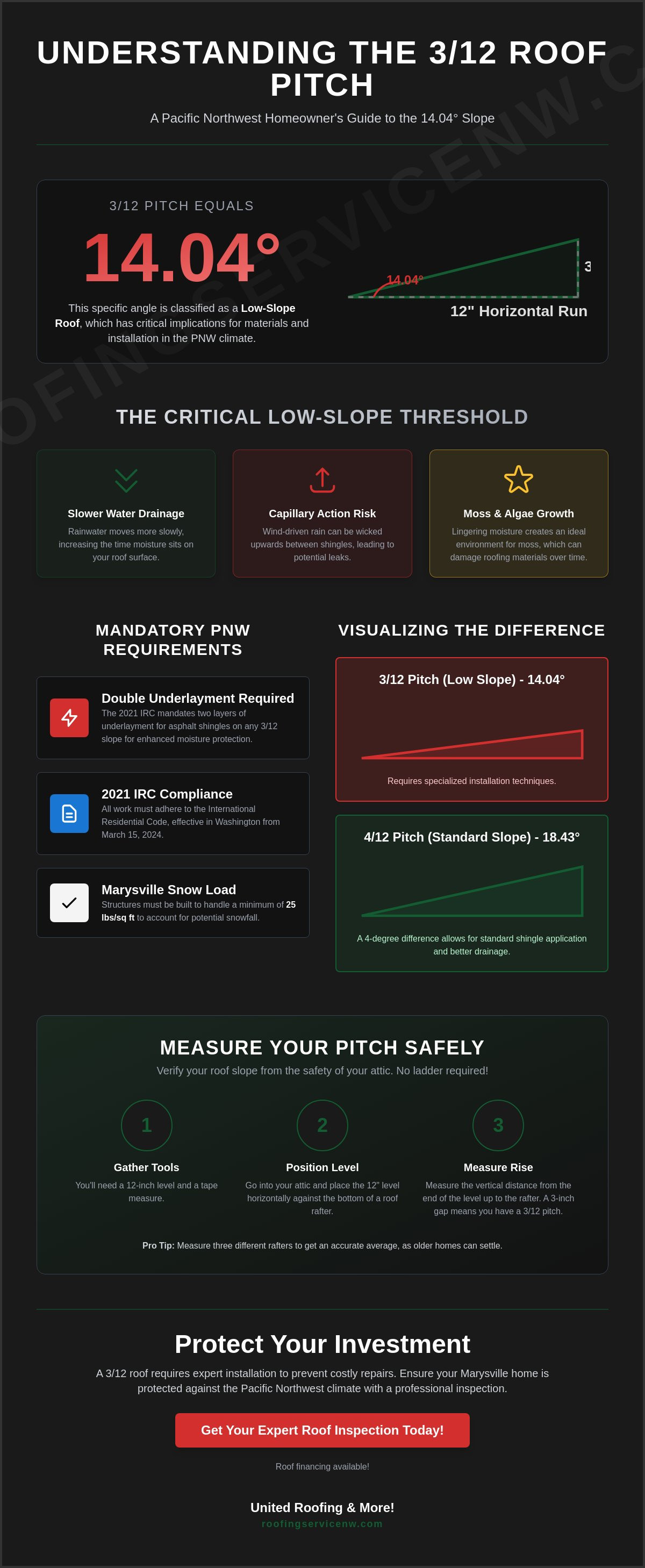
If you are looking at your home's blueprints or planning a new addition in Marysville, you have likely seen the ratio 3:12. This measurement tells you that for every 12 inches your roof extends horizontally, it rises 3 inches vertically. When you convert this 3/12 pitch in degrees, the result is exactly 14.04 degrees. In the construction industry, we classify any roof with this angle as a low-slope roof. It is a gentle, subtle incline often found on covered porches, carports, or modern home additions. Understanding this specific angle is the first step toward a successful roof installation or replacement.
The concept of Roof pitch is the foundation of all drainage and material decisions. While a 14.04-degree angle might look nearly flat from the street, it provides just enough lift to move water toward your gutter system. However, because the slope is so mild, it requires expert attention to detail to prevent moisture from backing up under your roofing materials. Expert Services & More! are available to help you determine if your current slope meets local building codes. Roof financing available!
The Geometry of 14.04 Degrees
Calculating a 3/12 pitch in degrees involves a bit of trigonometry. To find the exact angle, we use the inverse tangent function, or tan⁻¹(3/12). This mathematical constant stays the same regardless of the size of your home. Architects usually prefer using degrees because it allows for precision in structural drawings and rafters. On the other hand, roofing contractors in King and Snohomish County use ratios like 3/12 because they are easier to measure on a job site with a standard framing square.
For comparison, a 14.04-degree roof is significantly shallower than the "standard" residential slope. Most traditional homes in our area feature a 4/12 pitch, which sits at 18.43 degrees. That four-degree difference might sound small, but it completely changes how we approach your roof replacement. While a 4/12 pitch allows for standard shingle application, the 14.04-degree slope of a 3/12 pitch puts you in a specialized category that requires enhanced protection against the elements.
Why 3/12 is a Critical Transition Point
In the Pacific Northwest, we view 3/12 as the ultimate transition point. It is the threshold where a roof moves from being "steep" enough for basic gravity-fed drainage to "low-slope" territory where water lingers longer. On a 14.04-degree surface, rainwater moves slower. This slow movement increases the risk of "capillary action," where water is wicked upward between shingles during heavy wind or persistent drizzle. If you are curious about how a slightly steeper slope compares, you can read our 4/12 pitch in degrees guide for more details. Knowing these differences ensures you choose the right materials for long-term durability. Transparency and communication are our top priorities at United Roofing & More!, so drop us a line if you need a pitch verification today!
How to Calculate and Verify Your Roof Pitch
Safety is our top priority. You don't need to risk a fall to verify a 3/12 pitch in degrees. Most homeowners can get an accurate reading without ever stepping onto a ladder. You only need three basic items: a 12-inch level, a tape measure, and a pencil. These tools allow you to check the "Rise over Run" of your roof. This is the standard way we measure slope in King and Snohomish County. Precision matters because even a small error can lead to improper material selection.
If you aren't comfortable handling the tools yourself, don't worry. Expert Services & More! are ready to help. We provide expert roof inspections to ensure your measurements are perfect before any work begins. Transparency and communication are key to our process. We want you to feel confident in your roof replacement plan. Our team has 15 years of experience measuring complex slopes in the Puget Sound area. Roof financing available!
Measuring from the Attic
The attic is the best place for a DIY check. It protects you from the elements and provides a clear view of the structural rafters. Simply place your 12-inch level against the bottom of a rafter. Ensure the bubble is centered. Measure the vertical gap between the end of your level and the wood above it. This vertical distance is your "rise." In older Marysville homes, wood can warp or settle over several decades. We recommend checking three different rafters to find an average. Seattle architecture often includes mixed-pitch roofs. Checking from the attic helps you identify if only one section of your home has that specific 14.04-degree slope. This measurement is vital because it dictates your choice of low-slope roofing materials, which must handle water differently than steeper designs.
Calculating the Pitch Ratio
If the vertical rise is exactly 3 inches over the span of your 12-inch level, you have a 3/12 pitch. You must calculate roof pitch with precision to avoid costly mistakes during installation. Learning how to figure roof pitch is the best way to ensure you buy the right amount of double underlayment for a low-slope project. Knowing the ratio helps our skilled professionals give you a more accurate estimate.
Digital tools are another great option for tech-savvy homeowners. Many free smartphone apps can measure a 3/12 pitch in degrees instantly. You just hold your phone against the rafter. The screen will show "14.04°" if the slope is correct. This is a fast way to verify your manual findings. While these apps are helpful, manual measurements remain the most reliable for planning a major roof installation. Whether you use a phone or a tape measure, the goal is total accuracy for your home's protection.
Material Limitations for 3/12 Low-Slope Roofs
Choosing the right material for a 3/12 pitch in degrees (14.04°) is one of the most important decisions you'll make for your home. While many homeowners prefer the classic look of asphalt shingles, this slope is a challenging environment. Standard shingles rely on gravity to shed water quickly. On a 14.04-degree incline, gravity works much slower. Wind-driven rain is a constant threat in the Puget Sound area. Strong gusts can push water upward, forcing it underneath the bottom edge of your shingles. This bypass is the leading cause of "mystery leaks" on low-slope homes in Marysville and Seattle.
Manufacturer requirements for these slopes are extremely strict. To maintain your warranty, you must follow the 2021 International Residential Code (IRC) updates that became effective on March 15, 2024. For any pitch between 2/12 and 4/12, the code mandates a double underlayment application. This creates a secondary drainage plane that protects your roof deck if the primary shingles fail. Skipping this step is a recipe for disaster. Expert Services & More! prioritize transparency and communication, ensuring your installation meets every legal and manufacturer standard. Roof financing available!
Asphalt Shingles on a 3/12 Pitch
If you choose shingles, you need an "ice and water shield" membrane. This is especially true in Marysville, where we design for a 25 lbs/sq ft snow load. As snow melts on a 14.04-degree slope, it often pools at the eaves. A self-adhering membrane prevents this standing water from seeping into your rafters. We also use a "reduced exposure" technique. By overlapping the shingles more than usual, we create a thicker, more resilient shield. Our experienced team knows how to handle these technical details to keep your home dry. Drop us a line for a free estimate today!
Best Materials for Low-Slope Marysville Homes
Standing seam metal roofing is often a superior choice for a 14.04-degree slope. These top-quality systems use long, vertical panels with no horizontal seams. This design eliminates the entry points for water. Metal is also excellent at resisting the organic growth and moss so common in King and Snohomish County. For very low-angle additions, we recommend TPO or PVC membranes. These materials are essentially "rubberized" sheets that are heat-welded together. They provide a seamless, commercial-grade waterproof barrier. While the initial cost may be higher, the long-term peace of mind is invaluable. Skilled professionals from United Roofing & More! can help you weigh these options. Expert Services & More! are ready to start your project!
PNW Climate: Challenges for 14.04 Degree Slopes
Living in the Puget Sound means dealing with approximately 150 days of rain per year. While a steep roof sheds this water instantly, a 3/12 pitch in degrees (14.04°) faces a different reality. The "Seattle Drizzle" is not usually heavy, but it is persistent. On a 14.04-degree slope, water moves slowly across the surface. This sluggish drainage allows moisture to linger, which often leads to premature decay of the roofing materials. When water sits, it finds every microscopic entry point. This is why expert installation is non-negotiable for homeowners in Marysville and Seattle. Expert Services & More! are ready to protect your home. Roof financing available!
Moss and algae thrive in our damp, mild climate. A low-slope roof collects more debris, such as pine needles and leaves, than a steeper one. This organic matter traps moisture against the shingles, creating a perfect nursery for moss. Once moss takes hold, it acts like a sponge, holding water against the roof even during dry spells. Regular roof cleaning is essential to prevent this growth from lifting your shingles. Additionally, we always emphasize the importance of a high-quality roof drip edge. This component is the essential guard for Marysville homes, as it prevents slow-moving water from wicking back into your fascia and soffits.
Drainage and Gutter Efficiency
A 14.04-degree slope requires a perfectly calibrated gutter system. In cities like Everett and Renton, rain patterns can be unpredictable. If your gutters are even slightly off-level, water will back up onto the roof. We often recommend oversized 6-inch gutters for a 3/12 pitch in degrees to handle the volume. Ponding water is a major risk at transition points where the roof meets a wall or a steeper section. These areas must be flashed with extreme precision to prevent leaks. Transparency and communication are our signatures; we'll show you exactly how we plan to manage your roof's drainage. Schedule a professional drainage assessment with our team today to avoid future water damage.
Snow Load and Structural Integrity
Marysville building codes require roofs to handle a snow load of 25 lbs/sq ft. On a 14.04-degree roof, snow does not slide off naturally. It sits and accumulates, putting significant pressure on the structure. This is especially concerning for modern home additions that might not have been built to the same standards as the main house. Following master roofing standards is the only way to ensure your low-slope roof is structurally sound. Our skilled professionals have 15 years of experience reinforcing roofs for Western Washington winters. We lead with our credentials so you can rest easy during the next big storm. Expert Services & More! are just a phone call away!
Planning Your 3/12 Roof Project in Marysville
Planning a project for a 3/12 pitch in degrees requires more than just a quick look. This 14.04-degree angle is a specialized zone. You need a professional to verify the pitch and assess any existing leaks. Because water drains slowly at this slope, the underlying decking often suffers from hidden rot. Our skilled professionals use a detailed inspection process to find these issues before they become emergencies. Expert Services & More! are ready to protect your home. Roof financing available!
The specific pitch also impacts your roof replacement labor costs. Installing double underlayment and specialized flashing takes more time than a standard steep-slope job. We prioritize transparency and communication, so you'll see every detail in your estimate. We want you to understand exactly where your investment goes. We've spent 15 years perfecting low-slope residential systems in King and Snohomish County. Our team leads with credentials and a hardworking attitude. Expert Services & More! are just a phone call away!
Getting an Accurate Estimate
A 14.04-degree slope demands a closer look at your roof's foundation. During our free quote, we check for soft spots in the wood. This is critical for structural safety and code compliance. We also discuss roof financing near me to help manage the cost of top-quality materials. Financing makes the best moisture-management systems affordable for every Marysville family. We believe in lowering the barrier to entry for essential home repairs. Roof financing available!
Next Steps for Homeowners
Don't wait for the next big storm to test your roof. Schedule a free inspection in Seattle, Renton, or Marysville today. You can review our portfolio of successful metal and shingle installations on low-slope homes. We are proud of our reliable reputation and our no-nonsense approach to customer service. Drop us a line to discuss your specific 3/12 pitch in degrees concerns. We are eager to provide the expert services you deserve. Transparency and communication are our core promises to you. Call now to get started!
Secure Your Home with Expert Low-Slope Solutions
A 3/12 pitch in degrees is exactly 14.04 degrees, and getting this measurement right is the foundation of a leak-free home. You now know that this transition slope requires specific underlayment strategies to withstand the 150 days of rain we see annually in the Puget Sound. Following the 2021 International Residential Code, which took effect on March 15, 2024, is the only way to protect your long-term investment. Expert Services & More! are just a phone call away.
United Roofing & More! is here to help you navigate these technical requirements with ease. We are a locally owned business with 15 years of PNW experience. Our skilled professionals specialize in both steep and low-slope roofing systems. Transparency and communication are our signatures. We offer expert roofing financing for all project sizes to make your replacement stress-free. Roof financing available!
Get a Free Quote on Your Marysville Roof Replacement!
Don't let a low-slope roof cause high-stress leaks. Drop us a line today and let's build a roof that lasts!
Frequently Asked Questions
Is a 3/12 roof pitch walkable?
Yes, a 3/12 pitch is considered very walkable. This 14.04-degree angle is much safer to navigate than steep residential slopes. Most roofing professionals can move across this surface without specialized steep-slope equipment. However, you should never walk on a wet or mossy roof. Safety remains the top priority for our skilled professionals during every roof repair. We lead with our credentials to ensure every job site is safe.
What is the minimum pitch for asphalt shingles in Washington State?
The absolute minimum pitch for asphalt shingles is 2:12 under the 2021 International Residential Code. Washington State adopted this code on March 15, 2024. For a 3/12 pitch in degrees, you are required to use a double underlayment system. This law ensures your home stays dry despite the slow water runoff. Expert Services & More! are available to verify your code compliance today.
How do I convert 3/12 pitch to a percentage?
You convert a 3/12 pitch to a percentage by dividing the rise by the run, which equals a 25% slope. This number represents the vertical rise as a portion of the horizontal distance. Engineers often use this percentage to calculate the speed of water drainage. Knowing your roof is at a 25% gradient helps you choose the right gutter capacity for Seattle's rainy seasons. Transparency and communication are our core promises.
Can I use a 3/12 pitch for a shed or patio cover?
Yes, 3/12 is a very popular choice for accessory structures like sheds or patio covers. It offers a sleek, low-profile appearance. In Marysville, these structures must still meet the 25 lbs/sq ft snow load requirement. We recommend using standing seam metal for these projects. Metal handles the 14.04-degree slope much better than shingles on small spans. Our experienced team can help you plan your next installation.
Does a 3/12 pitch require a special drip edge installation?
A 3/12 pitch requires precise drip edge placement rather than a unique part. On this shallow slope, water tends to cling to the edge of the roof. We install the drip edge with a specific overlap to prevent moisture from wicking into the wooden fascia. This attention to detail is what distinguishes our top-quality roof installation. Drop us a line if you have questions about your home's edge metal!
Will a 3/12 pitch roof leak more than a 4/12 pitch roof?
A 3/12 pitch is statistically more prone to leaks than a 4/12 pitch if standard installation methods are used. The four-degree difference significantly changes how water behaves. On a 14.04-degree surface, water lingers longer and can be pushed under shingles by wind. That's why we insist on using enhanced moisture barriers for all our low-slope projects. We value your peace of mind and long-term trust.
What is the best underlayment for a 14.04-degree roof?
The best underlayment for a 3/12 pitch in degrees is a full-coverage, self-adhering synthetic membrane. This material acts as a primary waterproof seal. While standard felt is cheaper, it doesn't provide the same security against the persistent PNW drizzle. Our experienced team uses these high-value materials to ensure your roof replacement lasts for decades. Expert Services & More! are ready to start. Roof financing available!
How does roof pitch affect the cost of a replacement in Marysville?
Roof pitch influences cost by dictating the complexity of the installation. While a 3/12 pitch is easier to walk on, it requires more expensive materials like ice and water shield. The labor required for double underlayment can add several hours to the project timeline. We provide clear, honest estimates so you know exactly what you're paying for. Our hardworking team is ready to help you. Roof financing available!

